
Burgundy, Through One Map
Why Do Two Villages Share the Name of a Vineyard Called Bald Mountain? — Montrachet
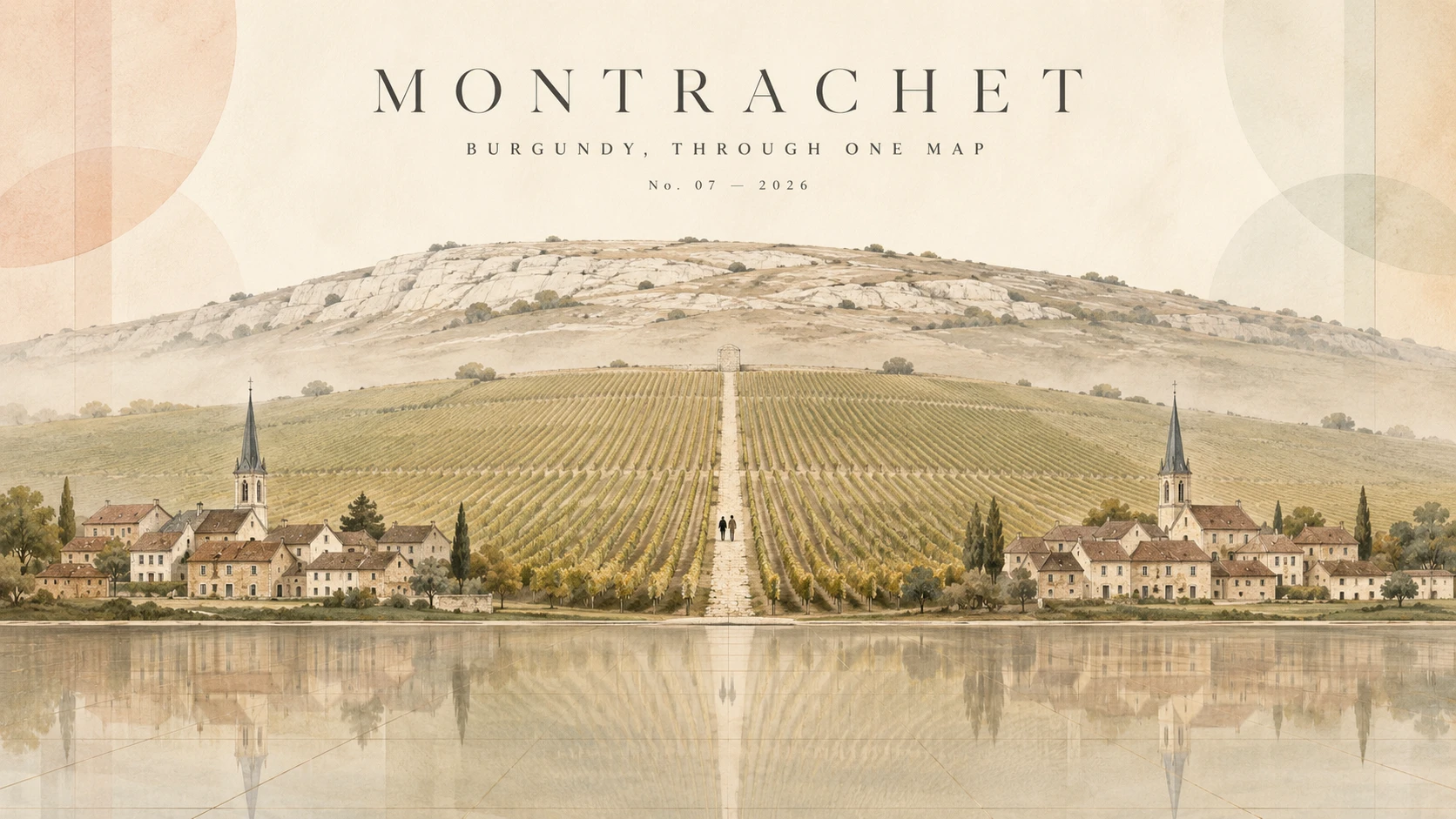
Head south past the Côte de Nuits, and the Côte de Beaune begins. From here, the villages lining the map turn from red wine to white. Near this entrance stands a hill, home to a vineyard named Montrachet. This name is said to mean “bald mountain” — a mountain bare of trees. Two neighboring villages, Puligny and Chassagne, both carry this name as their own village name today. Why did two villages come to share the name of a single vineyard? Trace it back, and it leads to a quiet administrative line that splits one vineyard in two.
| Item | Details |
|---|---|
| Name of the climat | Montrachet |
| Commune / district | Puligny-Montrachet / Chassagne-Montrachet (Côte de Beaune) |
| Classification | Grand Cru / AOC recognized July 31, 1937 |
| Area | Approx. 8 hectares (Puligny side approx. 4 ha / Chassagne side approx. 4 ha) |
| Milestone years | November 27, 1879 (Puligny and Chassagne each add “Montrachet” to their village name) / July 31, 1937 (recognized as Grand Cru AOC) |
| For reference | Grape variety 100% Chardonnay / white wine only |
A Hill Called Bald Mountain
Trace the name “Montrachet” back, and it is said to lead to “râche,” an old French word for a scalp condition that causes hair loss. From this, “Mont Rachaz” is said to have come to mean “bald mountain” — a mountain bare of trees. Tradition also holds that this rocky, thin-soiled hill once supported little more than thorny scrub and boxwood. While most of the slopes of the Côte de Beaune are covered in green vines, this one corner, it is said, took its name from a very different kind of landscape.
One Vineyard Straddling a Boundary
An administrative line divides this hillside vineyard in two. South of the line lies the territory of Chassagne; north of it, the territory of Puligny. Yet the vineyard itself remains a single, continuous plot of about 8 hectares — split almost evenly, with roughly 4 hectares on the Chassagne side and roughly 4 hectares on the Puligny side. One vineyard exists, administratively, across two villages at once.
1879: Two Villages Take the Name at the Same Time
The practice of a village adding a vineyard’s name to its own had already appeared elsewhere in the Côte d’Or, beginning with the village of Gevrey. These two villages joined that same movement. By decree of November 27, 1879, the village of Puligny became “Puligny-Montrachet,” and the village then known as “Chassagne-le-Haut” became “Chassagne-Montrachet” — both renamed on the same date, by the same decree. Elsewhere, a single village had taken on the name of a single vineyard. What these two villages did took a different shape: two villages facing each other across a boundary line took in the name of one shared vineyard, at the same time, as their own.
Montrachet Today
Puligny and Chassagne have remained neighbors ever since, each keeping its own village name. The vineyard spanning both villages was recognized as Grand Cru AOC on July 31, 1937. Nearly 150 years after the boundary line first split this hillside in two, two villages still stand side by side, administratively, beneath a single name: Montrachet.
Three Facts Worth Knowing
- The name “Montrachet” is said to mean “bald mountain” — a mountain bare of trees. Tradition holds that this rocky, thin-soiled hill once supported little more than thorny scrub and boxwood.
- On November 27, 1879, the neighboring villages of Puligny and Chassagne each added “Montrachet” to their own village name, by the same decree. Two villages facing each other across a boundary line took in the name of one shared vineyard at the same time.
- The vineyard spanning both villages was recognized as Grand Cru AOC on July 31, 1937. The roughly 8-hectare vineyard remains split almost evenly between the Puligny and Chassagne sides, continuing today as a single vineyard.
In this series
เมื่อเดินทางลงใต้พ้นโกต เดอ นุยส์ (Côte de Nuits) ไป ก็จะเข้าสู่โกต เดอ โบน (Côte de Beaune) จากจุดนี้เป็นต้นไป หมู่บ้านที่เรียงรายบนแผนที่จะเปลี่ยนจากไวน์แดงเป็นไวน์ขาว ใกล้กับจุดเริ่มต้นนี้มีเนินเขาลูกหนึ่งซึ่งเป็นที่ตั้งของไร่องุ่นชื่อมงราเช (Montrachet) กล่าวกันว่าชื่อนี้หมายถึง “ภูเขาหัวโล้น” ภูเขาที่ไร้ต้นไม้ หมู่บ้านสองแห่งที่อยู่ติดกัน คือปูลิญี (Puligny) และชาซาญ (Chassagne) ต่างก็ใช้ชื่อนี้เป็นส่วนหนึ่งของชื่อหมู่บ้านตนเองมาจนถึงทุกวันนี้ เหตุใดหมู่บ้านสองแห่งจึงมาร่วมใช้ชื่อไร่องุ่นเพียงผืนเดียว หากย้อนรอยดู จะพบเส้นแบ่งเขตการปกครองเส้นหนึ่งที่แบ่งไร่องุ่นผืนนี้ออกเป็นสองส่วนอย่างเงียบ ๆ
| รายการ | รายละเอียด |
|---|---|
| ชื่อไร่ (climat) | Montrachet (มงราเช) |
| หมู่บ้าน/เขต | ปูลิญี-มงราเช (Puligny-Montrachet) / ชาซาญ-มงราเช (Chassagne-Montrachet) (เขตโกต เดอ โบน) |
| การจัดระดับ | แกรนด์ครู (Grand Cru) / ได้รับการรับรอง AOC เมื่อวันที่ 31 กรกฎาคม 1937 |
| พื้นที่ | ประมาณ 8 เฮกตาร์ (ฝั่งปูลิญีประมาณ 4 เฮกตาร์ / ฝั่งชาซาญประมาณ 4 เฮกตาร์) |
| ปีสำคัญ | 27 พฤศจิกายน 1879 (หมู่บ้านปูลิญีและชาซาญต่างเพิ่มชื่อ “มงราเช” เข้ากับชื่อหมู่บ้านของตน) / 31 กรกฎาคม 1937 (ได้รับการรับรองเป็นแกรนด์ครู AOC) |
| ข้อมูลอ้างอิง | พันธุ์องุ่น ชาร์ดอเนย์ 100% / ผลิตเฉพาะไวน์ขาว |
เนินเขาที่ได้ชื่อว่าภูเขาหัวโล้น
หากย้อนรอยที่มาของชื่อ “มงราเช” กล่าวกันว่าจะพบคำภาษาฝรั่งเศสโบราณ “râche” ซึ่งหมายถึงโรคผิวหนังศีรษะที่ทำให้ผมร่วง จากคำนี้เองที่กล่าวกันว่ากลายมาเป็น “Mont Rachaz” ซึ่งมีความหมายว่า “ภูเขาหัวโล้น” ภูเขาที่ไร้ต้นไม้ นอกจากนี้ยังมีเรื่องเล่าว่าเนินเขาที่เต็มไปด้วยหินและดินตื้นแห่งนี้ เคยมีเพียงพุ่มไม้หนามและต้นบ๊อกซ์วูดขึ้นอยู่เท่านั้น ขณะที่พื้นที่ลาดเขาส่วนใหญ่ของโกต เดอ โบนปกคลุมด้วยไร่องุ่นสีเขียว กล่าวกันว่าเนินเขามุมนี้เพียงมุมเดียวได้ชื่อมาจากภูมิทัศน์ที่ต่างออกไป
ไร่องุ่นผืนเดียวที่คร่อมเส้นแบ่งเขต
ไร่องุ่นบนเนินเขาแห่งนี้ถูกแบ่งเป็นสองส่วนด้วยเส้นแบ่งเขตการปกครอง ฝั่งใต้ของเส้นแบ่งเป็นเขตของหมู่บ้านชาซาญ ฝั่งเหนือเป็นเขตของหมู่บ้านปูลิญี แต่ตัวไร่องุ่นเองยังคงเป็นผืนเดียวต่อเนื่องกัน มีเนื้อที่ราว 8 เฮกตาร์ แบ่งเกือบเท่า ๆ กัน คือฝั่งชาซาญราว 4 เฮกตาร์ และฝั่งปูลิญีราว 4 เฮกตาร์ ไร่องุ่นผืนเดียวจึงดำรงอยู่คร่อมสองหมู่บ้านในทางการปกครอง
ปี 1879 หมู่บ้านสองแห่งใช้ชื่อนี้พร้อมกัน
แนวทางที่หมู่บ้านนำชื่อไร่องุ่นมาเพิ่มในชื่อของตนเองนั้น เคยปรากฏมาก่อนแล้วในหมู่บ้านอื่นของโกตดอร์ โดยเริ่มจากหมู่บ้านเฌอเวรย์ (Gevrey) หมู่บ้านทั้งสองนี้ก็เข้าร่วมกระแสเดียวกัน ด้วยกฤษฎีกาลงวันที่ 27 พฤศจิกายน 1879 หมู่บ้านปูลิญีเปลี่ยนชื่อเป็น “ปูลิญี-มงราเช” ส่วนหมู่บ้านที่ขณะนั้นมีชื่อว่า “ชาซาญ-เลอ-โอ” (Chassagne-le-Haut) ก็เปลี่ยนชื่อเป็น “ชาซาญ-มงราเช” ทั้งสองหมู่บ้านเปลี่ยนชื่อในวันเดียวกัน ด้วยกฤษฎีกาฉบับเดียวกัน ในที่อื่น หมู่บ้านหนึ่งแห่งรับชื่อไร่องุ่นหนึ่งผืนมาเป็นของตน แต่สิ่งที่หมู่บ้านทั้งสองนี้ทำมีรูปแบบต่างออกไป หมู่บ้านสองแห่งที่หันหน้าเข้าหากันคร่อมเส้นแบ่งเขต ต่างรับชื่อไร่องุ่นผืนเดียวกันมาเป็นชื่อหมู่บ้านของตนพร้อมกันในคราวเดียว
มงราเชในปัจจุบัน
ปูลิญีและชาซาญยังคงเป็นหมู่บ้านเพื่อนบ้านกันมาโดยตลอด ต่างฝ่ายต่างรักษาชื่อหมู่บ้านของตนไว้ ไร่องุ่นที่คร่อมทั้งสองหมู่บ้านนี้ได้รับการรับรองเป็นแกรนด์ครู AOC เมื่อวันที่ 31 กรกฎาคม 1937 เกือบ 150 ปีผ่านไปแล้วนับจากที่เส้นแบ่งเขตแบ่งเนินเขานี้ออกเป็นสองส่วน ทุกวันนี้หมู่บ้านทั้งสองก็ยังคงตั้งเคียงข้างกันในทางการปกครอง ภายใต้ชื่อเดียว นั่นคือ “มงราเช”
3 เรื่องที่รู้แล้วเล่าต่อได้
- กล่าวกันว่าชื่อ “มงราเช” (Montrachet) หมายถึง “ภูเขาหัวโล้น” ภูเขาที่ไร้ต้นไม้ มีเรื่องเล่าว่าเนินเขาที่เต็มไปด้วยหินและดินตื้นแห่งนี้ เคยมีเพียงพุ่มไม้หนามและต้นบ๊อกซ์วูดขึ้นอยู่เท่านั้น
- วันที่ 27 พฤศจิกายน 1879 หมู่บ้านปูลิญีและชาซาญที่อยู่ติดกัน ต่างเพิ่มชื่อ “มงราเช” เข้ากับชื่อหมู่บ้านของตนด้วยกฤษฎีกาฉบับเดียวกัน หมู่บ้านสองแห่งที่คร่อมเส้นแบ่งเขต ต่างรับชื่อไร่องุ่นผืนเดียวกันมาเป็นชื่อหมู่บ้านของตนพร้อมกัน
- ไร่องุ่นที่คร่อมทั้งสองหมู่บ้านนี้ได้รับการรับรองเป็นแกรนด์ครู AOC เมื่อวันที่ 31 กรกฎาคม 1937 ไร่องุ่นเนื้อที่ราว 8 เฮกตาร์ยังคงแบ่งเกือบเท่า ๆ กันระหว่างฝั่งปูลิญีและฝั่งชาซาญ และยังคงเป็นไร่องุ่นผืนเดียวมาจนถึงทุกวันนี้
ลิงก์ในชุดเรื่อง
コート・ド・ニュイを南へ抜けると、コート・ド・ボーヌが始まる。ここから先、地図に並ぶ村の顔ぶれは、赤ワインから白ワインへと変わっていく。その入口に近い丘に、モンラッシェという名の畑がある。この名は「禿山」—木も生えない禿げた山—を意味すると伝えられる。隣り合う二つの村、ピュリニー村とシャサーニュ村は、どちらもこの名を自らの村名として名乗っている。一つの畑の名前を、なぜ二つの村が分け合うことになったのか。たどっていくと、一枚の畑を静かに割る、一本の境界線に行き着く。
| 項目 | 内容 |
|---|---|
| 畑の名称 | Montrachet(モンラッシェ) |
| 村・地区 | ピュリニー・モンラッシェ村/シャサーニュ・モンラッシェ村(コート・ド・ボーヌ地区) |
| 格付け | グラン・クリュ(特級)/AOC認定 1937年7月31日 |
| 面積 | 約8ヘクタール(ピュリニー側 約4ヘクタール/シャサーニュ側 約4ヘクタール) |
| 節目の年 | 1879年11月27日(ピュリニー村・シャサーニュ村がそれぞれ村名に「モンラッシェ」を追加)/1937年7月31日(グラン・クリュとしてAOC認定) |
| 参考 | ぶどう品種 シャルドネ100%/白ワインのみ |
禿山と呼ばれた丘
「モンラッシェ」という名の由来をたどると、古いフランス語で頭髪が抜け落ちる病を指した「râche」という語に行き着くと伝えられる。そこから生まれた「Mont Rachaz」が、「禿山」—木の生えない、禿げた山—を意味するようになったという。石が多く痩せたこの丘には、かつて棘のある低木とツゲの木ほどしか育たなかったという言い伝えも残る。コート・ド・ボーヌの斜面の多くが緑の畑に覆われるなか、この一角だけは、そんな風景から名前をもらったと伝えられている。
境界にまたがる、一枚の畑
この丘の畑は、行政上の境界線によって二つに分けられている。線の南側はシャサーニュ村、北側はピュリニー村の領域だ。だが畑そのものは一枚の続いた区画のまま、広さは約8ヘクタール。内訳はほぼ半分ずつで、シャサーニュ側が約4ヘクタール、ピュリニー側が約4ヘクタール。一つの畑が、行政の上では二つの村にまたがって存在している。
1879年、二つの村が同時に名乗った
畑の名を自らの村名に加えるという方式は、ジュヴレ村を皮切りに、コート・ドールの他の村でもすでに見られていた。この二つの村も、その流れに加わることになる。1879年11月27日の政令により、ピュリニー村は「ピュリニー・モンラッシェ」に、それまで「シャサーニュ・ル・オー」と呼ばれていたシャサーニュ村は「シャサーニュ・モンラッシェ」に、同じ日付でそれぞれ改称した。他の村では、一つの村が一つの畑の名を受け継いだ。だが、この二つの村がしたことは、それとは形が違う。境界を挟んで向かい合う二つの村が、一つの畑の名前を、同時にそれぞれの村名として迎え入れたのだ。
今日のモンラッシェ
ピュリニー村とシャサーニュ村は、その後も隣り合ったまま、それぞれの村名を保ち続けている。両村にまたがるこの畑は、1937年7月31日、グラン・クリュとしてAOC認定された。境界線が畑を割ってから150年近くが過ぎた今も、「モンラッシェ」という一つの名前の下に、二つの村が行政上は並び立っている。
知っておくと語れる3つ
- 「モンラッシェ」という名は、「禿山」—木も生えない禿げた山—を意味すると伝えられる。 石の多い痩せたこの丘には、かつて棘のある低木とツゲの木ほどしか育たなかったという言い伝えが残る。
- 1879年11月27日、隣り合うピュリニー村とシャサーニュ村は、同じ政令により、それぞれの村名に「モンラッシェ」を加えた。 一つの畑の名前を、境界を挟む二つの村が、同時にそれぞれの村名として迎え入れた。
- 両村にまたがるこの畑は、1937年7月31日、グラン・クリュとしてAOC認定されている。 約8ヘクタールの畑は、ピュリニー側とシャサーニュ側にほぼ半分ずつ分かれたまま、今も一つの畑として続いている。