
Burgundy, Through One Map
Why Did a Family Give Away Half Its Harvest for Decades, Even Though the Vineyards Were Its Own? — Méo-Camuzet
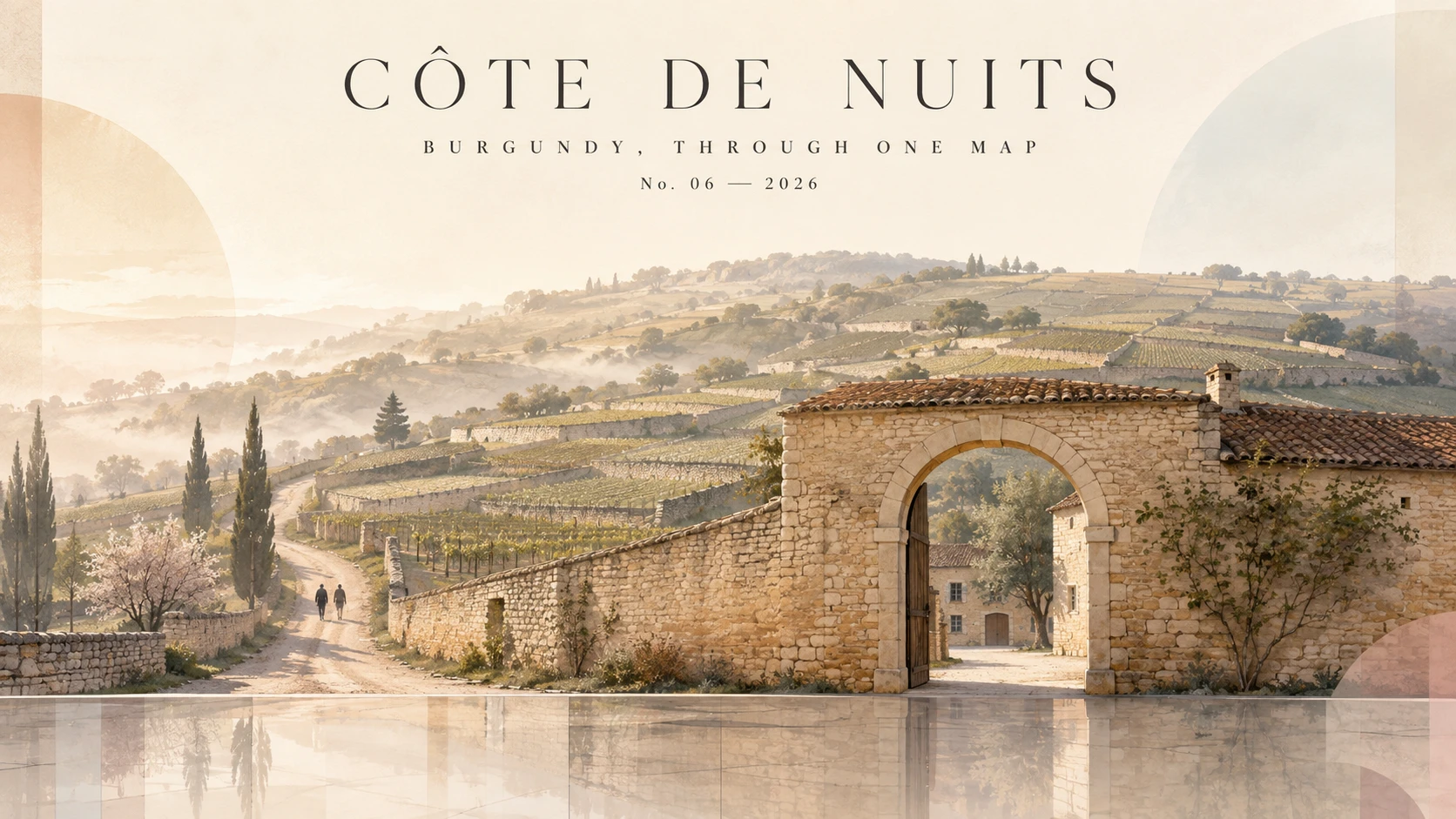
A family based in the village of Vosne-Romanée owned vineyards across the Côte de Nuits. Yet for most of the twentieth century, it was not a member of the family who actually worked those vineyards. The land was entrusted to outside growers, who received half the harvest in return. The family’s name was Camuzet, and later Méo-Camuzet. Why, for so long, did a family that owned its own vineyards not work them itself?
| Item | Details |
|---|---|
| Domaine name | Méo-Camuzet |
| Base | Vosne-Romanée (Côte de Nuits) |
| Tenant farmers under métayage (4) | Jean Faurois / Jacques Faurois / Jean Tardy / Henri Jayer (during Jean Méo’s management, 1959–1984) |
| Milestone years | 1920 (Étienne Camuzet acquires the Château du Clos de Vougeot) / 1946 (Camuzet dies; daughter Maria Noirot inherits) / 1959 (Maria Noirot dies; nephew Jean Méo inherits) / 1981 (domaine renamed “Méo-Camuzet”) / 1989 (Jean-Nicolas Méo settles in Vosne-Romanée) / 2008 (last tenant farmers retire) |
| For reference | The family’s vineyards are spread across several parcels in the Côte de Nuits, centered on Vosne-Romanée |
A Politician Who Gathered Vineyards, and Never Lived Among Them
Étienne Camuzet (1867–1946) was a grower born in the village of Vosne-Romanée, who served as mayor of the village from 1900 to 1929 and as a member of the National Assembly for Côte-d’Or from 1902 to 1932 — more than thirty years in public office altogether. He also expanded his activity as a grower, selecting and buying up vineyards in and around the village. In 1920, he acquired the Château du Clos de Vougeot as well. Yet he himself never lived there. What he used the building for was housing the tenant farmers who looked after his vineyards.
To a Daughter, Then a Nephew — A Family Facing Paris
When Camuzet died in 1946, his vineyards passed to his daughter, Maria Noirot. She, too, continued to entrust the land to the tenant farmers her father had relied on. When Maria Noirot died in 1959, the estate passed to her nephew, Jean Méo. Jean Méo was a Paris-based figure who, after training as a mining engineer, is said to have joined the cabinet of General de Gaulle before going on to hold management positions at several large companies. Based far from the vineyards, he entrusted the family’s land, from 1959 to 1984, to four tenant farmers — Jean Faurois, Jacques Faurois, Jean Tardy, and Henri Jayer. Under métayage — an arrangement in which the tenant kept half the harvest in return for working the land — the four men each tended their own parcels. In 1981, the domaine’s name was changed from “Camuzet” to “Méo-Camuzet,” and in 1983 the first wine to carry that name was released.
A Young Heir, Educated in Paris and America
In 1984, Jean Méo told his son Jean-Nicolas — then twenty years old and a student at the ESCP business school in Paris — that he would one day take over the vineyards. Jean-Nicolas did not return to the estate right away; he continued his studies, going on to study oenology at the University of Burgundy and spending a year in the United States at the University of Pennsylvania. It was in 1989 that he finally settled in Vosne-Romanée.
What a Retiring Tenant Farmer Passed On to the Young Heir
By 1989, when Jean-Nicolas Méo returned, Henri Jayer, one of the tenant farmers, was already heading toward retirement. Even so, the domaine says, Jayer agreed to pass on his own winemaking craft to the young heir. For some years afterward, Jayer continued to teach at Jean-Nicolas’s side — accounts differ on exactly how long, but they agree that the relationship was closest in the early years. The vineyards returned to the family’s hands little by little, and by 2008 the last of the tenant farmers had retired; from then on, Jean-Nicolas cultivated the entire estate directly.
From the time Jean Méo inherited the vineyards after Maria Noirot’s death to the day the land came to be worked by the family alone once again, roughly half a century had passed. The craft that made that return possible had been carried by growers from outside the family.
Three Facts Worth Knowing
- The family owned its vineyards, yet for a long time did not work them itself. From 1959 to 1984, Jean Méo entrusted the land under métayage to four tenant farmers — Jean Faurois, Jacques Faurois, Jean Tardy, and Henri Jayer.
- In 1989, the young heir Jean-Nicolas Méo, educated in Paris and America, settled in Vosne-Romanée. Henri Jayer, one of the tenant farmers and by then heading toward retirement, is said to have passed on his winemaking craft to him.
- It took roughly half a century, from Jean Méo’s inheriting the vineyards after Maria Noirot’s death to the family working every parcel with its own hands. By 2008, the last tenant farmers had retired and the land had returned fully to the family.
In this series
ตระกูลหนึ่งซึ่งมีฐานอยู่ที่หมู่บ้านโวสน-โรมาเน (Vosne-Romanée) เป็นเจ้าของไร่องุ่นหลายแห่งในเขตโกต เดอ นุยส์ (Côte de Nuits) แต่ตลอดช่วงเวลาส่วนใหญ่ของศตวรรษที่ 20 ผู้ที่ลงมือทำไร่เหล่านั้นจริง ๆ ไม่ใช่คนในตระกูลเลย ไร่ถูกมอบหมายให้ชาวไร่จากภายนอก ผู้รับส่วนแบ่งครึ่งหนึ่งของผลผลิตเป็นค่าตอบแทน ชื่อของตระกูลนี้คือกามูเซ (Camuzet) และต่อมาคือเมโอ-กามูเซ (Méo-Camuzet) เหตุใดตระกูลที่เป็นเจ้าของไร่องุ่นเองจึงไม่ลงมือทำไร่ด้วยตนเองอยู่นานเช่นนี้
| รายการ | รายละเอียด |
|---|---|
| ชื่อโดเมน | Méo-Camuzet (เมโอ-กามูเซ) |
| ฐานที่ตั้ง | หมู่บ้านโวสน-โรมาเน (เขตโกต เดอ นุยส์) |
| ชาวไร่ผู้เช่าภายใต้ métayage (4 ราย) | ฌอง โฟรัว (Jean Faurois) / ฌัก โฟรัว (Jacques Faurois) / ฌอง ตาร์ดี (Jean Tardy) / อองรี ฌาเยร์ (Henri Jayer) (ในช่วงที่ฌอง เมโอบริหาร คือปี 1959–1984) |
| ปีสำคัญ | 1920 (เอเตียน กามูเซซื้อปราสาทโกล เดอ วูโฌ) / 1946 (กามูเซเสียชีวิต ธิดามารีอา นัวโรรับช่วงต่อ) / 1959 (มารีอา นัวโรเสียชีวิต หลานชายฌอง เมโอรับช่วงต่อ) / 1981 (เปลี่ยนชื่อโดเมนเป็น “เมโอ-กามูเซ”) / 1989 (ฌอง-นิโกลาส์ เมโอลงหลักปักฐานที่โวสน-โรมาเน) / 2008 (ชาวไร่ผู้เช่าคนสุดท้ายเกษียณ) |
| ข้อมูลอ้างอิง | ไร่องุ่นของตระกูลกระจายอยู่หลายแปลงในเขตโกต เดอ นุยส์ โดยมีโวสน-โรมาเนเป็นศูนย์กลาง |
นักการเมืองผู้รวบรวมไร่องุ่น แต่ไม่เคยอาศัยอยู่ที่นั่น
เอเตียน กามูเซ (Étienne Camuzet, 1867–1946) เป็นชาวไร่ที่เกิดในหมู่บ้านโวสน-โรมาเน ดำรงตำแหน่งนายกเทศมนตรีของหมู่บ้านตั้งแต่ปี 1900 ถึง 1929 และเป็นสมาชิกสภาผู้แทนราษฎรจากเขตโกตดอร์ (Côte d’Or) ตั้งแต่ปี 1902 ถึง 1932 รวมเวลารับราชการกว่าสามสิบปี เขายังขยายกิจการชาวไร่ของตนด้วยการคัดเลือกและซื้อไร่องุ่นในและรอบหมู่บ้านเพิ่มเติม ในปี 1920 เขายังได้ซื้อปราสาทโกล เดอ วูโฌ (Château du Clos de Vougeot) มาครอบครองอีกด้วย แต่ตัวเขาเองไม่เคยอาศัยอยู่ที่นั่นเลย สิ่งที่เขาใช้อาคารนี้ทำคือเป็นที่พักให้แก่ชาวไร่ผู้เช่าที่ดูแลไร่องุ่นของเขา
สู่ธิดา แล้วจึงถึงหลานชาย — ตระกูลที่หันหน้าสู่ปารีส
เมื่อกามูเซเสียชีวิตในปี 1946 ไร่องุ่นตกทอดไปยังธิดาของเขา มารีอา นัวโร (Maria Noirot) ผู้ซึ่งยังคงมอบหมายที่ดินให้แก่ชาวไร่ผู้เช่าที่บิดาของเธอเคยพึ่งพาต่อไป เมื่อมารีอา นัวโรเสียชีวิตในปี 1959 กิจการจึงตกทอดไปยังหลานชายของเธอ ฌอง เมโอ (Jean Méo) ฌอง เมโอเป็นบุคคลที่มีฐานอยู่ในปารีส กล่าวกันว่าหลังจากได้รับการศึกษาเป็นวิศวกรเหมืองแร่แล้ว เขาได้เข้าร่วมคณะทำงานของนายพลเดอ โกล (De Gaulle) ก่อนจะดำรงตำแหน่งบริหารในบริษัทขนาดใหญ่หลายแห่งในเวลาต่อมา เขาซึ่งอยู่ห่างไกลจากไร่องุ่น ได้มอบหมายที่ดินของตระกูลให้แก่ชาวไร่ผู้เช่า 4 ราย ตั้งแต่ปี 1959 ถึง 1984 ได้แก่ ฌอง โฟรัว, ฌัก โฟรัว, ฌอง ตาร์ดี และอองรี ฌาเยร์ ภายใต้ระบบ métayage — ข้อตกลงที่ผู้เช่าจะได้รับผลผลิตครึ่งหนึ่งเป็นค่าตอบแทนการทำไร่ — ทั้งสี่คนต่างดูแลแปลงของตนเองต่อมา ในปี 1981 ชื่อโดเมนถูกเปลี่ยนจาก “กามูเซ” เป็น “เมโอ-กามูเซ” และในปี 1983 ไวน์รุ่นแรกภายใต้ชื่อนี้ก็ถือกำเนิดขึ้น
ทายาทหนุ่มผู้ร่ำเรียนที่ปารีสและอเมริกา
ในปี 1984 ฌอง เมโอบอกกับฌอง-นิโกลาส์ (Jean-Nicolas) บุตรชายของเขา ซึ่งขณะนั้นอายุ 20 ปีและกำลังศึกษาอยู่ที่สถาบัน ESCP โรงเรียนธุรกิจในปารีส ว่าสักวันหนึ่งเขาจะต้องรับช่วงดูแลไร่องุ่นต่อ ฌอง-นิโกลาส์ไม่ได้กลับมาทันที แต่ยังคงศึกษาต่อ โดยไปศึกษาวิชาการทำไวน์ (oenology) ที่มหาวิทยาลัยบูร์กอญ (Université de Bourgogne) และใช้เวลาหนึ่งปีที่มหาวิทยาลัยเพนซิลเวเนีย (University of Pennsylvania) ในสหรัฐอเมริกา เขาลงหลักปักฐานที่โวสน-โรมาเนในปี 1989
สิ่งที่ชาวไร่ผู้กำลังจะเกษียณส่งต่อให้ทายาทหนุ่ม
เมื่อฌอง-นิโกลาส์ เมโอกลับมาในปี 1989 อองรี ฌาเยร์ หนึ่งในชาวไร่ผู้เช่า ก็กำลังก้าวเข้าสู่ช่วงเกษียณแล้ว กระนั้น ทางโดเมนก็ระบุว่าฌาเยร์ยอมรับที่จะถ่ายทอดฝีมือการทำไวน์ของตนให้แก่ทายาทหนุ่มผู้นี้ ในช่วงหลายปีต่อจากนั้น ฌาเยร์ยังคงสอนงานอยู่เคียงข้างฌอง-นิโกลาส์ — ระยะเวลาที่แน่ชัดแตกต่างกันไปตามแหล่งข้อมูล แต่ทุกแหล่งเห็นตรงกันว่าความสัมพันธ์นี้แน่นแฟ้นที่สุดในช่วงปีแรก ๆ ไร่องุ่นค่อย ๆ กลับคืนสู่มือของตระกูลทีละน้อย และภายในปี 2008 ชาวไร่ผู้เช่าคนสุดท้ายก็เกษียณลง นับแต่นั้นฌอง-นิโกลาส์จึงดูแลไร่องุ่นทั้งหมดของโดเมนด้วยตนเองโดยตรง
นับจากที่ฌอง เมโอรับช่วงไร่องุ่นต่อหลังการเสียชีวิตของมารีอา นัวโร จนถึงวันที่ผืนดินกลับมาอยู่ในมือของตระกูลเพียงลำพังอีกครั้ง เวลาผ่านไปราวครึ่งศตวรรษ ฝีมือที่นำพาการกลับคืนมานี้ ถูกส่งผ่านมาโดยชาวไร่จากภายนอกตระกูล
3 เรื่องที่รู้แล้วเล่าต่อได้
- ตระกูลนี้เป็นเจ้าของไร่องุ่นเอง แต่กลับไม่ได้ลงมือทำไร่ด้วยตนเองอยู่นาน ระหว่างปี 1959 ถึง 1984 ฌอง เมโอมอบหมายที่ดินให้แก่ชาวไร่ผู้เช่า 4 ราย ภายใต้ระบบ métayage ได้แก่ ฌอง โฟรัว, ฌัก โฟรัว, ฌอง ตาร์ดี และอองรี ฌาเยร์
- ในปี 1989 ทายาทหนุ่มฌอง-นิโกลาส์ เมโอ ผู้ร่ำเรียนจากปารีสและอเมริกา ได้ลงหลักปักฐานที่โวสน-โรมาเน กล่าวกันว่าอองรี ฌาเยร์ หนึ่งในชาวไร่ผู้เช่าที่กำลังจะเกษียณ ได้ถ่ายทอดฝีมือการทำไวน์ให้แก่เขา
- นับจากที่ฌอง เมโอรับช่วงไร่องุ่นต่อหลังการเสียชีวิตของมารีอา นัวโร จนถึงวันที่ตระกูลกลับมาทำไร่ทุกแปลงด้วยมือของตนเองอีกครั้ง ใช้เวลาราวครึ่งศตวรรษ ภายในปี 2008 ชาวไร่ผู้เช่าคนสุดท้ายก็เกษียณลง และผืนดินก็กลับคืนสู่มือของตระกูลอย่างสมบูรณ์
ลิงก์ในชุดเรื่อง
ヴォーヌ・ロマネ村に本拠を置くある一族は、コート・ド・ニュイのいくつもの畑を所有していた。だが20世紀の大半のあいだ、その畑に実際に鍬を入れていたのは、一族の人間ではなかった。畑を託されたのは、収穫の半分を対価として受け取る、よその栽培家たちだった。一族の名は、カミュゼ、そして後にメオ・カミュゼ。畑を持ちながら、なぜ長いあいだ自分たちでは耕さなかったのか。
| 項目 | 内容 |
|---|---|
| ドメーヌ名 | Méo-Camuzet(メオ・カミュゼ) |
| 拠点 | ヴォーヌ・ロマネ村(コート・ド・ニュイ地区) |
| 折半耕作の小作人(4名) | ジャン・フォロワ/ジャック・フォロワ/ジャン・タルディ/アンリ・ジャイエ(ジャン・メオの経営期=1959〜1984年) |
| 節目の年 | 1920年(エティエンヌ・カミュゼがクロ・ド・ヴージョの城館を取得)/1946年(カミュゼ没、娘マリア・ノワロが相続)/1959年(マリア・ノワロ没、甥ジャン・メオが相続)/1981年(ドメーヌ名を「メオ・カミュゼ」に改称)/1989年(ジャン=ニコラ・メオがヴォーヌ・ロマネに腰を据える)/2008年(最後の小作人が引退) |
| 参考 | 一族の畑はヴォーヌ・ロマネ村を中心に、コート・ド・ニュイ地区の複数の区画にまたがる |
政治家が畑を集め、そこには住まなかった理由
エティエンヌ・カミュゼ(1867〜1946)は、ヴォーヌ・ロマネ村生まれの栽培家で、村長を1900年から1929年まで、コート・ドール選出の国会議員を1902年から1932年まで、あわせて30年以上にわたって務めた人物である。栽培家としても手を広げ、村とその周辺の畑を選んで買い集めた。1920年には、クロ・ド・ヴージョの城館も取得している。だが彼自身がそこに暮らすことはなかった。住まいとして使わせたのは、畑の面倒を見る小作人たちだった。
娘、そして甥へ—パリを向いた一族
1946年にカミュゼが没すると、畑は娘のマリア・ノワロが相続した。彼女もまた、父の代からの小作人たちに畑を委ね続けた。1959年、マリア・ノワロが没すると、畑は甥のジャン・メオの手に渡る。ジャン・メオはパリを拠点とする人物で、鉱山技師の教育を受けたのち、シャルル・ド・ゴール将軍の内閣に加わり、その後複数の大企業の経営に携わったと伝えられる。畑から遠く離れたところにいた彼は、1959年から1984年までのあいだ、一族の畑を4名の小作人に委ねた—ジャン・フォロワ、ジャック・フォロワ、ジャン・タルディ、そしてアンリ・ジャイエである。折半耕作(フランス語で métayage、収穫の半分を対価に畑を任せる契約)のもと、4名はそれぞれの区画を耕し続けた。1981年、ドメーヌの名は「カミュゼ」から「メオ・カミュゼ」へと改められ、1983年には、この名を冠した最初のワインが世に出ている。
パリとアメリカで学んだ、若き当主
1984年、ジャン・メオは、当時20歳でパリの高等商業学校(ESCP)に在学中だった息子ジャン=ニコラに、いずれ畑を継ぐよう伝えた。ジャン=ニコラはすぐには畑に戻らず、学業を続けている。ブルゴーニュ大学で醸造学を学び、アメリカに渡ってペンシルベニア大学でも一年を過ごした。彼がヴォーヌ・ロマネに腰を据えたのは、1989年のことだった。
引退へ向かう小作人が、若き当主に手渡したもの
ジャン=ニコラ・メオが戻った1989年、小作人の一人であったアンリ・ジャイエは、すでに引退へ向かいつつあった。それでもジャイエは、若き当主に自らの醸造の技を伝えることを引き受けたと、ドメーヌは伝えている。その後数年にわたり、ジャイエはジャン=ニコラのそばで教え続けた—関わった年数は出典によって幅があるが、特に最初の数年は関わりが深かったとされる。畑は少しずつ一族の手に返っていき、2008年までに、かつての小作人たちは全員引退し、一族の畑はすべてジャン=ニコラが直接耕すところとなった。
マリア・ノワロの死後、ジャン・メオが畑を継いでから、その畑がふたたび一族の手だけで耕されるようになるまで、およそ半世紀。技を運んだのは、一族の外にいた栽培家たちだった。
知っておくと語れる3つ
- 一族は畑を持ちながら、長いあいだ自分たちでは耕さなかった。 1959年から1984年のあいだ、ジャン・メオは畑を4名の小作人—ジャン・フォロワ、ジャック・フォロワ、ジャン・タルディ、アンリ・ジャイエ—に折半耕作で委ねていた。
- 1989年、パリとアメリカで学んだ若き当主ジャン=ニコラ・メオが、ヴォーヌ・ロマネに腰を据えた。 引退へ向かっていた小作人アンリ・ジャイエが、彼に醸造の技を伝えたと伝えられる。
- マリア・ノワロの死後、ジャン・メオが畑を継いでから、一族が全ての畑を自分たちの手で耕すようになるまで、およそ半世紀がかかった。 2008年、最後の小作人たちが引退し、畑は一族の手に完全に戻った。