
Burgundy, Through One Map
Why Does an Emperor's Name Still Mark This Vineyard, More Than 1,200 Years Later? — Corton-Charlemagne
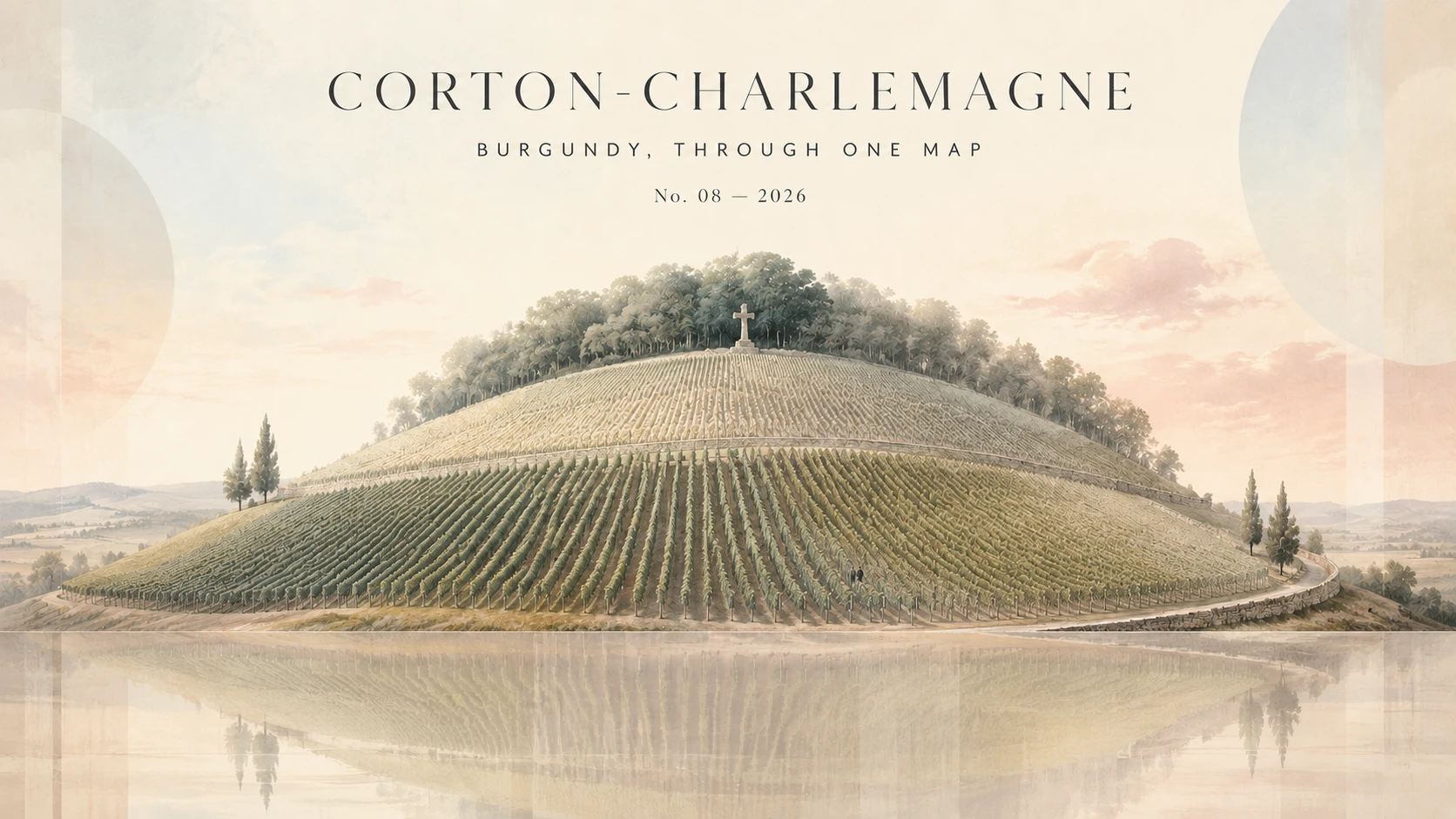
At the northern end of the Côte de Beaune, a gently sloping hill rises above the surrounding plain. Its name is Corton. On one part of this hill, a white wine is grown that carries the name “Corton-Charlemagne.” Charlemagne, the historical figure whose name marks this wine, died more than 1,200 years ago. The names of most medieval kings and emperors remain confined to history books today, far from daily life. But the name on this hillside vineyard is different. Why does the name of a single emperor still remain, to this day, as the official name of a vineyard, more than 1,200 years later? The answer lies in an event said to have taken place on this hill in the 8th century, and in a story that has been passed down ever since.
| Item | Details |
|---|---|
| Name of the vineyard | Corton-Charlemagne |
| Commune / district | The hill of Corton, spanning the communes of Aloxe-Corton, Pernand-Vergelesses, and Ladoix-Serrigny (Côte de Beaune) |
| Classification | Grand Cru / AOC recognized July 31, 1937 |
| Grape variety | Chardonnay (reserved for white wine only; the regulations also permit a small proportion of Pinot Blanc, though this is rarely used in practice) |
| Milestone years | 775 (the emperor is said to have donated his holdings on this hill to an abbey) / 1375 (the earliest confirmed surviving record) / July 31, 1937 (recognized as Grand Cru under the AOC system) |
| For reference | A separate part of the same hill carries the name “Corton” (mostly for red wine). “Corton” is not the name of a village — it is the name of the hill itself |
The Emperor Is Said to Have Donated the Vineyard on This Hill to an Abbey
In 775, Charlemagne, then King of the Franks and only later an emperor, is said to have donated most of his holdings on the hill of Corton to an abbey — that of Saint-Andoche in Saulieu. Saulieu is another town in Burgundy, some distance to the west of this hill.
However, no original document recording this donation survives today. According to tradition, the document proving the donation was lost in a fire in 1360. The earliest record that can be confirmed today dates from later still — 1375, when the church of Saulieu leased out a plot known as “Clos le Charlemagne.” The year 775 is a tradition repeated across multiple works of wine history, but it carries no direct backing from a surviving original document today.
One Hill, Two Names
The name Corton does not belong to a village. It belongs to the hill itself. The slopes of the hill span three communes: Aloxe-Corton, Pernand-Vergelesses, and Ladoix-Serrigny. On the upper part of the hill, where the thin soil is mixed with limestone, Chardonnay is planted, and the white wine grown there carries the name “Corton-Charlemagne.” Lower down the slope, in soils containing more clay, Pinot Noir is planted for the most part, and the red wine grown there carries the name “Corton.” From this single hill come two wines of different color, each carrying a different name — and the emperor’s name is inscribed on only one of them.
Why Does the Emperor’s Name Belong Only to the White Grapes?
Why was the upper part of the hill planted with white grapes? Confirmed historical records leave no clear answer to this question. But one story has been passed down. According to it, the emperor, unwilling to see his white beard stained by red wine, ordered that this part of the hill be planted with white grapes instead — or so it is said. Accounts differ on who is said to have given the order: in some tellings it is the emperor himself, in others his wife or his mother. It survives today not as a confirmed historical record, but as one of the stories told about this hill.
Today, as a Grand Cru
More than a thousand years after the donation is said to have taken place, on July 31, 1937, Corton-Charlemagne — together with Corton and Charlemagne — was recognized as a Grand Cru under France’s Appellation d’Origine Contrôlée (AOC) system. Since then, the name has continued in use to this day as an official administrative classification. The memory of the donation the emperor is said to have left on this hill lives on in the form of a legend — and with that legend, the name alone remains on the vineyard today.
Three Facts Worth Knowing
- “Corton” is not the name of a village — it is the name of the hill itself. The white wine grown on the upper part of the hill carries the name “Corton-Charlemagne”; the red wine grown lower down carries the name “Corton.”
- In 775, Charlemagne is said to have donated the vineyard on this hill to an abbey in Saulieu. No original document recording the donation survives, however, and the earliest confirmed record dates only to 1375.
- As for why the upper part of the hill was planted with white grapes, a story is told that the emperor did not want his white beard stained by red wine. This is not a confirmed historical record. On July 31, 1937, Corton-Charlemagne was recognized as a Grand Cru under the AOC system.
In this series
ที่ปลายด้านเหนือของโกต เดอ โบน (Côte de Beaune) มีเนินเขาลูกหนึ่งทอดลาดเอียงอยู่เหนือพื้นที่ราบโดยรอบ ชื่อของที่นี่คือ กอร์ตง (Corton) บนส่วนหนึ่งของเนินเขานี้ มีไวน์ขาวชนิดหนึ่งที่ใช้ชื่อว่า “กอร์ตง-ชาร์เลอมาญ” (Corton-Charlemagne) ชาร์เลอมาญ (Charlemagne) บุคคลในประวัติศาสตร์ผู้เป็นที่มาของชื่อไวน์นี้ สิ้นพระชนม์มาแล้วกว่า 1,200 ปี พระนามของกษัตริย์และจักรพรรดิในยุคกลางส่วนใหญ่ในปัจจุบันยังคงอยู่แต่ในหนังสือประวัติศาสตร์ ห่างไกลจากชีวิตประจำวัน แต่ชื่อของไร่องุ่นบนเนินเขาแห่งนี้กลับไม่เป็นเช่นนั้น เหตุใดพระนามของจักรพรรดิเพียงพระองค์เดียว จึงยังคงเป็นชื่อทางการของไร่องุ่นมาจนถึงทุกวันนี้ แม้ผ่านมากว่า 1,200 ปี คำตอบอยู่ที่เหตุการณ์หนึ่งซึ่งกล่าวกันว่าเกิดขึ้นบนเนินเขาแห่งนี้ในศตวรรษที่ 8 และเรื่องเล่าหนึ่งที่ถูกส่งต่อกันมานับแต่นั้น
| รายการ | รายละเอียด |
|---|---|
| ชื่อไร่องุ่น | Corton-Charlemagne (กอร์ตง-ชาร์เลอมาญ) |
| หมู่บ้าน/เขต | เนินเขากอร์ตง ครอบคลุมหมู่บ้านอาล็อกส์-กอร์ตง (Aloxe-Corton) เปร์น็อง-แวร์เฌอเลส (Pernand-Vergelesses) และลาดัวซ์-เซรีญี (Ladoix-Serrigny) (เขตโกต เดอ โบน) |
| การจัดระดับ | แกรนด์ครู (Grand Cru) / ได้รับการรับรอง AOC เมื่อวันที่ 31 กรกฎาคม 1937 |
| สายพันธุ์องุ่น | ชาร์ดอนเนย์ (Chardonnay) (ใช้เฉพาะไวน์ขาว ตามกฎระเบียบอนุญาตให้ใช้ปิโนต์บลังก์ (Pinot Blanc) ได้เล็กน้อย แต่ในทางปฏิบัติแทบไม่มีการใช้) |
| ปีสำคัญ | ปี 775 (กล่าวกันว่าจักรพรรดิทรงบริจาคที่ดินบนเนินเขานี้ให้แก่อาราม) / ปี 1375 (บันทึกที่เก่าแก่ที่สุดเท่าที่ยืนยันได้) / วันที่ 31 กรกฎาคม 1937 (ได้รับการรับรองเป็นแกรนด์ครูภายใต้ระบบ AOC) |
| ข้อมูลอ้างอิง | อีกส่วนหนึ่งของเนินเขาเดียวกันนี้ใช้ชื่อ “กอร์ตง” (Corton) (ส่วนใหญ่ใช้กับไวน์แดง) “กอร์ตง” ไม่ใช่ชื่อหมู่บ้าน แต่เป็นชื่อของเนินเขาเอง |
กล่าวกันว่าจักรพรรดิทรงบริจาคไร่องุ่นบนเนินเขานี้ให้แก่อาราม
ปี 775 ชาร์เลอมาญ (Charlemagne) ซึ่งขณะนั้นทรงเป็นกษัตริย์แห่งชาวแฟรงก์ และภายหลังจึงขึ้นเป็นจักรพรรดิ กล่าวกันว่าทรงบริจาคที่ดินส่วนใหญ่ที่พระองค์ทรงถือครองอยู่บนเนินเขากอร์ตง ให้แก่อารามแห่งแซ็งต์-อองดอช เดอ โซลิเยอ (Saint-Andoche de Saulieu) โซลิเยอเป็นเมืองอีกแห่งหนึ่งในบูร์กอญ ตั้งอยู่ห่างจากเนินเขานี้ไปทางทิศตะวันตก
อย่างไรก็ตาม เอกสารต้นฉบับที่บันทึกการบริจาคครั้งนี้ไม่หลงเหลืออยู่ในปัจจุบัน ตามที่กล่าวกันมา เอกสารที่พิสูจน์การบริจาคนี้สูญหายไปในเหตุเพลิงไหม้เมื่อปี 1360 บันทึกที่เก่าแก่ที่สุดเท่าที่ยืนยันได้ในปัจจุบันย้อนไปได้ถึงปี 1375 ซึ่งเป็นเอกสารการให้เช่าที่ดินแปลงหนึ่งที่เรียกว่า “โกล เลอ ชาร์เลอมาญ” (Clos le Charlemagne) โดยโบสถ์แห่งโซลิเยอ ปี 775 จึงเป็นเรื่องเล่าที่ถูกบันทึกซ้ำในเอกสารประวัติศาสตร์ไวน์หลายฉบับ แต่ไม่มีเอกสารต้นฉบับใดหลงเหลืออยู่เพื่อยืนยันโดยตรงในปัจจุบัน
หนึ่งเนินเขา สองชื่อ
ชื่อ “กอร์ตง” ไม่ใช่ชื่อหมู่บ้าน แต่เป็นชื่อของเนินเขาเอง ไหล่เขาแห่งนี้ครอบคลุม 3 หมู่บ้าน ได้แก่ อาล็อกส์-กอร์ตง เปร์น็อง-แวร์เฌอเลส และลาดัวซ์-เซรีญี บนส่วนบนของเนินเขา ซึ่งดินตื้นปนหินปูน มีการปลูกชาร์ดอนเนย์ และไวน์ขาวที่ได้จากส่วนนี้ใช้ชื่อ “กอร์ตง-ชาร์เลอมาญ” ส่วนไหล่เขาตอนกลางลงมา ซึ่งดินมีส่วนผสมของดินเหนียวมากขึ้น ส่วนใหญ่ปลูกปิโนต์นัวร์ (Pinot Noir) และไวน์แดงที่ได้จากส่วนนี้ใช้ชื่อ “กอร์ตง” จากเนินเขาลูกเดียวกัน จึงเกิดไวน์สองสีที่ต่างกัน แต่ละชนิดมีชื่อต่างกัน — และพระนามของจักรพรรดิถูกจารึกอยู่บนไวน์เพียงชนิดเดียวเท่านั้น
เหตุใดพระนามของจักรพรรดิจึงอยู่กับองุ่นขาวเท่านั้น
เหตุใดส่วนบนของเนินเขาจึงถูกปลูกด้วยองุ่นขาว คำถามนี้ไม่มีบันทึกประวัติศาสตร์ที่ยืนยันได้ให้คำตอบที่ชัดเจน แต่มีเรื่องเล่าเรื่องหนึ่งที่สืบทอดต่อกันมา กล่าวกันว่าจักรพรรดิไม่ทรงประสงค์ให้พระทาฐิกะสีขาวของพระองค์เปื้อนไวน์แดง จึงมีรับสั่งให้ปลูกองุ่นขาวบนส่วนนี้ของเนินเขาแทน — ดังที่เล่าขานกันมา ผู้เล่าเรื่องแต่ละสายให้รายละเอียดต่างกันว่าใครเป็นผู้มีรับสั่งนี้ บ้างก็เล่าว่าเป็นพระประสงค์ของจักรพรรดิเอง บ้างก็เล่าว่าเป็นพระประสงค์ของพระมเหสีหรือพระมารดา เรื่องนี้ไม่ใช่บันทึกประวัติศาสตร์ที่ได้รับการยืนยัน แต่หลงเหลืออยู่ในปัจจุบันในฐานะหนึ่งในเรื่องเล่าของเนินเขาแห่งนี้
ปัจจุบัน ในฐานะแกรนด์ครู
ผ่านมากว่าหนึ่งพันปีนับจากที่กล่าวกันว่ามีการบริจาคที่ดิน วันที่ 31 กรกฎาคม 1937 กอร์ตง-ชาร์เลอมาญ พร้อมกับกอร์ตงและชาร์เลอมาญ ได้รับการรับรองเป็นแกรนด์ครูภายใต้ระบบ Appellation d’Origine Contrôlée (AOC) ของฝรั่งเศส นับแต่นั้นมา ชื่อนี้ยังคงถูกใช้เป็นชื่อเรียกทางการในระบบบริหารจนถึงทุกวันนี้ ความทรงจำเรื่องการบริจาคที่กล่าวกันว่าจักรพรรดิทรงทิ้งไว้บนเนินเขาแห่งนี้ ได้รับการเล่าขานต่อกันมาในรูปแบบของตำนาน และพร้อมกับตำนานนั้น มีเพียงชื่อเท่านั้นที่ยังคงอยู่บนไร่องุ่นจนถึงทุกวันนี้
3 เรื่องที่รู้แล้วเล่าต่อได้
- “กอร์ตง” ไม่ใช่ชื่อหมู่บ้าน แต่เป็นชื่อของเนินเขาเอง ไวน์ขาวที่ได้จากส่วนบนของเนินเขาใช้ชื่อ “กอร์ตง-ชาร์เลอมาญ” ส่วนไวน์แดงที่ได้จากส่วนล่างลงมาใช้ชื่อ “กอร์ตง”
- ปี 775 กล่าวกันว่าชาร์เลอมาญทรงบริจาคไร่องุ่นบนเนินเขานี้ให้แก่อารามแห่งโซลิเยอ อย่างไรก็ตาม เอกสารต้นฉบับที่บันทึกการบริจาคนี้ไม่หลงเหลืออยู่ และบันทึกที่เก่าแก่ที่สุดเท่าที่ยืนยันได้ย้อนไปได้เพียงปี 1375
- ส่วนเหตุผลที่ส่วนบนของเนินเขาถูกปลูกด้วยองุ่นขาว มีเรื่องเล่าว่าจักรพรรดิไม่ทรงประสงค์ให้พระทาฐิกะสีขาวของพระองค์เปื้อนไวน์แดง นี่ไม่ใช่บันทึกประวัติศาสตร์ที่ได้รับการยืนยัน วันที่ 31 กรกฎาคม 1937 กอร์ตง-ชาร์เลอมาญได้รับการรับรองเป็นแกรนด์ครูภายใต้ระบบ AOC
ลิงก์ในชุดเรื่อง
コート・ド・ボーヌの北端に、なだらかな丘が一つ、周囲から盛り上がっている。丘の名はコルトン。この丘の一角で採れる白ワインには、「コルトン・シャルルマーニュ」という名がつけられている。シャルルマーニュ、日本では「カール大帝」の名でも知られるこの人物が世を去ってから、すでに1200年以上がたつ。中世の王や皇帝の名の多くは歴史書の中に留まり、今日の暮らしからは遠い。だが、この丘の畑の名前だけは違う。なぜ、一人の皇帝の名が、1200年以上たった今も畑の正式な名称としてそのまま残っているのか。答えは、8世紀にこの丘を巡って起きたとされる出来事と、その後に語り継がれてきた一つの逸話にある。
| 項目 | 内容 |
|---|---|
| 畑の名称 | Corton-Charlemagne(コルトン・シャルルマーニュ) |
| 村・地区 | アロクス・コルトン村/ペルナン・ヴェルジュレス村/ラドワ・セリニー村(コート・ド・ボーヌ地区)にまたがるコルトンの丘 |
| 格付け | グラン・クリュ(特級)/AOC認定 1937年7月31日 |
| ブドウ品種 | シャルドネ(白ワイン専用。規定上ピノ・ブランも少量認められるが実際にはほとんど使われない) |
| 節目の年 | 775年(皇帝がこの丘の畑を修道院に寄進したと伝えられる)/1375年(現存する最古の記録)/1937年7月31日(グラン・クリュとしてAOC認定) |
| 参考 | 同じ丘の別区画は「コルトン」(主に赤ワイン用)を名乗る。「コルトン」は村名ではなく丘そのものの名前 |
皇帝が、この丘の畑を修道院に寄進したと伝えられる
775年、フランク王国の王であったシャルルマーニュ(カール大帝、後に皇帝となる)が、コルトンの丘にあった自らの所領の大半を、ソーリューの修道院(サン=タンドッシュ・ド・ソーリュー)に寄進したと伝えられる。ソーリューは、この丘から西へ離れた、ブルゴーニュの別の町にある教会である。
ただし、この寄進を記した原文書そのものは今日には残っていない。伝えられるところでは、寄進を証明する文書は1360年の火災で失われたとされる。今日確認できる最古の記録は、それよりものちの1375年、ソーリューの教会が「クロ・ル・シャルルマーニュ」と呼ばれる区画を貸し出した際の文書にまでさかのぼる。775年という年号は、複数のワイン史の文献に繰り返し記されてきた伝承であり、原文書による直接の裏付けは今日には残っていない。
一つの丘に、二つの名前
コルトンという名は、村の名前ではない。丘そのものの名前だ。丘の斜面は、アロクス・コルトン村、ペルナン・ヴェルジュレス村、ラドワ・セリニー村という3つの村にまたがっている。丘の上部、石灰岩まじりの痩せた土壌が広がる一角にはシャルドネが植えられ、そこで採れる白ワインは「コルトン・シャルルマーニュ」を名乗る。一方、丘の中腹から下、粘土質を含む土壌が広がる区画には主にピノ・ノワールが植えられ、そこで採れる赤ワインは「コルトン」を名乗る。同じ一つの丘から、色の異なる二つのワインが生まれ、それぞれ別の名前を持っている—皇帝の名は、その一方にだけ刻まれている。
なぜ、白ブドウだけに皇帝の名が
なぜ、丘の上部には白ブドウが植えられたのか。この問いに、確認された歴史記録は明確な答えを残していない。だが、一つの逸話が語り継がれている。皇帝が、自らの白いひげが赤ワインで汚れることを嫌い、この一角には白いブドウを植えるよう命じた—そう伝わっている。誰が命じたかについても語り手によって細部は異なり、皇帝自身の意向として語られることもあれば、皇帝の妃や母の意向として語られることもある。史実として確認された記録ではなく、丘に伝わる言い伝えの一つとして今日に残っている。
今日、グラン・クリュとして
寄進の伝承から一千年以上のときを経て、1937年7月31日、コルトン・シャルルマーニュはコルトン、シャルルマーニュとともに、フランスの原産地呼称統制(AOC)のグラン・クリュ(特級)として認定された。以来、この名は行政上の正式な区分名として今日まで使われ続けている。皇帝が丘に遺したとされる寄進の記憶は、伝説というかたちで語り継がれ、その伝説とともに、名前だけが今も畑の上に残っている。
知っておくと語れる3つ
- 「コルトン」は村の名前ではなく、丘そのものの名前だ。 丘の上部で採れる白ワインは「コルトン・シャルルマーニュ」を、中腹から下で採れる赤ワインは「コルトン」を名乗る。
- 775年、シャルルマーニュ(カール大帝)がこの丘の畑をソーリューの修道院に寄進したと伝えられる。 ただし寄進を記した原文書は現存せず、確認できる最古の記録は1375年までしかさかのぼれない。
- なぜ丘の上部に白ブドウが植えられたかについては、「皇帝が白いひげを赤ワインで汚したくなかったため」という逸話が伝わる。 史実として確認された記録ではない。1937年7月31日、コルトン・シャルルマーニュはグラン・クリュとしてAOC認定された。