
Burgundy, Through One Map
Why Do So Many Burgundy Village Names Carry Long, Hyphenated Names? — Chambertin
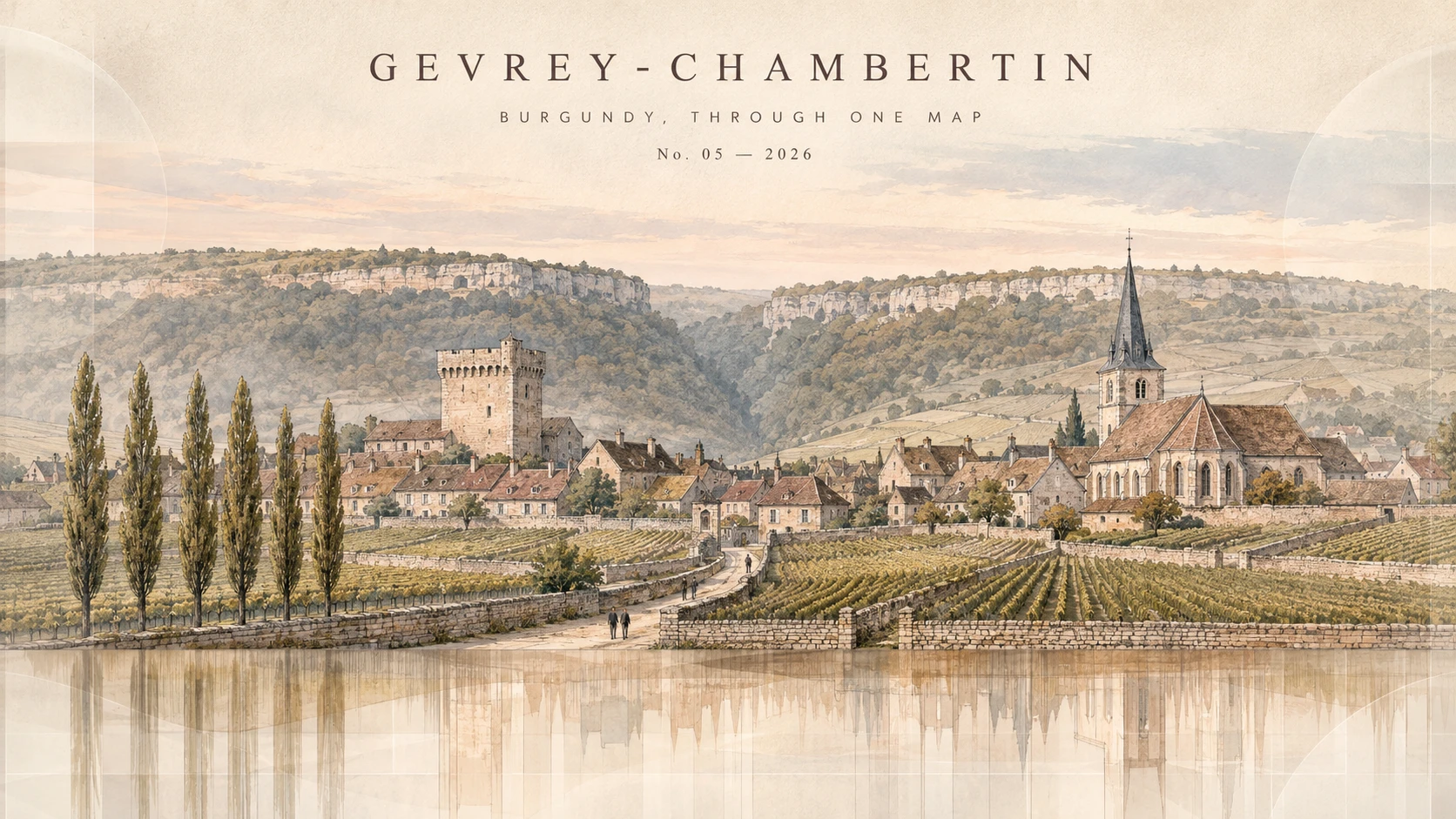
Walk through the Côte de Nuits, and something becomes clear. Gevrey-Chambertin, Chambolle-Musigny — many villages carry long, hyphenated names. Trace where this custom began, and it leads to two neighboring vineyards and a single village. The vineyards are named Chambertin and Clos de Bèze. A village taking both these vineyard names entirely as its own — that was the first step toward a shape that many Burgundy village names share today.
| Item | Details |
|---|---|
| Name of the climats | Chambertin / Chambertin-Clos de Bèze |
| Commune / district | Gevrey-Chambertin (Côte de Nuits) |
| Classification | Both Grand Cru / AOC recognized July 31, 1937 |
| Area | Chambertin approx. 13 hectares / Clos de Bèze approx. 15 hectares |
| Milestone years | 7th century (land is said to have been granted to the Abbey of Bèze, in a donation said to date to around 630) / 1219 (the Abbey of Bèze sells Clos de Bèze to the canons of Langres) / 1847 (the village of Gevrey adds “Chambertin” to its name) / July 31, 1937 (recognized as Grand Cru AOC) |
| For reference | Grape variety 100% Pinot Noir / red wine only |
Clos de Bèze, the Starting Point
Records of vines taking root in Gevrey reach far back. In the 7th century, Amalgaire, Duke of Burgundy, is said to have granted land in this area to the Abbey of Bèze, in a donation said to date to around 630. Monks cleared the land and planted vines there. This became “Clos de Bèze” — one of the oldest vineyard records to survive in Burgundy. In 1219, the Abbey of Bèze sold the vineyard to the canons of Langres, and it remained a vineyard afterward.
Another Name Is Born in the Field Next Door
Next to Clos de Bèze, a man named Bertin is said to have held a field of his own. If good wine could come from the monks’ land, Bertin reasoned, it should come from his field too — and so, the story goes, he planted vines on the adjoining plot. That field came to be called “Champ de Bertin” (Bertin’s field), later shortened to “Chambertin,” according to tradition. The name already appears in written form by then: as “Campo Bertyun” in a document of 1219, and as “Champ Berthin” in a record of 1584. After Bertin’s death, the monks are said to have taken over his field, and the two neighboring vineyards — Clos de Bèze and Chambertin — came to be known side by side.
1847: The Village Takes the Vineyard’s Name
Taking a vineyard’s name and making it entirely the village’s own — Gevrey was the first to do this. In 1847, by royal authorization from King Louis-Philippe, the village added “Chambertin” to its own name, becoming “Gevrey-Chambertin.” This precedent became a template that villages across the Côte d’Or followed one after another. The neighboring village of Vosne added the name Romanée to become Vosne-Romanée; the villages of Puligny and Chassagne both added the name Montrachet; and Chambolle added the name Musigny. This is where the pattern begins that gives so many Burgundy village names their long, hyphenated form today.
Chambertin and Clos de Bèze Today
The Emperor Napoleon is said to have had this wine transported with him on his travels and campaigns. The two vineyards behind the name remained side by side, each keeping its own identity. Clos de Bèze and Chambertin were each recognized as an independent Grand Cru AOC on July 31, 1937.
Nearly 1,400 years have passed since the monks of the Abbey of Bèze first cleared this land. From one vineyard borrowing part of a neighbor’s name, to a village taking that name entirely as its own — the name Chambertin spread, little by little, from field to field, and from field to the village of Gevrey itself.
Three Facts Worth Knowing
- The name “Chambertin” is said to come from “Champ de Bertin” (Bertin’s field), belonging to a man named Bertin who grew vines beside the neighboring vineyard, Clos de Bèze. After Bertin’s death, tradition holds that the monks took over his field.
- In 1847, the village of Gevrey obtained royal authorization from King Louis-Philippe to add “Chambertin” to its own name. This first step of turning a vineyard’s name into a village’s name became a template that villages across the Côte d’Or followed, including Vosne-Romanée and Chambolle-Musigny.
- The Emperor Napoleon is said to have had this wine transported with him on his travels and campaigns. The two vineyards behind the name — Chambertin and Clos de Bèze — remain independent Grand Crus to this day, each recognized as AOC in 1937.
In this series
เมื่อเดินไปตามโกต เดอ นุยส์ (Côte de Nuits) จะสังเกตเห็นสิ่งหนึ่ง หมู่บ้านหลายแห่งมีชื่อยาวที่เชื่อมกันด้วยเครื่องหมายขีดกลาง เช่น เฌอเวรย์-ชองแบร์แต็ง (Gevrey-Chambertin), ชองโบล-มูซินยี (Chambolle-Musigny) หากย้อนรอยดูว่าธรรมเนียมนี้เริ่มต้นจากที่ใด จะพบไร่องุ่นสองผืนที่อยู่ติดกัน และหมู่บ้านหนึ่งแห่ง ไร่องุ่นทั้งสองมีชื่อว่าชองแบร์แต็งและโกล เดอ แบซ (Clos de Bèze) การที่หมู่บ้านนำชื่อไร่องุ่นทั้งสองมาเป็นชื่อของตนเองทั้งหมด — นั่นคือก้าวแรกของรูปแบบที่ชื่อหมู่บ้านจำนวนมากในบูร์กอญมีร่วมกันในปัจจุบัน
| รายการ | รายละเอียด |
|---|---|
| ชื่อไร่ (climat) | Chambertin (ชองแบร์แต็ง) / Chambertin-Clos de Bèze (ชองแบร์แต็ง-โกล เดอ แบซ) |
| หมู่บ้าน/เขต | เฌอเวรย์-ชองแบร์แต็ง (Gevrey-Chambertin เขตโกต เดอ นุยส์) |
| การจัดระดับ | ทั้งสองเป็นแกรนด์ครู (Grand Cru) / ได้รับการรับรอง AOC เมื่อวันที่ 31 กรกฎาคม 1937 |
| พื้นที่ | ชองแบร์แต็งประมาณ 13 เฮกตาร์ / โกล เดอ แบซประมาณ 15 เฮกตาร์ |
| ปีสำคัญ | ศตวรรษที่ 7 (กล่าวกันว่าราวปี 630 มีการถวายที่ดินแก่อารามแบซ) / ปี 1219 (อารามแบซขายโกล เดอ แบซให้แก่คณะสงฆ์แห่งล็องกร์) / ปี 1847 (หมู่บ้านเฌอเวรย์เพิ่มชื่อ “ชองแบร์แต็ง” เข้ากับชื่อหมู่บ้าน) / 31 กรกฎาคม 1937 (ได้รับการรับรองเป็นแกรนด์ครู AOC) |
| ข้อมูลอ้างอิง | พันธุ์องุ่น ปิโนต์ นัวร์ 100% / ผลิตเฉพาะไวน์แดง |
จุดเริ่มต้นที่โกล เดอ แบซ
บันทึกการปลูกองุ่นในย่านเฌอเวรย์ย้อนไปได้ไกล ในศตวรรษที่ 7 กล่าวกันว่าดยุกแห่งบูร์กอญ อามาลแกร์ (Amalgaire) ได้ถวายที่ดินในย่านนี้แก่อารามแบซ (abbaye de Bèze) โดยกล่าวกันว่าปีที่ถวายอยู่ราวปี 630 พระในอารามได้แผ้วถางที่ดินและปลูกองุ่นลงไป ผืนดินนั้นกลายเป็น “โกล เดอ แบซ” ซึ่งเป็นหนึ่งในบันทึกไร่องุ่นที่เก่าแก่ที่สุดเท่าที่หลงเหลืออยู่ในบูร์กอญ ไร่แห่งนี้ถูกขายให้แก่คณะสงฆ์แห่งล็องกร์ (Langres) ในปี 1219 และยังคงเป็นไร่องุ่นสืบต่อมา
อีกชื่อหนึ่งถือกำเนิดขึ้นในไร่ข้างเคียง
กล่าวกันว่าข้างไร่โกล เดอ แบซ มีชายคนหนึ่งชื่อแบร์แต็ง (Bertin) เป็นเจ้าของที่ดินอยู่ แบร์แต็งคิดว่าหากที่ดินของพระในอารามให้ไวน์ที่ดีได้ ที่ดินของตนก็น่าจะให้ไวน์ที่ดีได้เช่นกัน จึงปลูกองุ่นลงในที่ดินติดกันนั้น ที่ดินผืนนั้นถูกเรียกว่า “ไร่ของแบร์แต็ง (Champ de Bertin)” และต่อมาก็ย่อลงจนกลายเป็น “ชองแบร์แต็ง” ตามเรื่องเล่าที่สืบต่อกันมา ชื่อนี้ปรากฏเป็นลายลักษณ์อักษรแล้วในเอกสารปี 1219 ในรูป “Campo Bertyun” และในบันทึกปี 1584 ในรูป “Champ Berthin” กล่าวกันว่าหลังจากแบร์แต็งเสียชีวิต พระในอารามได้รับช่วงดูแลที่ดินผืนนั้นต่อ และไร่องุ่นสองผืนที่อยู่ติดกัน — โกล เดอ แบซและชองแบร์แต็ง — ก็เริ่มเป็นที่รู้จักคู่กันมาตั้งแต่นั้น
ปี 1847 หมู่บ้านใช้ชื่อไร่องุ่นเป็นชื่อตน
การนำชื่อไร่องุ่นมาเป็นชื่อหมู่บ้านทั้งหมด — เฌอเวรย์เป็นหมู่บ้านแรกที่ทำเช่นนี้ ในปี 1847 ด้วยพระบรมราชานุญาตจากพระเจ้าหลุยส์-ฟิลิปป์ (Louis-Philippe) หมู่บ้านได้เพิ่มชื่อ “ชองแบร์แต็ง” เข้ากับชื่อของตน กลายเป็น “เฌอเวรย์-ชองแบร์แต็ง” แบบอย่างนี้กลายเป็นรูปแบบที่หมู่บ้านต่าง ๆ ในโกตดอร์ (Côte d’Or) ทำตามกันมาทีละแห่ง หมู่บ้านโวสน (Vosne) ที่อยู่ใกล้กันเพิ่มชื่อโรมาเน (Romanée) กลายเป็นโวสน-โรมาเน หมู่บ้านปูลิญี (Puligny) และชาซาญ (Chassagne) ต่างก็เพิ่มชื่อมงราเช (Montrachet) เข้ากับชื่อของตน ส่วนหมู่บ้านชองโบล (Chambolle) ก็เพิ่มชื่อมูซินยี (Musigny) นี่คือจุดเริ่มต้นของรูปแบบที่ทำให้ชื่อหมู่บ้านจำนวนมากในบูร์กอญมีชื่อยาวที่เชื่อมด้วยเครื่องหมายขีดกลางอยู่จนถึงทุกวันนี้
ชองแบร์แต็งและโกล เดอ แบซในปัจจุบัน
กล่าวกันว่าจักรพรรดินโปเลียนทรงให้ขนไวน์ชนิดนี้ไปด้วยทั้งในการเดินทางและการทัพ ไร่องุ่นทั้งสองผืนที่เป็นที่มาของชื่อนี้ยังคงอยู่ติดกันต่อมา แต่ละผืนยังคงรักษาชื่อของตนเองไว้ โกล เดอ แบซและชองแบร์แต็งต่างได้รับการรับรองเป็นแกรนด์ครูอิสระจากกัน เมื่อวันที่ 31 กรกฎาคม 1937
นับจากพระในอารามแบซเริ่มแผ้วถางผืนดินนี้ เวลาผ่านไปแล้วเกือบ 1,400 ปี จากไร่หนึ่งที่ยืมชื่อบางส่วนจากไร่ข้างเคียง จนถึงหมู่บ้านที่รับชื่อนั้นมาเป็นของตนเองทั้งหมด — ชื่อชองแบร์แต็งได้แผ่ขยายออกไปทีละน้อย จากไร่หนึ่งสู่อีกไร่หนึ่ง และจากไร่องุ่นสู่หมู่บ้านเฌอเวรย์เอง
3 เรื่องที่รู้แล้วเล่าต่อได้
- กล่าวกันว่าชื่อ “ชองแบร์แต็ง” (Chambertin) มาจาก “ไร่ของแบร์แต็ง (Champ de Bertin)” ของชายคนหนึ่งชื่อแบร์แต็งที่ปลูกองุ่นข้างไร่โกล เดอ แบซ เล่ากันว่าหลังจากแบร์แต็งเสียชีวิต พระในอารามได้รับช่วงดูแลที่ดินผืนนั้นต่อ
- ในปี 1847 หมู่บ้านเฌอเวรย์ได้รับพระบรมราชานุญาตจากพระเจ้าหลุยส์-ฟิลิปป์ให้เพิ่มชื่อ “ชองแบร์แต็ง” เข้ากับชื่อหมู่บ้านของตน ก้าวแรกของการนำชื่อไร่องุ่นมาเป็นชื่อหมู่บ้านนี้ กลายเป็นแบบอย่างที่หมู่บ้านต่าง ๆ ในโกตดอร์ทำตาม รวมถึงโวสน-โรมาเนและชองโบล-มูซินยี
- กล่าวกันว่าจักรพรรดินโปเลียนทรงให้ขนไวน์ชนิดนี้ไปด้วยทั้งในการเดินทางและการทัพ ไร่องุ่นทั้งสองผืนที่เป็นที่มาของชื่อนี้ — ชองแบร์แต็งและโกล เดอ แบซ — ยังคงเป็นแกรนด์ครูอิสระจากกันจนถึงทุกวันนี้ โดยต่างได้รับการรับรอง AOC ในปี 1937
ลิงก์ในชุดเรื่อง
コート・ド・ニュイを歩くと、気づくことがある。ジュヴレ・シャンベルタン、シャンボール・ミュジニー—多くの村が、ハイフンでつながった長い名前を持っている。この作法がどこから始まったのか、たどっていくと、隣り合う二つの畑と、一つの村にたどり着く。畑の名は、シャンベルタンとクロ・ド・ベーズ。この二つの畑の名を、村がまるごと自分のものにした—それが、今日のブルゴーニュの村名の多くに共通する形の、最初の一歩だった。
| 項目 | 内容 |
|---|---|
| 畑の名称 | Chambertin(シャンベルタン)/Chambertin-Clos de Bèze(シャンベルタン・クロ・ド・ベーズ) |
| 村・地区 | ジュヴレ・シャンベルタン村(コート・ド・ニュイ地区) |
| 格付け | ともにグラン・クリュ(特級)/AOC認定 1937年7月31日 |
| 面積 | シャンベルタン 約13ヘクタール/クロ・ド・ベーズ 約15ヘクタール |
| 節目の年 | 7世紀(630年頃とされる、ベーズ修道院への土地寄進と伝わる)/1219年(ベーズ修道院がクロ・ド・ベーズをラングル参事会に売却)/1847年(ジュヴレ村が村名に「シャンベルタン」を追加)/1937年7月31日(グラン・クリュとしてAOC認定) |
| 参考 | ぶどう品種 ピノ・ノワール100%/赤ワインのみ |
クロ・ド・ベーズという出発点
ジュヴレの地に葡萄が根づいた記録は、古くまでさかのぼる。7世紀、ブルゴーニュ公アマルゲールがこの地の土地をベーズ修道院に寄進したと伝えられ、その年は630年頃とされる。修道士たちはこの土地を開墾し、葡萄を植えた。それが「クロ・ド・ベーズ」—ブルゴーニュに残る畑の記録のなかでも、最も古い部類に入る。この畑は1219年、ベーズ修道院からラングル参事会に売却され、その後も葡萄畑であり続けた。
隣の畑に、もう一つの名前が生まれた
クロ・ド・ベーズの隣には、ベルタンという人物が畑を持っていたと伝えられる。修道士たちと同じ土地から良いワインができるなら、自分の畑からもできるはずだ—そう考えたベルタンは、隣接する土地に葡萄を植えた。その畑は「ベルタンの畑(Champ de Bertin)」と呼ばれ、のちに縮まって「シャンベルタン」になった、という言い伝えが残る。この呼び名は、1219年の文書に「Campo Bertyun」、1584年の記録には「Champ Berthin」という形ですでに残っている。ベルタンの死後、畑は修道士たちが引き継いだと伝えられ、隣り合う二つの畑—クロ・ド・ベーズとシャンベルタン—は、並んでその名を知られるようになっていった。
1847年、村が畑の名を名乗った
畑の名を、村がまるごと自分の名前にする—この方式を最初に採ったのが、ジュヴレ村だった。1847年、国王ルイ・フィリップの勅許により、村は自らの村名に「シャンベルタン」を加え、「ジュヴレ・シャンベルタン」となった。この前例は、コート・ドールの村々が次々と追随する型になった。隣村ヴォーヌはロマネの名を加えてヴォーヌ・ロマネに、ピュリニー村とシャサーニュ村はともにモンラッシェの名を、シャンボール村はミュジニーの名を、それぞれ自らの村名に迎え入れていった。今日、ブルゴーニュの村名の多くがハイフンでつながった長い名前を持つのは、この1847年の一歩に始まる。
今日のシャンベルタンとクロ・ド・ベーズ
皇帝ナポレオンは、旅にも遠征にも、このワインを運ばせたと伝えられる。名の由来となった二つの畑は、その後も隣り合ったまま、それぞれの名前を保ち続けた。クロ・ド・ベーズとシャンベルタンは、1937年7月31日、それぞれ独立したグラン・クリュとしてAOC認定されている。
ベーズ修道院の修道士たちがこの土地を開墾してから、1400年近く。隣の畑がその名の一部を借り、村がその名をまるごと引き受けるまで—シャンベルタンという名前は、畑から畑へ、そして畑からジュヴレという村そのものへと、少しずつ広がっていった。
知っておくと語れる3つ
- 「シャンベルタン」という名は、隣の畑クロ・ド・ベーズのそばで葡萄を育てていたベルタンという人物の「畑(Champ de Bertin)」に由来すると伝えられる。 ベルタンの死後、修道士たちがその畑を引き継いだという言い伝えが残る。
- 1847年、ジュヴレ村は国王ルイ・フィリップの勅許を得て、自らの村名に「シャンベルタン」を加えた。 畑の名を村名にする、この最初の一歩は、ヴォーヌ・ロマネやシャンボール・ミュジニーなど、コート・ドールの村々が次々と追随する型になった。
- 皇帝ナポレオンは、旅にも遠征にも、このワインを運ばせたと伝えられる。 名の由来となった二つの畑—シャンベルタンとクロ・ド・ベーズ—は、今もそれぞれ独立したグラン・クリュとして、1937年にAOC認定されている。