
Burgundy, Through One Map
Why Do About 80 People Now Share a Vineyard That One Abbey Walled In? — Clos de Vougeot
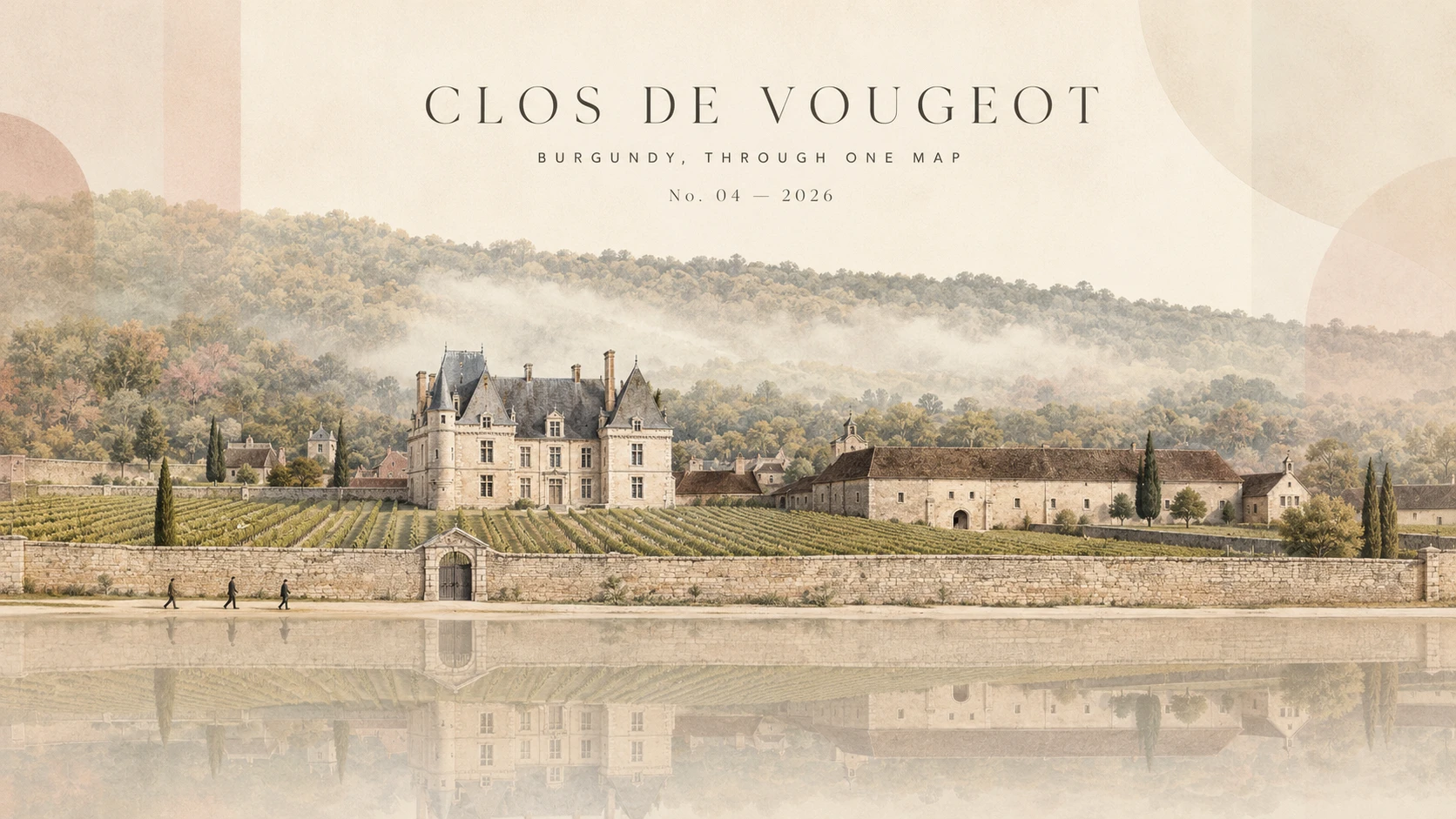
In a corner of the village of Vougeot, in the Côte de Nuits, a stone wall encircles a single vineyard. Its name is Clos de Vougeot. Its area is about 50 hectares, and the wall that surrounds it runs for about 3.3 kilometers. This wall was first built by a single abbey. The stones that enclose the vineyard were laid, generation after generation, by the hands of monks. And yet today, inside this wall, there are about 80 producers. A single abbey built this one wall — so why do so many people now hold a parcel of land within it? The answer lies in the history this vineyard passed through after the wall was completed.
| Item | Details |
|---|---|
| Name of the vineyard | Clos de Vougeot |
| Commune / district | Vougeot (Côte de Nuits) |
| Classification | Grand Cru / AOC recognized July 31, 1937 |
| Form of ownership | Long held as a single property from its founding / gradually divided from the late 19th century onward / today shared among about 80 owners |
| Milestone years | 1098 (founding of the Abbey of Cîteaux) / 12th century (the monks begin gathering the vineyard) / around the 14th century (the wall is said to have taken roughly its present form) / 1551 (a Renaissance-style manor is added) / 1790 (confiscation in the French Revolution) / 1944 (the château becomes the seat of the Confrérie des Chevaliers du Tastevin) |
| For reference | Area approx. 50 hectares / wall approx. 3.3 kilometers in length / a single vineyard enclosed by a single wall |
The Monks Gathered the Vineyard and Built the Wall
In 1098, the Abbey of Cîteaux was founded by Robert of Molesme and others. The Cistercian monks of this abbey are said to have gradually gathered vineyard plots around the village of Vougeot over the course of the 12th century, through donations from the nobility of Burgundy and through purchases made by the abbey itself. To bring these gathered parcels together as one, the monks enclosed them with a stone wall. The French word “clos” means “enclosed land,” and this is the reason the vineyard came to be called “Clos de Vougeot.” The wall was built in stages from the 12th through the 14th century, and is said to have taken roughly its present form around 1336. The wall that survives today runs for about 3.3 kilometers, and its line still corresponds closely to today’s AOC boundary.
A Place for Winemaking Was Also Built Here
The monks did not stop at enclosing the vineyard; they also built winemaking facilities on this land. Inside the wall, buildings for pressing grapes, making wine, and storing it are said to have been put in place over the course of successive generations. In 1551, Dom Jean Loisier, then abbot of Cîteaux, added a Renaissance-style manor to the site. Both the wall and the buildings speak to the length of time the monks devoted to this land.
The Revolution Changed the Owner, but the Vineyard Was Still One
In 1789, the French Revolution set in motion the confiscation of Church property. The estate of the Abbey of Cîteaux, including Clos de Vougeot, was not spared. In February 1790, the abbey and its vast estate were confiscated and declared national property. The vineyard is then said to have been put up for auction as a single lot. At this point, the vineyard still belonged to a single owner — it would be some time yet before the land inside the wall was first divided among multiple hands.
Inheritance and Sale Divided One Vineyard Among About 80
Even after the Revolution, ownership of the vineyard changed hands several times, but from the close of the 19th century into the 20th, each round of inheritance and sale gradually divided what had once been a single vineyard among an increasing number of owners. The château, too, fell into disrepair by the late 19th century before being restored by a private owner, and it continued to pass through individual hands into the 20th century. But the fragmentation of the vineyard itself did not stop there, and today about 80 people each hold their own parcel within this one wall. The wall remains one, and the name of the vineyard remains one, even as the number of owners kept growing — the wall the monks built still holds all of them within the same boundary.
Today, the Château Is the Seat of the Confrérie des Chevaliers du Tastevin
Apart from the vineyard itself, the château had one more turning point in its history. In 1944, the château came into the ownership of an association called the “Friends of the Château du Clos de Vougeot,” which granted a long-term right of use to an organization founded in 1934 to safeguard the reputation of the wines of Burgundy, the Confrérie des Chevaliers du Tastevin. The château has been its seat ever since. The vineyard enclosed by the wall came to be divided among about 80 hands, while the château that once watched over it became the seat of a single organization — different as their paths were, both are things built on this land that are still in use today.
Three Facts Worth Knowing
- The French word “clos” means “land enclosed by a wall.” The wall around Clos de Vougeot was built by Cistercian monks between the 12th and 14th centuries and runs for about 3.3 kilometers. Its line still corresponds closely to today’s AOC boundary.
- When the French Revolution confiscated the property of the Abbey of Cîteaux, the vineyard still belonged to a single owner. It was the accumulation of inheritances and sales from the close of the 19th century into the 20th that divided the vineyard among multiple owners; today, about 80 people each hold a parcel within this one wall.
- In 1944, the château came under the ownership of the “Friends of the Château du Clos de Vougeot” and became the seat of the Confrérie des Chevaliers du Tastevin, an organization founded in 1934. The vineyard within the wall came to be divided among about 80 owners, while the château that watched over it continues today as the seat of a single organization.
In this series
ที่มุมหนึ่งของหมู่บ้านวูโฌ (Vougeot) ในเขตโกต เดอ นุยส์ (Côte de Nuits) มีกำแพงหินแนวหนึ่งล้อมรอบไร่องุ่นทั้งผืนเอาไว้ ชื่อของที่นี่คือ โกล เดอ วูโฌ (Clos de Vougeot) มีเนื้อที่ราว 50 เฮกตาร์ และกำแพงที่ล้อมรอบมีความยาวรวมราว 3.3 กิโลเมตร ผู้ที่ก่อกำแพงนี้ขึ้นเป็นครั้งแรกคืออารามเพียงแห่งเดียว ก้อนหินที่เรียงกันล้อมรอบไร่องุ่นนี้ ล้วนมาจากน้ำมือของพระในอารามหลายชั่วอายุคน แต่ทุกวันนี้ ภายในกำแพงแห่งนี้กลับมีผู้ผลิตอยู่ราว 80 ราย อารามเพียงแห่งเดียวเป็นผู้ก่อกำแพงนี้ขึ้น แล้วเหตุใดปัจจุบันจึงมีคนมากมายถือครองที่ดินอยู่ภายในนั้น คำตอบอยู่ในประวัติศาสตร์ที่ไร่องุ่นแห่งนี้ผ่านพบมา หลังจากกำแพงสร้างเสร็จ
| รายการ | รายละเอียด |
|---|---|
| ชื่อไร่องุ่น | Clos de Vougeot (โกล เดอ วูโฌ) |
| หมู่บ้าน/เขต | หมู่บ้านวูโฌ (Vougeot เขตโกต เดอ นุยส์) |
| การจัดระดับ | แกรนด์ครู (Grand Cru) / ได้รับการรับรอง AOC เมื่อวันที่ 31 กรกฎาคม 1937 |
| รูปแบบการถือครอง | นับแต่ก่อตั้งเป็นกรรมสิทธิ์เดียวมาอย่างยาวนาน / ตั้งแต่ปลายศตวรรษที่ 19 ค่อย ๆ ถูกแบ่งออก / ปัจจุบันมีผู้ถือครองราว 80 ราย |
| ปีสำคัญ | ปี 1098 (ก่อตั้งอารามซีโต) / ศตวรรษที่ 12 (พระในอารามเริ่มรวบรวมไร่องุ่น) / ราวศตวรรษที่ 14 (กำแพงมีรูปทรงใกล้เคียงปัจจุบัน ตามที่กล่าวกัน) / ปี 1551 (ต่อเติมคฤหาสน์สไตล์เรอเนซองส์) / ปี 1790 (ถูกยึดในช่วงปฏิวัติฝรั่งเศส) / ปี 1944 (ปราสาทกลายเป็นที่ตั้งของ Confrérie des Chevaliers du Tastevin) |
| ข้อมูลอ้างอิง | พื้นที่ประมาณ 50 เฮกตาร์ / กำแพงยาวรวมประมาณ 3.3 กิโลเมตร / ไร่องุ่นผืนเดียวที่ล้อมรอบด้วยกำแพงแนวเดียว |
พระในอารามรวบรวมไร่องุ่นและก่อกำแพงล้อมรอบ
ปี 1098 โรแบร์ เดอ โมแลม (Robert de Molesme) และคณะได้ก่อตั้งอารามซีโต (Abbaye de Cîteaux) ขึ้น กล่าวกันว่าพระในคณะซิสเตอร์เชียน (Cistercian) แห่งอารามนี้ค่อย ๆ รวบรวมแปลงไร่องุ่นในย่านหมู่บ้านวูโฌตลอดศตวรรษที่ 12 ผ่านการบริจาคจากขุนนางแห่งบูร์กอญและการซื้อเพิ่มเติมโดยอารามเอง เพื่อรวมแปลงที่รวบรวมมาให้เป็นผืนเดียวกัน พระเหล่านี้จึงก่อกำแพงหินล้อมรอบเอาไว้ คำว่า “clos” ในภาษาฝรั่งเศสมีความหมายว่า “ผืนดินที่ถูกล้อมด้วยกำแพง” และนี่คือที่มาของชื่อ “โกล เดอ วูโฌ” การก่อสร้างกำแพงดำเนินไปเป็นขั้นตอนตั้งแต่ศตวรรษที่ 12 จนถึงศตวรรษที่ 14 และกล่าวกันว่ามีรูปทรงใกล้เคียงกับปัจจุบันแล้วราวปี 1336 กำแพงที่หลงเหลือมาจนถึงทุกวันนี้มีความยาวรวมราว 3.3 กิโลเมตร และแนวกำแพงนี้ก็ยังคงใกล้เคียงกับเขตแดน AOC ในปัจจุบัน
สถานที่สำหรับการผลิตไวน์ก็ถูกสร้างขึ้นบนผืนดินนี้เช่นกัน
พระในอารามไม่ได้เพียงล้อมรั้วไร่องุ่นเท่านั้น แต่ยังสร้างอาคารสำหรับการผลิตไวน์ขึ้นบนผืนดินนี้ด้วย กล่าวกันว่าภายในกำแพง มีการจัดสร้างสถานที่สำหรับคั้นองุ่น หมักไวน์ และเก็บรักษาไวน์ขึ้นทีละน้อยตามกาลเวลา ในปี 1551 ดง ฌอง ลัวซีเย (Dom Jean Loisier) เจ้าอาวาสแห่งซีโตในขณะนั้น ได้ต่อเติมคฤหาสน์สไตล์เรอเนซองส์เข้ากับสถานที่แห่งนี้ ทั้งกำแพงและอาคารต่าง ๆ ล้วนบอกเล่าถึงระยะเวลาอันยาวนานที่พระในอารามทุ่มเทให้กับผืนดินแห่งนี้
การปฏิวัติเปลี่ยนตัวเจ้าของ แต่ไร่องุ่นยังคงเป็นผืนเดียว
ปี 1789 การปฏิวัติฝรั่งเศสทำให้เริ่มมีการยึดทรัพย์สินของศาสนจักร ที่ดินของอารามซีโต ซึ่งรวมถึงโกล เดอ วูโฌด้วย ก็ไม่พ้นจากเหตุการณ์นี้ ในเดือนกุมภาพันธ์ 1790 อารามและที่ดินอันกว้างใหญ่ของอารามถูกยึดและประกาศให้เป็นทรัพย์สินของรัฐ หลังจากนั้น กล่าวกันว่าไร่องุ่นถูกนำออกประมูลขายทั้งผืนในคราวเดียว ในช่วงเวลานี้ ไร่องุ่นยังคงเป็นของเจ้าของรายเดียวอยู่ — การที่พื้นที่ภายในกำแพงจะถูกแบ่งให้กับผู้ถือครองหลายรายเป็นครั้งแรกนั้น ยังต้องรออีกระยะหนึ่ง
การสืบทอดมรดกและการขายต่อทำให้ไร่องุ่นผืนเดียวถูกแบ่งเป็นราว 80 ส่วน
แม้หลังการปฏิวัติ เจ้าของไร่องุ่นก็เปลี่ยนมืออยู่หลายครั้ง แต่ตั้งแต่ปลายศตวรรษที่ 19 จนถึงศตวรรษที่ 20 ทุกครั้งที่มีการสืบทอดมรดกหรือการขายต่อซ้อนทับกัน ไร่องุ่นที่เคยเป็นผืนเดียวก็ค่อย ๆ ถูกแบ่งออกให้กับผู้ถือครองหลายรายมากขึ้นเรื่อย ๆ ส่วนปราสาทเองก็เคยทรุดโทรมลงในช่วงปลายศตวรรษที่ 19 ก่อนจะได้รับการบูรณะโดยเจ้าของเอกชน และยังคงผ่านมือเจ้าของเอกชนต่อมาอีกในศตวรรษที่ 20 แต่การแบ่งย่อยของตัวไร่องุ่นเองก็ไม่ได้หยุดลงเพียงเท่านั้น ทุกวันนี้มีคนราว 80 รายที่ต่างถือครองแปลงของตนเองอยู่ภายในกำแพงแนวเดียวนี้ กำแพงยังคงเป็นแนวเดียว ชื่อไร่องุ่นก็ยังคงเป็นชื่อเดียว มีเพียงจำนวนเจ้าของเท่านั้นที่เพิ่มขึ้นเรื่อย ๆ — กำแพงที่พระในอารามก่อขึ้นไว้ ยังคงโอบรับทุกคนไว้ภายในเขตแดนเดียวกันจนถึงทุกวันนี้
ปัจจุบัน ปราสาทแห่งนี้คือที่ตั้งของ Confrérie des Chevaliers du Tastevin
นอกเหนือจากไร่องุ่นแล้ว ตัวปราสาทเองก็มีจุดเปลี่ยนสำคัญอีกครั้งหนึ่งในประวัติศาสตร์ของมัน ปี 1944 ปราสาทตกเป็นกรรมสิทธิ์ขององค์กรหนึ่งที่ชื่อว่า “สมาคมมิตรแห่งปราสาทโกล เดอ วูโฌ” ซึ่งองค์กรนี้ได้มอบสิทธิการใช้ระยะยาวให้แก่องค์กร Confrérie des Chevaliers du Tastevin ซึ่งก่อตั้งขึ้นในปี 1934 โดยมีจุดประสงค์เพื่อปกป้องชื่อเสียงของไวน์แห่งบูร์กอญ นับแต่นั้นมา ปราสาทแห่งนี้ก็เป็นที่ตั้งขององค์กรนี้เรื่อยมา พื้นที่ไร่องุ่นภายในกำแพงถูกแบ่งออกไปอยู่ในมือคนราว 80 ราย ขณะที่ปราสาทซึ่งเฝ้ามองไร่องุ่นมาโดยตลอดกลับกลายเป็นที่ตั้งขององค์กรเพียงหนึ่งเดียว — แม้เส้นทางจะต่างกัน แต่สิ่งที่ถูกสร้างขึ้นบนผืนดินแห่งนี้ทั้งสองอย่าง ก็ยังคงถูกใช้งานอยู่จนถึงทุกวันนี้
3 เรื่องที่รู้แล้วเล่าต่อได้
- คำว่า “Clos” ในภาษาฝรั่งเศส หมายถึง “ผืนดินที่ถูกล้อมด้วยกำแพง” กำแพงที่ล้อมรอบโกล เดอ วูโฌ ถูกก่อขึ้นโดยพระคณะซิสเตอร์เชียนระหว่างศตวรรษที่ 12 ถึง 14 มีความยาวรวมราว 3.3 กิโลเมตร และแนวกำแพงนี้ก็ยังคงใกล้เคียงกับเขตแดน AOC ในปัจจุบัน
- เมื่อการปฏิวัติฝรั่งเศสยึดทรัพย์สินของอารามซีโต ไร่องุ่นแห่งนี้ยังคงเป็นของเจ้าของรายเดียวอยู่ การที่ไร่องุ่นถูกแบ่งออกให้กับผู้ถือครองหลายรายนั้น เกิดจากการสืบทอดมรดกและการขายต่อที่สะสมกันมาตั้งแต่ปลายศตวรรษที่ 19 จนถึงศตวรรษที่ 20 ทุกวันนี้มีคนราว 80 รายที่ต่างถือครองแปลงของตนเองอยู่ภายในกำแพงแนวเดียวนี้
- ปี 1944 ปราสาทตกเป็นกรรมสิทธิ์ของ “สมาคมมิตรแห่งปราสาทโกล เดอ วูโฌ” และกลายเป็นที่ตั้งขององค์กร Confrérie des Chevaliers du Tastevin ที่ก่อตั้งขึ้นในปี 1934 ไร่องุ่นภายในกำแพงถูกแบ่งออกไปอยู่ในมือผู้ถือครองราว 80 ราย ขณะที่ปราสาทซึ่งเฝ้ามองไร่องุ่นมาโดยตลอด ยังคงเป็นที่ตั้งขององค์กรเพียงหนึ่งเดียวมาจนถึงทุกวันนี้
ลิงก์ในชุดเรื่อง
ヴージョ村、コート・ド・ニュイ地区の一角に、石を積んだ壁が一つの畑をぐるりと囲んでいる。名はクロ・ド・ヴージョ。広さは約50ヘクタール、壁の全長は約3.3キロメートルにおよぶ。この壁を最初に築いたのは、一つの修道院だった。畑を囲うために積まれた石は、何世代もの修道士たちの手によるものだ。だが今、この壁の内側には、約80人の造り手がいる。一つの壁を築いたのはたった一つの修道院だったのに、なぜ今はこれほど多くの人がここに区画を持っているのか。答えは、壁が完成したあとにこの畑がたどった歴史そのものにある。
| 項目 | 内容 |
|---|---|
| 畑の名称 | Clos de Vougeot(クロ・ド・ヴージョ) |
| 村・地区 | ヴージョ村(コート・ド・ニュイ地区) |
| 格付け | グラン・クリュ(特級)/AOC認定 1937年7月31日 |
| 所有形態 | 創設から長く単一の所有/19世紀末以降、徐々に分有へ/現在は約80人が分有 |
| 節目の年 | 1098年(シトー修道院創設)/12世紀(修道士による畑の取得開始)/14世紀ごろ(壁がほぼ現在の姿に、とされる)/1551年(ルネサンス様式の館を増築)/1790年(フランス革命による没収)/1944年(城館が利き酒騎士団の本拠に) |
| 参考 | 面積 約50ヘクタール/壁の全長 約3.3キロメートル/単一の壁に囲まれた一つの畑 |
修道士たちが、畑を集めて壁を築いた
1098年、ロベール・ド・モレームらによってシトー修道院が創設された。この修道院を母体とするシトー会の修道士たちは、ブルゴーニュ貴族からの寄進と、修道院自身による買い足しを通じて、12世紀のあいだにヴージョ村の一帯で畑を少しずつ集めていった、と伝わる。集めた区画をひとつにまとめるため、修道士たちはその周囲を石壁で囲んだ。フランス語の「クロ(clos)」は「囲われた土地」を意味する言葉で、この畑が「クロ・ド・ヴージョ」と呼ばれる理由もここにある。壁の建設は12世紀から14世紀にかけて段階的に進み、1336年ごろに現在とほぼ同じ姿になった、とされる。今日に残る壁の全長は約3.3キロメートルにおよび、その線引きは今のAOCの境界とほぼ重なっている。
醸造の拠点も、この地に築かれた
修道士たちは畑を囲うだけでなく、ここに醸造のための建物も築いていった。壁の内側には、ぶどうを搾り、ワインを仕込み、貯蔵するための施設が、時代を重ねながら整えられていったと伝わる。1551年には、当時のシトー修道院長ドン・ジャン・ロワジエが、ルネサンス様式の館をこれに増築した。壁と建物、その両方が、修道士たちがこの土地に注いだ年月の長さを物語っている。
革命は所有者を変えたが、畑はまだ一つのままだった
1789年、フランス革命によって教会財産の没収が始まった。クロ・ド・ヴージョを含むシトー修道院の領地も、その対象となる。1790年2月、修道院とその広大な領地は没収され、国有財産と宣言された。その後、畑は一括のまま競売にかけられたと伝わる。この時点では、畑はまだ一つの所有者の手にあるままだった—壁の内側が、初めて複数の持ち主に分かれるのは、もう少しあとのことになる。
相続と売却が、一つの畑を約80人に分けていった
革命後も畑の所有者は何度か入れ替わったが、19世紀の終わりごろから20世紀にかけて、相続や売却が重なるたびに、一つだった畑は少しずつ複数の所有者に分けられていった。城館の方も、19世紀末に一度荒廃しかけたのち個人の手で修復され、20世紀に入ってからも個人の所有者が続いた時期がある。だが畑そのものの細分化はその後も止まらず、今では約80人が、この一つの壁の中に、それぞれ自分の区画を持っている。壁は一つ、畑の名も一つのままなのに、持ち主だけが増え続けた—修道士たちが築いた壁は、今もその全員を同じ境界の内側にとどめている。
城館は今、利き酒騎士団の本拠に
畑とは別に、城館そのものの歴史にも、もう一つの転機があった。1944年、城館は「クロ・ド・ヴージョ城館の友の会」という団体の所有となり、この団体が、ブルゴーニュワインの名声を守ることを目的として1934年に発足した団体「利き酒騎士団(Confrérie des Chevaliers du Tastevin)」に、長期の使用契約を結んだ。それ以来、城館はこの団体の本拠であり続けている。畑を囲った壁の内側は約80人の手に分かれ、畑を見守ってきた城館は一つの団体の本拠になった—形は変わっても、どちらもこの土地に築かれたものが、今なお使われ続けている。
知っておくと語れる3つ
- 「クロ(Clos)」はフランス語で「壁で囲われた土地」を意味する言葉だ。 クロ・ド・ヴージョを囲む壁は12〜14世紀にかけてシトー会の修道士たちが築いたもので、全長は約3.3キロメートル。その線引きは、今のAOCの境界とほぼ重なっている。
- フランス革命でシトー修道院の財産は没収されたが、畑はそのときはまだ一つの所有者のもとにあった。 畑が複数の持ち主に分かれていったのは、19世紀末から20世紀にかけての相続と売却の積み重ねによるもので、今では約80人がこの一つの壁の中に、それぞれの区画を持っている。
- 1944年、城館は「クロ・ド・ヴージョ城館の友の会」の所有となり、1934年発足の団体「利き酒騎士団」の本拠になった。 壁の中の畑は約80人に分かれた一方、壁を見守ってきた城館は一つの団体の拠点として今に続いている。