
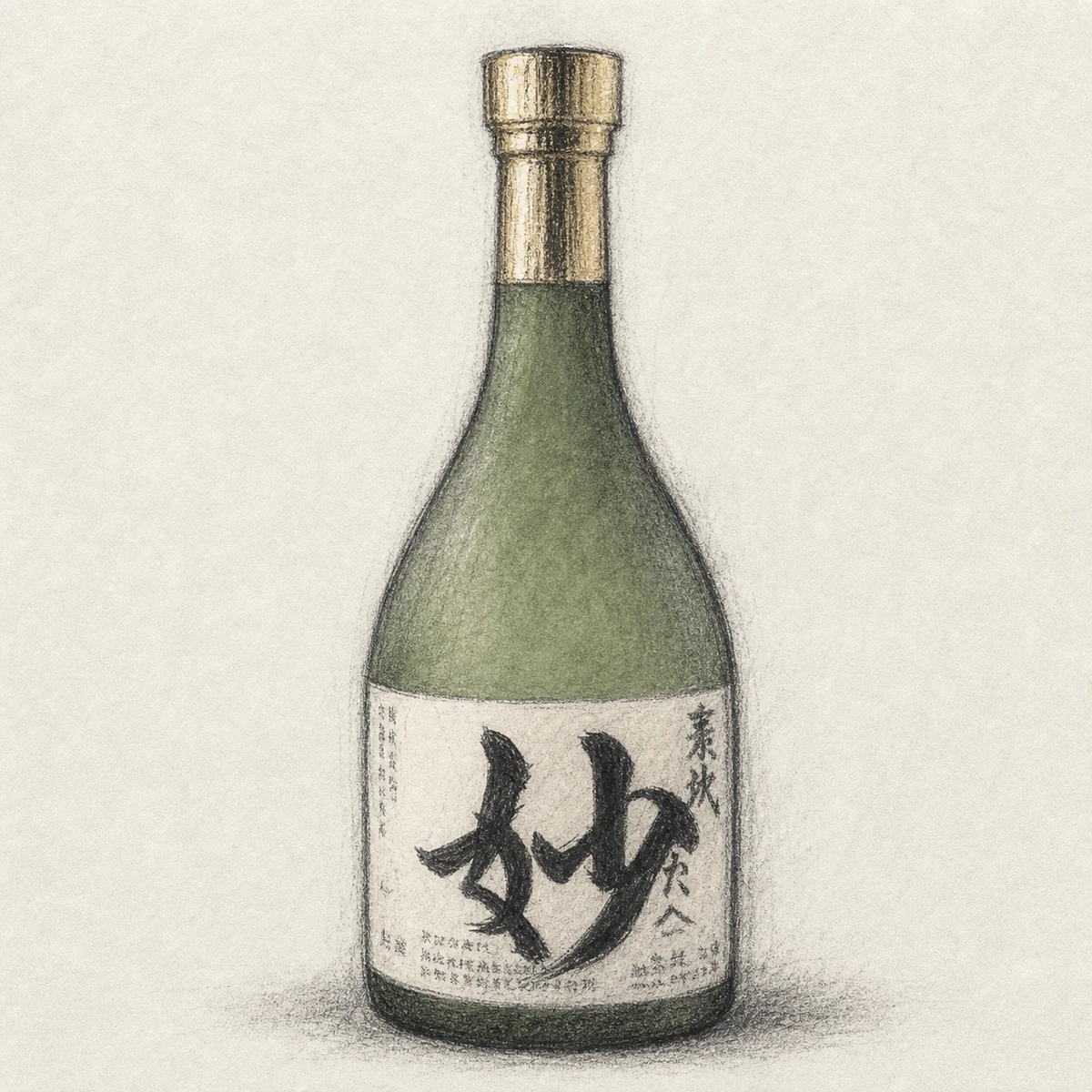
GIKYO Tahe
A multi-vintage flagship where polish and time meet.
Thailand · Product information
Product information from Bacchus Global Co., Ltd., based in Bangkok, Thailand. About Bacchus Global
The middle press, matured and blended
The middle portion of Junmai-Daiginjo is matured for at least five years at ice temperature, then blended across brewing years. The aim is not obvious age, but calm depth and continuity.
How it tastes
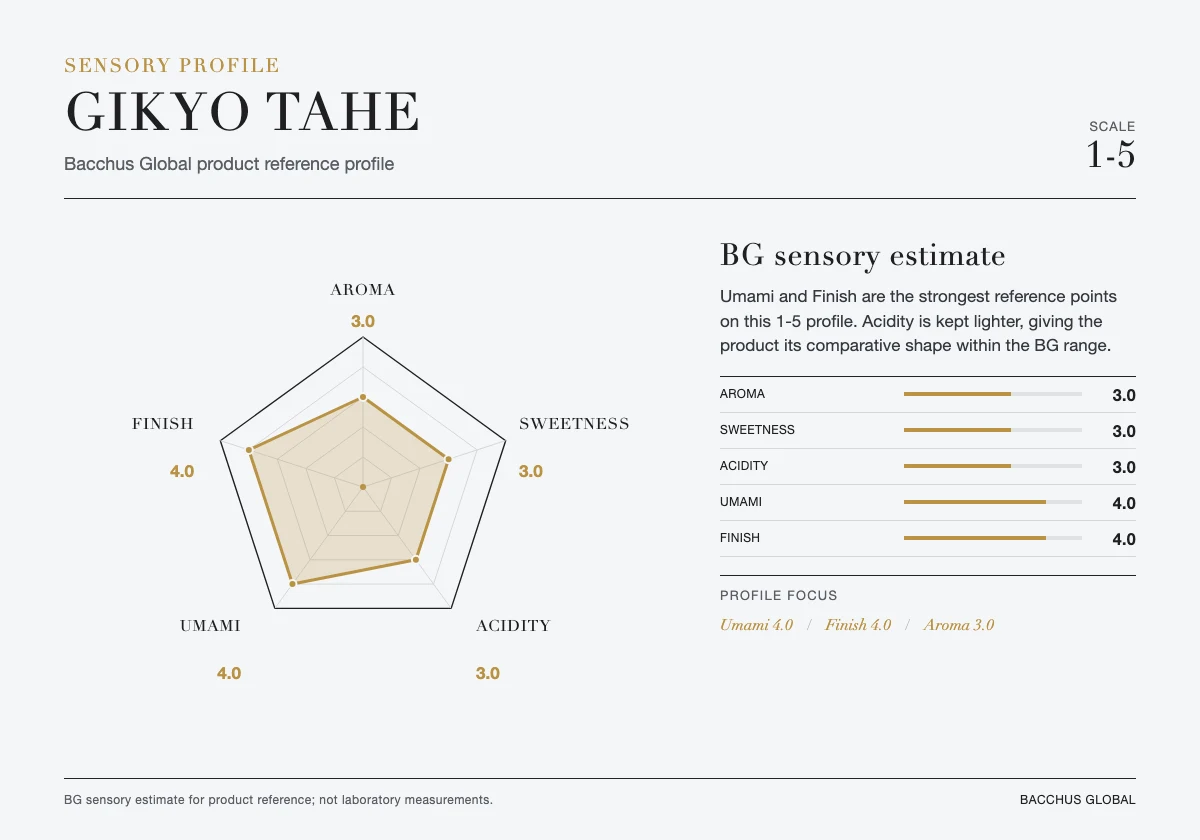
Pear, sweet apple, restrained flowers and a gentle caramel note sit over clean mineral structure, creamy texture and deep rice umami.
The creamy texture and deep rice umami stay balanced throughout.
Aisai, Aichi — rice first, time included
Yamachu Honke Shuzo works with Yamada Nishiki from the Special-A district of Tojo, Hyogo. GIKYO is built around rice umami rather than showy aroma, with careful pressing, maturation and blending used differently across the range.
Question 1
Which rice is used?
- Yamada Nishiki from Hyogo’s Tojo Special A district
- Ginginga from Iwate
- Sanuki Yoimai from Kagawa
Read the answer and explanation
Correct answer: A — Yamada Nishiki from Hyogo’s Tojo Special A district
Answer: Yamada Nishiki from Hyogo’s Tojo Special A district. The linked section gives the source detail.
Question 2
Which part of the pressed sake is selected?
- The first run
- The middle run
- The final run
Read the answer and explanation
Correct answer: B — The middle run
Answer: The middle run. The linked section gives the source detail.
Question 3
What happens after cold maturation?
- Only one brewing year is used
- Fruit juice is added
- Sakes from multiple brewing years are combined
Read the answer and explanation
Correct answer: C — Sakes from multiple brewing years are combined
Answer: Sakes from multiple brewing years are combined. The linked section gives the source detail.
At the table
- Refined sushi
- White fish and shellfish
- Dashi-led dishes
- Lightly grilled wagyu
Related products
Three routes through maturity, concentration and a lighter table-sake style — all linked in English.
Related stories
Official GIKYO product information in English.
Common questions
Q: What does “multi-vintage” mean for this sake?
A: The middle press of this Junmai-Daiginjo is matured for at least five years at ice temperature, then blended across different brewing years — rather than being bottled as a single vintage.
Q: Why is it polished to 30%?
A: A 30% polish is within the Junmai-Daiginjo range, removing more of the rice grain’s outer layers than a standard Junmai; the page attributes the resulting texture and structure (described as “clean mineral structure, creamy texture and deep rice umami”) to this combined with the extended maturation.
Q: What’s the difference between GIKYO Tahe and GIKYO Haruka?
A: Tahe is a Junmai-Daiginjo at 16% ABV, polished to 30% and matured at least five years before blending across vintages. Haruka is a Junmai at 14% ABV with a lighter, more approachable profile for everyday table use. Both share the same rice and brewery.
Interested in listing GIKYO Tahe at your restaurant or retail venue? Our team can provide information on availability, storage requirements and trade terms.

