Drink
Sake Assemblage|The Craft of Blending at Gikyo and Zaku
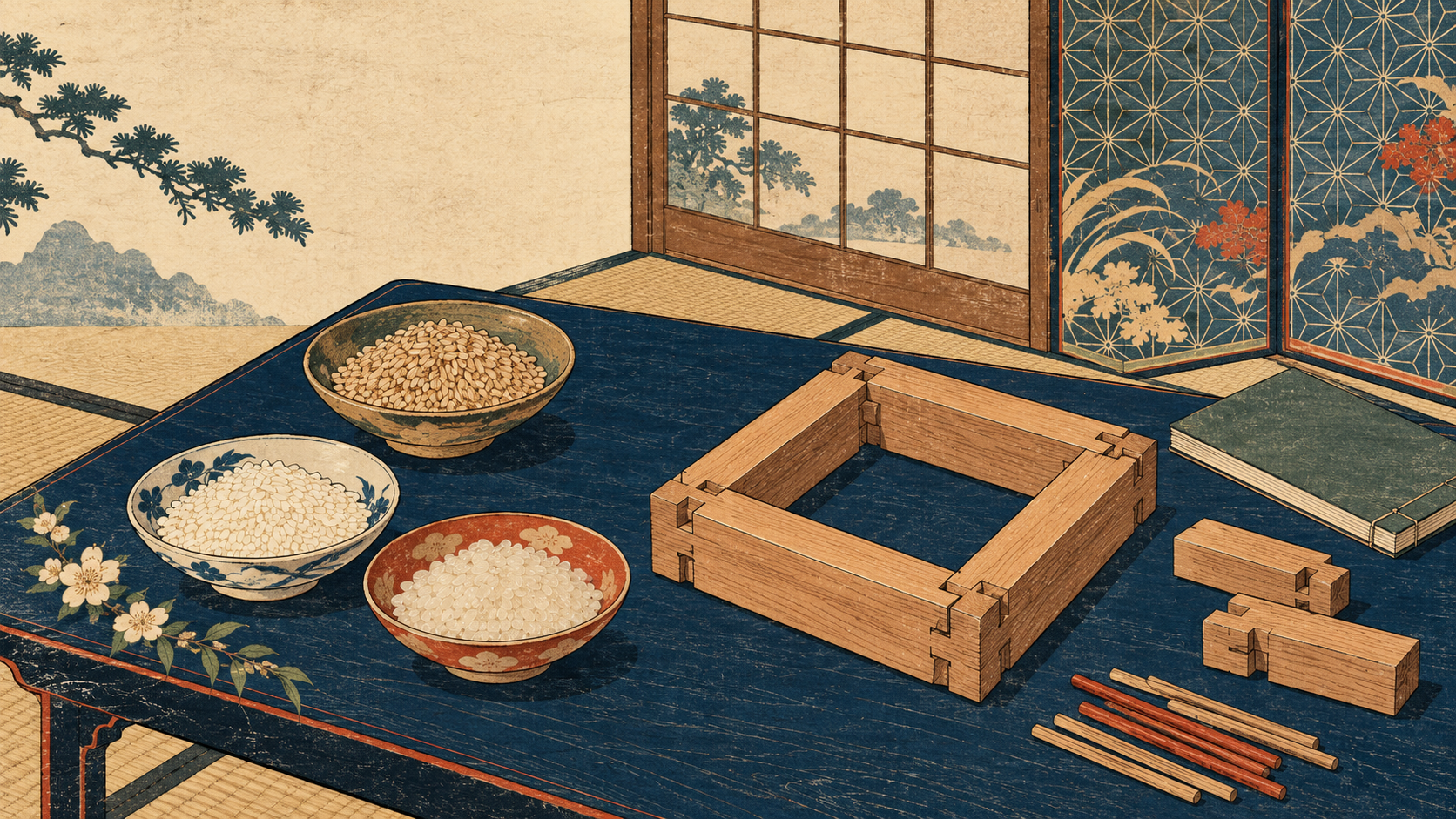
The brewer's decisions continue after the sake has been brewed. Another stage involves selecting different finished sakes, adjusting their proportions, and combining them to achieve a desired flavor profile. This technique is known as assemblage.
Gikyo's "Tahe" and "Yorokobi," alongside "ZAKU eks Edition No.1," are all blended sakes carried by Bacchus Global. What goes into each blend, and what kind of flavor is the brewer trying to achieve? Exploring these differences offers a broader perspective on the craft of sake brewing.
Building a Unified Flavor from Multiple Sakes
Assemblage is a French word meaning "assembly" or "combination." In winemaking, it refers to the technique of blending different wines. In sake production, sakes made with different rice varieties, yeast strains, brewing years, or aging conditions are combined to balance their aroma, sweetness, acidity, umami, and texture.
One example is "IWA 5," produced by Shiraiwa in Toyama Prefecture. The brewery places assemblage at the heart of its sake-making philosophy, combining sakes brewed under different conditions, including variations in rice varieties and yeast strains. In Kyoto, "Assemblage Club" brings together Masuda Tokubee Shoten, Kitagawa Honke, and Matsui Shuzo in blends that cross brewery boundaries.
Some assemblages combine sakes produced within a single brewery, while others bring together sakes from multiple breweries. The nature of the assemblage changes depending on the components selected and the desired result.
Gikyo|Blending Aged Sakes
Yamachu Honke Shuzo, located in Aisai City, Aichi Prefecture, has continued blending aged sakes under its "Gikyo" label. One product that clearly illustrates this approach is "Tahe" (妙).
Tahe uses Yamada Nishiki rice grown in the Tojo Special A district of Hyogo Prefecture, polished to a rice-polishing ratio of 30%. The resulting sake matures under refrigeration at the brewery for at least five years before sakes from different brewing years are combined. The rice-polishing ratio expresses the weight of rice remaining after polishing as a percentage of its original brown-rice weight.
"Yorokobi" (慶) is also finished by blending aged sakes. It uses Yamada Nishiki rice from the same region, polished to a 40% ratio. The blend consists of the nakagumi of Junmai Ginjo sakes aged at low temperatures for at least three years. Nakagumi is the sake collected during the middle stage of pressing.
In both of these Gikyo products, the final character is shaped by the choice of rice, the degree of polishing, and how the aged sakes are combined. Aging is a process through which sake develops and changes over time, while blending involves selecting and combining those matured sakes. Together, these two processes contribute to the completion of the finished bottle.
Zaku|Designing a Blend Around Sushi
"ZAKU eks Edition No.1" is a sake developed with the involvement of Shimizu Seizaburo Shoten, a brewery in Suzuka City, Mie Prefecture, and Yasuhiko Mitani of the sushi restaurant "Mitani" in Yotsuya, Tokyo. It was developed for sushi under the "éks" brand operated by JAPAN CRAFT SAKE COMPANY.
The starting point for its development was a subtle bitterness reminiscent of fruit. Mitani tasted existing Zaku sakes and identified "Zaku Kaizan Ittekisui Junmai Daiginjo" as close to the flavor he had in mind. This sake became the foundation for a blend with other sakes, with the aim of adjusting the intensity of sweetness and the delicacy of the flavor.
Sushi uses a variety of toppings, including white fish, lean tuna, and shellfish. How should sake complement the combination of these toppings and sushi rice with sweetness and acidity? The brewery considered blending proportions while incorporating the chef's perspective.
The process does not end once a blending ratio has been established. Master brewer Tomohiro Uchiyama explains that even when producing the same label, the blending proportions are reconsidered if the characteristics of the component sakes change. Rather than mechanically following a fixed ratio, the brewer evaluates the component sakes at that particular time and adjusts the blend accordingly. This approach highlights the role of human judgment in assemblage.
The Brewer's Judgment|The Intent Behind the Blend
Gikyo's "Tahe" and "Yorokobi" illustrate a process centered on selecting and combining aged sakes. "ZAKU eks Edition No.1" reveals a process of defining a desired flavor with sushi in mind, then developing a blend from existing sakes. These blends have different starting points.
Looking beyond rice-polishing ratios and brewing years to consider why different sakes were combined reveals the brewer's decisions after brewing. Behind a bottle lies both the technical expertise that supports fermentation and the judgment involved in selecting and combining sakes afterward. Assemblage offers a way to understand sake through both perspectives.
This article explores sake blending techniques and the production approaches behind GIKYO and ZAKU eks Edition No.1. It is intended for educational and cultural information and does not promote the purchase or consumption of alcohol. Intended for readers aged 20 and over.
บทความนี้นำเสนอข้อมูลเชิงความรู้และวัฒนธรรมเกี่ยวกับเทคนิคการเบลนด์สาเก และแนวทางการผลิตของ GIKYO และ ZAKU eks Edition No.1 มิได้มีเจตนาส่งเสริมการซื้อหรือการบริโภคเครื่องดื่มแอลกอฮอล์ สำหรับผู้อ่านอายุ 20 ปีขึ้นไป
Discover the culture behind every bottle
We share brewery stories, tasting notes and the craft of koji & fermentation — for educational and cultural purposes only.
เราถ่ายทอดเรื่องราวจากผู้ผลิต บันทึกรสชาติ และศาสตร์แห่งโคจิและการหมัก — เพื่อการศึกษาและวัฒนธรรมเท่านั้น
Follow on Instagram Facebook