
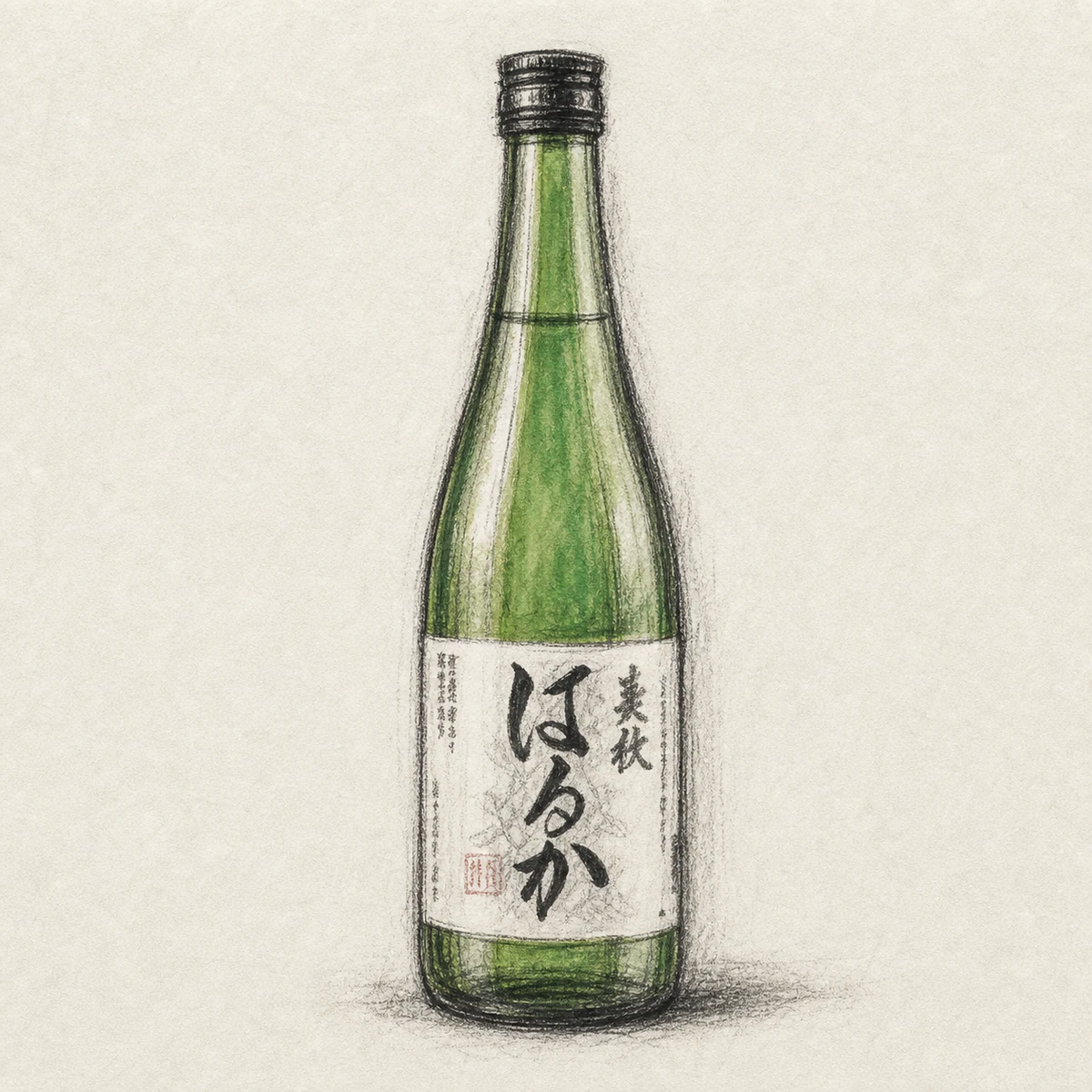
GIKYO Haruka
A lighter everyday GIKYO that keeps the rice in view.
Thailand · Product information
Product information from Bacchus Global Co., Ltd., based in Bangkok, Thailand. About Bacchus Global
The approachable edge of the range
Haruka is adjusted to a lower strength than GIKYO’s concentrated labels. It keeps Tojo Yamada Nishiki’s gentle sweetness and umami while widening the useful temperature range for table service.
How it tastes
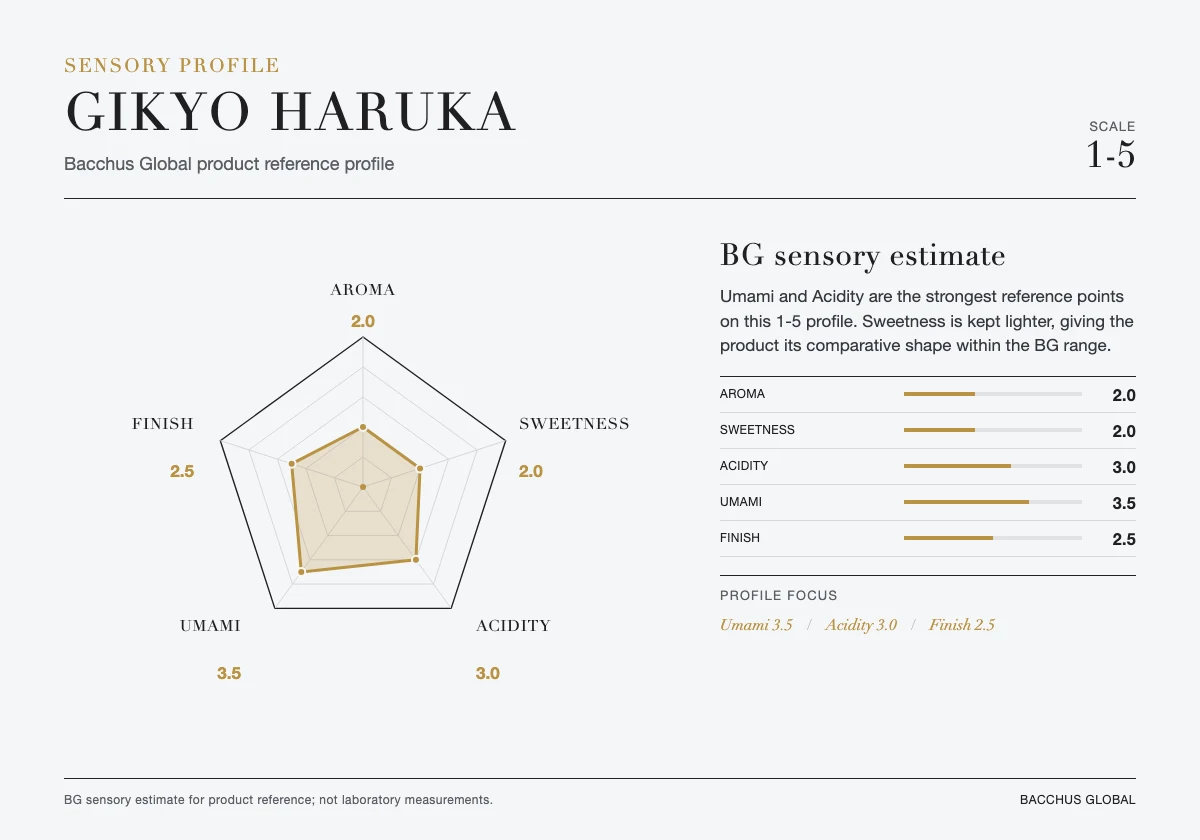
Restrained aroma, gentle rice sweetness, clear umami and flexible acidity finish softly without losing depth.
Its rice sweetness and umami stay consistent throughout.
Aisai, Aichi — rice first, time included
Yamachu Honke Shuzo works with Yamada Nishiki from the Special-A district of Tojo, Hyogo. GIKYO is built around rice umami rather than showy aroma, with careful pressing, maturation and blending used differently across the range.
Question 1
Which rice is used?
- Yamada Nishiki from Tojo Special A
- Gohyakumangoku from Fukui
- Sanuki Yoimai from Kagawa
Read the answer and explanation
Correct answer: A — Yamada Nishiki from Tojo Special A
Answer: Yamada Nishiki from Tojo Special A. The linked section gives the source detail.
Question 2
What is the alcohol content?
- 11%
- 14%
- 18%
Read the answer and explanation
Correct answer: B — 14%
Answer: 14%. The linked section gives the source detail.
Question 3
What is the rice-polishing ratio?
- 40%
- 50%
- 60%
Read the answer and explanation
Correct answer: C — 60%
Answer: 60%. The linked section gives the source detail.
At the table
- White-fleshed sashimi
- Dashi dishes
- Simmered vegetables
- Clear Thai broths
Related products
Three routes through maturity, concentration and a lighter table-sake style — all linked in English.
Related stories
Official GIKYO product information in English.
Common questions
Q: How is Haruka different from other GIKYO labels?
A: Haruka is adjusted to a lower strength (14% ABV) than GIKYO’s more concentrated labels, widening the range of table temperatures over which its flavor profile remains balanced, while keeping the same Tojo Yamada Nishiki rice base.
Q: What rice is used, and why does it matter?
A: Yamada Nishiki from the Special-A district of Tojo, Hyogo — a rice district associated with the variety’s highest classification grade.
Q: What’s the difference between GIKYO Haruka and GIKYO Tahe?
A: Haruka is a Junmai at 14% ABV with a lighter, more approachable profile for everyday table use. Tahe is a Junmai-Daiginjo at 16% ABV, polished to 30% and matured at least five years before blending — a higher-ABV, longer-aged expression. Both share the same rice and brewery.
Interested in listing GIKYO Haruka at your restaurant or retail venue? Our team can provide information on availability, storage requirements and trade terms.

