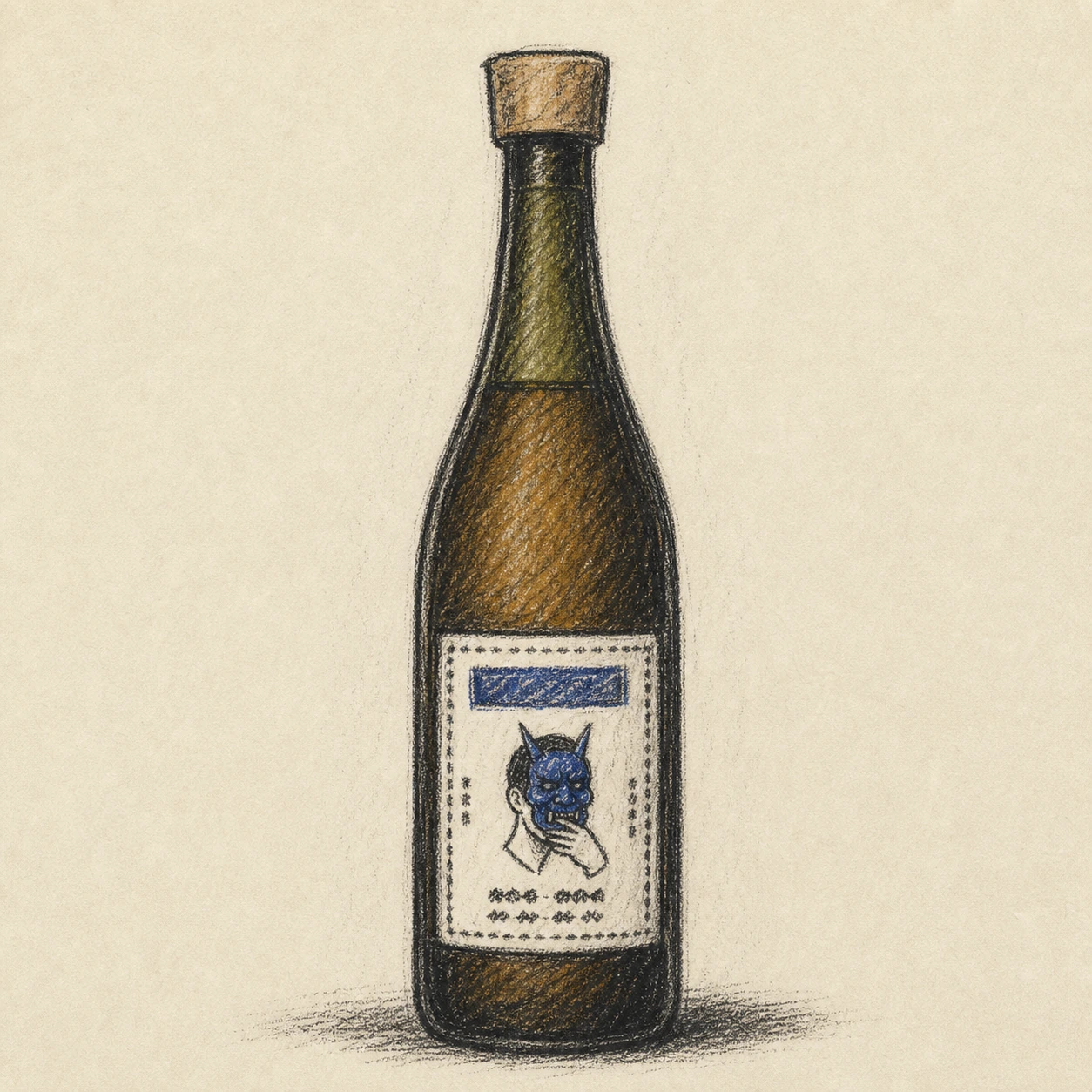
AO-ONI DRY Vermouth
Built on hon-mirin and sake and infused with wormwood, lemon, hyssop and ginger, this reimagines vermouth without grapes through rice sweetness and herbal bitterness.
Thailand · Product information
Product information from Bacchus Global Co., Ltd., based in Bangkok, Thailand. About Bacchus Global
Japanese dry vermouth
Building herbal layers on a rice foundation
Its character comes from the way the main ingredient meets the base spirit. Two choices are central to the result.
Using hon-mirin and sake
Rice-derived sweetness and savoury depth create a lower centre of gravity than wine.
Macerating botanicals separately
Wormwood anchors individually extracted ingredients, which are then layered.
Rice roundness and herbal bitterness
Lemon and ginger brightness, green hyssop and dry wormwood bitterness tighten the rice’s soft sweetness.
Japanese dry vermouth
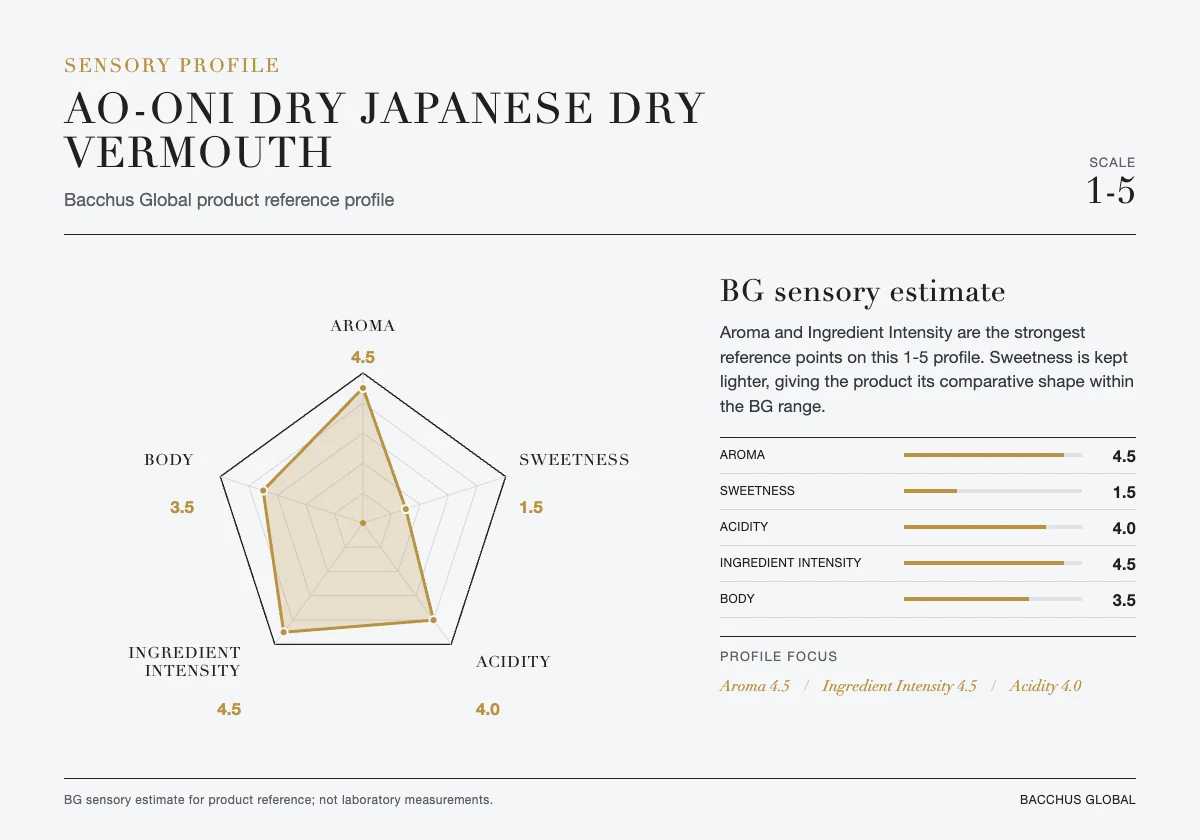
Lemon and ginger brightness, green hyssop and dry wormwood bitterness tighten the rice’s soft sweetness.
Question 1
What makes up the base?
- Hon-mirin and sake
- Only red wine
- Only barley shochu
Read the answer and explanation
Correct answer: A — Hon-mirin and sake
Hon-mirin and sake form the rice-based foundation.
Question 2
Which botanical anchors the bitterness?
- Matcha
- Wormwood
- Rose petals
Read the answer and explanation
Correct answer: B — Wormwood
Wormwood is the anchor among the botanicals.
Question 3
How are the botanicals handled?
- Only grapes are fermented
- They are used only as bottle decorations
- They are macerated separately and layered
Read the answer and explanation
Correct answer: C — They are macerated separately and layered
The botanicals are extracted individually before being brought together.
Where citrus brightness meets herbal edge
These pairings are not combinations stated officially by the producer; they are a reading drawn from the characteristics recorded on this product page.
This pairing rationale draws on the following reference books: Following the acid-insertion concept in “Logical Pairing,” citrus acidity works to balance richness in a dish; “Food Pairing Encyclopedia” notes ginger shares an aroma family with citrus and lemongrass, and “The Science of Food Pairing” frames citrus and ginger brightness as resonating readily with seafood aromas.
Kanegasaki Herb Liqueur Distillery in Kanegasaki, Iwate
Kanegasaki Herb Liqueur Distillery is based in Kanegasaki, Iwate. For this liqueur, it brings ingredient selection and established production craft together in a distinctly Japanese expression.
Related products
Only directly relevant products and Bacchus Global stories are shown.
Related product information
Contact Bacchus Global for product documentation and trade information.