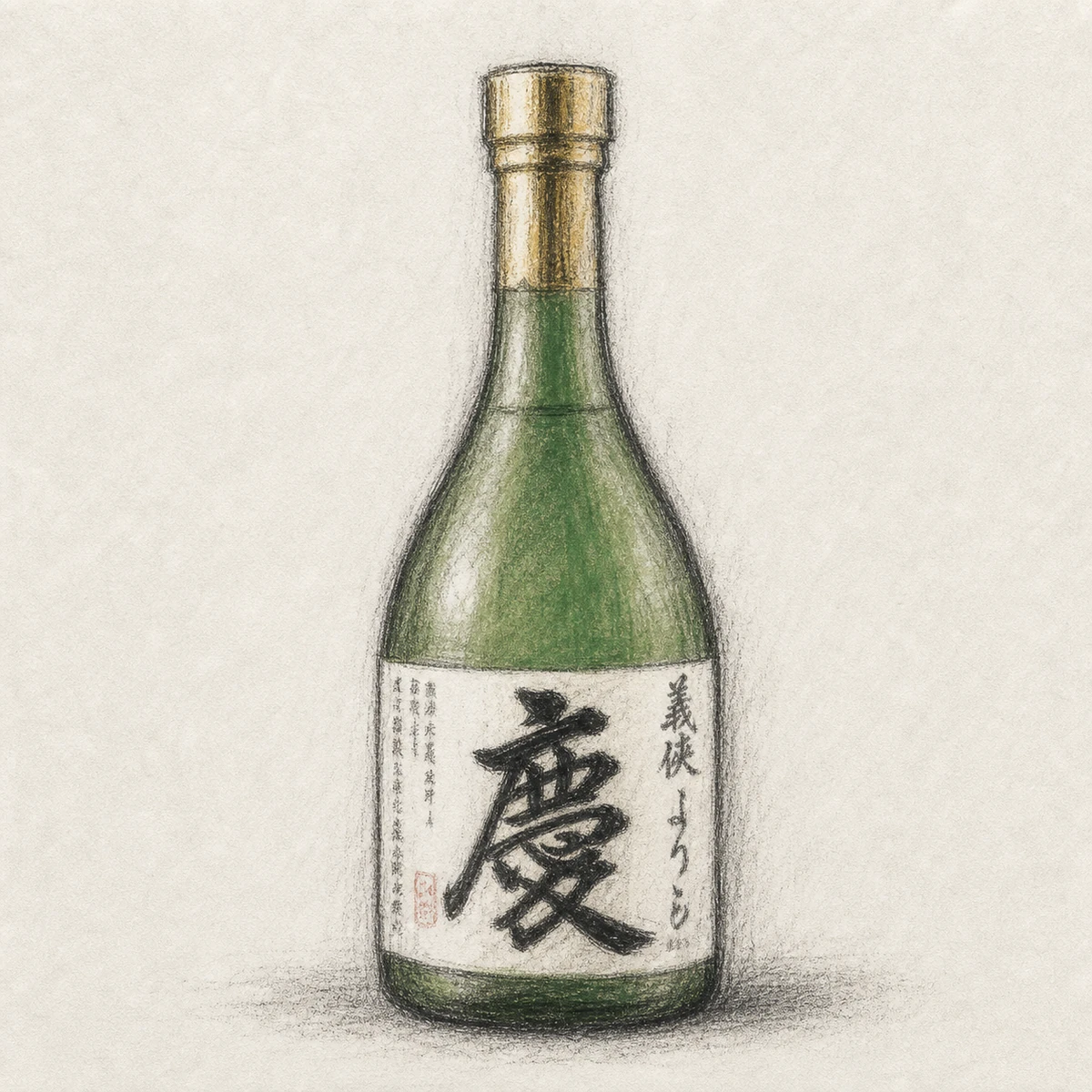
GIKYO Yorokobi
Several cold-aged vintages composed into one quiet whole.
A blend that makes maturity seamless
Middle-press Junmai-Daiginjo from several brewing years is cold matured and blended. The result turns separate vintages into one rounded, composed expression.
Each vintage is matured at low temperature for three years or more before blending, layering successive years’ character into a single, settled depth. Rather than aromatic flair, GIKYO Yorokobi values the quiet, breadth and long finish that only extended maturation brings.
How it tastes
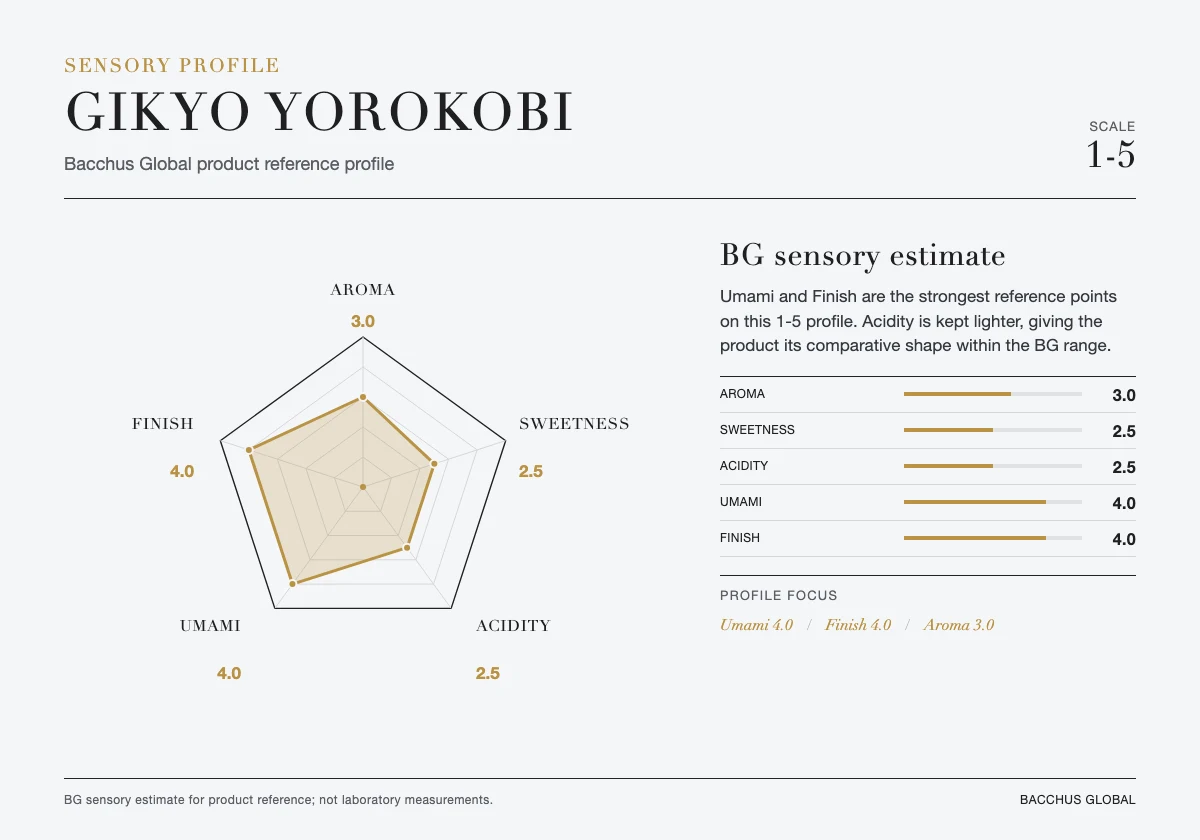
Ripe pear, gentle grain and a faint nutty maturity lead to a rounded mouthfeel, fine acidity and a long, calm finish.
The nutty maturity opens further as the sake gently warms.
Aisai, Aichi — rice first, time included
The name Gikyo was given by the brewery’s longtime sake merchant, in praise of Yamachu Honke Shuzo’s conduct during the Meiji era: when raw rice prices spiked, the brewery held to its contracted price with growers rather than pass the increase on. That commitment to honoring an agreement became the sake’s name.
Yamachu Honke Shuzo works with Yamada Nishiki from the Special-A district of Tojo, Hyogo, producing an all-junmai range with its own in-house rice polishing. GIKYO is built around rice umami rather than showy aroma, with careful pressing, maturation and blending used differently across the range.
At the table
The quiet umami of maturity pairs naturally with dishes that layer their own umami with care — sushi, grilled eel, mushroom and dashi dishes. With richer fare like roast duck, its depth of fat is matched by the sake’s long finish.
- Sushi
- Grilled eel
- Roasted duck
- Mushroom and dashi dishes
Related products
Three routes through maturity, concentration and a lighter table-sake style — all linked in English.
Related stories
Official GIKYO product information in English.
Interested in listing GIKYO Yorokobi at your restaurant or retail venue? Our team can provide information on availability, storage requirements and trade terms.