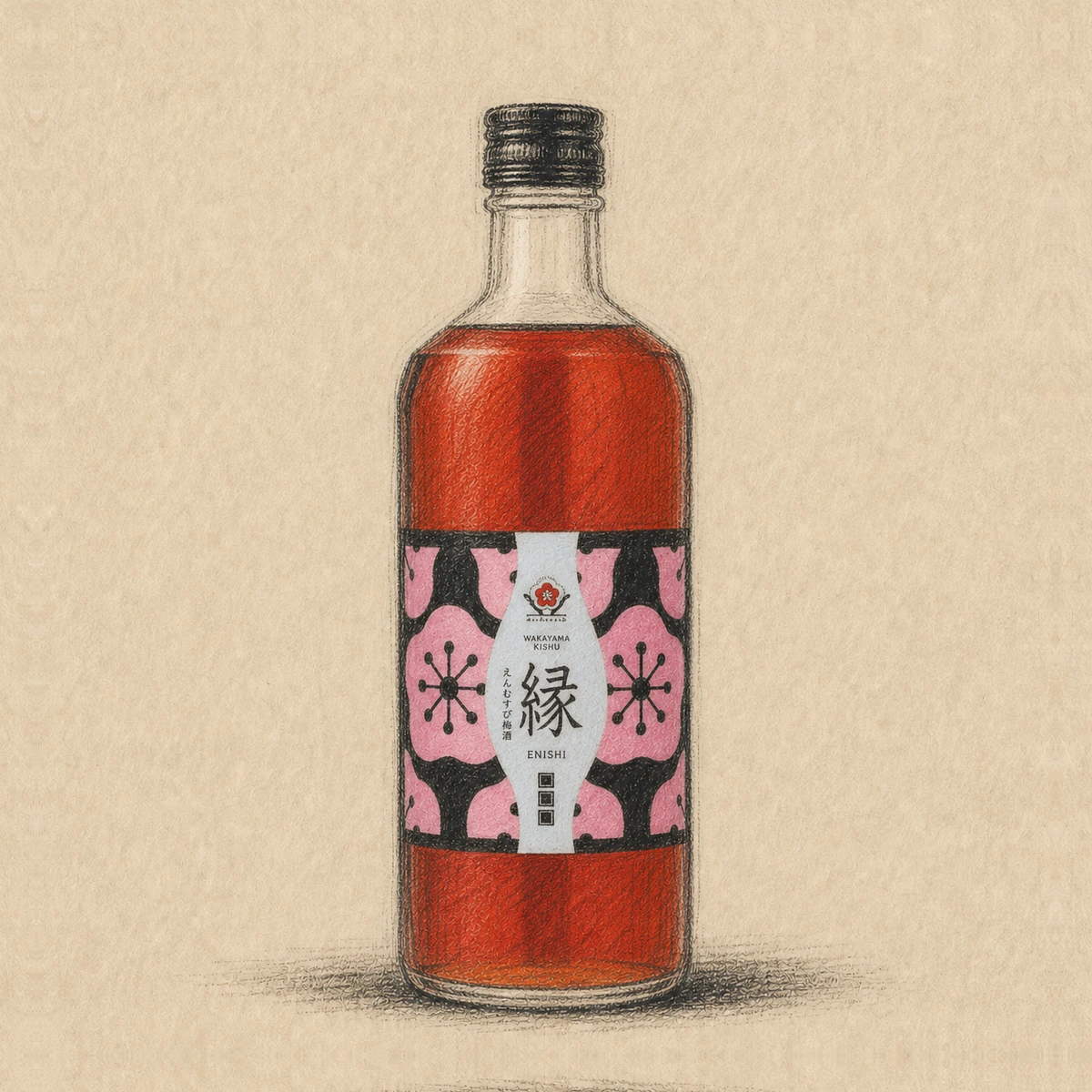
ENISHI Umeshu
Estate-grown ripe Nanko and red-fleshed Tsuyu-Akane meet Kyoto junmai sake, whose gentle rice-derived savouriness joins plum sweetness to vivid acidity.
Thailand · Product information
Product information from Bacchus Global Co., Ltd., based in Bangkok, Thailand. About Bacchus Global
Sake-based umeshu
Producer bottle specifications are shown for reference; current Thailand formats and lot specifications should be confirmed separately. Product specification reference
Two ume varieties, connected by junmai sake
Estate-grown ripe Nanko and Tsuyu-Akane are steeped with junmai sake from Kyoto’s Sasaki Shuzo and rock sugar.
Depth from ripe Nanko
Tree-ripened Nanko brings generous perfume and rounded fruit sweetness.
Tsuyu-Akane and sake as the bridge
Tsuyu-Akane contributes colour and bright acidity, while gentle rice savouriness draws the two fruits together.
Vivid fruit wrapped in the softness of rice
Natural pale-red colour carries plum’s sweet-tart energy with the rounded texture of sake.
A Kyoto sake brewery meets an ume grower in Minabe
Yamanishi wanted to make umeshu with sake. This two-voice conversation follows his meeting with Sasaki Shuzo, Umeyoshi's offer to produce the umeshu, and the trials that followed. It traces the story behind the name Enishi. Runs about 6 minutes 58 seconds.
Question 1
Which base does the page identify for steeping Enishi’s ume?
- Sake from Sasaki Shuzo in Kyoto
- Aged awamori from Okinawa
- Brandy
Read the answer and explanation
Correct answer: A — Sake from Sasaki Shuzo in Kyoto
Enishi steeps ume in sake from Kyoto’s Sasaki Shuzo. Aged awamori and brandy are bases used for other umeshu from the producer.
Question 2
What does “How it is made” say Tsuyu-Akane mainly contributes?
- Roasted-barley aroma
- Colour and acidity
- Cask aroma
Read the answer and explanation
Correct answer: B — Colour and acidity
Tree-ripened Nanko brings rounded fruit sweetness and aroma, while Tsuyu-Akane contributes colour and bright acidity.
Question 3
What sequence does the podcast introduction trace behind the name Enishi?
- Buying a still and ageing in casks only
- Choosing the label colour only
- An idea for sake-based umeshu, a meeting with Sasaki Shuzo, and Umeyoshi’s offer and trials
Read the answer and explanation
Correct answer: C — An idea for sake-based umeshu, a meeting with Sasaki Shuzo, and Umeyoshi’s offer and trials
The introduction follows Yamanishi’s idea, the meeting with Sasaki Shuzo, and Umeyoshi’s offer to produce the umeshu and subsequent trials.
Red fruit, ume and a soft rice-led finish
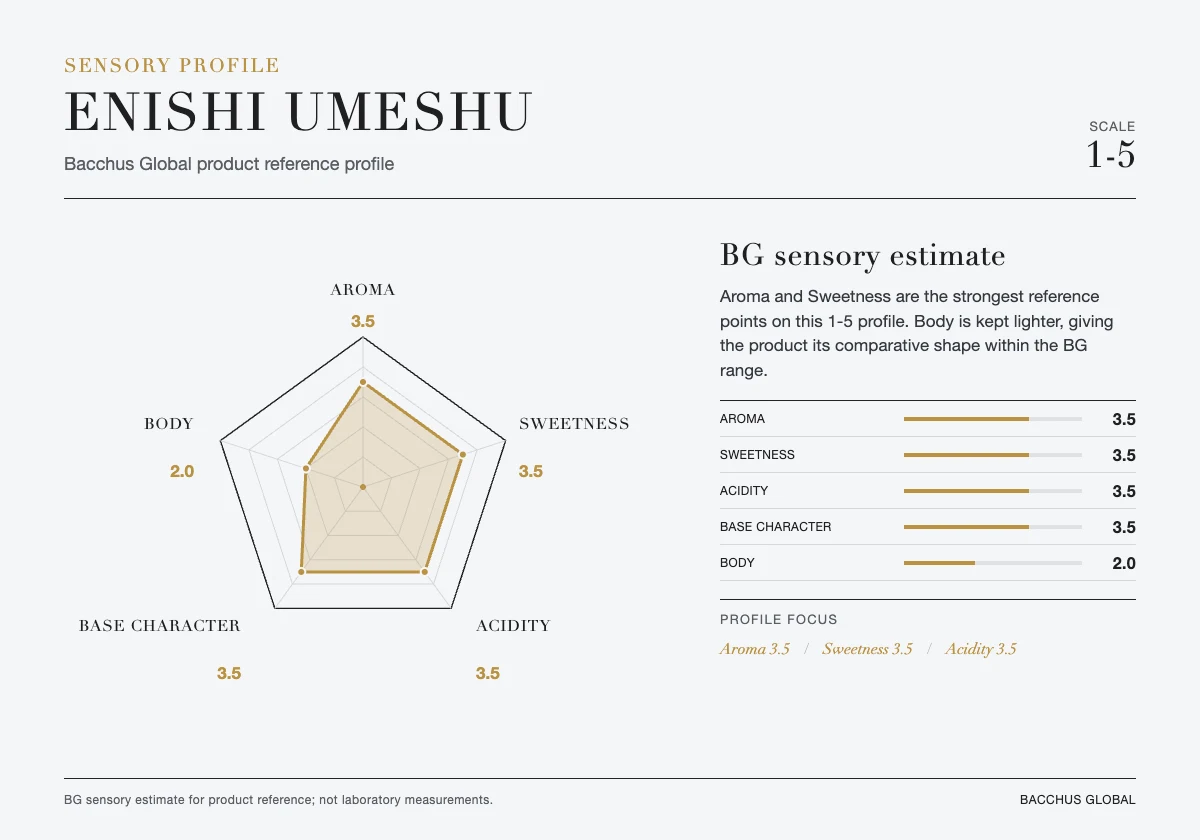
Fragrant plum and red-fruit notes lead into juicy sweetness and acidity, followed by the gentle savoury echo of junmai sake.
Four directions guided by junmai sake umami and red-fruit aroma
ENISHI Umeshu carries a fragrant aroma of plum and red fruit, juicy sweetness and acidity, and a gentle savoury finish derived from junmai sake. The combinations below are not official pairings presented by the producer, but readings drawn from the recorded taste characteristics.
Sake’s umami and sweetness are noted to align directly with food, while acidity is said to bring out the delicate savouriness of lean ingredients. The junmai sake umami and red-fruit acidity of ENISHI Umeshu draw on that alignment, giving it a base that meets dashi-forward dishes, vinegared dishes, seafood and rice dishes alike.
Kishu Honjo Umeyoshi, from ume growers to liqueur makers
Based in Minabe, Wakayama, Kishu Honjo Umeyoshi grows ume on its own farm and carries the fruit from harvest through liqueur production.
Related article — Umeshu Starts in the Orchard: Three Decisions
From the same producer
Only directly relevant products and Bacchus Global stories are shown.
Related stories
Only directly relevant products and Bacchus Global stories are shown.
Related product information
Contact Bacchus Global for product documentation and trade information.