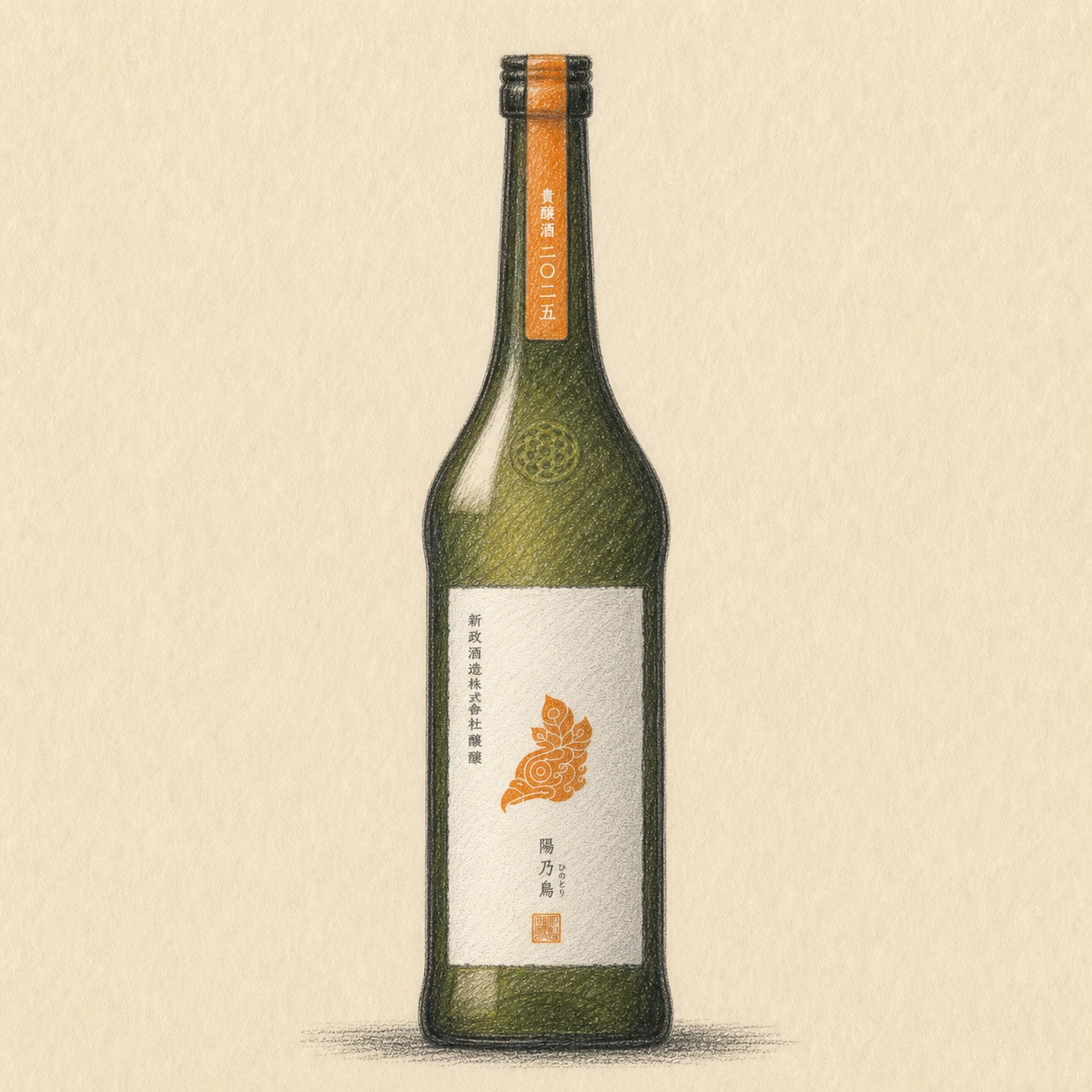
ARAMASA HINOTORI
Fruit-rich sweetness, cut clean by ARAMASA acidity.

Sake used where brewing water would normally be
HINOTORI is kijoshu: part of the brewing water is replaced with finished sake. Aramasa first rests that sake in mizunara oak for a year, then uses it in the mash. Released young rather than aged to heaviness, the result joins concentrated sweetness with the brewery’s bright acidity. The method is recorded in a text from 927, and its modern form was developed in 1973 by an engineer at the National Tax Agency of Japan. The brewery describes HINOTORI as the most historic creation in PRIVATE LAB and as the originator of the modern kijoshu style.
The story behind this bottle
A conversation about the bottle where one of rice, koji or water is different. About seven minutes.
How it tastes
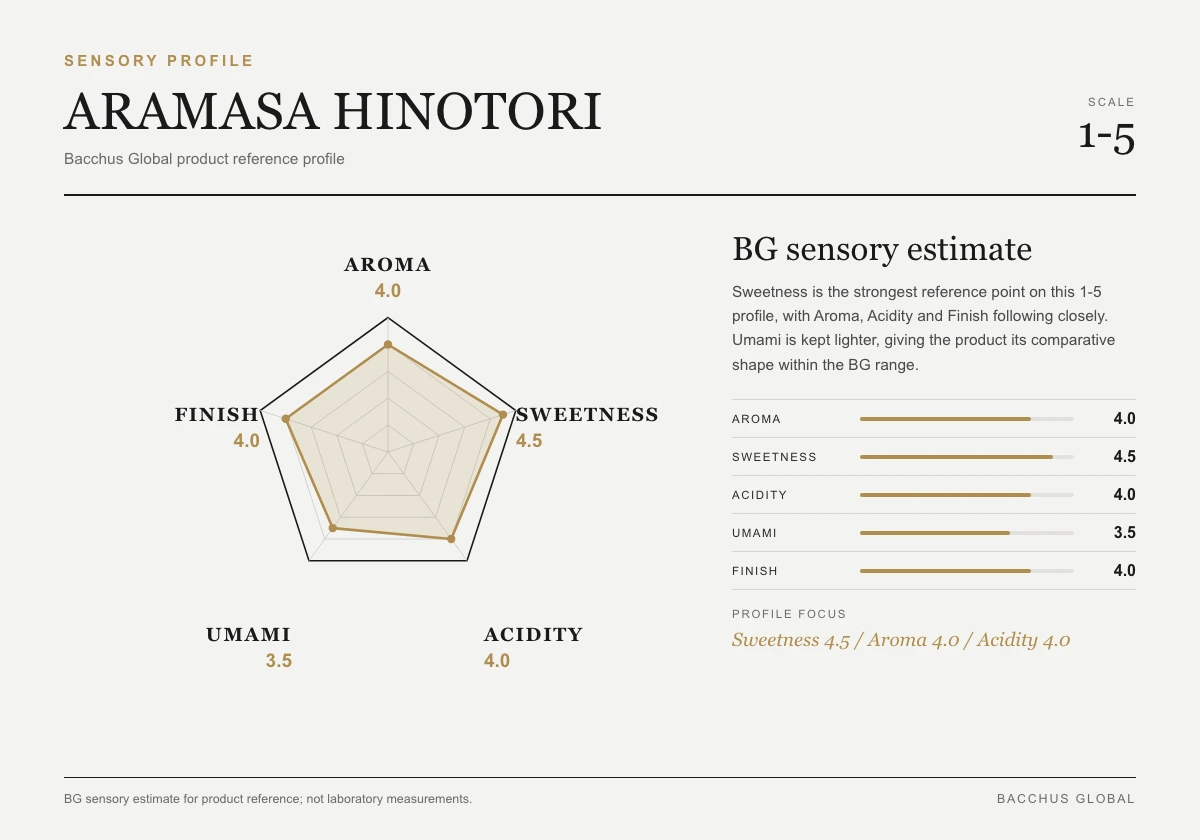
Honeycore apple, ripe apricot and osmanthus, with a hint of cedar from the vats and a spicy sweetness reminiscent of wild honey. Vanilla threads through the sweetness, drawn from the year the added sake spends in mizunara oak.
The palate opens with a rich, rounded sweetness held up by the mellow umami of Kairyo Shinko. Juicy acidity gives it definition, and a warm, spice-like bitterness leaves a gentle dryness before the finish draws smooth and long.
Association No. 6, Akita rice, and fifty wooden vats
Aramasa Brewery was founded in Akita City in 1852, and in 1930 Association No. 6 was isolated from a moromi at this brewery. It still limits its brewing yeast to Association No. 6, working with Akita-grown rice and the kimoto method.
The brewery returned to wooden vats in 2013, began passing on cooperage skills in 2016, and in 2024 opened its own cooperage and moved all fifty fermentation vessels to Akita cedar kioke. The point is not to display old tools, but to keep brewing this way.
Colors is the pasteurised core collection, created to reveal the distinct character of each rice variety. PRIVATE LAB explores new possibilities for sake through four core styles: kijoshu, high-acidity sake, low-alcohol sparkling sake and low-polishing-ratio sake. ASTRAL PLATEAU carries forward the philosophy refined through Colors and PRIVATE LAB, shaping a highly limited collection around a single rice variety, new cedar vats and fermentation without added yeast.
At the table
The brewery does not specify dishes in its own materials. What follows is not a brewery recommendation but a reference set built by Bacchus Global from the acidity, sweetness, umami and finish of the sake.
- Glazed eel
- Foie gras
- Aged cheese
- Fruit-led desserts
Related products
Three routes: a close style, a contrasting expression, and an ARAMASA reference point.
Related stories
Related Bacchus Global editorial content; no new external source is quoted here.
Interested in listing ARAMASA HINOTORI at your restaurant? Our team can provide information on availability, storage requirements and trade terms.