
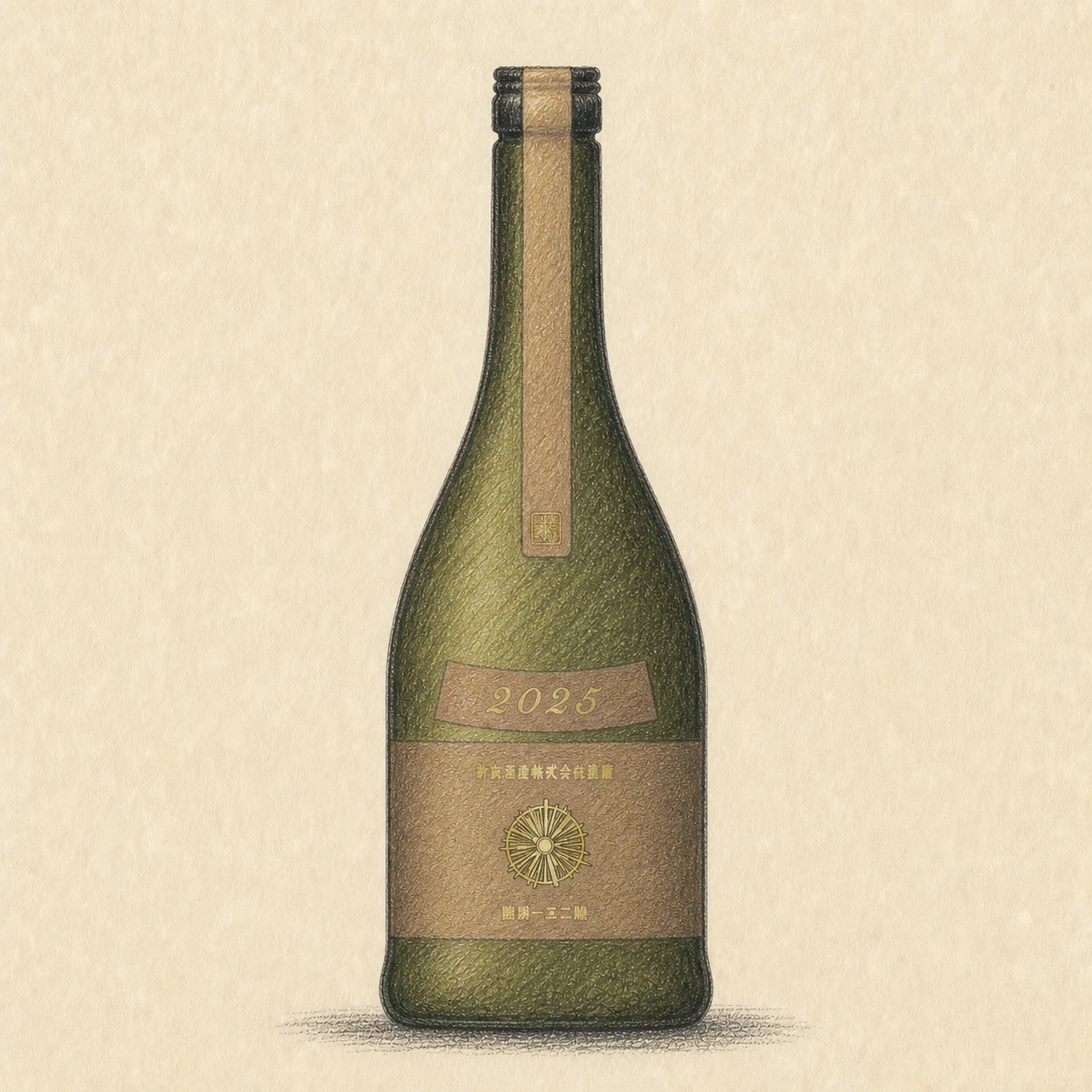
ARAMASA EARTH
Rikuu 132: Shine Muscat, white flowers and milky notes, supported by cedar.
Thailand · Product information
Product information from Bacchus Global Co., Ltd., based in Bangkok, Thailand. About Bacchus Global
Rikuu 132 from Uyashinai and the character of 2025
Rikuu 132 was developed in Akita during the Taisho era from Kame-no-O and Aikoku, and is also known as Ai-kame. It is also known as a rice that Kenji Miyazawa encouraged people to cultivate. EARTH uses Rikuu 132 grown without pesticides in Uyashinai, Akita.
Polished to 50%, fermented by kimoto with Association No. 6 in cedar vats, pasteurised and bottled undiluted at 13% ABV. The 2025 vintage is a single-lot bottling without blending, described as having the firm character of Rikuu 132 and a finish with gentle astringency.
Specifications and tasting notes shown here describe the 2025 vintage. If the supplied lot differs, the bottle label takes precedence.
The story behind this bottle
In 2021, only one company in Japan was making these wooden vats, and it announced it would close. This conversation follows what the brewery did next. About six minutes; audio in Japanese.
Question 1
Which two rice varieties are named as the parents of Rikuu 132, also known as Ai-kame?
- Kame-no-O and Aikoku
- Kairyo Shinko and Miyama Nishiki
- Yamada Nishiki and Omachi
Read the answer and explanation
Correct answer: A — Kame-no-O and Aikoku
The sake section names Kame-no-O and Aikoku as the parents of Rikuu 132.
Question 2
What challenge involving wooden vats does the podcast explore?
- Wooden vats always add fruit aromas
- Passing on vat-making skills as the number of makers declines
- Replacing every wooden vat with a wine barrel
Read the answer and explanation
Correct answer: B — Passing on vat-making skills as the number of makers declines
The audio follows the brewery’s efforts to pass on vat-making skills as makers become scarce. It does not assert scientific benefits or superiority over other vessels.
Question 3
How does the brewery section describe the Colors line to which EARTH belongs?
- A sparkling line made only with white koji
- A fruit-infused liqueur line
- A pasteurised line expressing differences between rice varieties
Read the answer and explanation
Correct answer: C — A pasteurised line expressing differences between rice varieties
Colors is described as a pasteurised core line expressing differences between rice varieties. EARTH uses Rikuu 132.
How it tastes
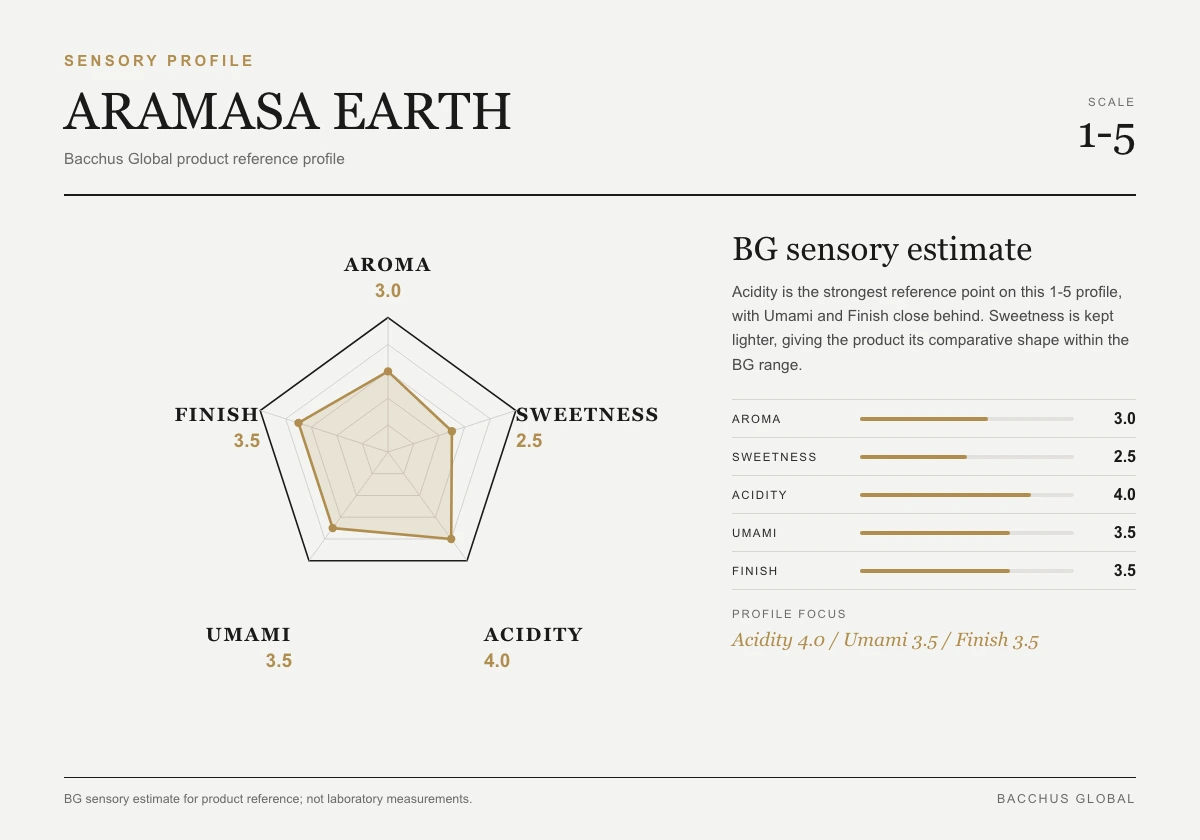
The 2025 aroma profile suggests Shine Muscat, white flowers and milk, supported by gentle cedar notes.
Soft sweetness, restrained umami and juicy acidity meet herbal and conifer-like astringency from the cedar vats. The 2025 finish shows the strength of Rikuu 132 and a gentle, lingering astringency.
The chart is a Bacchus Global reference estimate, not brewery analytical data.
図はBacchus Globalによる参考評価で、蔵元の分析値ではありません。
Akita rice, kimoto and cedar vats
Aramasa was founded in Akita in 1852. Association No. 6 yeast was isolated from its fermenting mash in 1930. Akita-grown rice, kimoto and cedar vats underpin its brewing. The Colors and PRIVATE LAB products presented here use No. 6; ASTRAL PLATEAU ferments without added yeast.
The brewery returned to cedar-vat brewing in 2013 and began passing on cooperage skills in 2016. It established its own cooperage in 2024 and transitioned to Akita-cedar brewing vessels. The brewery uses 50 Akita-cedar vats.
Colors is the pasteurised core line expressing differences between rice varieties. PRIVATE LAB explores four styles: kijoshu, high-acidity sake, low-alcohol sparkling sake and sake made with minimally polished rice. ASTRAL PLATEAU shares three foundations: a single rice variety, new cedar vats and fermentation without added yeast.
At the table
What follows is not a brewery recommendation but a reference set built by Bacchus Global from the acidity, sweetness, umami and finish of the sake.
- Salted and cured fish
- Grilled shellfish
- Goat cheese
- Roasted root vegetables
Related products
Three routes: a close style, a contrasting expression, and an ARAMASA reference point.
Related stories
Related Bacchus Global editorial content; no new external source is quoted here.
Interested in listing ARAMASA EARTH at your restaurant? Our team can provide information on availability, storage requirements and trade terms.

