AKABU Junmai
Rice umami, white peach and citrus — AKABU’s modern standard.

Rice umami, shown with a light touch
AKABU Junmai draws its structure from Iwate-grown rice polished to 60%, local-origin yeast and the region’s soft water. The design is deliberately modern: rice umami remains present, while clean acidity and carefully preserved freshness keep the profile light and precise.
AKABU does not publish its sake meter value or acidity level. Rather than let numbers set expectations of sweet or dry, the brewery wants the taste itself to come first — the impression it leaves matters more here than a detailed spec sheet.
White peach into citrus. A clean, quick finish.
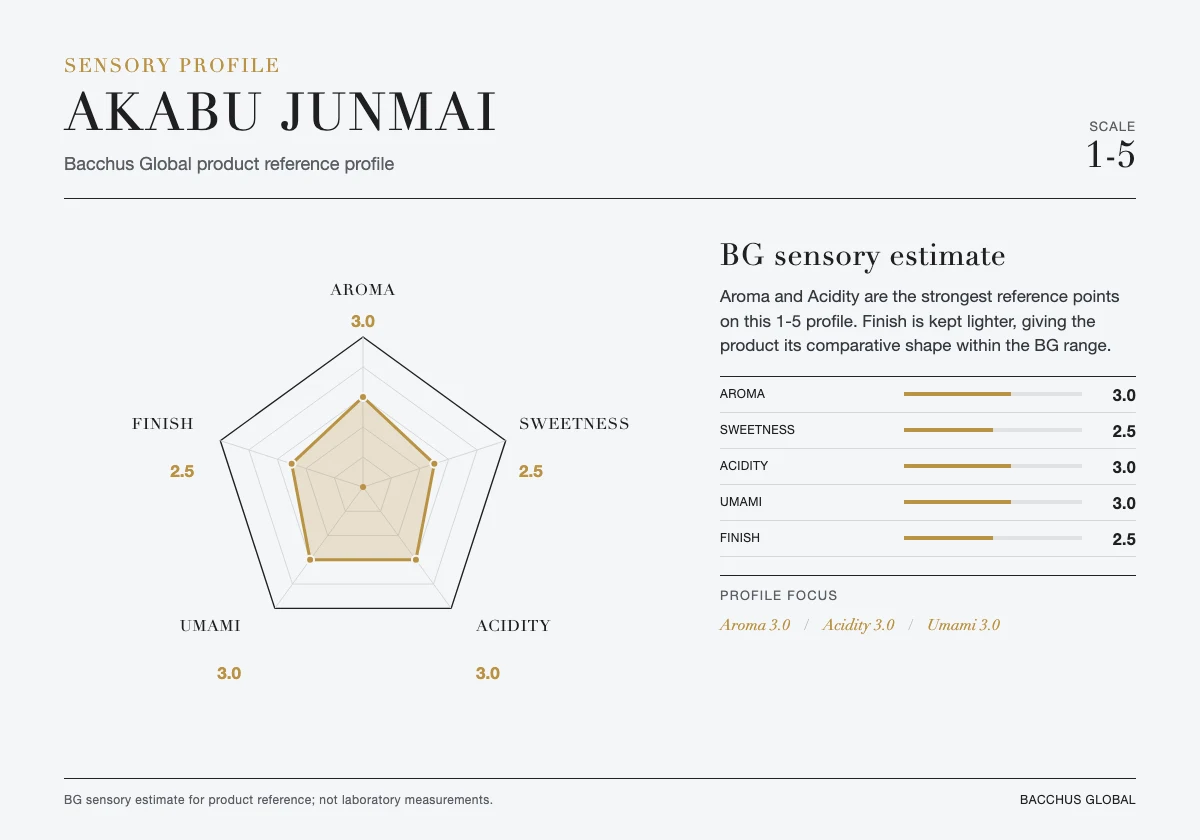
White peach and white blossom lead the nose, joined by a bright citrus lift of grapefruit and blood orange. It’s aromatic, but this isn’t a sake where scent does all the talking.
The mouthfeel is smooth and clean: juicy rice umami swells first, then acidity tightens the frame. The finish doesn’t linger — it cuts clean and fades quickly.
The clean acidity and the creamier layer of rice umami stay in balance, neither one overtaking the other.
Rebuilt in Morioka, Iwate
Akabu Shuzo was founded in 1896 in Otsuchi, Iwate. In the 2011 Great East Japan Earthquake, the tsunami destroyed the brewery completely.
Even so, brewing never stopped. A new brewery was completed in Morioka in 2013, and the following year, sixth-generation brewer-owner Ryunosuke Furudate and a young brewing team launched the new brand AKABU. Furudate was still in his early twenties at the time.
For the new brewery, they chose Iwate rice, prefecture-born yeast and Iwate’s soft water — every raw material drawn from the same soil, with careful temperature control coaxing out fruit character and a clean taste. Born after the rebuild, AKABU stands as the symbol of Akabu Shuzo’s fresh start.
To forge a new history from Iwate.AKABU — founding principle of the renewed brand
A crimson helmet, and AKABU at a glance
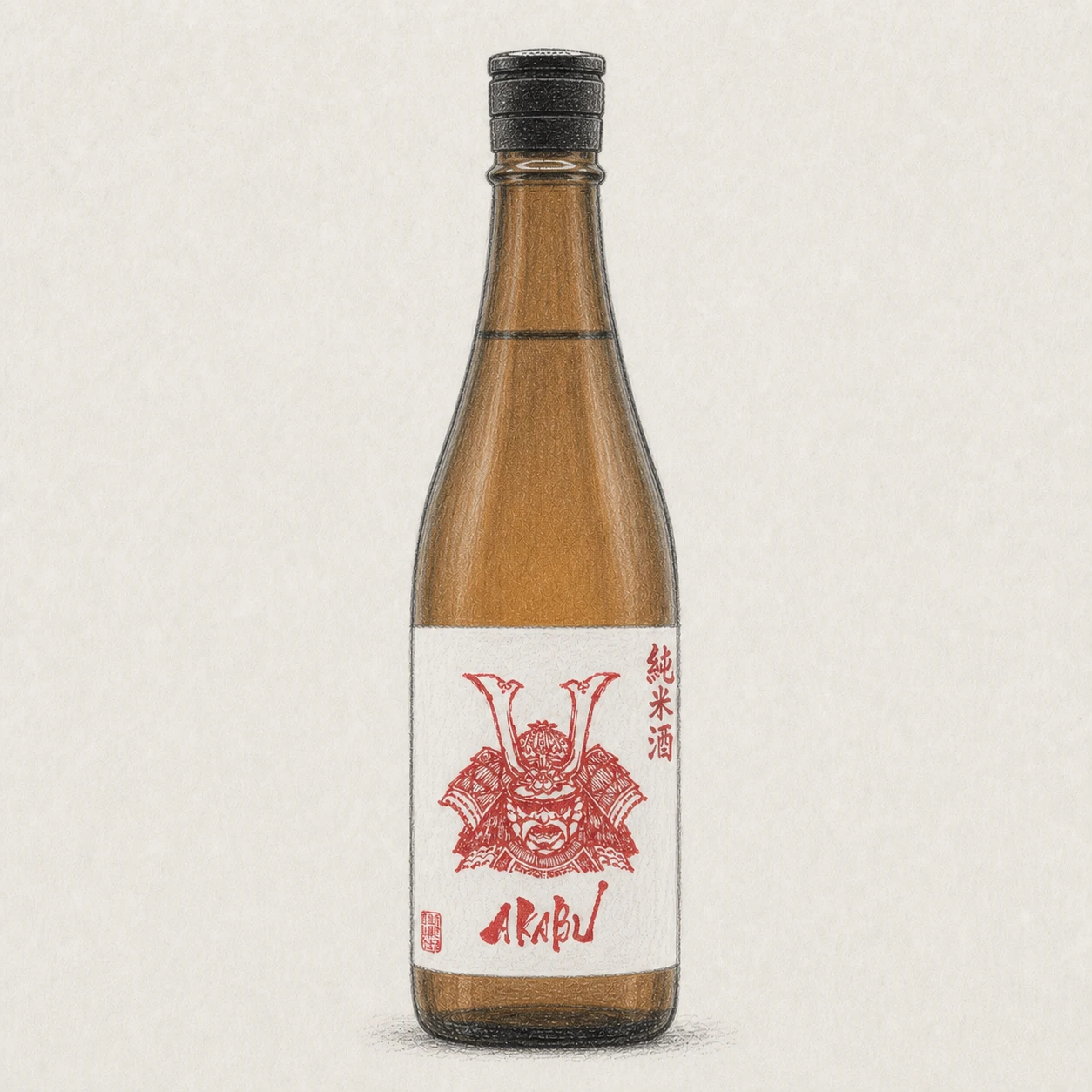
The label shows a samurai in a crimson helmet, paired with the name “AKABU” set large in roman letters. Rather than lean on traditional brush calligraphy alone, the design lets both the name and the image register at a glance — even for those who don’t know sake well.
Verified for this bottling
Only distinctions attributable to this exact label are shown. Awards for a pasteurised or otherwise different version are not transferred here.
Umami and acidity, matched to the table
Rice umami runs deep, but acidity keeps the finish light — so this sake doesn’t easily overpower the delicate flavours of seafood or vegetables. It suits more than Japanese cooking; dishes built on citrus and herbs work just as well.
- Sashimi and carpaccio of white fish
- Tempura and marinated vegetables
- Tom kha gai
- Lime-steamed white fish
AKABU Junmai’s clean acidity and understated rice umami show a natural affinity with milder Thai flavours — dishes built around coconut, chicken, crab, egg, citrus or herbs.
Related products
The two other core expressions provide a direct comparison within the AKABU range.
Related stories
Awards, brewery history, and the people shaping modern sake — one route for each.
Interested in listing AKABU Junmai at your restaurant or retail venue? Our team can provide information on availability, storage requirements and trade terms.