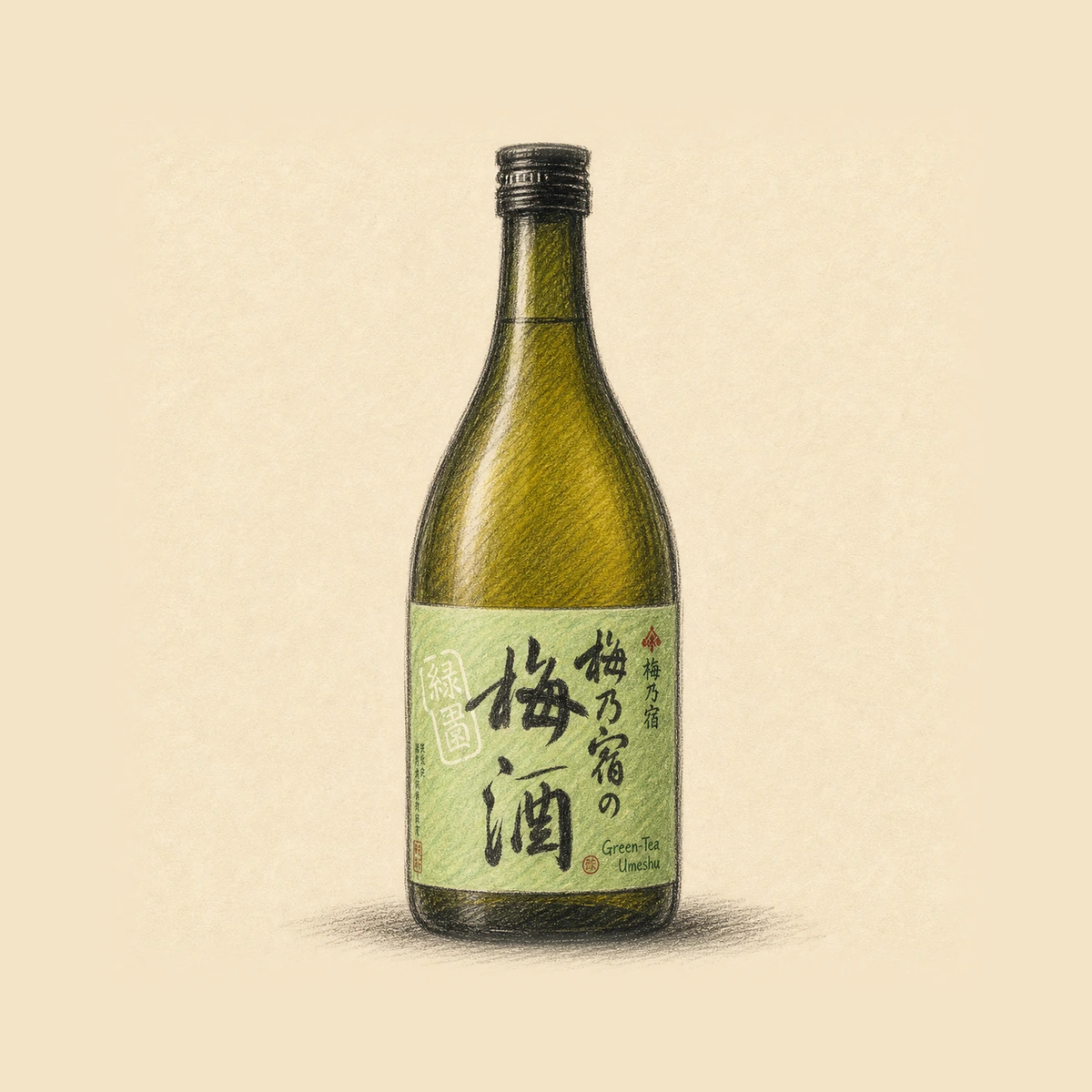
UMENOYADO Green-Tea Umeshu
Fresh green tea and gently roasted hojicha meet an umeshu made with both green and ripe fruit, giving its sweetness a clean, lightly bitter frame.
Green-tea and hojicha umeshu
Two expressions of ume, two expressions of tea
Umenoyado blends green-tea and hojicha extracts into an umeshu made with both green and fully ripened Japanese ume. Freshness, roast and fruit are designed to remain distinct while sharing the same structure.
Green and ripe ume form the fruit base
Green ume brings taut acidity, while fully ripened fruit supplies a rounder, more generous plum character.
Green tea and hojicha are layered in
Green-tea and hojicha extracts add freshness, mild bitterness and a roasted aroma, bringing a clean counterpoint to the plum’s sweetness.
Tea bitterness gives the sweetness definition
The freshness of green tea and the warmth of roasted hojicha shape the umeshu’s gentle sweetness, leading to a bright, balanced finish without allowing either fruit or tea to dominate completely.
Plum fruit, fresh green tea and a roasted finish
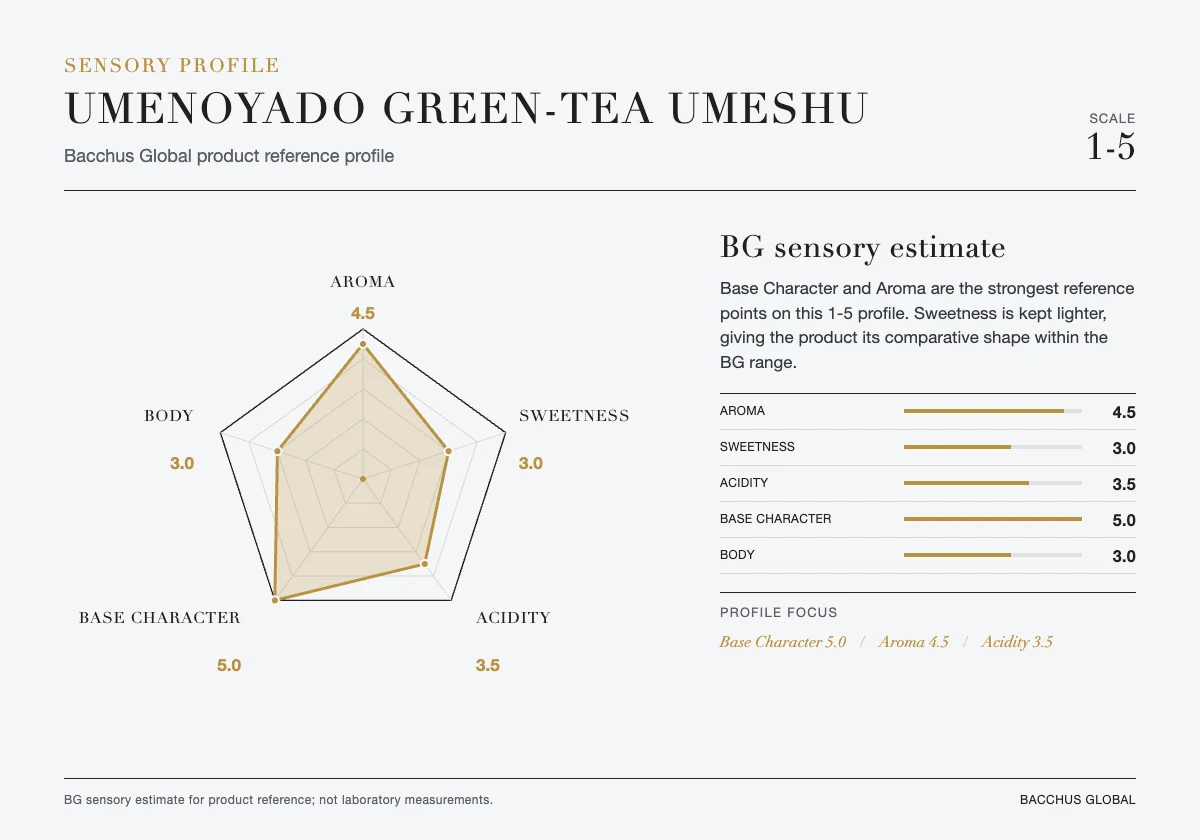
Pale gold to amber in colour, with fresh green-tea aromas, an earthy roasted note from hojicha, and a round impression of ripe ume and honey. The texture is silky; mild bitterness and lively acidity bring the sweetness into balance before a calm, tea-toned finish.
Four directions guided by tea-roast and ripe plum
Food affinities for UMENOYADO Green-Tea Umeshu are not a pairing the producer has presented officially, but a reading drawn from the characteristics recorded on this page. The double structure of green and ripe ume fruit meeting the freshness of green tea and the roast of hojicha runs through the four directions below.
Matching aroma works as a simple overlap in cases like citrus or roasted notes, but the structure of a pairing is set by sweetness, acidity and texture. The roasted, fresh character shared by green tea and hojicha is used here as a starting point, alongside the structural balance in which bitterness and acidity temper sweetness across the four directions.
Umenoyado in Katsuragi, Nara
Umenoyado was founded in Katsuragi, Nara, in 1893. Its name recalls an old plum tree in the brewery garden and the nightingales that visited it. UMENOYADO Green-Tea Umeshu connects that long association with ume to two contrasting expressions of Japanese tea.
From the same producer
Only directly relevant products and Bacchus Global stories are shown.
Contact Bacchus Global for product documentation and trade information.