Drink
Ginjo-zukuri Recommended as an Important Intangible Cultural Property|Toji Noguchi Naohiko Recommended as Its Holder
On October 16, 2026, Japan's Council for Cultural Affairs recommended to the Minister of Education, Culture, Sports, Science and Technology that ginjo-zukuri, a method of making sake, be newly designated as an Important Intangible Cultural Property, and that Noguchi Naohiko, a toji (master brewer) from Ishikawa Prefecture, be certified as its holder. Mr. Noguchi is 93. If certified, he will become a holder of the kind commonly known in Japan as a "Living National Treasure." If formally designated, ginjo-zukuri would be the first sake-making technique to receive this designation.
The recommendation does more than honor one brewer's career. It would add a sake-making technique, ginjo-zukuri, to the list of skills the Japanese state protects as cultural property. Following the Agency for Cultural Affairs' documents, this article sets out what is being recognized and what is new.
The Skill Comes First, Then the Person
Under the Important Intangible Cultural Property system, the state first designates a skill worth protecting, then certifies the people who have mastered it to a high level as its holders. "Living National Treasure" is the popular name for these holders. Until now, the designations have centered on performing arts such as kabuki and on craft techniques such as ceramics.
A revision of the system added "lifestyle culture," the culture handed down in everyday life, and this would be the first designation in that field. On the same day, designations were also recommended for rikka, a style of ikebana flower arrangement, and for Kyoto cuisine (kaiseki). Mr. Noguchi and two others are expected to become the first holders in this field. The formal designation and certification will be made by the Minister on the basis of the recommendation.
Japanese sake brewing was registered in 2021 as a Registered Intangible Cultural Property, "Traditional Sake Brewing," and in 2024 it was also inscribed as UNESCO Intangible Cultural Heritage. Both of these cover sake brewing as a whole, and the domestic registration recognized a preservation association of brewers as the holding group. This time, a single technique, ginjo-zukuri, has been named, and one toji who has mastered it has been put forward as its holder. That is the major difference from what came before.
How the Agency for Cultural Affairs Describes Ginjo-zukuri
The Agency describes ginjo-zukuri as "the skill of making sake (ginjo sake) that pursues an aesthetic flavor and aroma by investing labor and ingredients without sparing either." Sake has been refined over a long history, and along the way brewers found that how much of the rice is polished away is closely tied to the character of the sake. According to the Agency, the skill became established in the modern era, when the development of rice-polishing machines made it possible to remove a large part of the outer layer of the grain.
Under Japan's labeling standards, sake is called "ginjo" when it is made by ginjo-zukuri using rice polished to a ratio of 60% or less, meaning at least 40% of the outer part of each grain has been removed. The polishing ratio is one way into understanding ginjo-zukuri.
Seventy Years Since Leaving School, Working Across Breweries
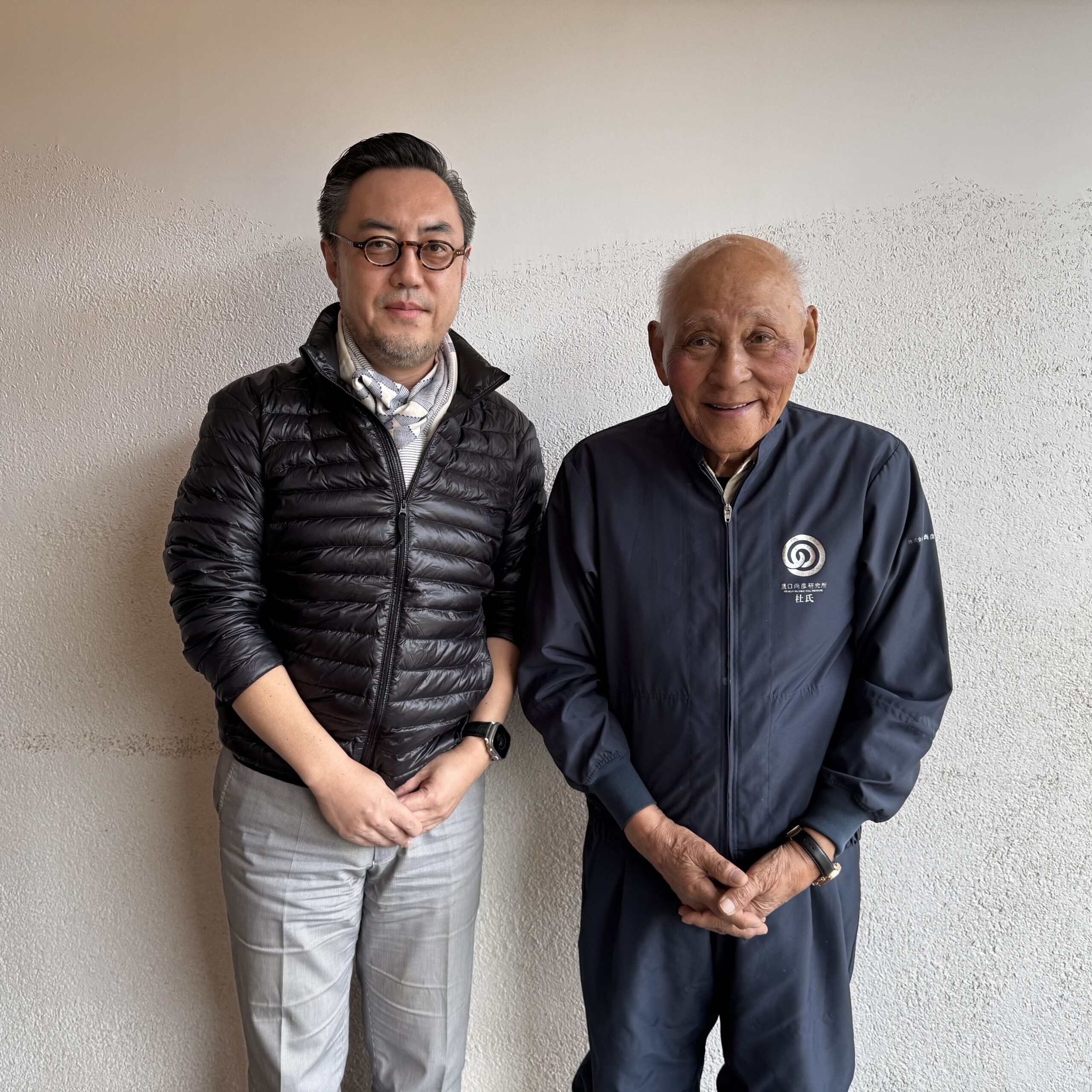
According to the Agency's documents, Mr. Noguchi was born in 1932, the son of a Noto toji. He entered the world of sake brewing after finishing junior high school and began working as a brewery worker in 1949. After serving in charge of the yeast starter (shubo) and as kashira, the toji's chief assistant, he became toji at Kikuhime in Ishikawa Prefecture in 1961, at the age of 28. A toji is the person responsible for the entire brewing process at a brewery.
He served as toji at Kikuhime for 37 years, until 1998. He received his first Gold Award at the Annual Japan Sake Awards in 1967, and has received it 26 times in total. He is also known as one of the people who led the growing interest in ginjo sake from the late 1970s onward.
When he left Kikuhime, Mr. Noguchi was in his mid-sixties. But his work did not end there. He served as toji at another brewery from 1998 to 2012 and at Noguchi Shuzo from 2013 to 2015, and in 2017, in his mid-eighties, he became toji at the Noguchi Naohiko Sake Institute in Komatsu, Ishikawa Prefecture. The Agency's documents record this role at the Institute as continuing to the present.
The Emphasis on the Next Generation
Yet the features the Agency highlighted for the holder were not limited to his long career or the number of his awards. The documents state clearly that he has devoted himself to guiding and training younger brewers and has produced many toji. In 2021 he became a member of the holding group for "Traditional Sake Brewing," and in 2026 he was also certified as a holder of Ishikawa Prefecture's Intangible Cultural Property "Nihonshu Toji."
Holders of Important Intangible Cultural Properties receive a government grant for refining their skill and training successors. The system itself assumes that the skill will be handed on to the next generation. If certified, Mr. Noguchi will take on the role of passing on ginjo-zukuri within that system.
In response to the recommendation, Mr. Noguchi expressed his gratitude through the Institute and said:
"Yet my own dream is still only partway along the road."
The recommendation calls for ginjo-zukuri to be designated as a skill to be handed down, and asks that a toji who has worked with it for more than seventy years be entrusted with the role of carrying it forward.
This article explains the recommendation to designate ginjo-zukuri as an Important Intangible Cultural Property and to certify Noguchi Naohiko as its holder, based on documents published by Japan's Agency for Cultural Affairs. It explores the brewing philosophy and cultural heritage of Noguchi Naohiko Sake Institute and the NOGUCHI NAOHIKO brand for educational and cultural purposes only, and does not aim to promote or encourage the purchase or consumption of alcohol. Intended for readers aged 20 and over.
บทความนี้อธิบายข้อเสนอให้กำหนดกินโจซึคุริเป็นสมบัติทางวัฒนธรรมที่จับต้องไม่ได้ที่สำคัญ และให้รับรองคุณโนกุจิ นาโอฮิโกะ เป็นผู้สืบทอด โดยอ้างอิงเอกสารของสำนักงานกิจการวัฒนธรรมของญี่ปุ่น เพื่อนำเสนอข้อมูลเกี่ยวกับปรัชญาการผลิตและมรดกทางวัฒนธรรมของ Noguchi Naohiko Sake Institute และแบรนด์ NOGUCHI NAOHIKO เพื่อการศึกษาและวัฒนธรรมเท่านั้น มิได้มีเจตนาเพื่อส่งเสริมการซื้อหรือการบริโภคเครื่องดื่มแอลกอฮอล์ สำหรับผู้อ่านอายุ 20 ปีขึ้นไป
Discover the culture behind every bottle
We share brewery stories, tasting notes and the craft of koji & fermentation — for educational and cultural purposes only.
เราถ่ายทอดเรื่องราวจากผู้ผลิต บันทึกรสชาติ และศาสตร์แห่งโคจิและการหมัก — เพื่อการศึกษาและวัฒนธรรมเท่านั้น
Follow on Instagram Facebook