
Italian Wine Through Names and Places
The Name Amarone Points Not to a Grape, but to a Method and a Place
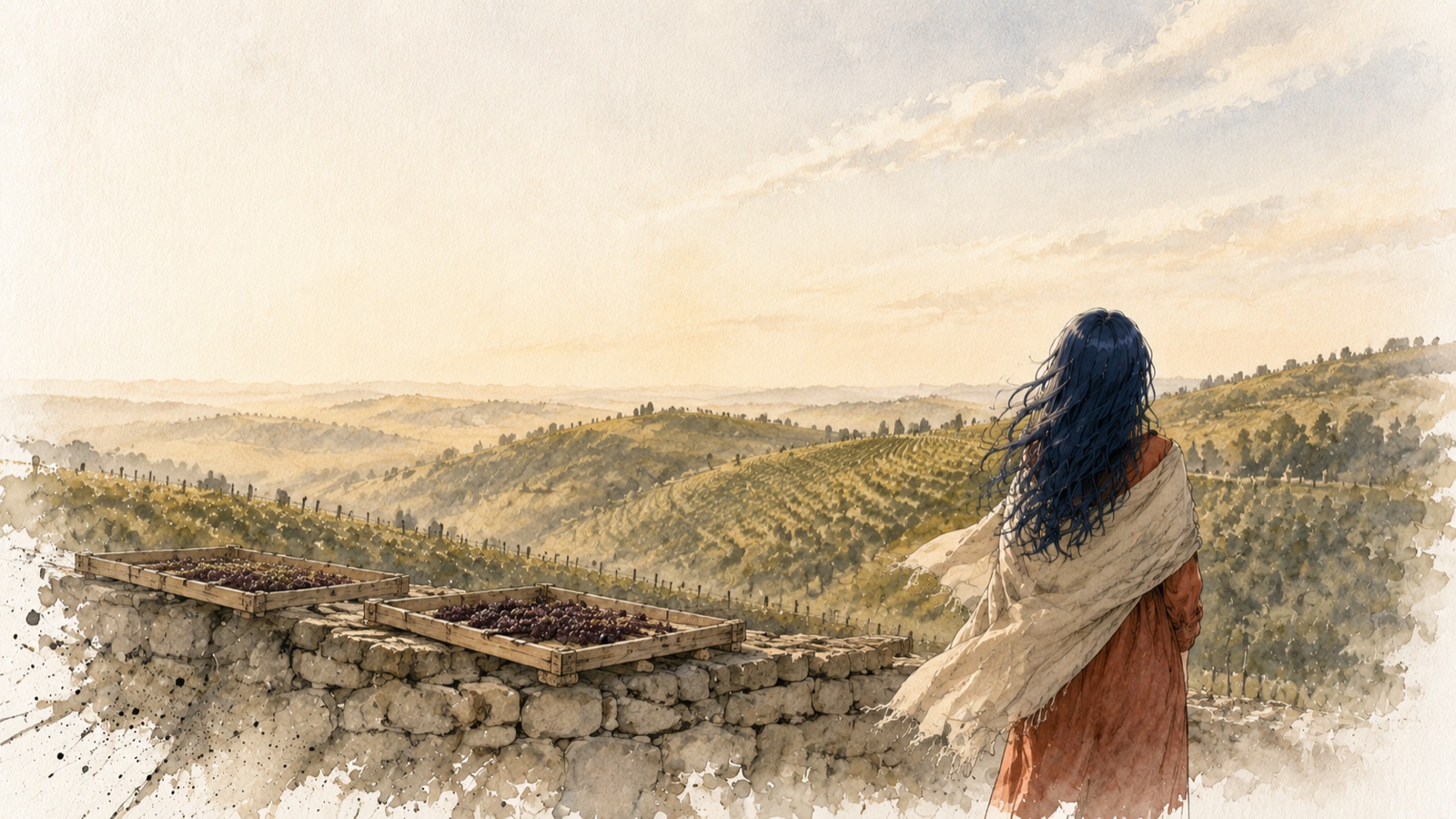
Not a few people, on hearing “Amarone,” picture the name of a grape variety. In fact, it is not a grape variety name at all, but a designation that combines a style of winemaking with a place name. Let’s trace how this name came to be formed.
Key Facts
| Item | Content |
|---|---|
| Official Name | Amarone della Valpolicella DOCG |
| Region | Veneto |
| Location | Verona Province, Veneto, in the Valpolicella district |
| Name Category | Style/method name + place name |
| Main Grape Varieties | Corvina / Corvinone / Rondinella |
The Story Behind the Name
Often assumed to be a grape variety name, but it is not
Many people believe “Amarone” is the name of a grape variety, but this is a misconception. In fact, it is said to be a style name derived from the Italian word for bitter, “amaro,” referring to a dry style in which sugar and extract are concentrated through a process of drying the grapes in the shade. To this, the place name “della Valpolicella” (of Valpolicella) is added, forming the official name “Amarone della Valpolicella.” The core of this name is that it combines a method (style) and a place (region) — not a grape variety. The grapes used are mainly Corvina, Corvinone, and Rondinella; none of these variety names appear in the designation itself.
A lineage from a sweet wine, and a story told about its birth
The Valpolicella region’s producer association (Consorzio) officially describes the sweet wine “Recioto” as “the forerunner of Amarone and one of the oldest wines of this region.” Both wines share the process of drying the grapes before vinification; what characterizes Amarone is that fermentation is carried through to completion, producing a dry wine with no residual sugar.
As for the specific circumstances of its birth, a story is widely told that “a barrel of Recioto was left to keep fermenting, and it turned into a dry wine with no residual sugar.” The winery said to be the protagonist of this story (today’s Cantina Valpolicella Negrar) itself, on its own official history page, describes this tale as “a story that captivates every time it is heard,” while clearly positioning it as a “legend.” This article, too, treats this story not as historical fact, but as a story that the winery itself, as the party concerned, positions as a legend.
Three Things to Look for on the Label
- The official designation “Amarone della Valpolicella” plus the DOCG notation (one of the classifications under which Italy officially guarantees a wine’s origin) — the legally official designation under Article 1 of the production regulations.
- Display of the harvest year (vintage) — Article 7 of the production regulations requires the harvest year to be shown on the label.
- Whether “Riserva” is indicated — the standard type undergoes a minimum of 2 years of aging, while wines labeled “Riserva” have undergone a minimum of 4 years of aging, counted from November 1 of the harvest year.
Common Confusions
- Mistaking “Amarone” for a grape variety name — it is in fact a style name plus a place name, and the grapes used are Corvina, Corvinone, and Rondinella.
- Confusing it with the sweet “Recioto della Valpolicella” — both start from the same shade-drying method, but Amarone is a dry wine in which fermentation has been carried through to completion.
- Confusing it with the bitter liqueur “Amaro” — the two share the same word origin, “amaro” (bitter), but Amarone is a wine, a separate category from the liqueur Amaro.
Next Region
→ Franciacorta: A Name That Is Both a Place and a Method (Lombardy)
← Back to the series hub — Italian Wine Through Names and Places
Sources
- Consorzio Tutela Vini Valpolicella, official production regulations “Disciplinare di produzione dei vini ‘Amarone della Valpolicella'” (PDF) — https://www.consorziovalpolicella.it/wp-content/uploads/2024/02/DisciplinareAmarone-della-Valpolicella.pdf
- Cantina Valpolicella Negrar, official history (English version) — https://www.cantinanegrar.com/en/history
- Qualigeo (third-party geographical indications database), “Amarone della Valpolicella PDO” — https://www.qualigeo.eu/en/product/amarone-della-valpolicella-pdo/
ชื่ออามาโรเนไม่ได้หมายถึงองุ่น แต่หมายถึงวิธีการผลิตและแผ่นดิน
หลายคนเมื่อได้ยินคำว่า “อามาโรเน” มักนึกถึงชื่อพันธุ์องุ่น แต่แท้จริงแล้วไม่ใช่ชื่อพันธุ์องุ่นแต่อย่างใด หากเป็นชื่อเรียกที่ผสมผสานระหว่างรูปแบบวิธีการผลิตกับชื่อแหล่งผลิต ลองไล่ดูว่าชื่อนี้ประกอบขึ้นมาอย่างไร
ข้อมูลพื้นฐาน
| รายการ | เนื้อหา |
|---|---|
| ชื่อทางการ | อามาโรเน เดลลา วัลโปลิเชลลา DOCG (Amarone della Valpolicella DOCG) |
| แคว้น | เวเนโต (Veneto) |
| ที่ตั้งบนแผนที่ | จังหวัดเวโรนา (Verona) แคว้นเวเนโต เขตวัลโปลิเชลลา (Valpolicella) |
| ประเภทของชื่อ | ชื่อรูปแบบวิธีการผลิต + ชื่อแหล่งผลิต |
| พันธุ์องุ่นหลัก | คอร์วีนา (Corvina) / คอร์วีโนเน (Corvinone) / รอนดิเนลลา (Rondinella) |
เรื่องราวเบื้องหลังชื่อ
มักเข้าใจว่าเป็นชื่อพันธุ์องุ่น แต่แท้จริงแล้วไม่ใช่
หลายคนเข้าใจว่า “อามาโรเน” เป็นชื่อพันธุ์องุ่น แต่นี่เป็นความเข้าใจที่คลาดเคลื่อน แท้จริงแล้วกล่าวกันว่าเป็นชื่อรูปแบบที่มาจากคำในภาษาอิตาลีที่แปลว่าขม คือ “amaro” ซึ่งหมายถึงรูปแบบไวน์รสไม่หวาน (dry) ที่มีปริมาณน้ำตาลและสารสกัดเข้มข้นขึ้นจากกระบวนการผึ่งองุ่นในที่ร่มก่อนการหมัก จากนั้นตามด้วยชื่อแหล่งผลิต “della Valpolicella” (แห่งวัลโปลิเชลลา) จึงกลายเป็นชื่อทางการ “Amarone della Valpolicella” แก่นสำคัญของชื่อนี้คือการผสมผสานระหว่างวิธีการผลิต (รูปแบบ) กับแผ่นดิน (แหล่งผลิต) ไม่ใช่ชื่อพันธุ์องุ่น องุ่นที่ใช้หลักๆ คือคอร์วีนา คอร์วีโนเน และรอนดิเนลลา ซึ่งชื่อพันธุ์เหล่านี้ไม่ได้ปรากฏอยู่ในชื่อเรียกนั้นเองแต่อย่างใด
สายสัมพันธ์จากไวน์หวาน และเรื่องราวกำเนิดที่เล่าขานกันมา
สมาคมผู้ผลิตประจำแคว้นวัลโปลิเชลลา (Consorzio) ระบุอย่างเป็นทางการว่าไวน์หวาน “เรชอโต” (Recioto) เป็น “ต้นกำเนิดของอามาโรเนและเป็นหนึ่งในไวน์ที่เก่าแก่ที่สุดของภูมิภาคนี้” ทั้งสองชนิดมีกระบวนการผึ่งองุ่นในที่ร่มก่อนการหมักร่วมกัน โดยลักษณะเฉพาะของอามาโรเนอยู่ที่การหมักจนสมบูรณ์เต็มที่ ทำให้ได้ไวน์รสไม่หวานที่ไม่มีน้ำตาลเหลือค้าง
ส่วนที่มาของการกำเนิดโดยเฉพาะเจาะจงนั้น มีเรื่องเล่าที่แพร่หลายว่า “ถังไม้ของเรชอโตถูกปล่อยให้หมักต่อไปเรื่อยๆ จนกลายเป็นไวน์รสไม่หวานที่ไม่มีน้ำตาลเหลือค้าง” โรงบ่มไวน์ที่ถูกกล่าวถึงว่าเป็นตัวเอกของเรื่องเล่านี้ (ปัจจุบันคือ Cantina Valpolicella Negrar) เองได้กล่าวถึงเรื่องนี้ในหน้าประวัติความเป็นมาอย่างเป็นทางการของตนว่าเป็น “เรื่องราวที่น่าหลงใหลทุกครั้งที่ได้ยิน” พร้อมทั้งระบุอย่างชัดเจนว่าเป็น “ตำนาน (legend)” บทความนี้จึงถือว่าเรื่องเล่านี้ไม่ใช่ข้อเท็จจริงทางประวัติศาสตร์ แต่เป็นเรื่องราวที่ทางโรงบ่มไวน์เองในฐานะผู้เกี่ยวข้องโดยตรงระบุว่าเป็นตำนาน
สามสิ่งที่สังเกตได้จากฉลาก
- การแสดงชื่อทางการ “Amarone della Valpolicella” พร้อมกับ DOCG (หนึ่งในประเภทการรับรองแหล่งกำเนิดไวน์อิตาลีโดยรัฐ) — เป็นชื่อทางการตามกฎหมายซึ่งอ้างอิงจากมาตรา 1 ของระเบียบการผลิต
- การแสดงปีที่เก็บเกี่ยว (วินเทจ) — มาตรา 7 ของระเบียบการผลิตกำหนดให้ต้องระบุปีที่เก็บเกี่ยวบนฉลาก
- การมีคำว่า “Riserva” หรือไม่ — ไวน์ประเภทมาตรฐานบ่มอย่างน้อย 2 ปี ในขณะที่ไวน์ที่มีคำว่า “Riserva” ผ่านการบ่มอย่างน้อย 4 ปี นับตั้งแต่วันที่ 1 พฤศจิกายนของปีที่เก็บเกี่ยว
ความเข้าใจที่สับสนบ่อย
- กรณีที่เข้าใจผิดว่า “อามาโรเน” เป็นชื่อพันธุ์องุ่น — แท้จริงแล้วเป็นชื่อรูปแบบ + ชื่อแหล่งผลิต และพันธุ์องุ่นที่ใช้คือคอร์วีนา คอร์วีโนเน และรอนดิเนลลา
- ความสับสนกับไวน์หวาน “เรชอโต เดลลา วัลโปลิเชลลา” (Recioto della Valpolicella) — เริ่มต้นจากกระบวนการผึ่งองุ่นในที่ร่มแบบเดียวกัน แต่อามาโรเนคือไวน์รสไม่หวานที่หมักจนสมบูรณ์เต็มที่
- ความสับสนกับเหล้าลิเคียวร์รสขม “อามาโร” (Amaro) — มีที่มาของคำร่วมกันคือ “amaro” (ขม) แต่อามาโรเนคือไวน์ ซึ่งเป็นคนละประเภทกับเหล้าลิเคียวร์อามาโร
ภูมิภาคถัดไป
→ ฟรานชาคอร์ตา (Franciacorta): ชื่อที่เป็นทั้งชื่อแหล่งผลิตและชื่อวิธีการผลิต (แคว้นลอมบาร์เดีย)
← กลับสู่หน้าหลักของซีรีส์ รู้จักไวน์อิตาลีผ่านชื่อและแผนที่
แหล่งข้อมูล
- Consorzio Tutela Vini Valpolicella ระเบียบการผลิตอย่างเป็นทางการ “Disciplinare di produzione dei vini ‘Amarone della Valpolicella'” (PDF) — https://www.consorziovalpolicella.it/wp-content/uploads/2024/02/DisciplinareAmarone-della-Valpolicella.pdf
- Cantina Valpolicella Negrar ประวัติความเป็นมาอย่างเป็นทางการ (ฉบับภาษาอังกฤษ) — https://www.cantinanegrar.com/en/history
- Qualigeo (ฐานข้อมูลสิ่งบ่งชี้ทางภูมิศาสตร์โดยบุคคลที่สาม) “Amarone della Valpolicella PDO” — https://www.qualigeo.eu/en/product/amarone-della-valpolicella-pdo/
アマローネという名前は、ぶどうではなく、造り方と土地を指す
「アマローネ」と聞いて、ぶどう品種の名前を思い浮かべる方も少なくない。しかし実際には、ぶどうの品種名ではなく、造り方のスタイルと産地名を組み合わせた呼称だ。その名前がどのように成り立っているのか、たどってみる。
基本情報
| 項目 | 内容 |
|---|---|
| 正式名称(日本語) | アマローネ・デッラ・ヴァルポリチェッラ DOCG |
| 正式名称(英語) | Amarone della Valpolicella DOCG |
| 州 | ヴェネト州 |
| 地図上の位置 | ヴェネト州ヴェローナ県、ヴァルポリチェッラ地区 |
| 名前の分類 | 製法・様式名+産地名 |
| 主要品種 | コルヴィーナ/コルヴィノーネ/ロンディネッラ |
検証済みの名前の物語
ぶどう品種の名前だと思われがちだが、実は違う
「アマローネ」をぶどう品種の名前だと思う人は多いが、これは誤りである。実際には、苦いを意味するイタリア語「amaro」から派生した様式名とされ、辛口かつ、陰干し工程により糖・エキス分が凝縮した様式を指す。そこに産地名「della Valpolicella(ヴァルポリチェッラの)」が続き、正式名称「Amarone della Valpolicella」が成立している。ぶどう品種の名前ではなく、造り方(様式)と土地(産地)を組み合わせた呼称である点が、この名前の核心である。使用されるぶどうはコルヴィーナ・コルヴィノーネ・ロンディネッラが主体で、いずれの品種名も呼称そのものには含まれない。
甘口ワインからの系譜と、伝えられる誕生の物語
ヴァルポリチェッラ地方の生産者団体(Consorzio)は、甘口ワイン「レチョート(Recioto)」を「アマローネの前身であり、この地方で最も古いワインのひとつ」と公式に位置づけている。ぶどうを陰干ししてから醸造するという工程は両者に共通し、発酵を最後まで進め切ることで糖分が残らない辛口のワインへと仕上げる点にアマローネの特徴がある。
誕生の具体的な経緯については、「レチョートの樽を発酵させたまま置いていたところ、糖分が残らない辛口のワインになっていた」という物語が広く語られている。この物語の主人公とされる酒蔵(現Cantina Valpolicella Negrar)自身が、自社の公式沿革ページでこの話を「いつ聞いても心引かれる話」としたうえで、明確に「伝説(legend)」と位置づけている。本記事でもこの物語は史実としてではなく、当事者の酒蔵自身が伝説と位置づけている物語として扱う。
ラベルで見分ける3項目
- 正式表示「Amarone della Valpolicella」+DOCG(原産地を国が保証する、イタリアワインの呼称区分のひとつ)の表記 — 規定書第1条に基づく法的な正式表示。
- 収穫年(ヴィンテージ)の表示 — 規定書第7条により、ラベルへの収穫年表示が義務づけられている。
- 「Riserva」表示の有無 — 通常タイプは最低2年の熟成、「Riserva」の表示があるものは収穫年の11月1日起算で最低4年の熟成を経ている。
よくある混同
- 「アマローネ」を品種名と誤解するケース — 実際は様式名+産地名であり、使用品種はコルヴィーナ・コルヴィノーネ・ロンディネッラ。
- 甘口の「レチョート・デッラ・ヴァルポリチェッラ」との混同 — 同じ陰干し製法から出発するが、アマローネは発酵を最後まで進めた辛口のワインである。
- 苦味系リキュール「アマロ」との混同 — 「amaro(苦い)」という語源は共通するが、アマローネはワインであり、リキュールのアマロとは別のカテゴリーである。
次の産地へ
→ フランチャコルタ:土地の名前でありながら、造り方をも指す名前(ロンバルディア州)
出典
- Consorzio Tutela Vini Valpolicella 公式規定書「Disciplinare di produzione dei vini “Amarone della Valpolicella”」(PDF) — https://www.consorziovalpolicella.it/wp-content/uploads/2024/02/DisciplinareAmarone-della-Valpolicella.pdf
- Cantina Valpolicella Negrar 公式沿革(英語版) — https://www.cantinanegrar.com/en/history
- Qualigeo(第三者地理的表示データベース)「Amarone della Valpolicella PDO」 — https://www.qualigeo.eu/en/product/amarone-della-valpolicella-pdo/