Drink
The Duality of Minabe
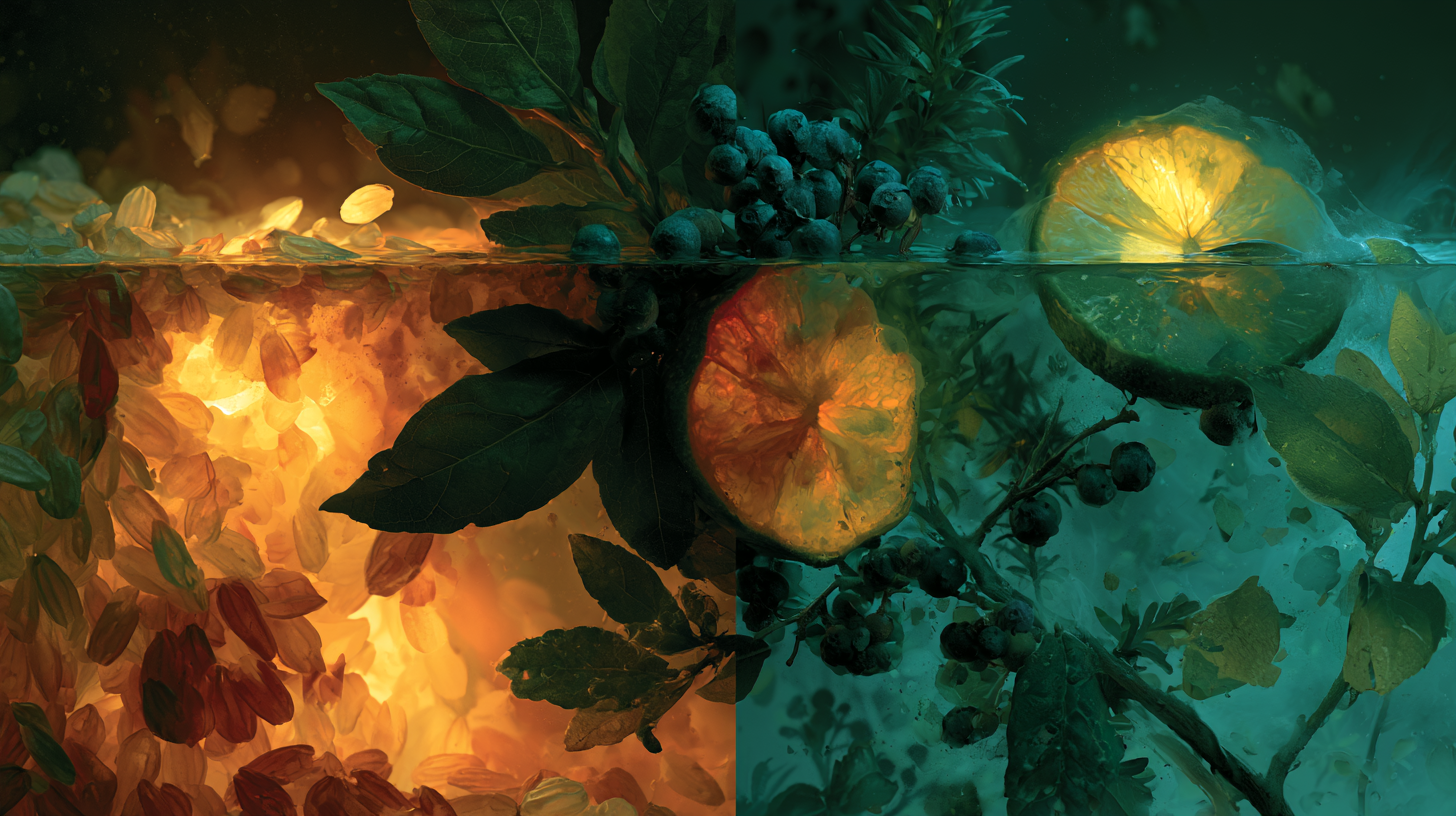
Two Contrasting Expressions Born from a Single Orchard
In Minabe, Wakayama Prefecture, the landscape is shaped by the centuries-old Minabe-Tanabe Ume System, recognized as a Globally Important Agricultural Heritage System. This is a home of the Nanko plum, where growing fruit is also a cultural practice passed between generations.
From a single family-owned orchard come two distinct expressions: CU9-Fuu / Mirin Base and CU9-Yii / Gin Base. Developed by Ryo Takada of CU9 under the Minabe Craft Umeshu label, both begin with Nanko plums hand-picked when fully ripe on the tree. How does this shared starting point lead to two different identities?
Two Philosophies from One Orchard
Using plums from the producer’s own orchard makes their origin traceable. That close relationship between the source of the fruit and the work of the producer is common to Fuu and Yii.
Minabe was designated the Kishu Minabe Umeshu Special Zone in 2008. For umeshu produced within the town from locally grown plums, the minimum annual production requirement for a manufacturing licence was lowered, opening a path for smaller producers. This provides a setting in which local fruit can be interpreted through individual approaches.
The paths divide at the choice of liquid used for steeping. Fuu is based on hon-mirin; Yii is based on craft gin.
Fuu: Choosing Mirin
Fuu uses Me, a hon-mirin brand from Kanda Toshimaya. Made with Japanese glutinous rice, rice koji and Kuma shochu from Kumamoto, this mirin becomes the medium in which CU9 steeps fully ripe Nanko plums for six months.
No sugar is added when making Fuu. Its sweetness draws on the sugars already present in hon-mirin: during mirin production, enzymes from koji convert rice starch into sugars. No added sugar does not mean sugar-free.
At 8% ABV, Fuu brings together the sweetness of hon-mirin and the acidity of Nanko plums, drawing on both rice and fruit. Hon-mirin is widely known as a cooking ingredient, but here it serves as the steeping liquid itself.
Yii: Choosing Craft Gin
Yii takes craft gin as its base: Sakaki, made at Kishu Kumano Distillery in Wakayama. The peels, seeds, leaves and other plant-derived ingredients used to flavor gin are known as botanicals. Alongside juniper, Sakaki uses botanicals such as citrus and sansho, including ingredients sourced from Wakayama.
With Yii, both the plums and the production of its base gin connect to Wakayama. This does not mean that every botanical was grown where the gin was made. Rather, the source of the fruit and the way the gin is produced offer two perspectives on its relationship with place.
Yii has an alcohol strength of 26% and uses beet sugar for sweetness. The aroma and acidity of ripe Nanko plums meet plant-like and spicy notes from the gin. Its flavor is assembled differently from Fuu’s hon-mirin-based approach.
A Study in Contrast
The difference is not simply alcohol strength. Looking at the steeping liquid and the source of sweetness makes the two production approaches clearer.
| Element | Fuu | Yii |
|---|---|---|
| Base | Me hon-mirin | Sakaki craft gin |
| Alcohol strength | 8% | 26% |
| Source of sweetness | Sugars in hon-mirin; no sugar added during production | Beet sugar |
This is not a ranking of one above the other. It shows how plums from the same orchard can become different umeshu through the choice of steeping liquid and sweetness.
Minabe and a Wider View of Umeshu
When these two expressions are discussed in Bangkok, the broad description ‘Japanese umeshu’ leaves much unexplained. Hon-mirin contributes sweetness derived from rice; gin introduces botanical aromas. Following each base back to its origins reveals different possibilities within the same fruit.
Fuu and Yii are not simply stronger and lighter versions of one recipe. They are two answers built from different ingredients and methods, starting at the same orchard. The history of plum growing is inherited, but the decision about what to make from those plums remains open to the producers of today.
(Mr. Bacchus)
Audio guide: Fuu and Yii compared
This comparison introduces the ingredients, base liquids and alcohol strengths of Fuu and Yii. The same episode appears on the feature and product pages.
English · 7:35
This article explores the ingredients, production methods and cultural background of CU9’s Fuu and Yii. It does not promote or encourage alcohol consumption. Intended for readers aged 20 and over.
บทความนี้นำเสนอข้อมูลเกี่ยวกับวัตถุดิบ วิธีการผลิต และภูมิหลังทางวัฒนธรรมของ Fuu และ Yii จาก CU9 มิได้มีเจตนาส่งเสริมหรือโฆษณาเครื่องดื่มแอลกอฮอล์ สำหรับผู้อ่านอายุ 20 ปีขึ้นไป
Discover the culture behind every bottle
We share brewery stories, tasting notes and the craft of koji & fermentation — for educational and cultural purposes only.
เราถ่ายทอดเรื่องราวจากผู้ผลิต บันทึกรสชาติ และศาสตร์แห่งโคจิและการหมัก — เพื่อการศึกษาและวัฒนธรรมเท่านั้น
Follow on Instagram Facebook