Drink
Polishing Away 92% of the Rice, Leaving Just 8%
The Focus and Resolve Behind Tatenokawa “Kyokugen”
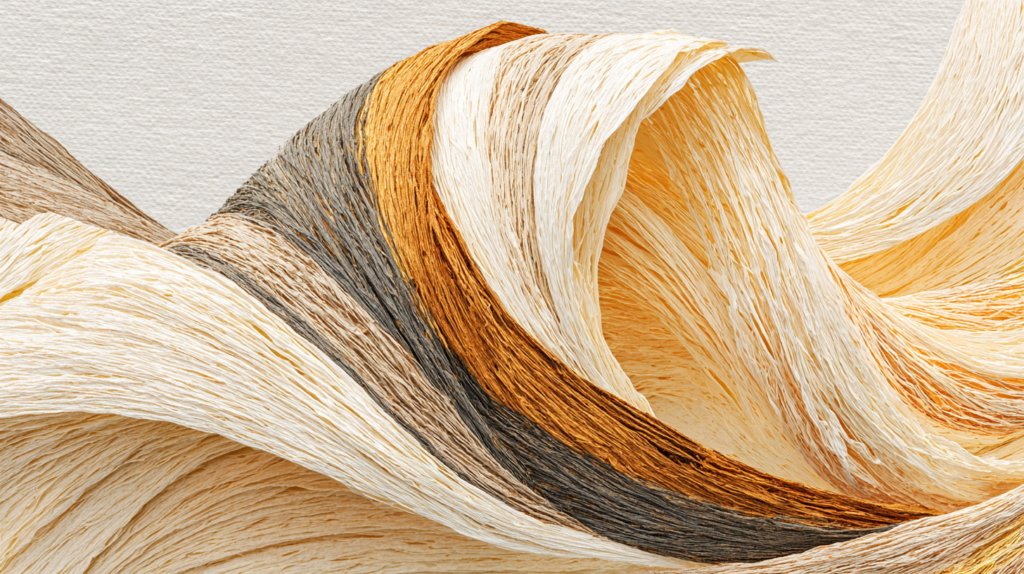
Polish a single grain of rice. Then polish it again. And again, until almost nothing remains. A mere 8% of its original weight is left; the other 92% is meticulously shaved away as rice bran over roughly 40 days. Born from pushing rice to its physical limit, the Junmai Daiginjo “Kyokugen”|brewed by Tatenokawa Shuzo in Sakata, Yamagata|embodies its name: the ultimate limit.
A Century of Heritage, A Defining Pivot
Tatenokawa Shuzo was founded in 1832. With a history stretching back nearly two centuries, the brewery took its name, “Tatenokawa” (Shield River), from its connection to presenting sake to the local feudal lord.
In 2010, the brewery made a bold decision: it would cease production of all sake outside the Junmai Daiginjo category, entirely phasing out futsushu, or ordinary table sake. From that point forward, their craft would be dedicated exclusively to Junmai Daiginjo|making them the first brewery in Yamagata Prefecture to do so. What sixth-generation brewery head Junpei Sato chose was not expansion, but absolute focus. In 2013, “Kyokugen” was born as the flagship expression of that singular choice.
This bottle is no mere whim of a brewery seeking to release a premium sake. It is traditions of resolve, captured in liquid form.
The Significance of 8%
To appreciate the gravity of an 8% rice-polishing ratio, one must look at the standard for Daiginjo, which requires 50% or lower. Tatenokawa’s precision takes this requirement to a formidable extreme.
The rice used is 100% Yamada Nishiki from Hyogo Prefecture. By shaving away the proteins and lipids in the outer layers to the absolute limit, the brewery minimizes the components that introduce off-flavors, leaving only the starch-rich core. The brewing takes place in a modern facility completed in 2021, where the temperature of the moromi (fermentation mash) is controlled in micro-increments of 0.1°C.
One might assume that polishing rice to such a degree would leave the flavor thin. Yet, within its pristine profile, “Kyokugen” retains an unexpected depth|a gentle roundness and a lingering finish derived entirely from the rice core. At the furthest edge of subtraction, richness endures. That is what makes “Kyokugen” so compelling.
Miyama Washi and Western Cheese
The packaging mirrors this aesthetic restraint. Wrapped in a clean white carton, the bottle features a label made from Miyama washi|a traditional handmade paper native to Yamagata. The refinement extends seamlessly from the liquid to its visual presentation.
The brewery’s pairing suggestions offer an unexpected dialogue between East and West. Alongside delicate Japanese flavors like Kyoto yuba (tofu skin), it complements rich Western cheeses such as blue cheese and Gouda. Balancing delicate Eastern nuances with the richness of the West, “Kyokugen” acts as a graceful bridge at the dining table.
Defining “Kyokugen”
“Kyokugen” signifies the ultimate threshold|the point beyond which one cannot press further. An 8% polishing ratio, 40 days of continuous milling, and temperature control within 0.1°C: each element is quietly contained within those two Japanese characters.
This is not simply a premium sake defined by price, but a narrative of calculated dedication. As the appreciation for sake and its heritage grows globally, discerning audiences in Bangkok can now quietly trace the philosophy of a Yamagata brewery that pursued its craft to the absolute edge.(Mr. Bacchus)
This article is intended solely to explore the brewing philosophy and cultural heritage of Tatenokawa Brewery and its Junmai Daiginjo “Kyokugen (ULTRA)”, and does not aim to promote or encourage the consumption of alcohol. / บทความนี้จัดทำขึ้นเพื่อนำเสนอข้อมูลเกี่ยวกับปรัชญาการผลิตและมรดกทางวัฒนธรรมของ Tatenokawa Brewery และสาเก Junmai Daiginjo “Kyokugen (ULTRA)” เท่านั้น มิได้มีเจตนาเพื่อส่งเสริมหรือโฆษณาเครื่องดื่มแอลกอฮอล์ สำหรับผู้มีอายุ 20 ปีขึ้นไป โปรดดื่มอย่างรับผิดชอบ
Related Product(s)
TATENOKAWA Extreme Ultra 8 Kyokugen / TATENOKAWA Stream Seiryu / TATENOKAWA Stream Red / TATENOKAWA Soube Wase
Discover the culture behind every bottle
We share brewery stories, tasting notes and the craft of koji & fermentation | for educational and cultural purposes only.
เราถ่ายทอดเรื่องราวจากผู้ผลิต บันทึกรสชาติ และศาสตร์แห่งโคจิและการหมัก | เพื่อการศึกษาและวัฒนธรรมเท่านั้น
Follow on Instagram FacebookRelated Articles
“Mastering the Art of 33%” / “The Spectrum of Junmai Daiginjo: Tatenokawa at 8%, 33%, and 50%” / “Discover how Tatenokawa Sake Brewery, Japan’s only all-Junmai Daiginjo producer, is rewriting the rules of premium sake” / “Reviving the Ancestor of a Legendary Sake Rice”