Drink
N by Hidetoshi Nakata: Brewing and bottle maturation
From football to sake
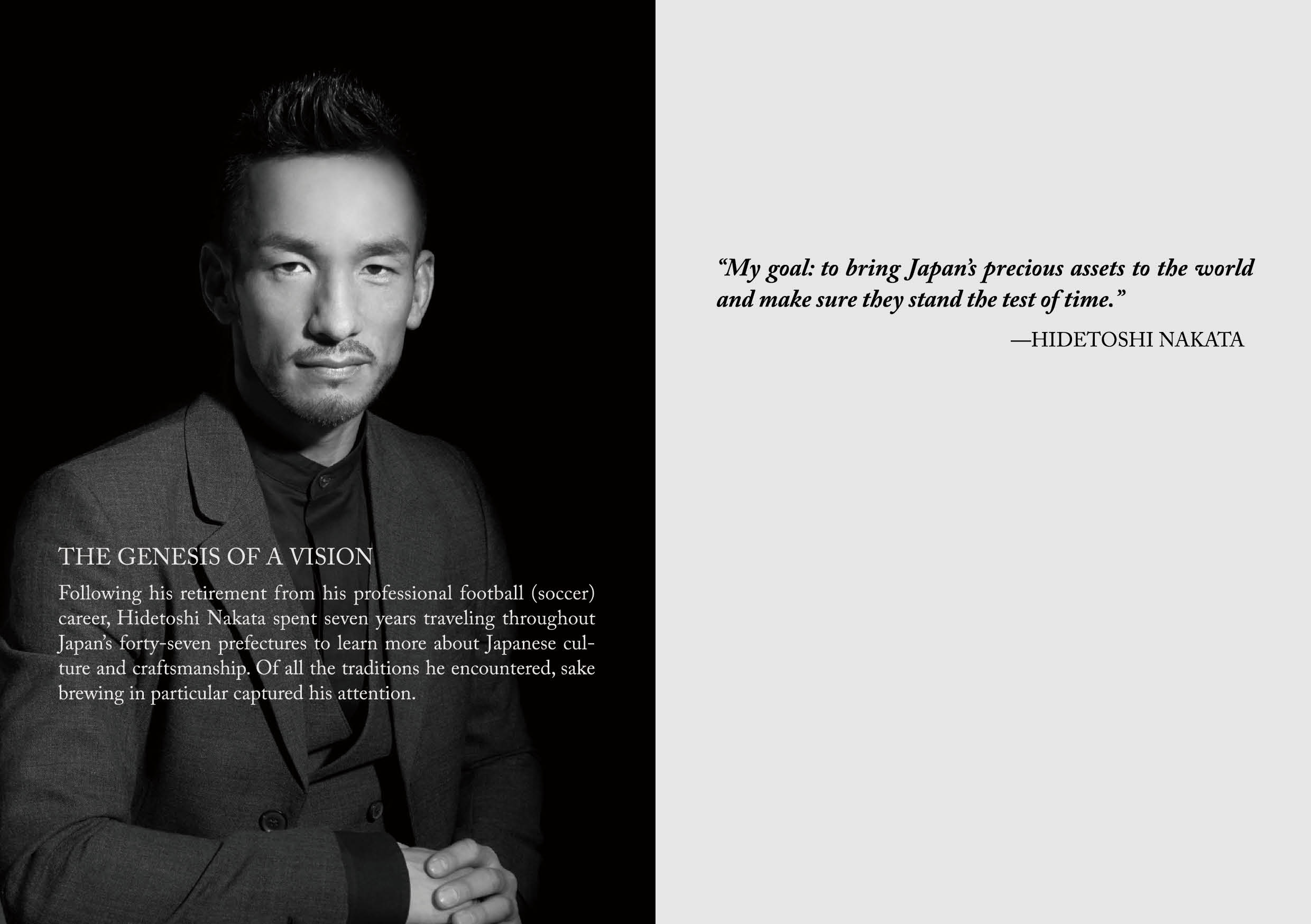
After retiring from professional football in 2006, Hidetoshi Nakata travelled throughout Japan to learn about regional crafts and agriculture. His interest in sake grew through visits to hundreds of breweries. In 2015 he established Japan Craft Sake Company to share knowledge of Japanese sake and craftsmanship.
Nakata’s travels also drew his attention to the way sake was stored and served outside Japan. N by Hidetoshi Nakata grew out of his work with Takagi Brewery in Yamagata, the brewery behind Juyondai. The project involved rice growers, brewers and craftspeople working on the presentation.
The signature release and the 2017 vintage
The producer’s portfolio lists Yamada Nishiki from a Special A district in Hyogo and Aiyama grown in Hyogo. It describes shizuku-shibori, a method in which sake drips from cloth bags under gravity, and an alcohol content of 15%. It describes a production run of 1,000 bottles per vintage for the signature release. The 2025 brochure lists 24 months of bottle maturation at −8 °C for that release.
The 2025 brochure describes the 2017 vintage separately. It lists six years of bottle maturation at −8 °C, shizuku-shibori and 15% alcohol by volume. These are maturation conditions at the brewery.
Traceability and the scope of temperature records
JAPAN CRAFT SAKE COMPANY describes Sake Blockchain as a system that uses bottle-specific QR codes to record distribution, inventory and sales information. Its separate international-logistics page reports an average network temperature of approximately −4°C to −5°C between brewery dispatch and the overseas distributor’s warehouse. This is the operator’s network-level description, not a measurement for every N by Hidetoshi Nakata shipment or a constant temperature guarantee through to the customer’s glass.
For a particular bottle or shipment, the applicable handling instructions, recorded locations, dates and measurement coverage need to be checked. QR-based traceability alone does not establish uninterrupted refrigeration, bottle-content temperature or unchanged quality. Brewery maturation conditions are separate from transport and storage conditions.
Sources: Hidetoshi Nakata’s biography, the sake portfolio, the 2025 project brochure, Sake Blockchain and international logistics. The public descriptions in the two logistics sources were checked on 3 September 2026.
This article is intended solely to share educational and cultural information about the topics discussed, and does not aim to promote or encourage the consumption of alcohol. For readers aged 20 and over. Please drink responsibly.
บทความนี้จัดทำขึ้นเพื่อให้ข้อมูลเชิงความรู้และวัฒนธรรมเกี่ยวกับหัวข้อที่นำเสนอเท่านั้น มิได้มีเจตนาส่งเสริมหรือโฆษณาเครื่องดื่มแอลกอฮอล์ สำหรับผู้มีอายุ 20 ปีขึ้นไป โปรดดื่มอย่างรับผิดชอบ
Discover the culture behind every bottle
We share brewery stories, tasting notes and the craft of koji & fermentation | for educational and cultural purposes only.
เราถ่ายทอดเรื่องราวจากผู้ผลิต บันทึกรสชาติ และศาสตร์แห่งโคจิและการหมัก | เพื่อการศึกษาและวัฒนธรรมเท่านั้น
Follow on Instagram FacebookRelated Articles
“Japan’s “Golden Generation” of Sake” / “Craft Sake Week 2026” / “Why Juyondai Quietly Remains at the Top”