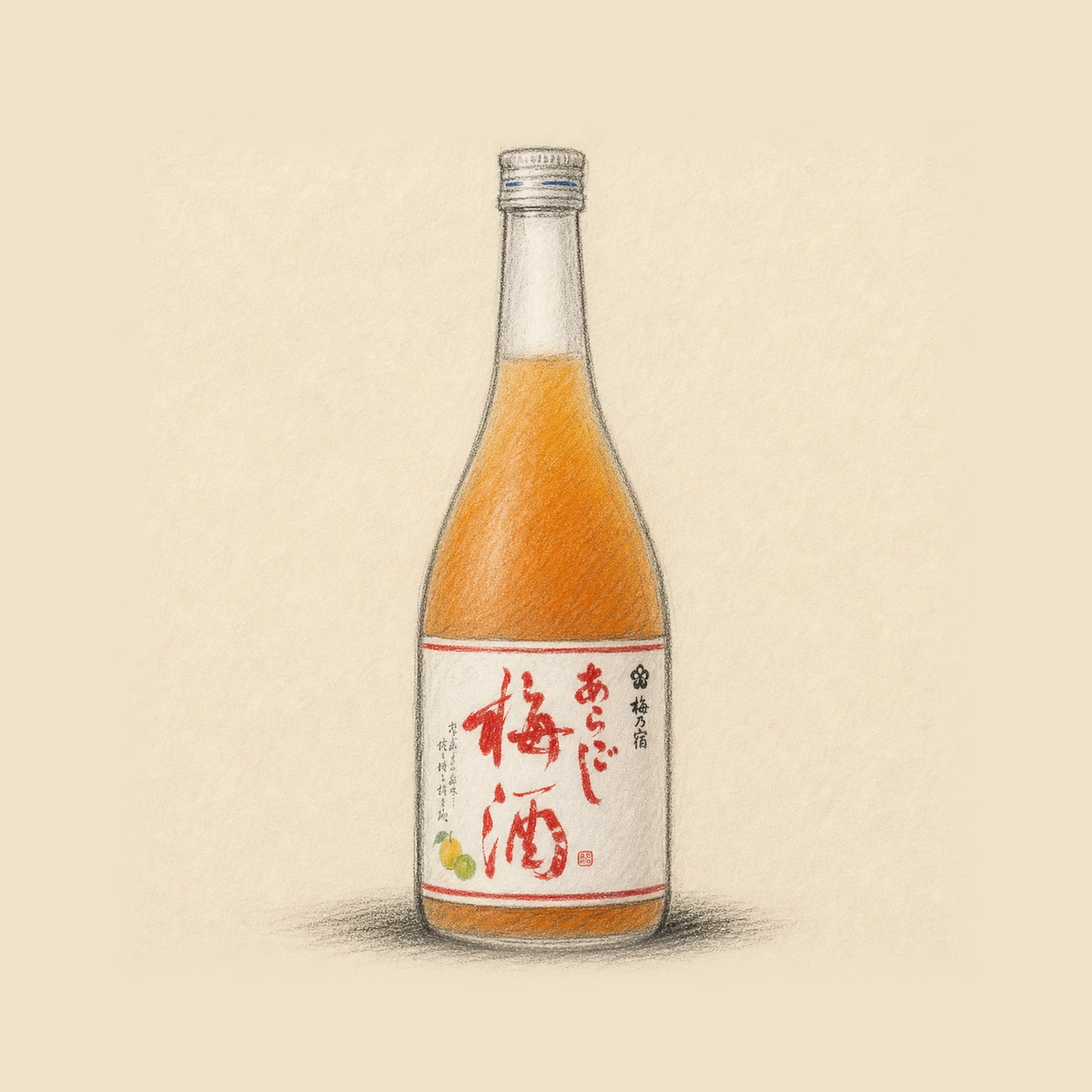
ARAGOSHI Umeshu
After steeping, the ume is pitted, puréed and blended back into the liqueur. About 21% fruit pulp creates dense texture and vivid acidity.
Thailand · Product information
Product information from Bacchus Global Co., Ltd., based in Bangkok, Thailand. About Bacchus Global
Umeshu with about 21% fruit pulp
Giving the steeped fruit a second life
Umenoyado makes the liqueur with both green and fully ripened Japanese ume. Once steeping is complete, the fruit is pitted, puréed and returned to the liquid. This extra step defines ARAGOSHI’s density and texture.
Green and ripe ume are steeped
Using fruit at two stages of ripeness brings together fresh acidity and the depth of fully ripened ume.
The fruit is pitted and blended back
The steeped ume is not simply discarded. Its stones are removed and the flesh is puréed into the liqueur, accounting for about 21% of the final product.
Fruit pulp at the heart of its texture
Fruit pulp makes up about 21% of the liqueur, creating a rounded density and vivid fruit presence distinct from a clear, pulp-free style.
Ripe ume depth with a fine, peel-like bitterness
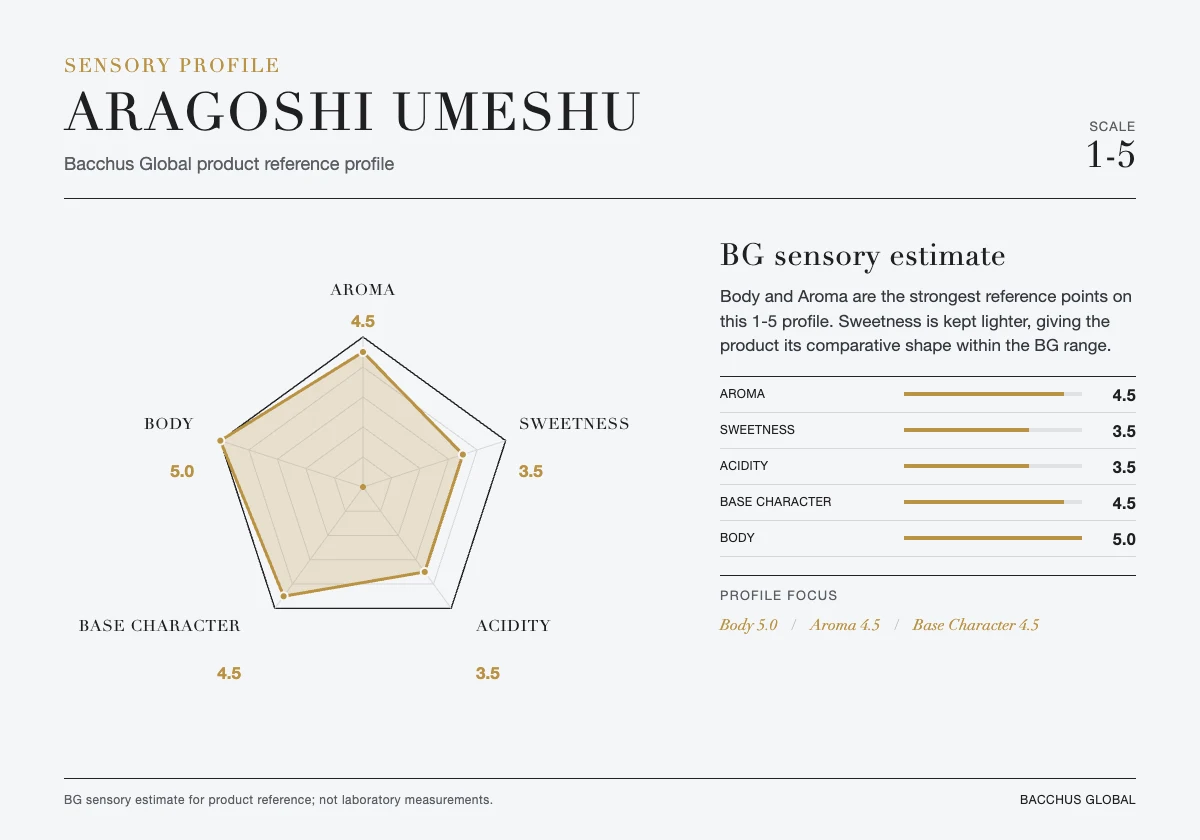
Ripe ume, honey and apricot lead the aroma. The palate has a nectar-like smoothness, balanced by fresh acidity, a faint peel-like bitterness and a touch of spice. It is concentrated, yet the finish remains clean and composed.
Question 1
Which ume are used?
- Green and fully ripe ume
- Only fully ripe ume
- Only green ume
Read the answer and explanation
Correct answer: A — Green and fully ripe ume
The page names Japanese ume at both green and fully ripe stages.
Question 2
What happens to the ume after steeping?
- The stones are ground with the pulp
- Stones are removed and pulp is puréed and returned
- All the pulp is discarded
Read the answer and explanation
Correct answer: B — Stones are removed and pulp is puréed and returned
The pitted fruit is turned into a purée and added back to the umeshu.
Question 3
Approximately what proportion is fruit pulp?
- About 2%
- About 12%
- About 21%
Read the answer and explanation
Correct answer: C — About 21%
The page says about 21%; this is not an exact value for every production lot.
Four directions shaped by dense fruit and ripe aroma
These pairings are not official combinations announced by the producer, but a reading of the aroma and flavor characteristics recorded on the product page. Ripe ume, honey and apricot aroma, a nectar-like texture, and a faint peel-like bitterness form the basis for four directions.
In food-pairing theory, acidity is known to soften the sensation of richness, and fruit with honey- or apricot-like aroma tends to sit comfortably alongside aged cheese or caramelized sweets. Aragoshi Umeshu’s concentrated texture and lightly bitter finish follow this same logic.
Umenoyado in Katsuragi, Nara
Umenoyado was founded in Katsuragi, Nara, in 1893. ARAGOSHI Umeshu followed in 2007, turning the fruit left after steeping into the defining element of the finished liqueur. The result has become one of the producer’s signature expressions of whole-fruit character.
IWSC 2022 / Japan Umeshu Competition 2017
ARAGOSHI Umeshu received Silver at both IWSC 2022 and the 2017 Japan Umeshu Competition. These are awards confirmed for this specific product.
From the same producer
Only directly relevant products and Bacchus Global stories are shown.
Related stories
Contact Bacchus Global for product documentation and trade information.