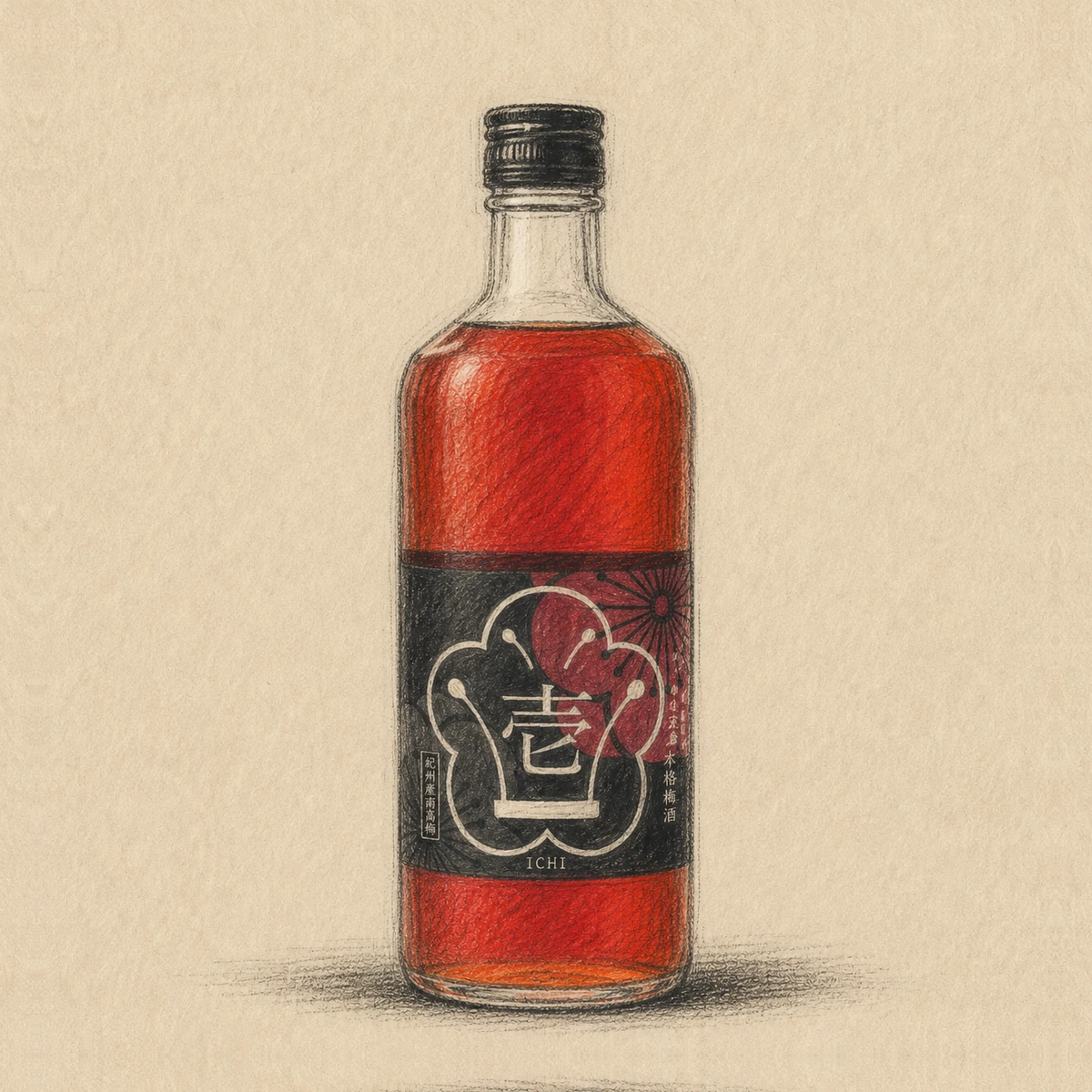
ICHI Umeshu
Estate-grown ripe Nanko ume and red-fleshed Tsuyu-Akane are steeped with Ryukyu awamori and rock sugar alone, revealing pale pink colour and a clean plum finish.
Thailand · Product information
Product information from Bacchus Global Co., Ltd., based in Bangkok, Thailand. About Bacchus Global
Awamori-based umeshu
Okinawan awamori and two Kishu ume varieties
Ripe Nanko and red-fleshed Tsuyu-Akane are steeped with Ryukyu awamori and rock sugar.
Tree-ripened fruit, steeped on harvest day
Yellow-ripe Nanko ume from the estate orchard goes into awamori on the day it is picked.
Tsuyu-Akane brings colour and acidity
Natural pigment gives the liqueur its pale pink hue while the red ume adds vivid acidity to Nanko’s depth.
Awamori depth, expressed with plum clarity
The spirit stays discreet, supporting the fruit with depth and a clean, quick finish.
The story behind this bottle
A conversation with the plum farm at its centre. About seven minutes.
Question 1
Which spirit is used to steep the ume in ICHI Umeshu?
- Ryukyu awamori
- Sake
- Whisky
Read the answer and explanation
Correct answer: A — Ryukyu awamori
Ripe Nanko and Tsuyu-Akane are steeped with Ryukyu awamori and rock sugar. Do not transfer the base of a sister product to ICHI.
Question 2
Which ume variety is said to add pale pink colour and vivid acidity?
- Nanko
- Tsuyu-Akane
- A non-ume colouring fruit
Read the answer and explanation
Correct answer: B — Tsuyu-Akane
Tsuyu-Akane is a red-fleshed ume that brings natural colour and acidity. The colour is not evidence of another fruit or artificial colouring.
Question 3
When does the page say the estate-grown ripe Nanko is put into awamori?
- Months after harvest
- After cask ageing
- On the day it is picked
Read the answer and explanation
Correct answer: C — On the day it is picked
The page says the yellow-ripe Nanko is picked from the estate orchard and steeped on harvest day. It does not disclose the harvest date of every lot.
Fragrant ume, measured sweetness and vivid acidity
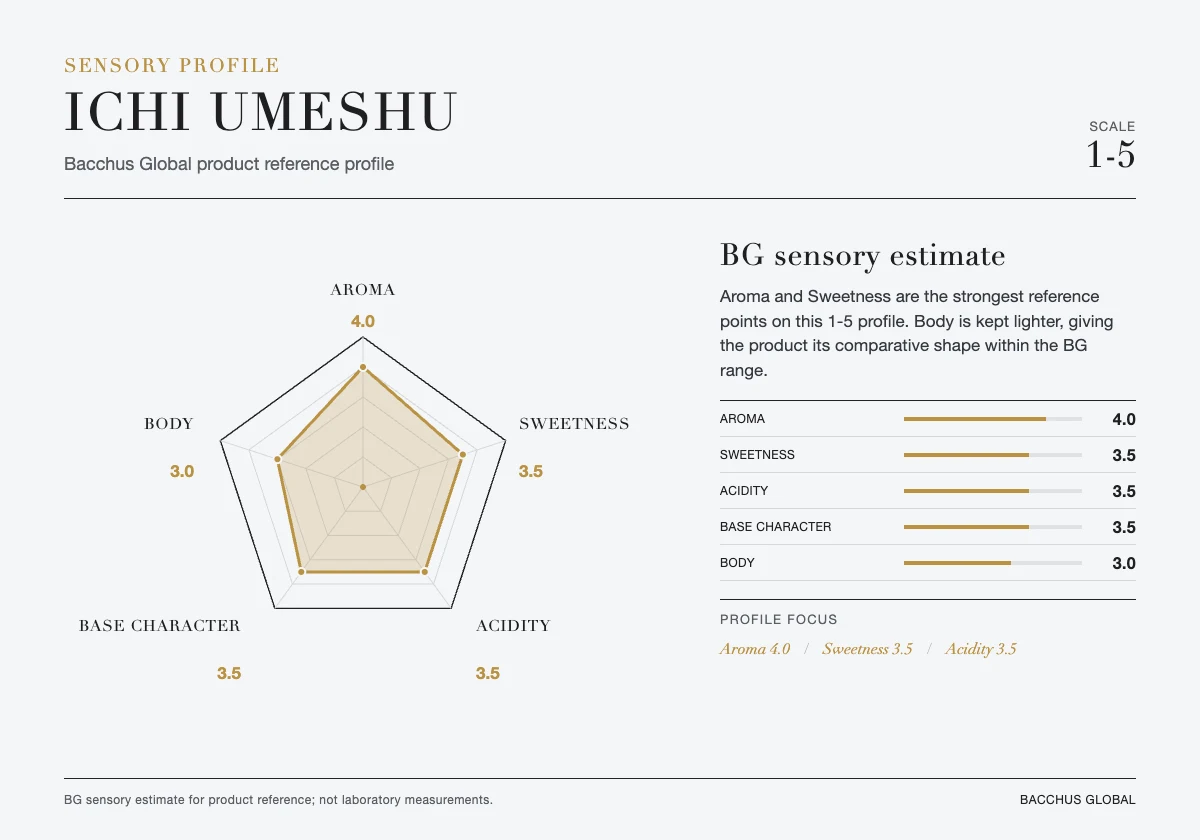
Plum aroma carries a quiet hint of awamori, followed by fruit sweetness, acidity and savoury depth. The palate is smooth and the finish refreshingly dry for the style.
Built around a pale acidity and savoury depth
The food affinities of ICHI Umeshu carry no official recommendation from the producer either. They are organised around the vivid acidity from the Tsuyu-Akane ume, the savoury depth carried by the awamori base, and a light, dry finish, in four directions.
This pairing rationale draws on the following reference book: Pairing principles for sushi and Japanese cuisine note that distilled spirits such as awamori carry almost no iron compared with brewed alcohol, reducing fishy notes when matched with seafood. The structural axes of acidity, umami and lightness were used to organise all four directions.
Kishu Honjo Umeyoshi, from ume growers to liqueur makers
Based in Minabe, Wakayama, Kishu Honjo Umeyoshi grows ume on its own farm and carries the fruit from harvest through liqueur production.
Kura Master 2026 Jury Prize · Platinum
Awarded the Jury Prize, first in its division, and a Platinum medal in the 2026 Kura Master Liqueur Competition.
From the same producer
Only directly relevant products and Bacchus Global stories are shown.
Related stories
Only directly relevant products and Bacchus Global stories are shown.
Contact Bacchus Global for product documentation and trade information.