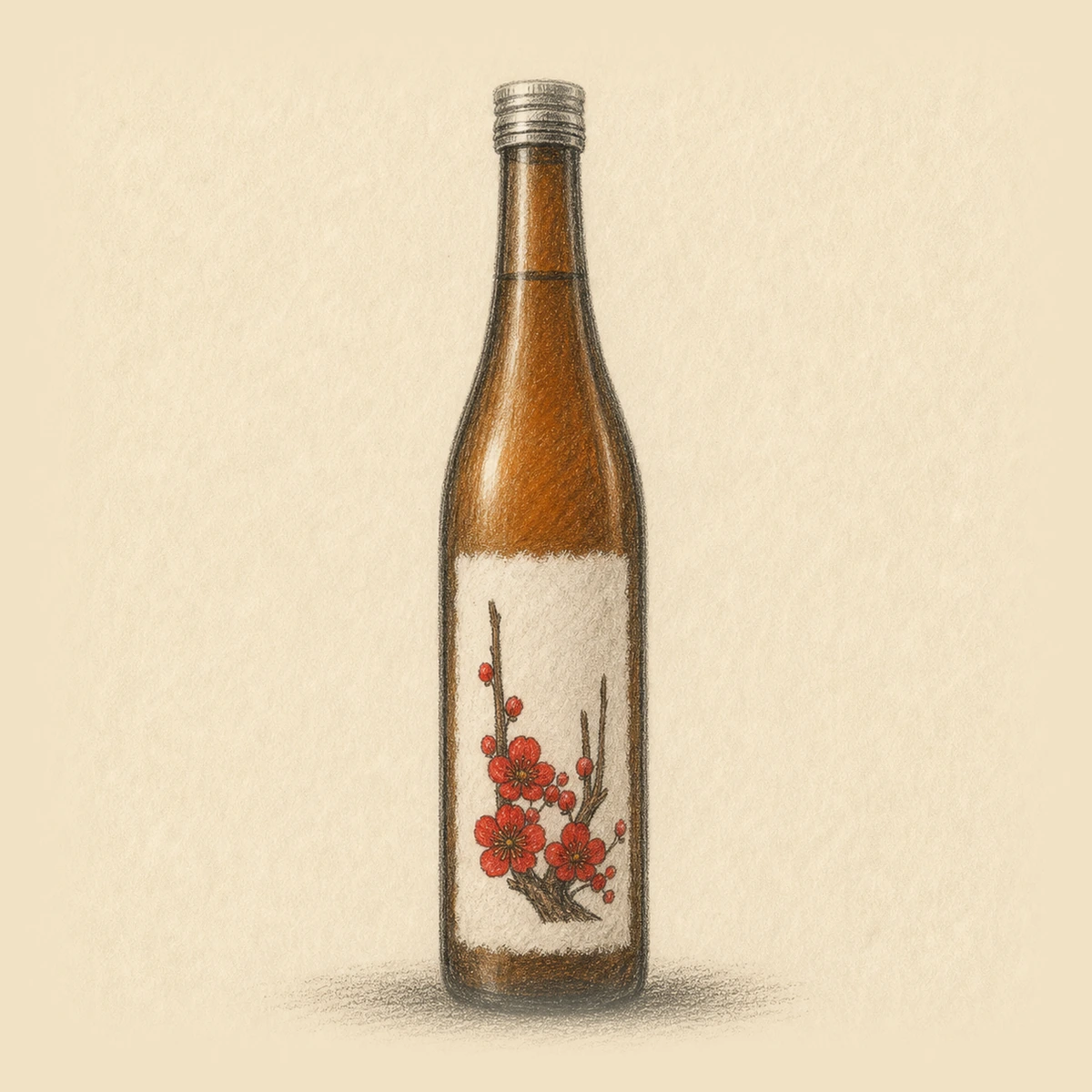
HANAFUDA no UMESHU
Nishiyoshino green ume meets flavourful honkaku shochu, while restrained sugar brings acidity forward and turns umeshu toward a lighter, food-friendly form.
Thailand · Product information
Product information from Bacchus Global Co., Ltd., based in Bangkok, Thailand. About Bacchus Global
Honkaku-shochu-based umeshu
The story behind this bottle
Aya and Kenji follow the ume blossoms on the label through the seasons of the hanafuda deck, then trace the Nishiyoshino fruit and honkaku shochu used to make this liqueur. English · approximately 8 minutes.
Supporting ume with honkaku shochu and less sugar
Single-distilled honkaku shochu forms the core of the base, allowing the fragrance and acidity of Nishiyoshino green ume to show without being covered by sweetness.
Putting green-ume acidity first
The fresh, forceful acidity of Nishiyoshino fruit sits at the centre of the profile.
Restraining sugar, preserving spirit character
Measured sweetness lets the gentle raw-material notes of honkaku shochu coexist with the ume.
Umeshu with the lightness of a table drink
A non-sticky palate and quick finish keep the profile light alongside food.
Gentle green-ume aroma, vivid acidity, clean finish
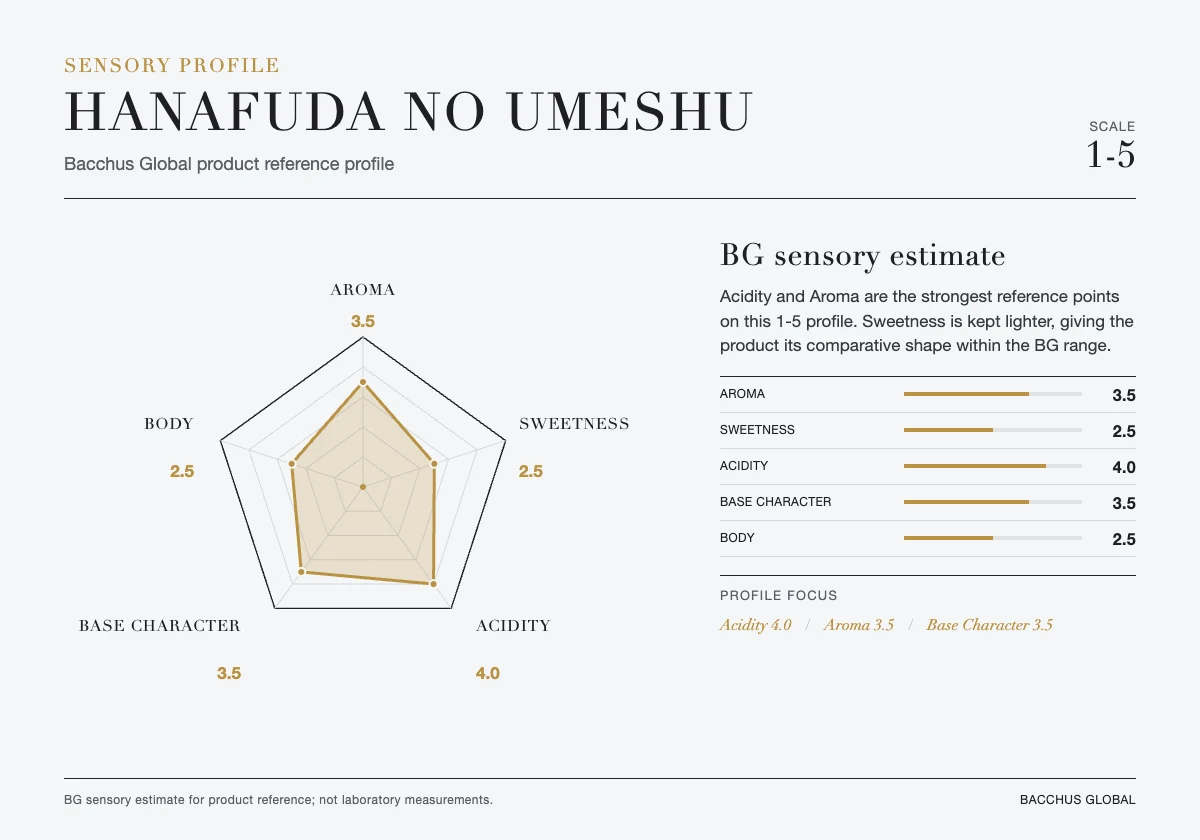
Soft green-ume fragrance precedes bright, firm acidity, supported by restrained sweetness. The finish is short, clean and free of weight.
Question 1
Where does the green ume come from?
- Nishiyoshino
- Aomori apples
- Only Wakayama peaches
Read the answer and explanation
Correct answer: A — Nishiyoshino
The green ume comes from Nishiyoshino.
Question 2
What forms the core of the base?
- Red wine
- Honkaku shochu
- Sake alone
Read the answer and explanation
Correct answer: B — Honkaku shochu
Single-distilled honkaku shochu forms the core.
Question 3
How is sweetness designed?
- More sugar to hide acidity
- No ume at all
- Less sugar to let green-ume acidity show
Read the answer and explanation
Correct answer: C — Less sugar to let green-ume acidity show
The page describes restrained sugar so ume acidity remains clear.
Green ume acidity and a clean shochu body, read through everyday food
The food affinities of HANAFUDA no UMESHU are not combinations stated by the producer, but a reading drawn from the characteristics recorded on this page. Built on green ume’s crisp acidity, restrained sweetness, and the clean body drawn from its honkaku shochu base, this is organized into four directions.
Matching acidity families, and choosing lighter dishes in step with the liqueur’s restrained sweetness, both follow a structural approach based on the intensity of sweetness and acidity.
Nara Kasugayama Shuzo, established in 1877
Established in 1877, Nara Kasugayama Shuzo works with Nara water and fruit across its distinctive Hanafuda-labelled umeshu range.
From the same producer
Only directly relevant products and Bacchus Global stories are shown.
Related stories
Contact Bacchus Global for product documentation and trade information.