
Drink
After a Record-Breaking Summer|What Made the Difference in France’s 2026 Harvest
In late October, grapevine leaves begin to turn golden on the slopes of the Côte d’Or in Burgundy. As vineyard work winds down for the season, harvest reports arrive from winegrowers across France, gradually bringing the character of the 2026 vintage into focus.
What the Hottest Summer Since 1900 Left Behind in the Vineyards
According to Météo-France, the summer of 2026 (June through August) was the hottest since records began in 1900. The average temperature was 3.6°C above the 1991-2020 norm, far surpassing the previous record set in 2003. Three heatwaves lasted a combined 53 days, while rainfall was approximately 40% below normal.
According to reports received by Bacchus Global (BG) from several winegrowers, water shortages caused grape ripening to stall in many vineyards in 2026, leaving berries small and low in juice. Young vines in some plots also suffered heat damage. Depending on the region, harvesting began three to six weeks earlier than usual. Yields were low, alcohol levels tended to be high, and aromas and fruit flavors were concentrated, although acidity declined in some cases.
According to media reports, September estimates from Agreste, the statistical department of the French Ministry of Agriculture, projected national wine production at less than 34 million hectoliters, placing the 2026 harvest among the smallest in the past 30 years.
How the Impact Varied by Region
The same estimates projected Champagne to experience the largest decline in production, with output approximately 50% below the previous year. Sugar levels rose so high that the Institut National de l’Origine et de la Qualité (INAO), France’s national body responsible for appellations, reportedly granted a special exemption for the 2026 harvest, raising the alcohol limit from the usual 13% to 15%.
Even so, one of BG’s partner producers in Champagne reported no particular concern about the vines themselves. The reason lies in Champagne’s underlying chalk soils, which have a strong capacity to retain water.
Among the reports from winegrowers, the greatest concern centered on Burgundy. Both Chardonnay and Pinot Noir are northern grape varieties vulnerable to extreme heat. Agreste’s estimates projected production in Burgundy and Beaujolais to fall by roughly one-third compared with the previous year. There are also concerns that the taut minerality characteristic of white wines from Chablis and the Côte de Beaune may be diminished.
Elsewhere, the reports presented a different picture. In Alsace, yields were low, but quality was reportedly good, particularly for Riesling. Producers in the Rhône described both quantity and quality as “very satisfactory.” In southern Roussillon, despite fears of substantial damage, grapes reportedly developed and ripened fully.
Clues to the Differences|Terroir and Vineyard Management
Why did the same summer produce such different outcomes? Three factors emerge from the reports: vineyard elevation, soil water-retention capacity, and vineyard management.
Regarding elevation, growers reported that vineyards on higher slopes experienced cooler days toward the end of summer, helping preserve acidity. Champagne’s chalk soils, mentioned earlier, illustrate the importance of water retention. As for vineyard management, reports from two producers offer useful examples.
At Domaine Gauby in Roussillon, rain fell repeatedly from the previous autumn through winter, with further rainfall in late August and early September. Gauby wrote, “I have never seen so many grapes on the vines.” Alongside the rainfall, the domaine cited its regenerative agricultural practices as one reason for the abundance. These practices are intended to help the vines benefit from rainfall over time.
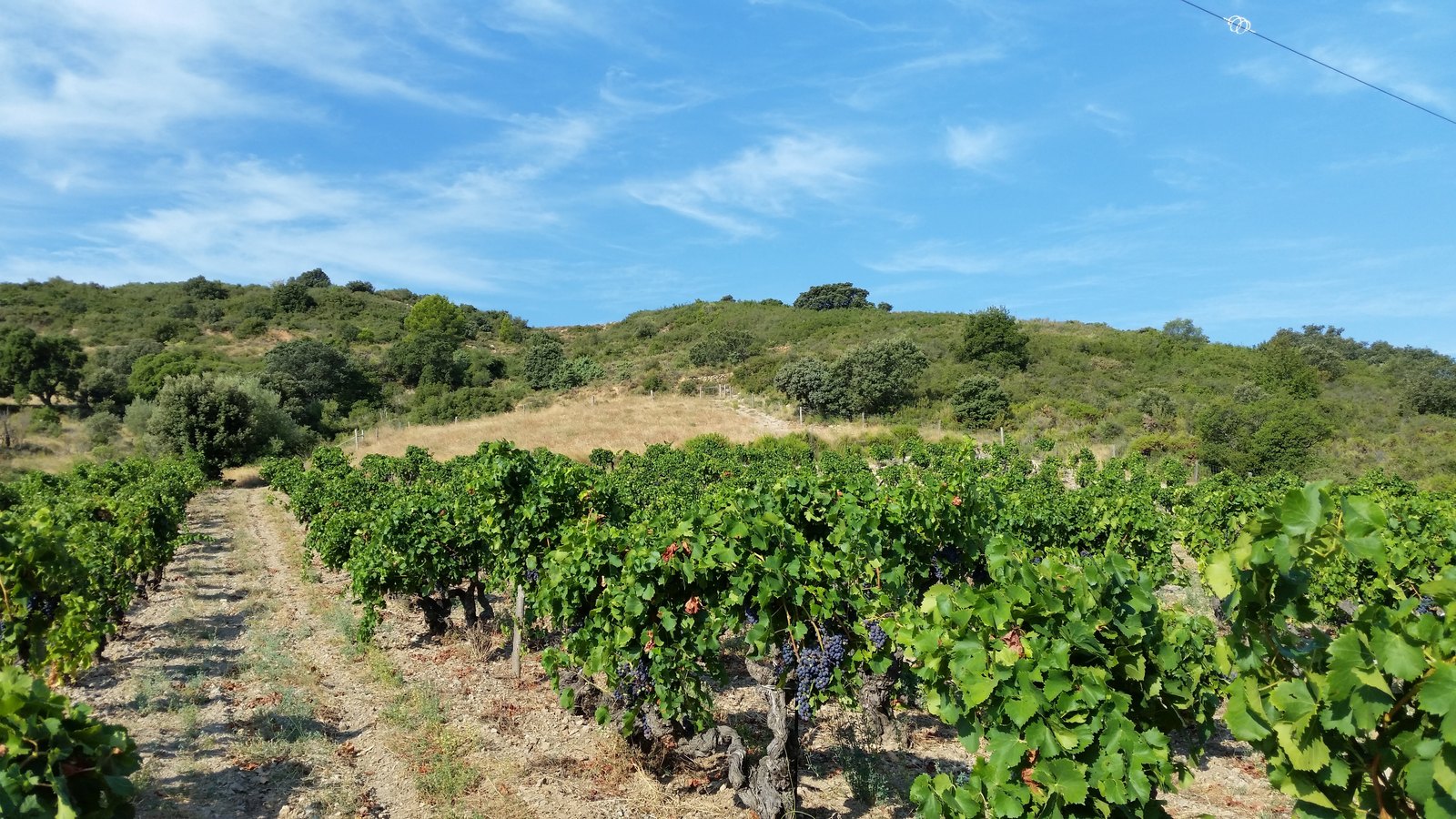
Domaine Bruno Dangin, in the Aube near the Champagne border, also experienced an early harvest and reduced yields. Nevertheless, according to its report, Mathieu Dangin saw encouraging signs from the “vitiforestry” approach he began in 2021, integrating fruit trees into the vineyards. The report did not specify exactly what had changed. Since introducing the practice, he has continued to observe changes in the vineyard, both positive and negative.
Maintaining such commitments to vineyard management can come at a cost. According to reports received by BG, in 2024, when rain continued for eight months, Domaine de l’Enclos in Chablis and Dominique Gruhier in Burgundy chose to forgo their harvests rather than use synthetic pesticides to control downy mildew. Even at the cost of losing an entire vintage, they remained committed to organic viticulture.
How to Understand the Wines of 2026
It would be easy to describe French wines from 2026 simply as products of a “hot vintage.” Yet this year’s reports reveal something more complex: even within the same vintage, substantial differences can emerge between regions and individual vineyards.
In the years ahead, understanding the wines of 2026 will mean looking beyond the vintage itself, to the region, vineyard elevation, and how the producer has cultivated and managed the land over time.
Producers’ reports and vineyard information can help explain how that demanding summer shaped the grapes.
This article is based on BG’s newsletter “Harvest 2026 Report,” sent on 23 October 2026. The full report, including regions and producers not covered here, is available in the Bacchus Journal archive.
This article is intended solely to explore the winemaking artistry and cultural heritage of French wine producers and the 2026 harvest in France, and does not aim to promote or encourage the consumption of alcohol.
บทความนี้จัดทำขึ้นเพื่อนำเสนอข้อมูลเกี่ยวกับศิลปะการทำไวน์และมรดกทางวัฒนธรรมของผู้ผลิตไวน์ฝรั่งเศสและการเก็บเกี่ยวองุ่นปี 2026 ในฝรั่งเศสเท่านั้น มิได้มีเจตนาเพื่อส่งเสริมหรือโฆษณาเครื่องดื่มแอลกอฮอล์ สำหรับผู้มีอายุ 20 ปีขึ้นไป โปรดดื่มอย่างรับผิดชอบ
Discover the culture behind every bottle
We share brewery stories, tasting notes and the craft of koji & fermentation — for educational and cultural purposes only.
เราถ่ายทอดเรื่องราวจากผู้ผลิต บันทึกรสชาติ และศาสตร์แห่งโคจิและการหมัก — เพื่อการศึกษาและวัฒนธรรมเท่านั้น
Follow on Instagram FacebookRelated articles
- The Story of a Winery That Lost Its Name
- BRUNO DANGIN
- Bruno Dangin, The Historical Terroir of Molesme: Where Champagne meets Burgundy
- DOMAINE DE L’ENCLOS
- Domaine Dominique Gruhier: Restoring a Place to Its Purpose
- D. Gruhier, Bourgogne Epineuil
- The Sole Village Appellation for Aligoté|Domaine de Villaine and Bouzeron
- How Dry Is “Brut”?|Understanding the Range of Sweetness Indicated by Champagne Labels
Product information
- DOMAINE GAUBY Calcinaires Rouge 2023
- DOMAINE GAUBY Muntada 2018
- DOMAINE GAUBY Vieilles Vignes Rouge 2021
- BRUNO DANGIN Cuvée Blanche Brut N.V.
- BRUNO DANGIN Cuvée Rosé Brut 2020
- BRUNO DANGIN Prestige de Constance Extra-Brut 2020
- DOMAINE DE L'ENCLOS Chablis 2023
- DOMAINE DE L'ENCLOS Chablis Grand Cru Vaudésir
- DOMAINE DE L'ENCLOS Chablis Premier Cru La Fourchaume 2023
- DOMAINE DOMINIQUE GRUHIER Bourgogne Épineuil 2023
- DOMAINE GRUHIER Cuvée Juliette
- DOMAINE GRUHIER Bourgogne Tonnerre 2022
- DOMAINE GRUHIER Petit Chablis Bio 2023

