

Bacchus Journal
23 October 2026
Harvest 2026
Report
Harvest 2026 in France — a report from the vineyards.
Web edition of “BACCHUS – Harvest 2026 Report -”, sent on 23 October 2026. The observations and assessments below reflect that newsletter edition.
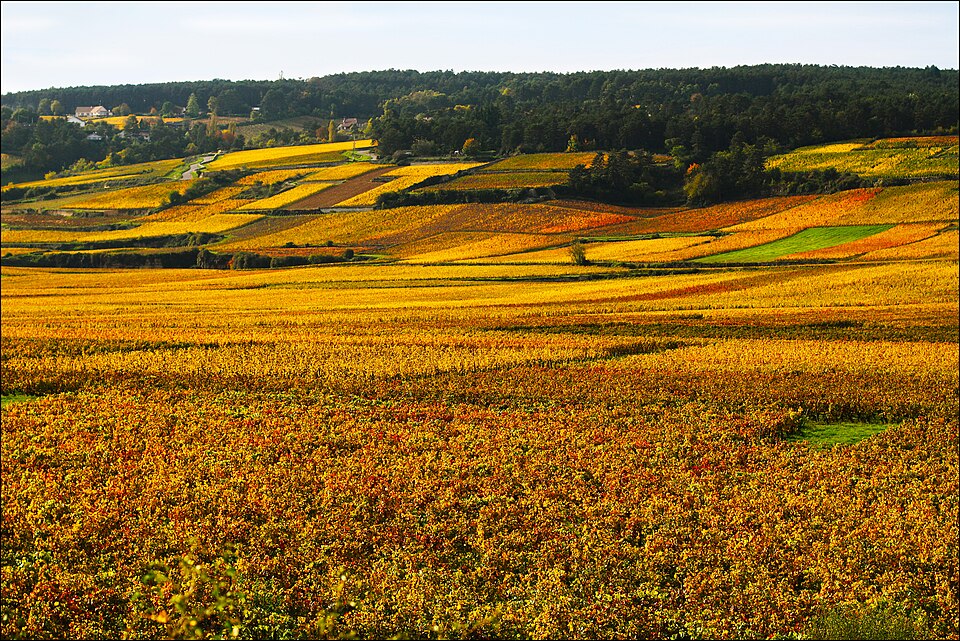
October is nearing its end, the harvests, in France, are complete, the vines have begun to dress themselves in their magnificent golden mantle. The colour that gave the "Côte d’Or" its name. As harvest reports come in, a profile of the vintage emerges.
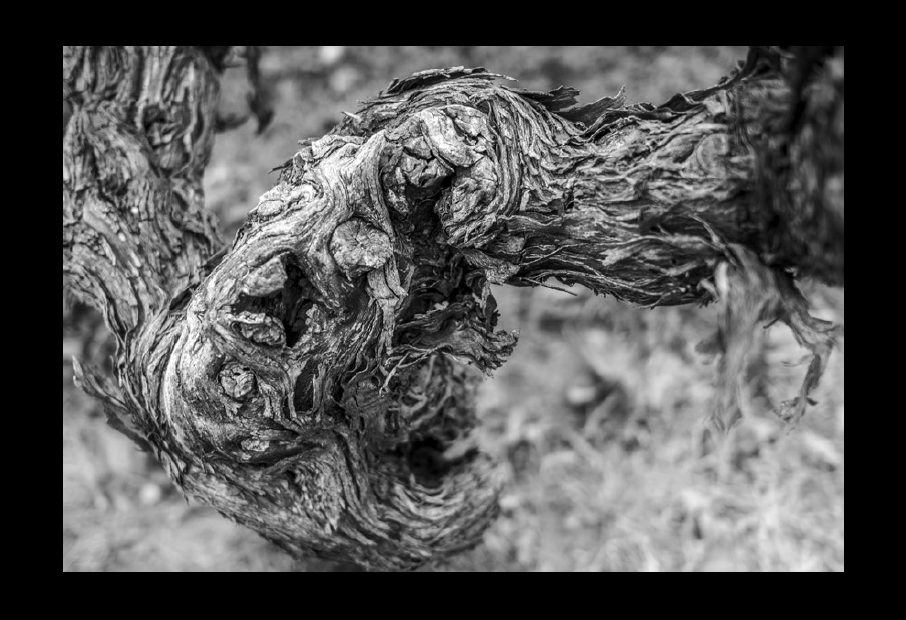
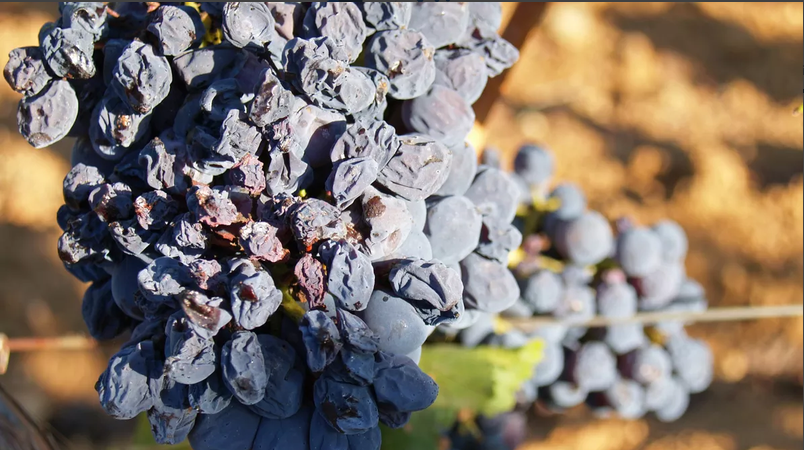
The summer of 2026 was the warmest ever recorded in France since records began in 1900, the 2026 vintage was particularly gruelling for the vines. A succesion of heatwaves led to severe water stress and a significant drop in yields, ranging from 35 to 80% compared to a normal year, depending on the region and the age of the vines. In 2025, the vines protected themselves by taking back the grape juice to survive. In 2026, in many places, the vines, due to the blockage of maturities, were not even able to produce complete grapes, only fruits with little juice. And sometimes not at all on the young vines that have been scalded. And in some cases, the grapes were scorched. Sometimes the vines themselves.
Exceptionally early harvests, 3 to 6 weeks earlier depending on the region, produced small quantities with an increased alcohol content, a high aromatic concentration, a very ripe fruit profile and coated tannins, and sometimes a decrease in acidity. On the high-altitude terroirs – such as Domaine Héritage du Pic Saint Loup or on the higher slopes of Vacqueyras at Domaine Le Sang des Cailloux & Domaine Grand Veneur –, late spells of cool weather helped to preserve correct acidity levels. The same was true for early-harvested wines such as those from Domaine Bruno Dangin and Domaine Gauby in Roussillon.
But again, there are significant variations between regions.
In Alsace – including Domaine Heitzmann – the harvest was of excellent quality but historically low in volume (-20 to 25% compared to the average of the last five years). The Rieslings are particularly successful.
In Champagne, a decrease of almost 50% for our three partner winemakers Bruno and Alice Paillard, Vincent Charlot and the Waris Hubert family. But there is no cause for concern regarding the vines themselves, as the chalk has a remarkable capacity to retain water – between 300 and 400 litres cubic meter.
But the over-ripening of the grapes and the lack of acidity pushed sugar levels to never seen before, forcing the INAO to grant an exceptional derogation authorizing wines to reach 15% alcohol (the usual limit being 13%).
But it is in Burgundy that concerns are greatest. Chardonnay and Pinot Noir are northern grape varieties that are highly sensitive to high temperatures. The risk is that the taut, mineral profile of its great white wines – such as those from Chablis or the Côte de Beaune – will be lost, resulting in wines that are too heavy and lack ageing potential.
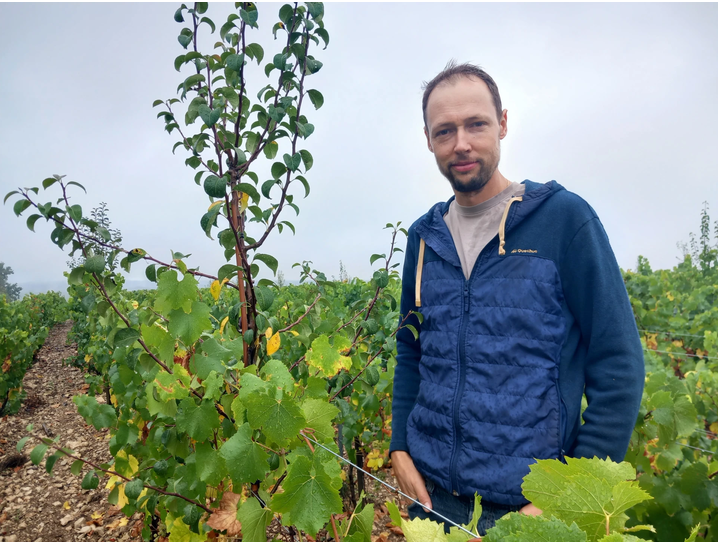
Domaine Bruno Dangin – in the Aube Prefecture, on the edge of Champagne, the region of the great Crémants de Bourgogne – saw an exceptionally early harvest and a drop in production, but the benefits of regenerative agriculture and vitiforestry – the combination of fruit trees and vines – have borne fruit.
The situation is more contrasted in Chablis – Domaine de l’Enclos – and further south in Burgundy – Dominique Gruhier, Ch. de Garnerot, Domaine Decelle, David Fagot, in Pouilly-Fuissé – where the harvest was reduced by between 30 and 50 per cent due to heatwaves.
But with late frosts, storms, fires and hail, the situation came close to disaster. Organic Chablis will become increasingly scarce in the coming years, with ‘white years’ such as 2024. In that year, following eight months of incessant rain, Domaine de l’Enclos and Dominique Gruhier chose not to harvest at all, rather than abandon organic practices and using synthetic molecules against mildew.
In Loire Atlantique – Domaine Le Fay d'Homme (Muscadet), and in the central Loire – Domaine Amirault (Anjou, St Nicolas de Bourgueil), Patrick Baudouin, (Anjou Noir, Savennières) – one of whose cuvées features on Anne-Sophie Pic’s wine list –, the sun beat down relentlessly. At the end of June, Angers was the hottest city on the planet. On the schist soils of Anjou Noir, on the slopes of the Layon, young Chenin vines were scorched whilst still on the vine.
In the Bordeaux region: Château des Annereaux (Lalande-de-Pomerol), Château La Grangère (Saint-Émilion), Château La Grolet (Côtes de Bourg); in the South-West: Château Les Croisille (Cahors), Clos Regain (Jurançon) – vintages that vary greatly in character, depending on local geographical conditions. Heatwaves have affected the whole region; yields are low, but as far as the wines are concerned, first impressions are very encouraging: rich, very fruity and well-concentrated. The final alcohol content is expected to be around 14 to 14.5 per cent. The potential looks truly excellent.
The Bordeaux region has ruled out any impact from the massive wildfire in Gironde on the flavour of the grapes.
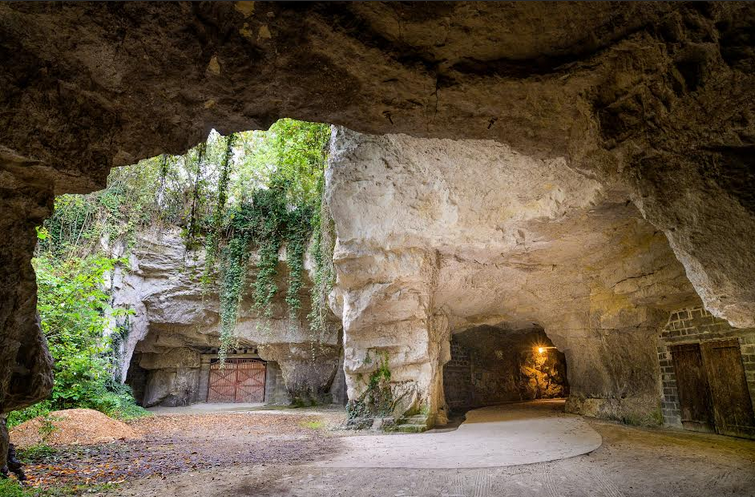
The Rhône – both the northern and southern regions – has produced fine harvests, described as “very satisfactory” by Domaine Lionnet (Cornas) and D. Alain Jaume (Condrieu, C. du Rhône, Châteauneuf-du-Pape) – in terms of both quality and quantity. In Châteauneuf, the vintage combines generous fruit with a solid structure of tannins and acidity. It promises to be a vintage with great ageing potential.
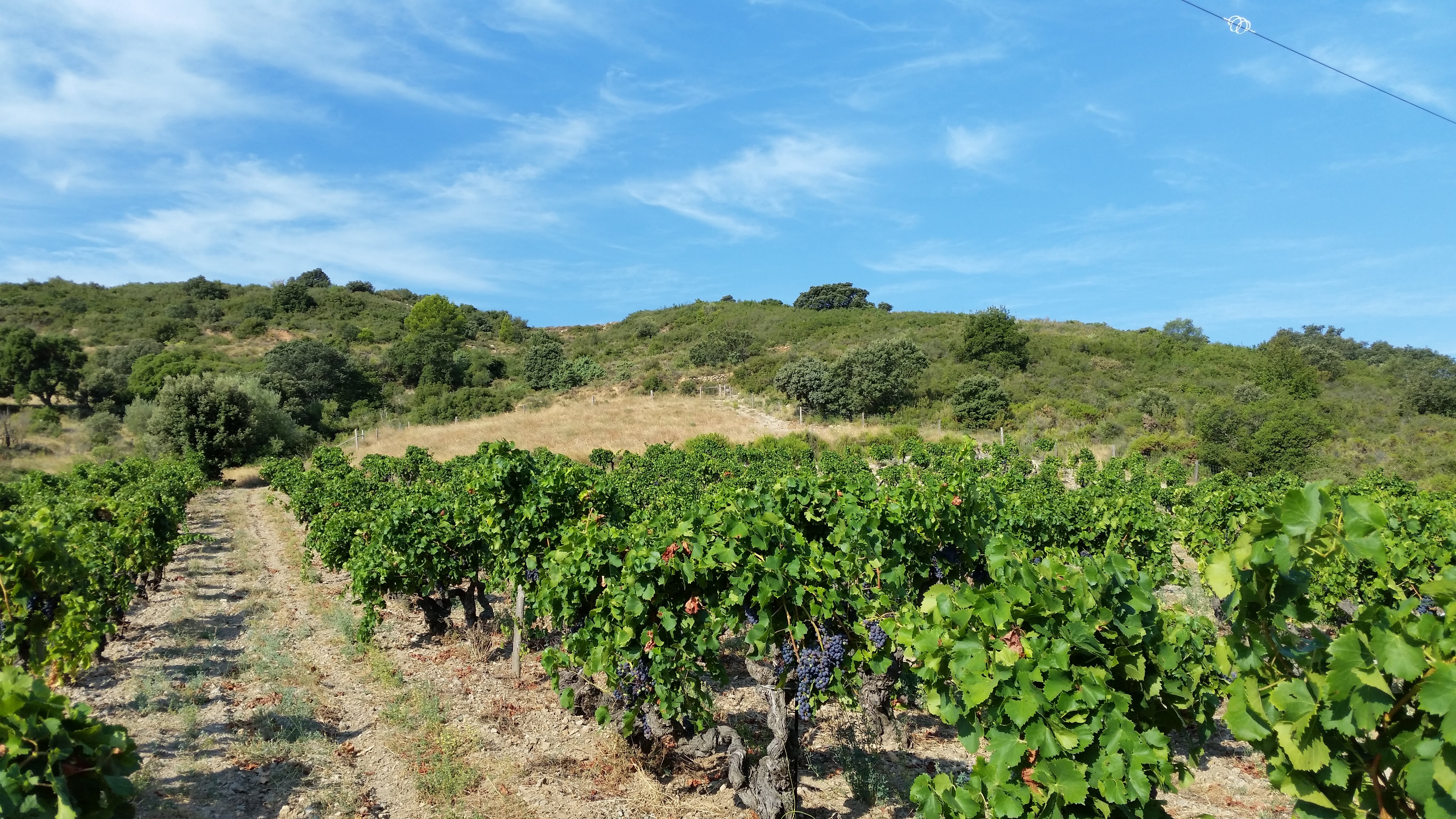
It’s much the same scenario in Languedoc – Domaine de Cazaban, Domaine de Sauzet, Domaine Le Sang des Cailloux (Vacqueyras) – whilst Roussillon stands out as an exception. Where one might have expected a climatic disaster, the rains of the previous winter, followed by those in late August and early September, allowed the berries to swell and reach full ripeness.
Domaine Gauby, in the Côtes Catalanes (Roussillon), writes to us that it “has never seen so many grapes on the vines. The rains that lasted throughout last autumn and winter protected the vines from water stress caused by the early heatwaves. We have seen the benefits of the regenerative farming practices we practice, where every single drop of water must benefit the vines over several years. We noticed the first signs of stress on the vines in late July, when the harvest was in full swing.”
The challenges of a climate that forces each year to adapt more
Faced with these climatic upheavals, the multiplication of droughts and their intensity, water, which until then was considered as a secondary factor, is becoming a vital challenge for viticulture. And, more directly, for our survival. Without water, no life, no humanity. The equation is strikingly simple.
This brings us to a subject that interests all of us, the changes in behavior that emerge with regard to wine consumption that we all face.
Among the many reasons underlying this planetary movement, there is one that emerges very clearly: concern, not to say dread, over what we are doing to our Mother Earth, our common home.
An increasing sensitivity to cultural methods.
The benefits of regenerative agriculture are unanimously recognized in what emerges from the reports we receive.
The work of men and women who are sometimes mocked is bearing fruit. All our partner winemakers, inhabited by the same fine awareness of their environment, say, in their own way, the possibility of another world. The biodiversity at the heart of the plots shows us another path.
"As a farmer, writes Alain Moueix – Ch. Mazeyres and Fonroque –, I could not adopt or maintain methods of cultivation that lastingly engage in bloodless ways affected by a life-threatening energy."
Our choices engage our responsibility.
Dr. François-Xavier Roland-Gosselin

