
Burgundy, Through One Map
Why Does a Hospital for the Poor Own a Vast Vineyard? — Hospices de Beaune
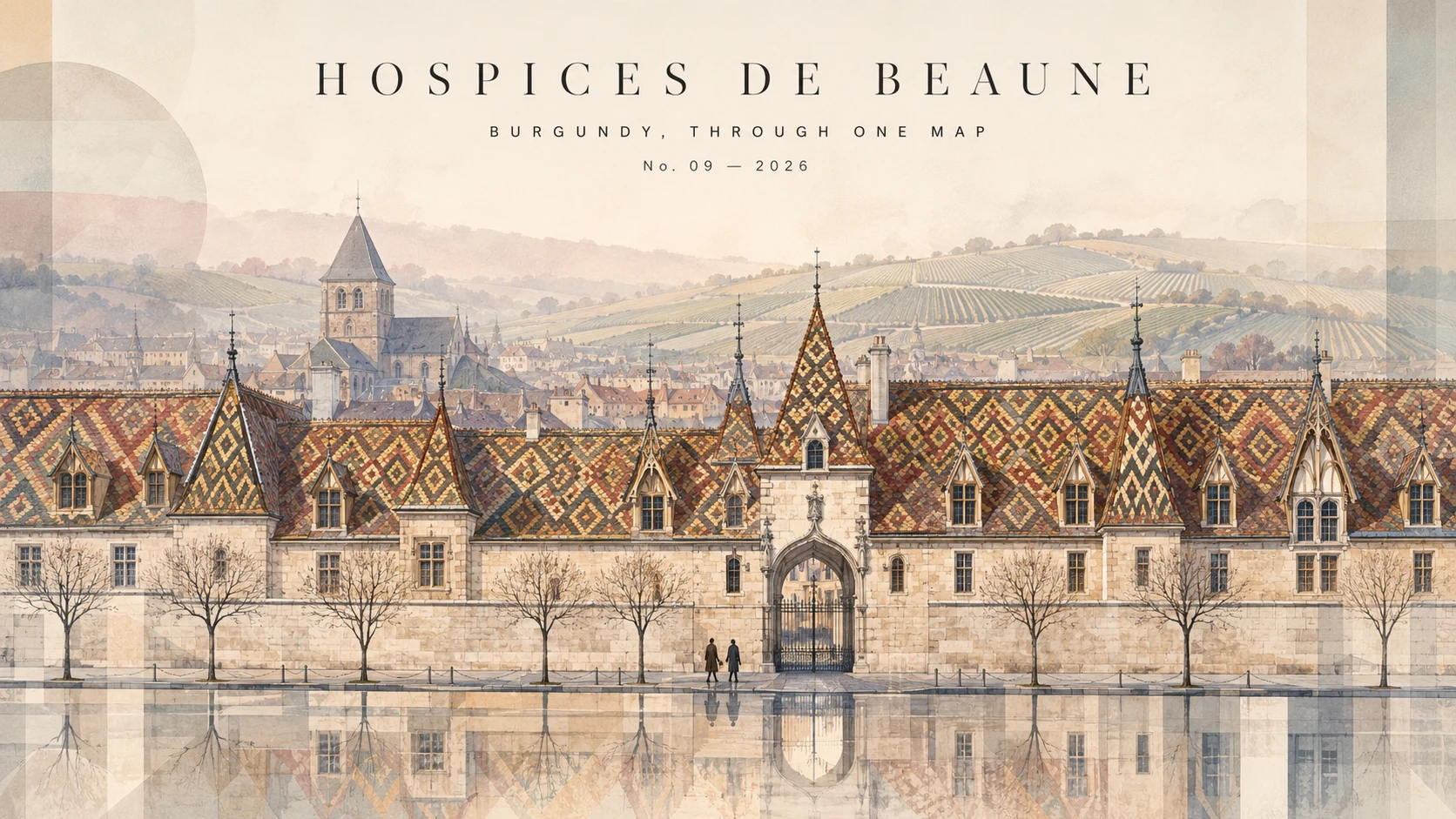
In the heart of Beaune, in the Côte de Beaune, stands a building crowned with a roof of glazed tiles — red, brown, yellow, and green — arranged in geometric patterns. Its name is Hospices de Beaune. Its historic building is known as the “Hôtel-Dieu,” built in 1443 as a hospital for the poor sick. Yet today, the name is often known in the world of wine before it is known as a hospital, because Hospices de Beaune owns roughly 60 hectares of vineyards centered on the Côte de Beaune, and each year releases the wine harvested that same year. Why did an institution built to save the poor come to own such an extensive vineyard? The answer lies in a decision made by a married couple more than 580 years ago, and in the goodwill of countless people who followed in the centuries since.
| Item | Details |
|---|---|
| Institution | Hospices de Beaune — its historic building is known as the Hôtel-Dieu |
| Location | Beaune (Côte de Beaune) |
| Founding couple | Nicolas Rolin (chancellor of the Duchy of Burgundy) and his wife, Guigone de Salins |
| Milestone years | August 4, 1443 (founding charter signed) / 1452 (the hospital receives its first patients) / 1859 (the practice of auctioning each year’s harvest becomes established) / continuing to this day (held every year on the third Sunday of November) |
| For reference | All of the vineyards were assembled through donations, centered on the Côte de Beaune and extending into the Côte de Nuits. Total area is roughly 60 hectares |
A Married Couple Who Built a House for the Poor
As of 1443, the Hundred Years’ War had not yet ended. Amid the long conflict, it is said that three-quarters of the residents of Beaune were left with no resources to rely on. That year, Nicolas Rolin, chancellor of the Duchy of Burgundy, and his wife, Guigone de Salins, decided to build a hospital for the poor sick in the town. The founding charter, dated August 4, states their purpose plainly — “I, Nicolas Rolin, knight, citizen of Autun… found and irrevocably endow, in the city of Beaune, a hospital for the poor sick.” The central great hall was completed around 1449–50, and by 1452 the hospital had already received its first patients.
Beneath a Roof of Many Colors
The buildings of Hospices de Beaune are known for Gothic architecture linked to the Flemish style, and above all for a roof of glazed tiles arranged in geometric patterns. Tiles glazed in red, brown, yellow, and green trace geometric figures across the roofs surrounding the courtyard — a design that still carries the deep ties between the Duchy of Burgundy and Flanders. After Nicolas Rolin died in 1462, Guigone de Salins chose to become a nun herself, devoting the rest of her life to the hospital until her own death in 1470.
A Vineyard Built Up Through Donations
Not long after its founding, people from the region began donating land to the hospital. Hoping for a family member’s recovery, or as an expression of gratitude, people came forward century after century to entrust vineyards to the institution, and these gifts accumulated little by little. The vineyards gathered this way now spread from the villages of the Côte de Beaune into the Côte de Nuits, totaling roughly 60 hectares today. Title to the land still rests with Hospices de Beaune.
1859: A System for Sharing the Harvest Takes Hold
How should the wine harvested each year from these accumulated vineyards serve the hospital’s operation? The answer that took hold in 1859 was to auction off that year’s harvest within the same year it was picked. The practice has been carried on as a tradition ever since, held every year on the third Sunday of November. The proceeds go toward maintaining and modernizing the hospital’s facilities and equipment, as well as supporting a local charitable organization chosen each year. The names of those who donated vineyards live on today in the names of some of the estate’s cuvées.
More than 580 years have passed since Nicolas Rolin and Guigone de Salins built this house for the poor in the town of Beaune. The hospital’s role has changed with the times, but the vineyards gathered through donation, and the system for sharing each year’s harvest, still operate today toward that same purpose.
Three Facts Worth Knowing
- Hospices de Beaune was built in 1443 by Chancellor Nicolas Rolin and his wife, Guigone de Salins, as a hospital for the poor sick. It was a time when, ten years before the Hundred Years’ War ended, three-quarters of Beaune’s residents are said to have been left destitute.
- The building is known for its Flemish-style roof, where tiles glazed in red, brown, yellow, and green form geometric patterns. Beneath it, after her husband’s death, Guigone de Salins became a nun and devoted the rest of her life to the hospital.
- What sustained the hospital across the centuries was the donation of vineyards by countless people. In 1859, the practice of auctioning each year’s harvest took hold, and the tradition continues today, with the proceeds supporting the hospital’s operations and local welfare.
In this series
ใจกลางเมืองโบน (Beaune) ในเขตโกต เดอ โบน (Côte de Beaune) มีอาคารหลังหนึ่งซึ่งมีหลังคามุงกระเบื้องเคลือบสีแดง สีน้ำตาล สีเหลือง และสีเขียว เรียงเป็นลวดลายเรขาคณิต ชื่อของที่นี่คือออสปิส เดอ โบน อาคารประวัติศาสตร์ของที่นี่มีชื่อว่า “โอเตล-ดิเยอ” (Hôtel-Dieu) สร้างขึ้นในปี 1443 เพื่อเป็นสถานพยาบาลสำหรับคนป่วยยากไร้ แต่ทุกวันนี้ ชื่อนี้มักเป็นที่รู้จักในโลกของไวน์ก่อนที่จะเป็นที่รู้จักในฐานะโรงพยาบาลเสียอีก เพราะออสปิส เดอ โบนเป็นเจ้าของไร่องุ่นเนื้อที่ประมาณ 60 เฮกตาร์ โดยมีศูนย์กลางอยู่ที่โกต เดอ โบน และทุกปีจะเผยแพร่ไวน์ที่เก็บเกี่ยวในปีนั้นออกมา เหตุใดสถานที่ซึ่งสร้างขึ้นเพื่อช่วยเหลือคนยากไร้จึงกลายมาเป็นเจ้าของไร่องุ่นผืนใหญ่เช่นนี้ คำตอบอยู่ที่การตัดสินใจของคู่สามีภรรยาคู่หนึ่งเมื่อกว่า 580 ปีก่อน และน้ำใจของผู้คนมากมายที่สืบทอดต่อกันมาตลอดหลายศตวรรษหลังจากนั้น
| รายการ | รายละเอียด |
|---|---|
| ชื่อสถานที่ | ออสปิส เดอ โบน (Hospices de Beaune) — อาคารประวัติศาสตร์มีชื่อว่าโอเตล-ดิเยอ (Hôtel-Dieu) |
| ที่ตั้ง | เมืองโบน (เขตโกต เดอ โบน) |
| คู่ผู้ก่อตั้ง | นิโกลาส์ โรแล็ง (Nicolas Rolin) อัครมหาเสนาบดีแห่งดัชชีบูร์กอญ และกีกอน เดอ ซาแล็ง (Guigone de Salins) ภริยาของเขา |
| ปีสำคัญ | 4 สิงหาคม 1443 (ลงนามในกฎบัตรก่อตั้ง) / 1452 (สถานพยาบาลรับผู้ป่วยรายแรก) / 1859 (ระบบการประมูลไวน์ที่เก็บเกี่ยวในแต่ละปีเริ่มเป็นที่ยึดถือ) / ดำเนินต่อเนื่องมาจนถึงปัจจุบัน (จัดขึ้นทุกวันอาทิตย์ที่สามของเดือนพฤศจิกายน) |
| ข้อมูลอ้างอิง | ไร่องุ่นทั้งหมดได้มาจากการบริจาค โดยมีศูนย์กลางอยู่ที่โกต เดอ โบน และขยายไปถึงโกต เดอ นุยส์ พื้นที่รวมประมาณ 60 เฮกตาร์ |
คู่สามีภรรยาผู้สร้างบ้านเพื่อคนยากไร้
ในปี 1443 สงครามร้อยปี (Hundred Years’ War) ยังไม่สิ้นสุดลง ท่ามกลางความขัดแย้งที่ยืดเยื้อยาวนาน กล่าวกันว่าประชากรเมืองโบนถึงสามในสี่ตกอยู่ในความยากไร้โดยไม่มีสิ่งใดให้พึ่งพา ในปีนั้นเอง นิโกลาส์ โรแล็ง อัครมหาเสนาบดีแห่งดัชชีบูร์กอญ และกีกอน เดอ ซาแล็ง ภริยาของเขา ตัดสินใจสร้างสถานพยาบาลสำหรับคนป่วยยากไร้ขึ้นในเมืองนี้ ถ้อยคำในกฎบัตรก่อตั้งลงวันที่ 4 สิงหาคม บอกเจตนารมณ์นี้ไว้อย่างตรงไปตรงมาว่า — “ข้าพเจ้า นิโกลาส์ โรแล็ง อัศวิน พลเมืองแห่งโอตุง (Autun) … ขอก่อตั้งและอุทิศสถานพยาบาลสำหรับคนป่วยยากไร้ขึ้น ณ เมืองโบนนี้ โดยไม่มีการเพิกถอน” ห้องโถงใหญ่ซึ่งเป็นศูนย์กลางของอาคารสร้างแล้วเสร็จราวปี 1449–1450 และในปี 1452 ก็ได้ต้อนรับผู้ป่วยรายแรกแล้ว
ใต้หลังคาหลากสีสัน
อาคารของออสปิส เดอ โบนเป็นที่รู้จักในฐานะสถาปัตยกรรมกอทิก (Gothic) ที่เชื่อมโยงกับรูปแบบเฟลมิช (Flemish) และที่โดดเด่นที่สุดคือหลังคากระเบื้องเคลือบที่เรียงเป็นลวดลายเรขาคณิต กระเบื้องเคลือบสีแดง สีน้ำตาล สีเหลือง และสีเขียว ก่อรูปเรขาคณิตบนหลังคาที่ล้อมรอบลานกลาง — ลวดลายที่ยังคงบอกเล่าความสัมพันธ์อันลึกซึ้งระหว่างดัชชีบูร์กอญกับแฟลนเดอร์ส (Flanders) เมื่อนิโกลาส์ โรแล็งเสียชีวิตในปี 1462 กีกอน เดอ ซาแล็งเลือกที่จะบวชเป็นภิกษุณีด้วยตนเอง และอุทิศชีวิตที่เหลือให้แก่สถานพยาบาลแห่งนี้จนกระทั่งเสียชีวิตในปี 1470
ไร่องุ่นที่ค่อย ๆ สะสมขึ้นจากการบริจาค
ไม่นานหลังการก่อตั้ง ผู้คนในภูมิภาคนี้ก็เริ่มบริจาคที่ดินให้แก่สถานพยาบาลแห่งนี้ ด้วยความหวังให้สมาชิกในครอบครัวหายจากอาการป่วย หรือเพื่อเป็นเครื่องหมายแห่งความขอบคุณ ผู้คนต่างทยอยมอบไร่องุ่นให้สืบต่อกันมาทุกศตวรรษ และค่อย ๆ สะสมขึ้นทีละน้อย ไร่องุ่นที่รวบรวมได้เช่นนี้ขยายจากหมู่บ้านต่าง ๆ ในโกต เดอ โบนไปจนถึงโกต เดอ นุยส์ ปัจจุบันมีเนื้อที่รวมประมาณ 60 เฮกตาร์ กรรมสิทธิ์ในที่ดินยังคงเป็นของออสปิส เดอ โบนมาจนถึงทุกวันนี้
ปี 1859 ระบบการแบ่งปันผลผลิตได้ก่อร่างขึ้น
ไวน์ที่เก็บเกี่ยวได้ในแต่ละปีจากไร่องุ่นที่สะสมไว้นี้ ควรนำมาใช้ประโยชน์เพื่อการดำเนินงานของสถานพยาบาลอย่างไร — คำตอบที่ก่อร่างขึ้นในปี 1859 คือการนำไวน์ที่เก็บเกี่ยวในปีนั้นออกประมูลภายในปีเดียวกัน ระบบนี้ได้รับการสืบทอดมาเป็นประเพณีจนถึงทุกวันนี้ โดยจัดขึ้นทุกปีในวันอาทิตย์ที่สามของเดือนพฤศจิกายน รายได้ที่ได้จะนำไปใช้ในการดูแลรักษาและปรับปรุงอุปกรณ์และอาคารของโรงพยาบาลให้ทันสมัย รวมถึงสนับสนุนองค์กรสวัสดิการท้องถิ่นที่ได้รับการคัดเลือกในแต่ละปีด้วย ชื่อของผู้บริจาคไร่องุ่นเหล่านี้ยังคงหลงเหลืออยู่ในชื่อของไวน์บางคูเว่ (cuvée) จนถึงปัจจุบัน
นับจากที่นิโกลาส์ โรแล็งและกีกอน เดอ ซาแล็งสร้างบ้านหลังนี้เพื่อคนยากไร้ขึ้นในเมืองโบน เวลาผ่านไปกว่า 580 ปีแล้ว บทบาทของโรงพยาบาลเปลี่ยนแปลงไปตามกาลเวลา แต่ไร่องุ่นที่สะสมมาจากการบริจาค และระบบการแบ่งปันผลผลิตประจำปี ยังคงดำเนินไปเพื่อจุดมุ่งหมายเดียวกันนี้จนถึงทุกวันนี้
3 เรื่องที่รู้แล้วเล่าต่อได้
- ออสปิส เดอ โบนสร้างขึ้นในปี 1443 โดยอัครมหาเสนาบดีนิโกลาส์ โรแล็งและกีกอน เดอ ซาแล็ง ภริยาของเขา เพื่อเป็นสถานพยาบาลสำหรับคนป่วยยากไร้ เป็นยุคสมัยที่กล่าวกันว่า ก่อนสงครามร้อยปีจะสิ้นสุดลงสิบปี ประชากรเมืองโบนถึงสามในสี่ตกอยู่ในความยากไร้
- อาคารแห่งนี้เป็นที่รู้จักจากหลังคาแบบเฟลมิชที่กระเบื้องเคลือบสีแดง สีน้ำตาล สีเหลือง และสีเขียว ก่อเป็นลวดลายเรขาคณิต ใต้หลังคานี้เอง หลังจากสามีเสียชีวิต กีกอน เดอ ซาแล็งได้บวชเป็นภิกษุณีและอุทิศชีวิตที่เหลือให้แก่สถานพยาบาลแห่งนี้
- สิ่งที่ค้ำจุนสถานพยาบาลแห่งนี้มาตลอดหลายศตวรรษคือการบริจาคไร่องุ่นจากผู้คนนับไม่ถ้วน ในปี 1859 ระบบการประมูลไวน์ที่เก็บเกี่ยวในแต่ละปีเริ่มเป็นที่ยึดถือ และประเพณีนี้ยังคงสืบทอดมาจนถึงทุกวันนี้ โดยรายได้นำไปใช้สนับสนุนการดำเนินงานของโรงพยาบาลและสวัสดิการในท้องถิ่น
ลิงก์ในชุดเรื่อง
コート・ド・ボーヌの中心、ボーヌの町なかに、赤・褐色・黄・緑の釉薬瓦が幾何学模様を描く屋根を戴いた一棟の建物がある。名はオスピス・ド・ボーヌ。その歴史ある建物は「オテル・デュー」と呼ばれ、1443年、貧しい病者のための施療院として建てられた。だが今日、この名はしばしば病院としてよりも先に、ワインの世界で知られている。オスピス・ド・ボーヌは、コート・ド・ボーヌを中心に約60ヘクタールのブドウ畑を持ち、毎年その年に収穫したワインを世に送り出しているからだ。貧しい病者を救うために建てられたこの施設が、なぜ広大なブドウ畑を持つに至ったのか。答えは、580年以上前に一組の夫婦が下した決断と、その後何世紀にもわたって積み重ねられた人々の善意にある。
| 項目 | 内容 |
|---|---|
| 施設名 | オスピス・ド・ボーヌ(Hospices de Beaune)—歴史的建造物としての名は「オテル・デュー」(Hôtel-Dieu) |
| 所在地 | ボーヌ(コート・ド・ボーヌ地区) |
| 創設者夫妻 | ニコラ・ロラン(ブルゴーニュ公国の宰相)と、その妻ギゴーヌ・ド・サラン |
| 節目の年 | 1443年8月4日(設立証書に署名)/1452年(施療院が最初の患者を受け入れる)/1859年(収穫年のワインを競売にかける仕組みが定着)/現在まで継続(毎年11月第3日曜に実施) |
| 参考 | ブドウ畑はすべて寄進によって集まったもので、コート・ド・ボーヌを中心にコート・ド・ニュイにまで及ぶ。総面積は約60ヘクタール |
一組の夫婦が、貧者のために建てた家
1443年の時点で、百年戦争はまだ終わっていなかった。長く続いた戦乱のなか、ボーヌの町では住民の四分の三が、頼るもののない困窮のうちにあったと伝えられる。この年、ブルゴーニュ公国の宰相であったニコラ・ロランと、その妻ギゴーヌ・ド・サランは、貧しい病者のための施療院をこの町に建てることを決めた。8月4日付の設立証書に残る言葉は、その目的をまっすぐに語っている—「オータンの市民たる騎士、ニコラ・ロランは……ここボーヌの町に、貧しい病者のための施療院を、取り消し不能の形で設立し、寄進する」。中心となる大広間は1449年から50年ごろに完成し、1452年には早くも最初の患者を迎え入れた。
色鮮やかな屋根の下で
オスピス・ド・ボーヌの建物は、フランドルの様式に連なるゴシック建築で知られ、なかでも幾何学模様に彩られた屋根瓦がその象徴とされる。赤・褐色・黄・緑の釉薬をかけた瓦が、中庭を囲む屋根の上に幾何学模様を描き出す—ブルゴーニュ公国とフランドルとの深いつながりを今に伝える意匠である。1462年にニコラ・ロランが没すると、ギゴーヌ・ド・サランは自ら修道女の道を選び、1470年に没するまでの生涯をこの施療院に捧げた。
畑は、寄進によって積み上げられた
創設からほどなく、地域の人々がこの施療院に土地を寄進しはじめた。家族の病の快復を願って、あるいはその感謝のしるしとして、ブドウ畑を託す者が世紀を追うごとに現れ、その一つひとつが少しずつ積み重なっていった。こうして集まった畑は、コート・ド・ボーヌの村々からコート・ド・ニュイにまで広がり、今日ではおよそ60ヘクタールを数える。畑の名義は、今もオスピス・ド・ボーヌにある。
1859年、収穫を分かち合う仕組みが定まった
積み上げられた畑からその年に穫れたワインを、施療院の運営にどう役立てるか—その答えとして、収穫年のワインをその年のうちに競売にかける仕組みが1859年に定着した。この仕組みは今日まで伝統として受け継がれ、毎年11月の第3日曜に行われている。得られた収益は、病院の設備や施設の維持・近代化にあてられるほか、毎年選ばれる地域の福祉団体への支援にも用いられる。畑を寄進した人々の名は、今も一部のキュヴェの名として残っている。
ニコラ・ロランとギゴーヌ・ド・サランが、貧しい病者のためにこの家をボーヌの町に建ててから、580年以上がすぎた。時代とともに病院としての役割は姿を変えてきたが、寄進によって集まった畑と、その年の収穫を分かち合う仕組みは、今も同じ目的のために動き続けている。
知っておくと語れる3つ
- オスピス・ド・ボーヌは、1443年に宰相ニコラ・ロランとその妻ギゴーヌ・ド・サランが、貧しい病者のための施療院として建てた。 百年戦争が終わる10年前、ボーヌの住民の四分の三が困窮のうちにあったと伝えられる時代のことだった。
- 建物は、赤・褐色・黄・緑の釉薬瓦が幾何学模様を描く、フランドル様式の屋根で知られる。 その下で、ギゴーヌ・ド・サランは夫の没後、自ら修道女となり生涯をこの施療院に捧げた。
- 施療院を支えたのは、何世紀にもわたる人々のブドウ畑の寄進だった。 1859年には、収穫年のワインを競売にかける仕組みが定着し、今日まで続く伝統として、収益は病院の運営と地域の福祉にあてられている。