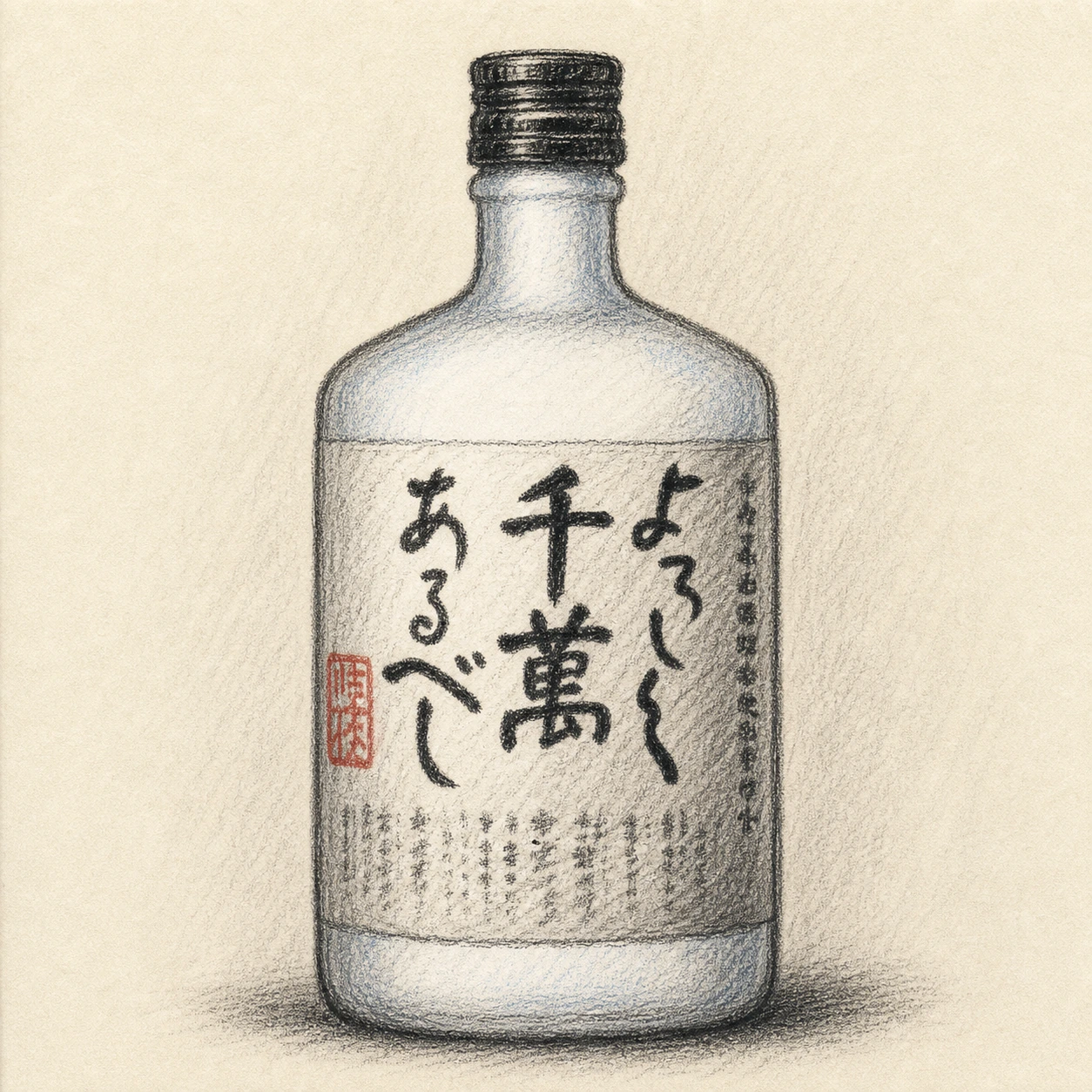
HAKKAISAN Rice Shochu Yoroshiku Senman Arubeshi
Five elements of sake brewing enter a 25% rice shochu: yellow koji, sake yeast, staged mashing, sake lees added during fermentation and vacuum distillation. After two years or more of storage, the result carries a sake-brewery way of thinking into shochu.
Sake technique translated into shochu
Yellow koji, sake yeast, staged mashing, the addition of sake lees during fermentation and vacuum distillation shape this expression. It is a rice shochu, rather than the separate 40% kasu-tori or oak-aged Fubaika products that share related naming.
Time after a low-temperature distillation
After vacuum distillation, the spirit is stored for at least two years. The time is part of the confirmed production method for this 25% standard rice shochu, and is distinct from the three-year-or-more period of the 40% kasu-tori expression.
Four directions shaped by a lighter structure
This page does not include specific aroma or flavour descriptions. What is recorded is production information — five elements (yellow koji, sake yeast, three-step brewing, sake lees added during fermentation, and reduced-pressure distillation) together with ageing of two years or more. What follows is a reading of food affinities in four directions, built from these production characteristics — not a pairing recommendation issued by the brewery itself.
This pairing rationale draws on the following reference book: The single largest factor in a drink’s weight is said to be its alcohol content, and a more moderate ABV is said to sit well with delicate dishes (Logical Pairing). The directions above were built from the confirmed production detail of 25% ABV and ageing of two years or more.
Minamiuonuma, Niigata — Hakkaisan Brewery
Hakkaisan Brewery was founded in 1922 in Minamiuonuma, Niigata. Its Fukasawahara Distillery brings brewing methods from sake into its shochu: yellow koji, sake yeast, staged mashing and sake lees are used differently across the three distinct expressions shown here.
For current-lot specifications, availability, storage requirements and trade terms, please contact Bacchus Global.