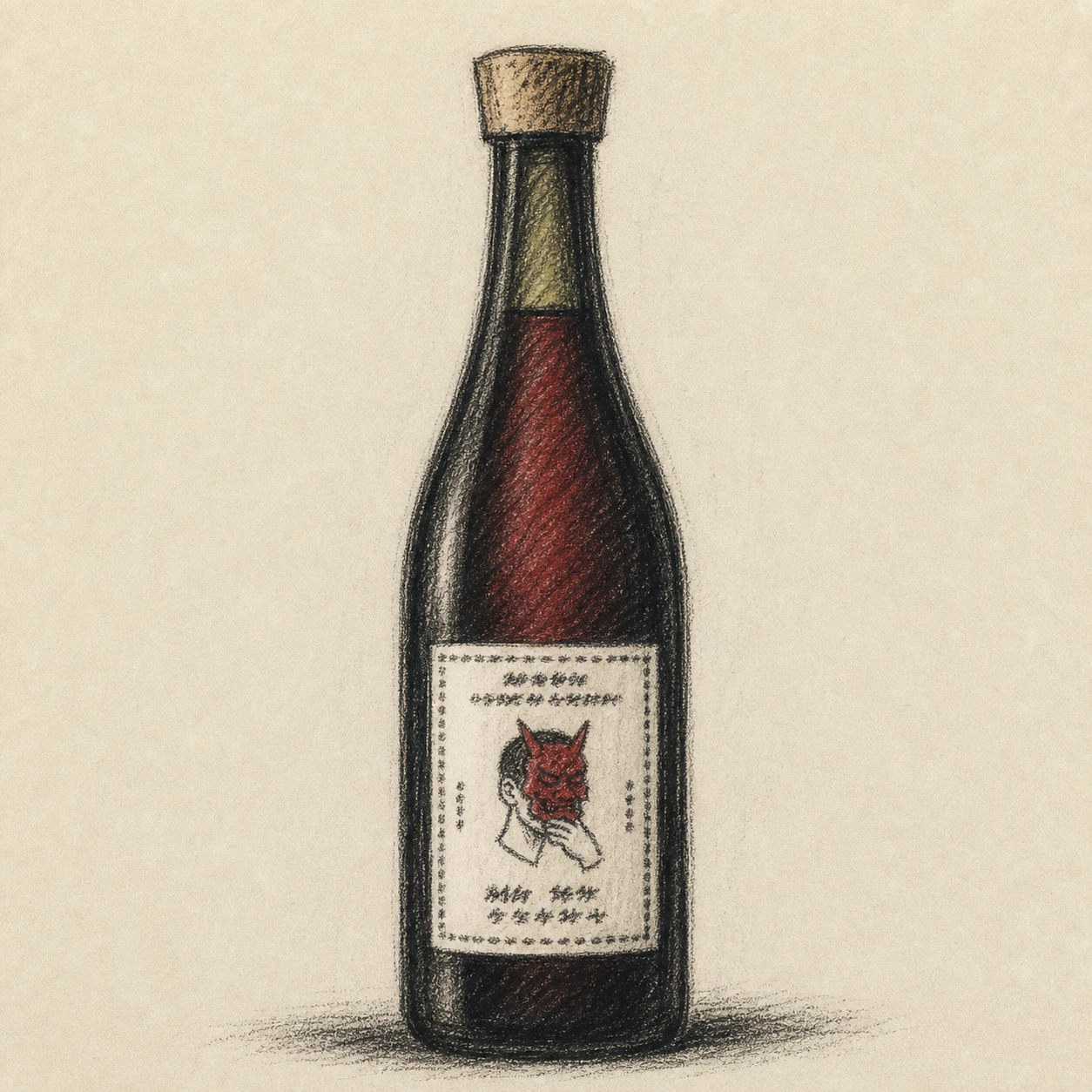
AKA-ONI ROSSO Sweet Vermouth
Built on hon-mirin and infused with wormwood and Japanese botanicals, this reimagines vermouth without grapes through rice sweetness and herbal bitterness.
Thailand · Product information
Product information from Bacchus Global Co., Ltd., based in Bangkok, Thailand. About Bacchus Global
Sweetness and bitterness in one bottle
Aya and Kenji explore the mirin foundation, botanical aromas and layers of bitterness in AKA-ONI ROSSO. Approx. 8 minutes 22 seconds.
Building herbal layers on a rice foundation
Its character comes from the way the main ingredient meets the base spirit. Two choices are central to the result.
Using hon-mirin and sake
Rice-derived sweetness and savoury depth create a lower centre of gravity than wine.
Macerating botanicals separately
Wormwood anchors individually extracted ingredients, which are then layered.
Rice roundness and herbal bitterness
Rounded hon-mirin sweetness meets herbs, spice and wormwood bitterness in a deep, warming finish.
Japanese sweet vermouth
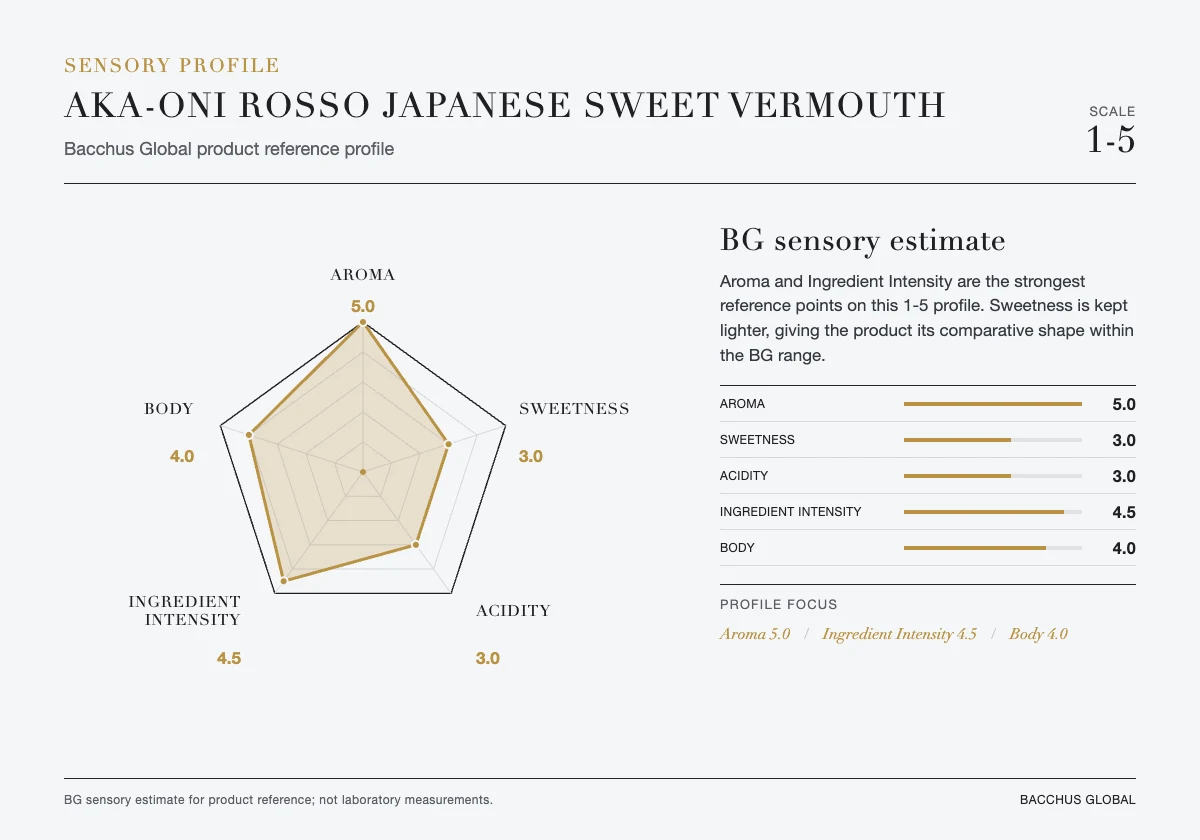
Rounded hon-mirin sweetness meets herbs, spice and wormwood bitterness in a deep, warming finish.
Question 1
What does the product-facts panel name as the base?
- Hon-mirin
- Only red wine
- Only barley shochu
Read the answer and explanation
Correct answer: A — Hon-mirin
The product facts list hon-mirin as the base.
Read the relevant passageQuestion 2
Which herb anchors the bitterness?
- Coffee
- Wormwood
- Matcha
Read the answer and explanation
Correct answer: B — Wormwood
Wormwood forms the bitter herbal backbone.
Read the relevant passageQuestion 3
How does the finish combine its flavours?
- Only sharp fruit acidity
- Neutral spirit without flavour
- Rounded sweetness with herbs and spice
Read the answer and explanation
Correct answer: C — Rounded sweetness with herbs and spice
Hon-mirin sweetness meets herbal and spice bitterness.
Read the relevant passageWhere round sweetness meets herbal warmth
These pairings are not combinations stated officially by the producer; they are a reading drawn from the characteristics recorded on this product page.
This pairing rationale draws on the following reference books: Following the harmony and balance concepts in “Logical Pairing,” the round sweetness aligns with a dish’s sweet-savoury character while herbal bitterness balances richness in warm dishes; “The Science of Food Pairing” frames roasted and herbal aromas as resonating in a shared direction.
Kanegasaki Herb Liqueur Distillery in Kanegasaki, Iwate
Kanegasaki Herb Liqueur Distillery is based in Kanegasaki, Iwate. For this liqueur, it brings ingredient selection and established production craft together in a distinctly Japanese expression.
Official producer websiteRelated products
Only directly relevant products and Bacchus Global stories are shown.
Related product information
Related stories
Contact Bacchus Global for product documentation and trade information.
Make a trade enquiry