
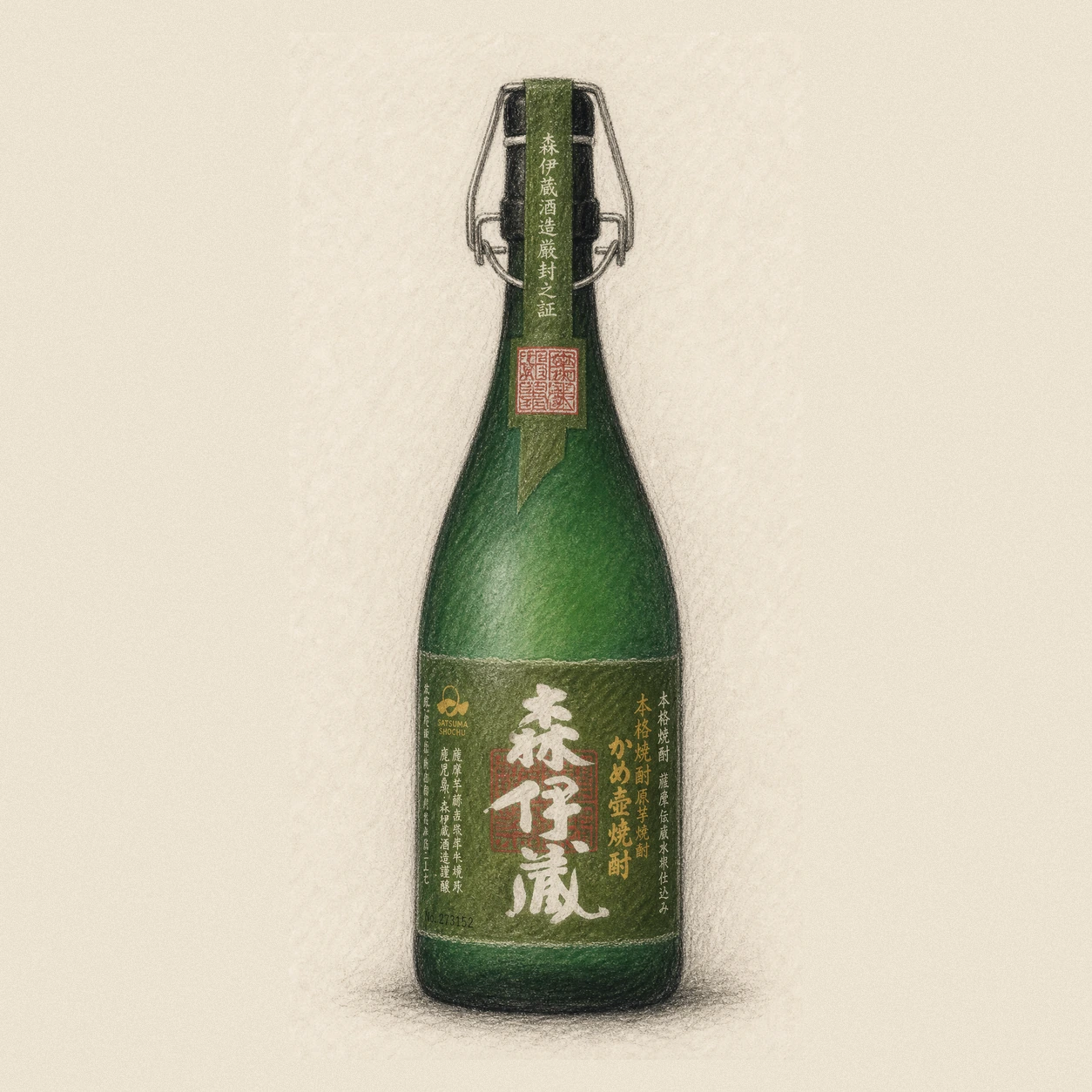
GOKUJO MORIIZO
The same sweet-potato shochu is given a longer, quieter passage: three years or more in clay pots inside a cave near the distillery. Time rounds the contour while keeping the origin of the spirit in view.
Thailand · Product information
Product information from Bacchus Global Co., Ltd., based in Bangkok, Thailand. About Bacchus Global
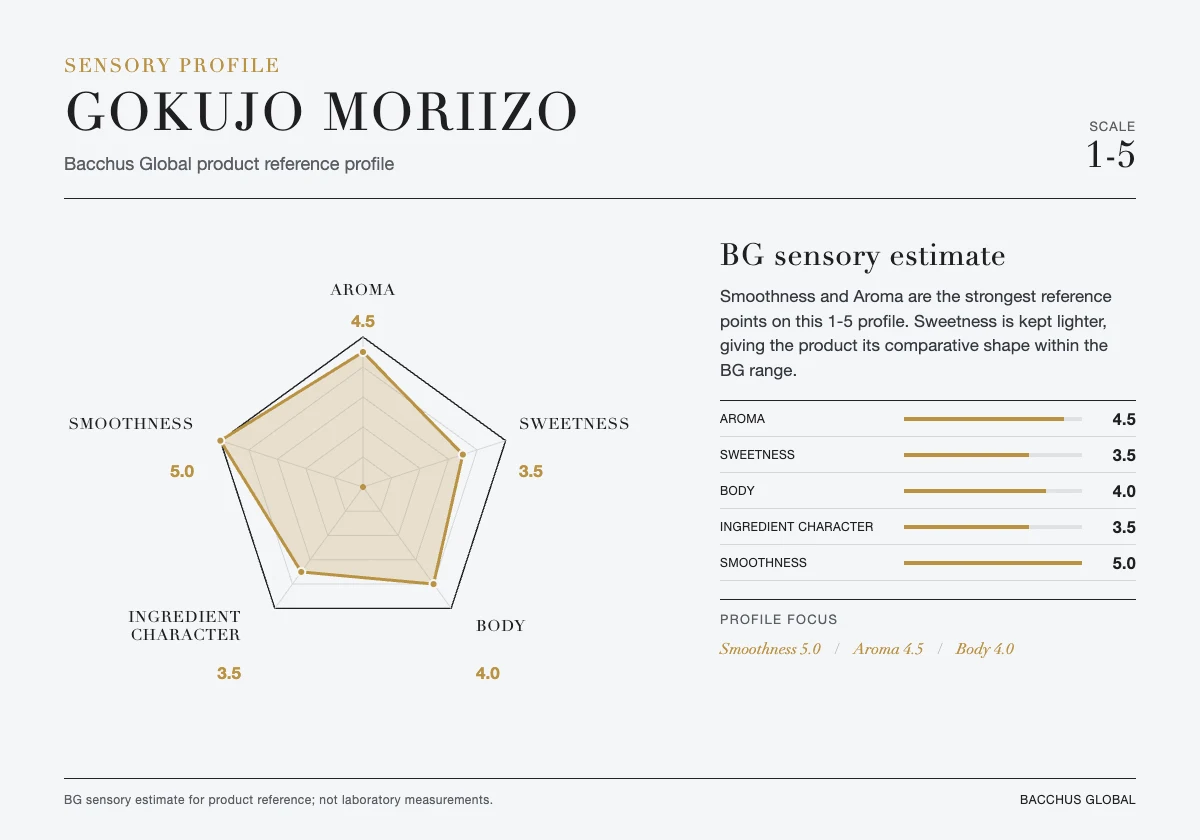
Sensory profile
Clay pots in a cave
The sweet-potato shochu matures for at least three years in clay pots inside a cave near the distillery. The stable environment softens the profile while preserving its material character.
Maturation as a change of pace
GOKUJO MORIIZO begins from the same foundation as the standard expression, then follows a longer maturation. Sweet-potato character develops toward soft caramel, tropical fruit and a long finish.
Question 1
Which sweet potato is used for the shochu?
- Koganesengan
- Beni Haruka
- Ordinary potato
Read the answer and explanation
Correct answer: A — Koganesengan
Answer: Koganesengan. The linked section gives the source detail.
Question 2
Where does the long ageing take place?
- In casks at sea
- In an artificial cave near the distillery
- In a wine refrigerator
Read the answer and explanation
Correct answer: B — In an artificial cave near the distillery
Answer: In an artificial cave near the distillery. The linked section gives the source detail.
Question 3
How long is it aged in earthenware jars?
- At least 3 days
- At least 3 months
- At least 3 years
Read the answer and explanation
Correct answer: C — At least 3 years
Answer: At least 3 years. The linked section gives the source detail.
Reading dishes from the recorded aroma
The pairings below are not a combination presented officially by the brewery, but a reading drawn from the aroma and finish characteristics recorded on this page.
This pairing rationale draws on the following reference books: Following the idea of “flavor harmony” described in Logical Pairing, a long finish shaped by aging and aromas in the caramel and tropical fruit direction tend to layer well with the roasted notes of cooked dishes or the sweetness of fruit. The Science of Food Pairing describes something similar: aroma groups built through roasting and aroma groups carried by fruit tend to connect through shared sensory cues.
Tarumizu, Kagoshima — Moriizo Shuzo
Moriizo Shuzo has produced shochu in Tarumizu, Kagoshima, since 1885. Production begins in earthenware vessels, and GOKUJO MORIIZO extends that foundation through longer maturation.
For current-lot specifications, availability, storage requirements and trade terms, please contact Bacchus Global.

