Drink
Beauty of Change
Experiencing Tamagawa’s Flavor Journey
Founded in 1842 in Kumihama-cho, Kyotango City, Kyoto Prefecture, Kinoshita Sake Brewery is a long-established brewery that has continued to brew sake by making the most of the local climate for approximately 175 years. The current owner, Yoshito Kinoshita, the 11th generation, is taking on new challenges with English Toji (Sake master brewer)Philip Harper, while maintaining the tradition. Their “Time Machine” and “Ice Breaker” products are opening up new possibilities for sake by reproducing Edo era production methods and the innovative style of cold sake to be enjoyed on the rocks.
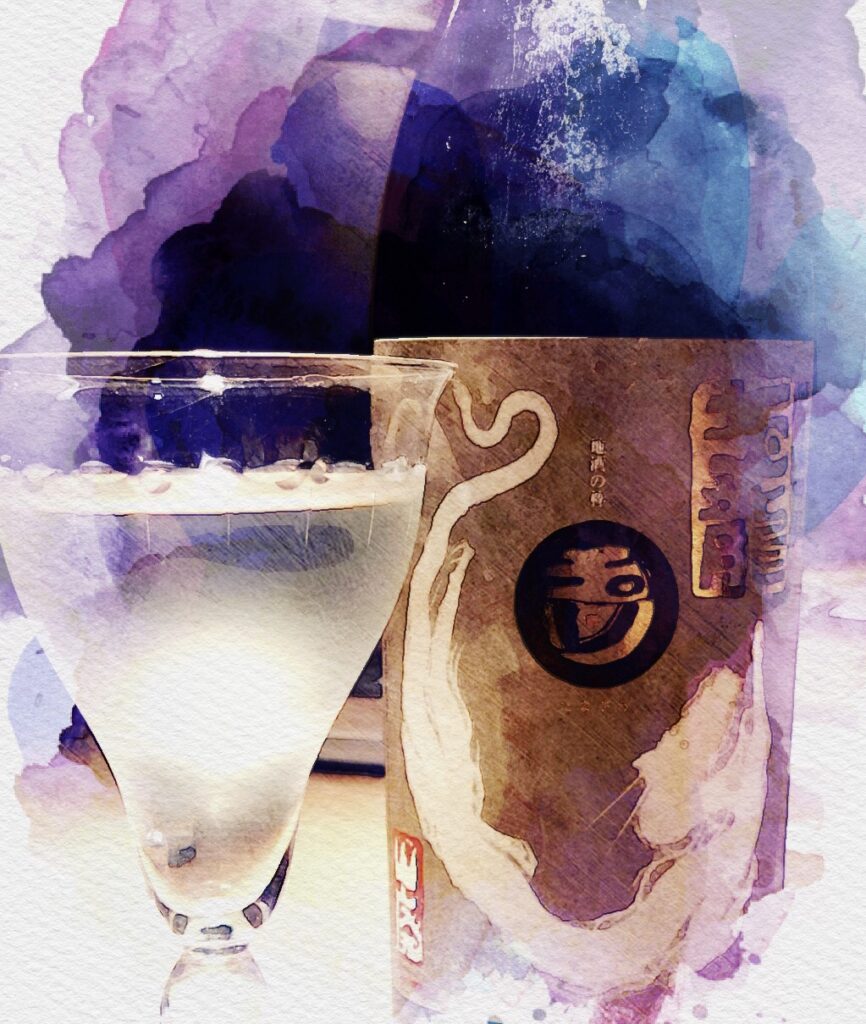
The name “Tamagawa” comes from the Kawakamitani River, a beautiful clear stream that runs next to the brewery. Named after a jewel-like river, this sake has a history that goes along with its beauty. The cute “marudama (round ball)” label and goodwill designed by the current owner’s brother-in-law, Katsusuke Sakane, a Japanese-style painter, are beloved by locals and fans of sake.
One of the reasons Tamagawa is called a “mysterious sake” is that its flavor changes over time. Tamagawa’s lineup ranges from freshly pressed “unfiltered, unpasteurized sake” to slowly aged ” aged sake,” which can be enjoyed while referring to the aging year indicated on the label for each product. In this way, one can fully appreciate the deep charm of the Tamagawa.
In addition, Tamagawa is a “tough” sake that defies the common wisdom that sake is difficult to preserve. Since it is not easily damaged and does not need to be drunk in a hurry, it can be laid down slowly at home to enjoy the changes in flavor caused by aging. Some fans say that the last glass is better than the first, and some even leave it for several years before enjoying it.
The change in flavor with temperature is one of the real pleasures of “Tamagawa. Cold, room temperature, and hot sake can be served at different temperatures, and the flavors change remarkably. The charm of “Tamagawa” is that its taste changes, such as when chilled sake returns to room temperature, or when heated sake cools down.
Tamagawa also defies the common wisdom of sake, which often says that if the temperature is raised too high when heating sake, the sake tastes rough. The hottest “Tobikiti-kan” is about 55 degrees, which is the standard line for Tamagawa. Raising the temperature mellows the flavor, so the staff at Kinoshita Sake Brewery rarely drink it “Nuru-kan”(warm temperature).
The rich flavor of “Tamagawa” can be enjoyed not only as a sake itself, but also with food pairing. It is an excellent marriage with a variety of dishes from Japanese, Western, and Chinese cuisine that crosses borders. Tamagawa comes in a range of styles, and its flavor varies with the aging period and the serving temperature.
Tamagawa has a distinctive flavor that changes over time. Its taste is deeply flavored. The flavor also changes with serving temperature. (Mr.Bacchus)
Related Product(s)
TAMAGAWA Junmai Yanwari / TAMAGAWA Gyoku-ryu Junmai-Daiginjo Yamahai / TAMAGAWA 2015 / THE TAMAGAWA / TAMAGAWA Junmai Yamahai Non-filter Nama-Genshu / TAMAGAWA Junmai-Ginjo Omachi / TAMAGAWA Daiginjo
This article is intended solely to share educational and cultural information about the topics discussed, and does not aim to promote or encourage the consumption of alcohol. For readers aged 20 and over. Please drink responsibly.
บทความนี้จัดทำขึ้นเพื่อให้ข้อมูลเชิงความรู้และวัฒนธรรมเกี่ยวกับหัวข้อที่นำเสนอเท่านั้น มิได้มีเจตนาส่งเสริมหรือโฆษณาเครื่องดื่มแอลกอฮอล์ สำหรับผู้มีอายุ 20 ปีขึ้นไป โปรดดื่มอย่างรับผิดชอบ
Discover the culture behind every bottle
We share brewery stories, tasting notes and the craft of koji & fermentation | for educational and cultural purposes only.
เราถ่ายทอดเรื่องราวจากผู้ผลิต บันทึกรสชาติ และศาสตร์แห่งโคจิและการหมัก | เพื่อการศึกษาและวัฒนธรรมเท่านั้น
Follow on Instagram FacebookRelated Articles
“TAMAGAWA Sake: Tradition Reinvented by Toji Philip Harper” / “In the Heart of Kyoto Stands a 300-Year-Old Sake Brewery” / “The Unfiltered Wonders”