
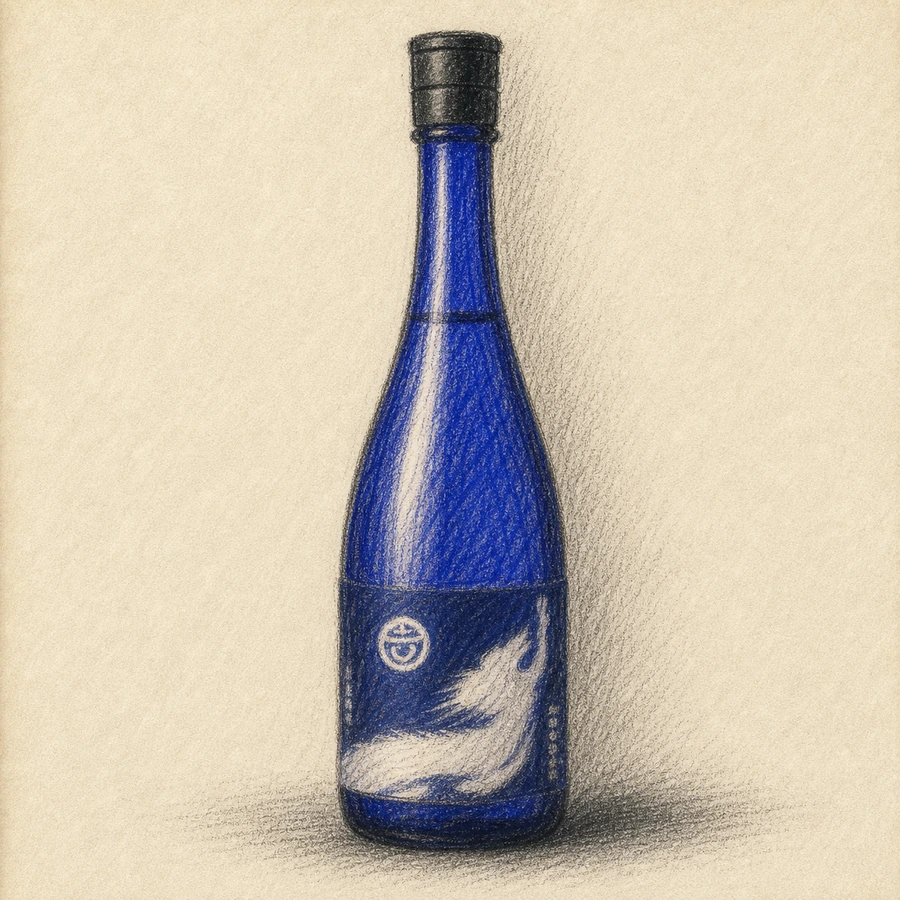
TAMAGAWA Gyoku-ryu Junmai-Daiginjo Yamahai
A sweet aroma opens into layers of mushroom and roasted nuts, with real depth beneath.
Thailand · Product information
Product information from Bacchus Global Co., Ltd., based in Bangkok, Thailand. About Bacchus Global

Yamada Nishiki, through no-added-yeast yamahai
TAMAGAWA Gyoku-ryu Junmai-Daiginjo Yamahai is made from 100% Hyogo-grown Yamada Nishiki rice, polished to 50%. No yeast is added — the yamahai method draws out the wild yeast naturally present in the brewery. ABV runs 15–16.9%, depending on the brewing year.
Rather than relying on a high polish ratio alone for a lighter style, it keeps the umami character typical of yamahai brewing, along with the kind of complexity that develops with age.
How it tastes
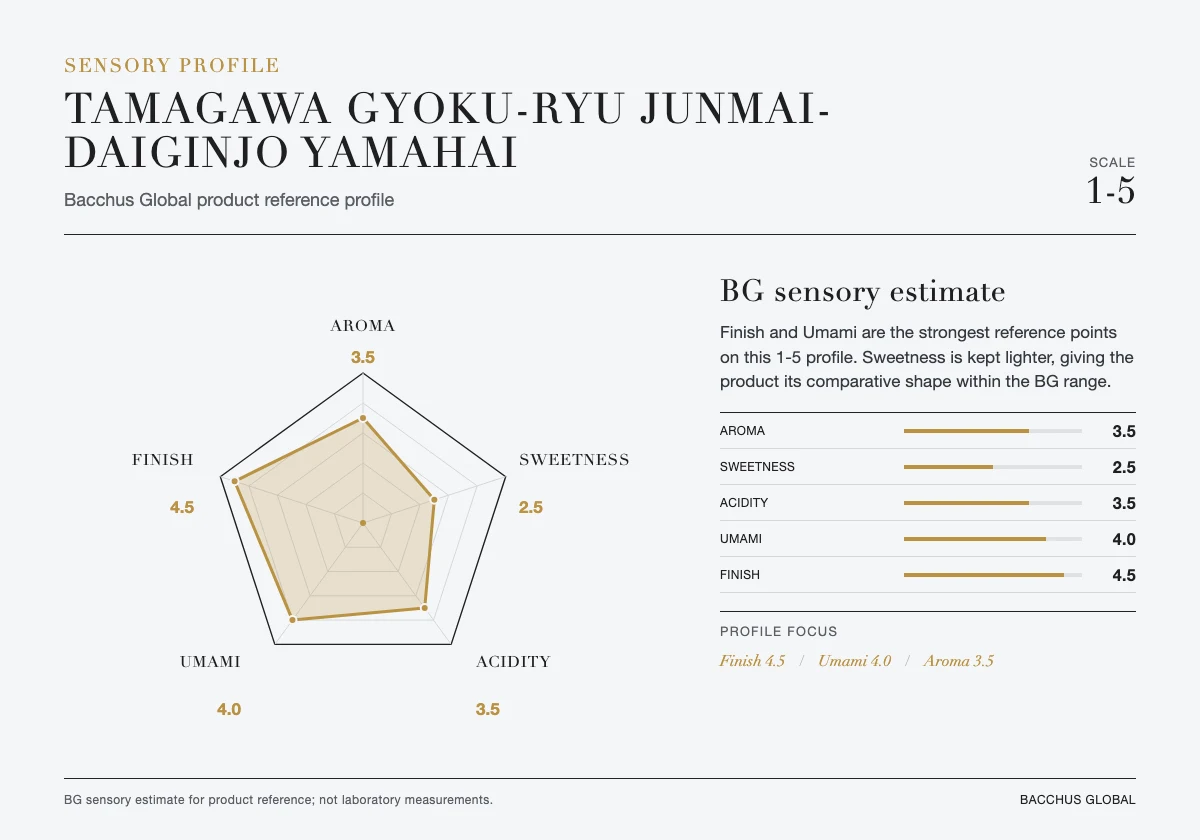
A sweet aroma suggestive of marshmallow and strawberry carries impressions of mushroom, roasted nuts and almond.
Umami and acidity layer repeatedly across the texture, with a finish that continues long.
The roasted-nut complexity and long, layered finish remain well defined throughout.
TAMAGAWA · Kinoshita Brewery · Kyoto
Kinoshita Brewery was founded in 1842 in Kumihama, Kyotango, Kyoto. The name TAMAGAWA comes from the Kawakamidani River that flows near the brewery.
Toji Philip Harper earned his Nanbu Toji certification in 2001 and joined Kinoshita Brewery in 2007. Working with traditional methods such as yamahai, no added yeast and aged styles, he values how the sake’s expression changes with temperature and time.
Question 1
What is the combination of rice and polishing ratio?
- Yamada Nishiki, 50%
- Omachi, 60%
- Kitanishiki, 66%
Read the answer and explanation
Correct answer: A — Yamada Nishiki, 50%
Hyogo-grown Yamada Nishiki is polished down to 50%.
Question 2
Which fermentation feature does the page describe?
- Brewed by the yamahai method without adding yeast
- Secondary fermentation in the bottle
- Grape juice is added
Read the answer and explanation
Correct answer: A — Brewed by the yamahai method without adding yeast
The page describes drawing out the activity of yeast living in the brewery.
Question 3
Which reading about temperature matches the page?
- Limited to chilled sake only
- As the temperature rises, the toasty notes and umami take on a different character
- Temperature has no bearing on the flavor
Read the answer and explanation
Correct answer: B — As the temperature rises, the toasty notes and umami take on a different character
The page shows how the sake changes from chilled through warmed (kan).
At the table
The layered umami and long finish pair well with aged ingredients and richer, full-bodied meat dishes.
- Seasonal seafood
- Vegetable dishes
- Lightly seasoned poultry
- Cheese
Related products
Compare a closely related expression, a contrasting bottle and a reference from the same range.
Related stories
Interested in listing TAMAGAWA Gyoku-ryu Junmai-Daiginjo Yamahai at your restaurant or retail venue? Our team can provide information on availability, storage requirements and trade terms.

