
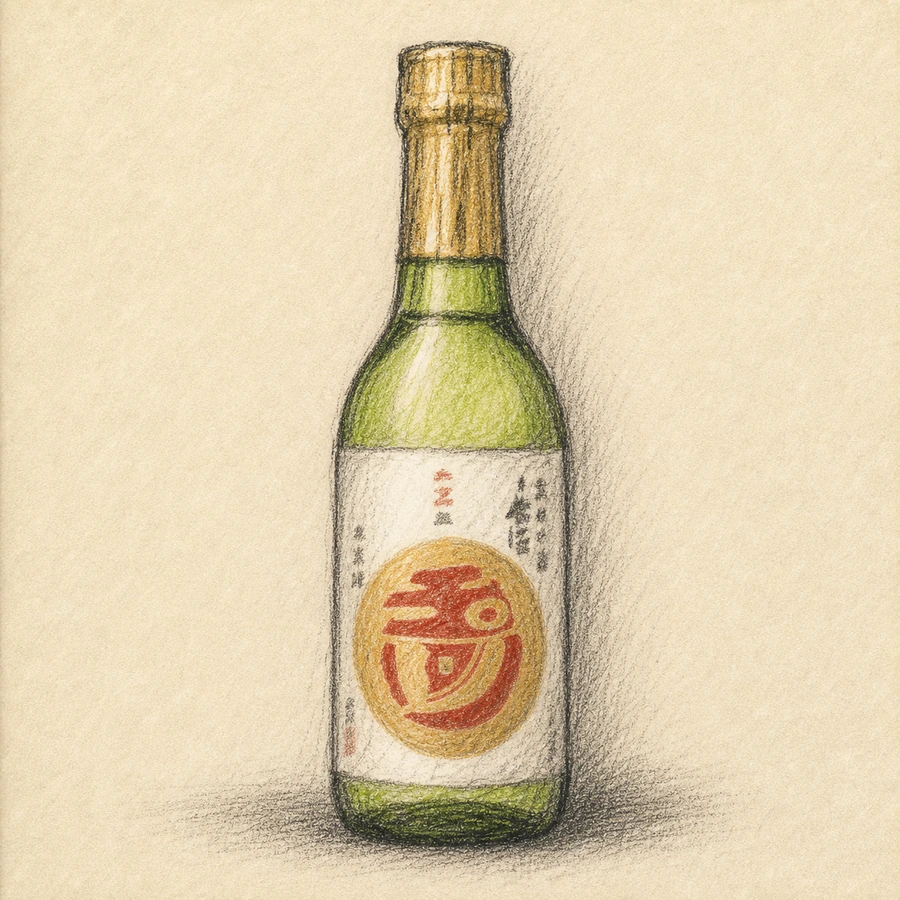
TAMAGAWA Daiginjo
Vivid fruit aromas and a silky texture, with a dry finish that carries lightly into the meal.
Thailand · Product information
Product information from Bacchus Global Co., Ltd., based in Bangkok, Thailand. About Bacchus Global
The daiginjo that carried TAMAGAWA abroad
TAMAGAWA Daiginjo is brewed from 100% Hyogo-grown Yamada Nishiki rice, polished to 50%. Brewer’s alcohol is added to the rice and rice koji, shaping the aroma’s lift and giving a light, clean cut at the table.
It was one of the earliest TAMAGAWA bottlings sent overseas, and it remains one of the brewery’s representative export labels.
How it tastes
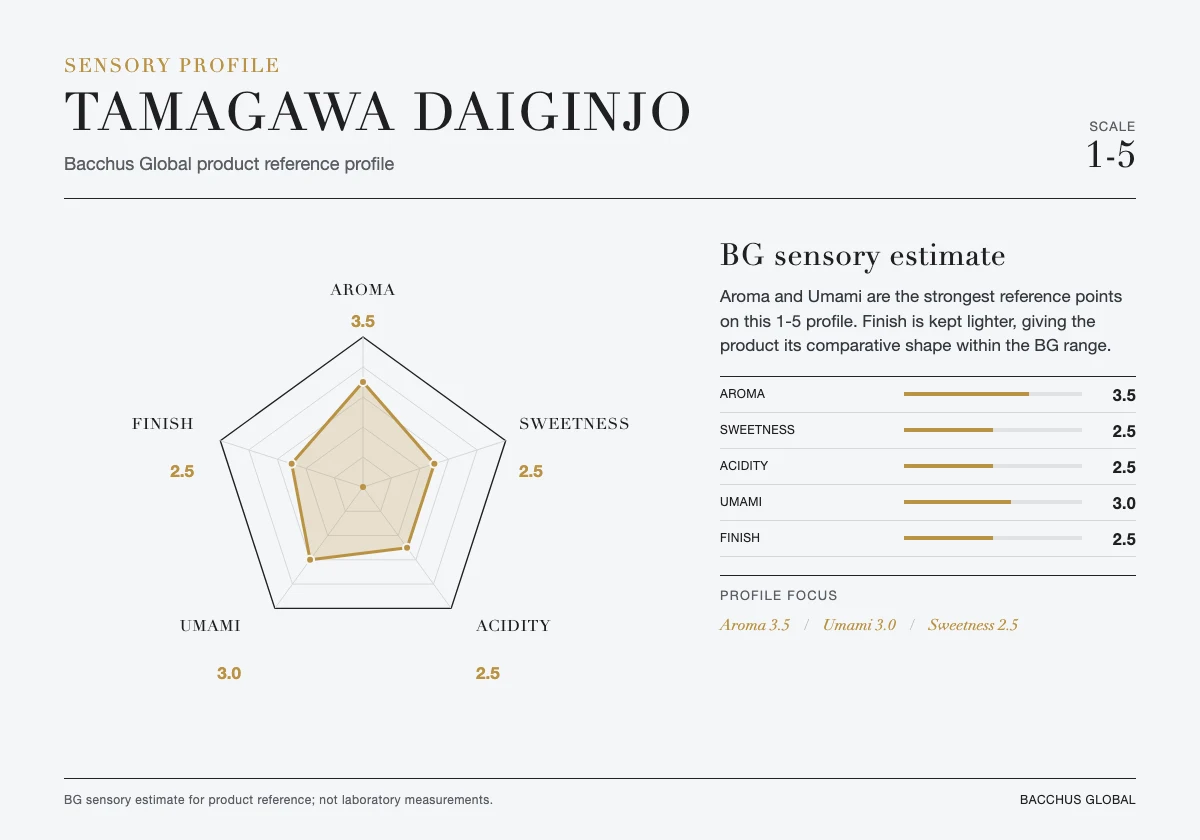
Strawberry, melon, peach and apricot fruit notes lead the nose, with an impression of white flowers.
The texture is silky and smooth, and small mineral and earthy nuances add depth beneath the fruit. The finish is clean and dry.
The mineral depth and fruit lift stay well balanced throughout, keeping the dry finish precise.
TAMAGAWA · Kinoshita Brewery · Kyoto
Kinoshita Brewery was founded in 1842 in Kumihama, Kyotango, Kyoto. The name TAMAGAWA comes from the Kawakamidani River that flows near the brewery.
Toji Philip Harper earned his Nanbu Toji certification in 2001 and joined Kinoshita Brewery in 2007. Working with traditional methods such as yamahai, no added yeast and aged styles, he values how the sake’s expression changes with temperature and time.
Verified for this bottling
Only awards verified against the organiser’s records as belonging to this exact bottling are listed. Where a domestic competition’s brewing year differs from its announcement year, both are shown.
Question 1
Which rice does the page list as the raw material?
- Omachi
- Yamada Nishiki from Hyogo Prefecture
- Kitanishiki
Read the answer and explanation
Correct answer: B — Yamada Nishiki from Hyogo Prefecture
Yamada Nishiki is polished down to 50%.
Question 2
Which matches the description of the ingredients?
- Rice, rice koji, and brewer’s alcohol
- Rice and rice koji only
- Rice and grape juice
Read the answer and explanation
Correct answer: A — Rice, rice koji, and brewer’s alcohol
This product is labeled “Daiginjo,” not “Junmai Daiginjo.”
Question 3
How are strawberry and melon presented on the page?
- As fruit juice in the blend
- As the rice’s place of origin
- As aroma impressions
Read the answer and explanation
Correct answer: C — As aroma impressions
They describe aromas reminiscent of fruit and do not indicate that fruit juice is used.
At the table
The fruit character and smooth texture carry the dry finish into a dish’s richness or spice, from delicate seafood through to more aromatic cooking.
- Seasonal seafood
- Vegetable dishes
- Lightly seasoned poultry
- Cheese
Related products
Compare a closely related expression, a contrasting bottle and a reference from the same range.
Related stories
Interested in listing TAMAGAWA Daiginjo at your restaurant or retail venue? Our team can provide information on availability, storage requirements and trade terms.

