
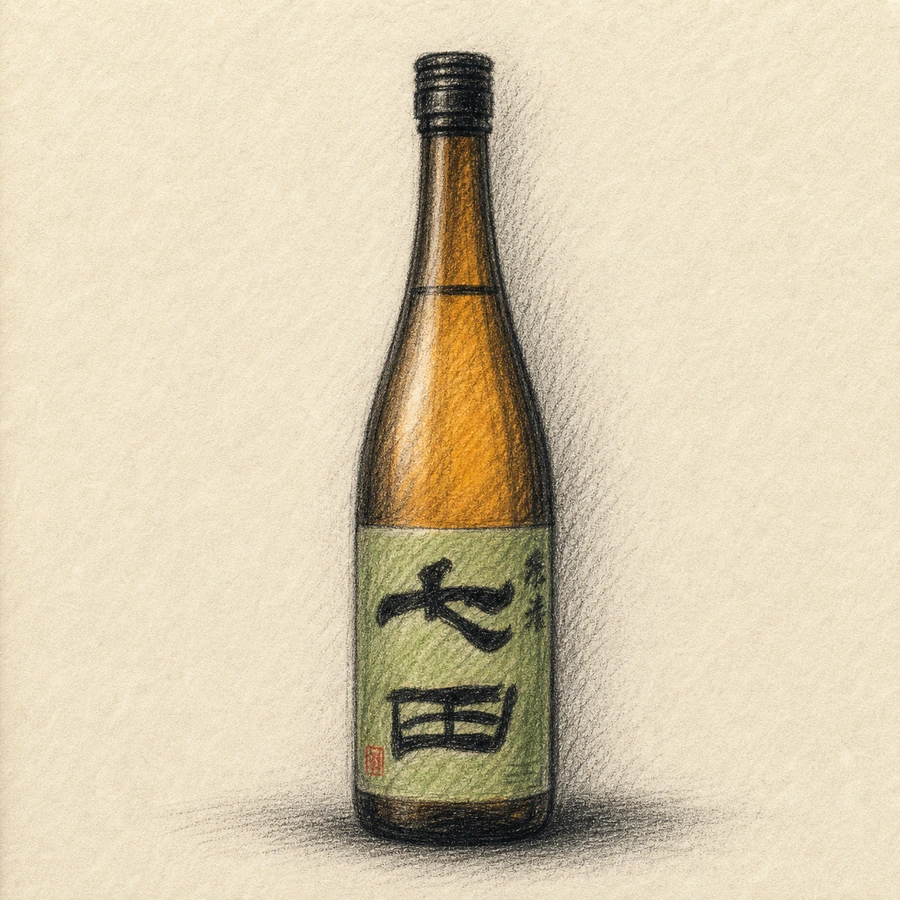
SHICHIDA Junmai
Yamada Nishiki and Reihou: rich rice umami, drawn tight by firm acidity and a dry finish — the SHICHIDA standard.
Thailand · Product information
Product information from Bacchus Global Co., Ltd., based in Bangkok, Thailand. About Bacchus Global
Not overpolished, so the rice’s umami reaches the table
SHICHIDA Junmai is made with Yamada Nishiki and Reihou rice, polished to 65%. ABV is 16%; the sake meter value varies from vintage to vintage, in a +2 to +4 range.
No water is added after pressing, and no activated-charcoal filtration is used; it is finished with a single pasteurisation. Retaining the rice’s flavour firmly, with acidity and a dry finish that carry through the meal, this is SHICHIDA’s standard bottling.
From a job magazine to the people who carry a brewery forward
Jun Goto's path from learning to passing on brewing skills, alongside Kensuke Shichida's creation of the brand. A two-voice conversation tracing a family business and the transmission of brewing knowledge. Runs about 7 minutes 12 seconds.
Question 1
Which two rice varieties does this page name for SHICHIDA Junmai?
- Yamada Nishiki and Reihou
- Yamada Nishiki and Omachi
- Koganesengan and Hinohikari
Read the answer and explanation
Correct answer: A — Yamada Nishiki and Reihou
“The sake” names Yamada Nishiki and Reihou. Koganesengan is a sweet-potato variety, not one of the rice varieties listed here.
Question 2
Which finishing steps does “The sake” describe?
- Adding water and charcoal filtering, then cask ageing
- No water added after pressing, no activated-charcoal filtration, and one pasteurisation
- Distilling the sake and storing it in wooden koji trays
Read the answer and explanation
Correct answer: B — No water added after pressing, no activated-charcoal filtration, and one pasteurisation
The page says no water is added after pressing and no activated-charcoal filtration is used; it is finished with a single pasteurisation. This does not claim that no form of filtration occurs.
Question 3
What work does the podcast introduction associate with Jun Goto and Kensuke Shichida?
- Fruit growing and still design
- Restaurant management and recipe development
- Goto’s learning and passing on brewing skills, and Shichida’s creation of the brand
Read the answer and explanation
Correct answer: C — Goto’s learning and passing on brewing skills, and Shichida’s creation of the brand
“Listen” introduces Goto’s path from learning to passing on brewing skills alongside Shichida’s creation of the brand.
Aroma and taste profile
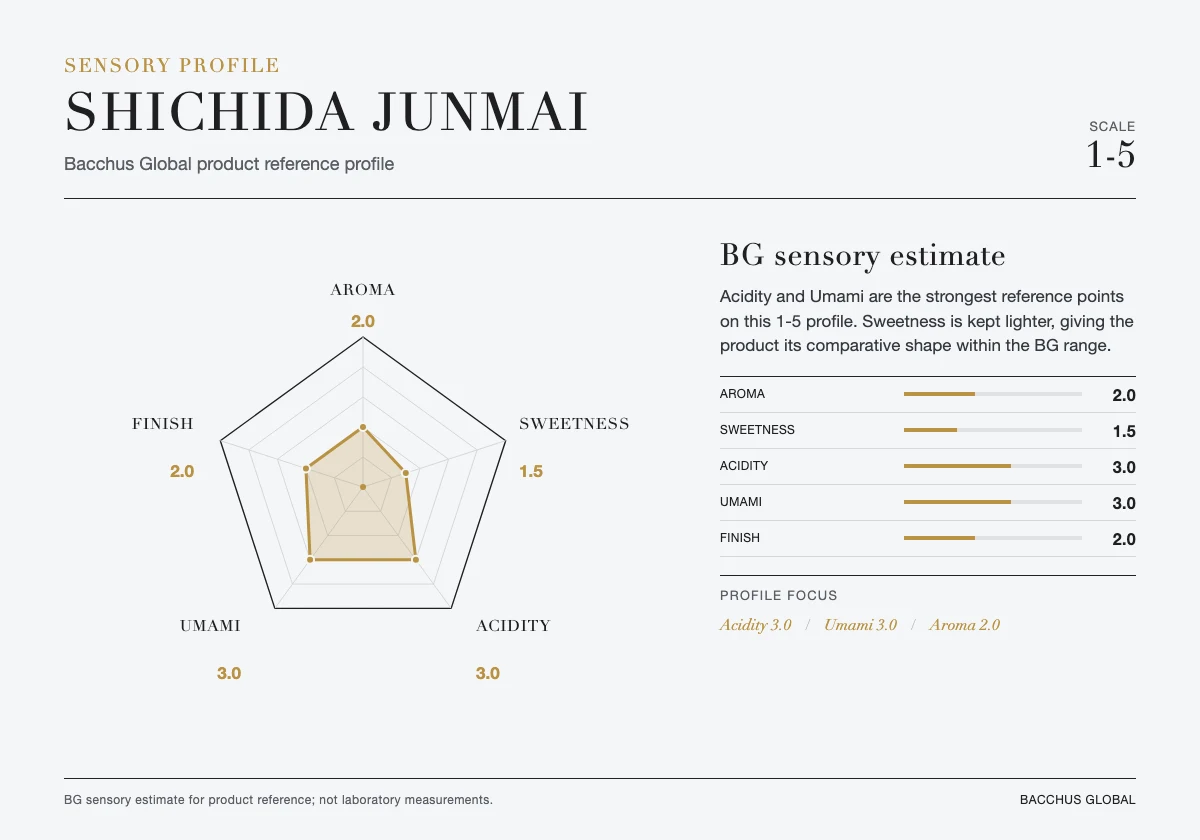
A gentle aroma reminiscent of steamed rice and grain. Rice umami swells on entry, and firm acidity gives it shape. The finish is dry.
The dry finish stays clean, with the rice’s umami running quietly beneath it.
SHICHIDA / TENZAN · Tenzan Sake Brewery · Saga
Tenzan Sake Brewery is based in Ogi City, Saga Prefecture. Building on a water-wheel business begun in 1861, the brewery turned to sake production in 1875. Drawing on groundwater from the Gion River system, it has brewed sake that gives the rice’s umami a firm core.
SHICHIDA is a brand launched in 2001 by Kensuke Shichida, the brewery’s sixth-generation owner. It pursues a balance of aroma, umami and finish suited to the modern table, while making the most of the differences between rice varieties.
Verified international recognition
Listed only where the official Kura Master record matches this exact product name. Other labels and variants are excluded.
At the table
Its rice umami and dry finish suit everyday cooking — grilled, fried and simmered dishes alike.
- Grilled fish
- Tempura
- Simmered root vegetables
- Teriyaki chicken
Related products
Compare a closely related expression, a contrasting bottle and a reference from the same range.
Related stories
A Bacchus Global article introducing the land, sake-making and background of Tenzan Sake Brewery and SHICHIDA / TENZAN.
Interested in listing SHICHIDA Junmai at your restaurant or retail venue? Our team can provide information on availability, storage requirements and trade terms.

