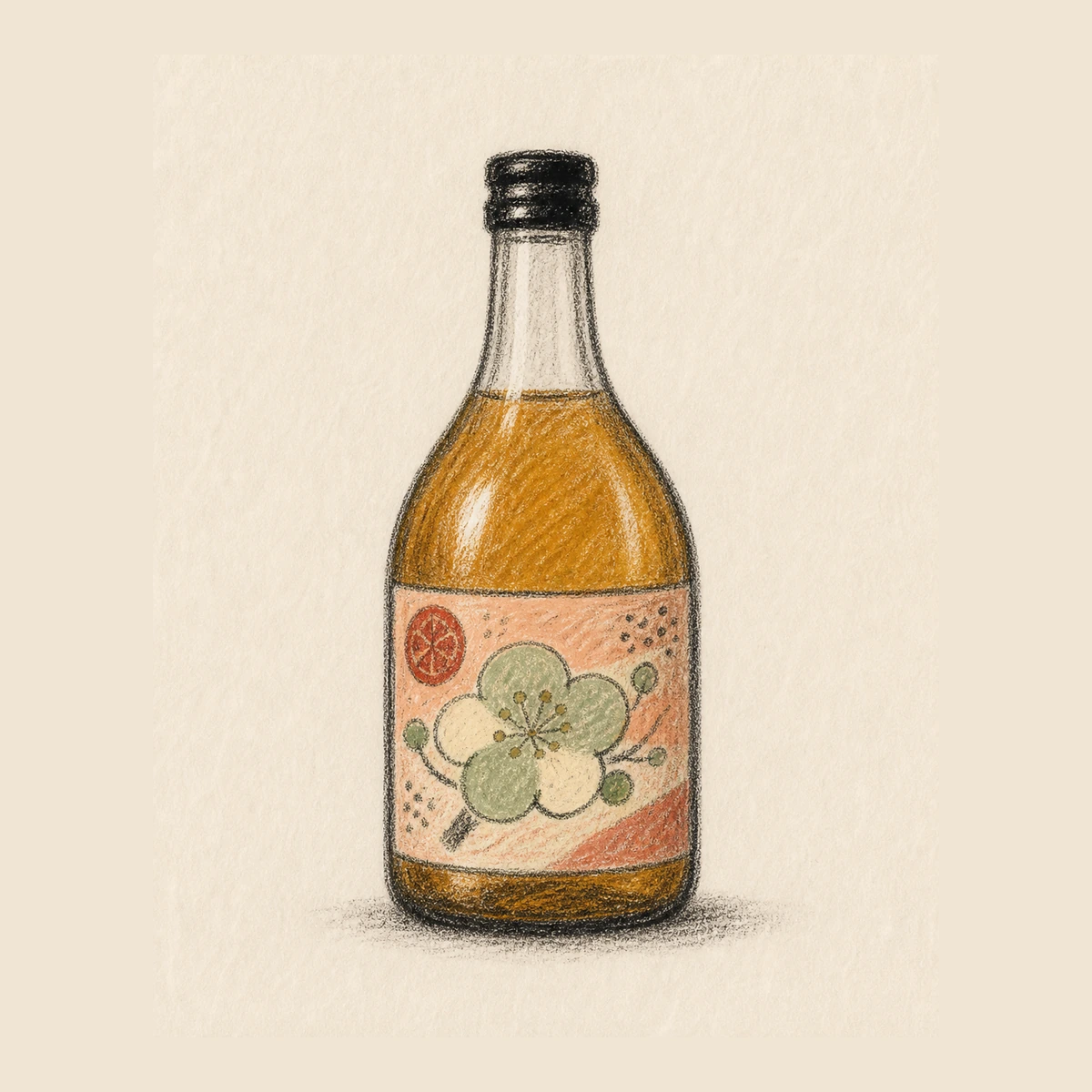
KOTSUZUMI Baijun
Ripe Nanko ume is finely worked back into the liqueur, giving this lightly cloudy expression the body of the fruit and an acidity that keeps its richness composed.
Fruit-textured umeshu
Keeping the fruit as texture, not aroma alone
Ripe Nanko ume pulp is finely cut and dispersed through the liqueur. The approach carries the physical density of the fruit into the glass rather than relying on infusion alone.
Finely working ripe Nanko ume
Breaking down the ripe pulp releases a rounded aroma recalling peach and plum, together with the depth of the ume itself.
Keeping the liqueur lightly cloudy
Fine fruit remains suspended in the liqueur, preserving a smooth viscosity and a tangible sense of the plum.
Rich in texture, resolved by acidity
The softly viscous palate is held in line by bright ume acidity, so the sweetness does not weigh down the clean finish.
Peach-like aroma and a smooth, lightly cloudy palate
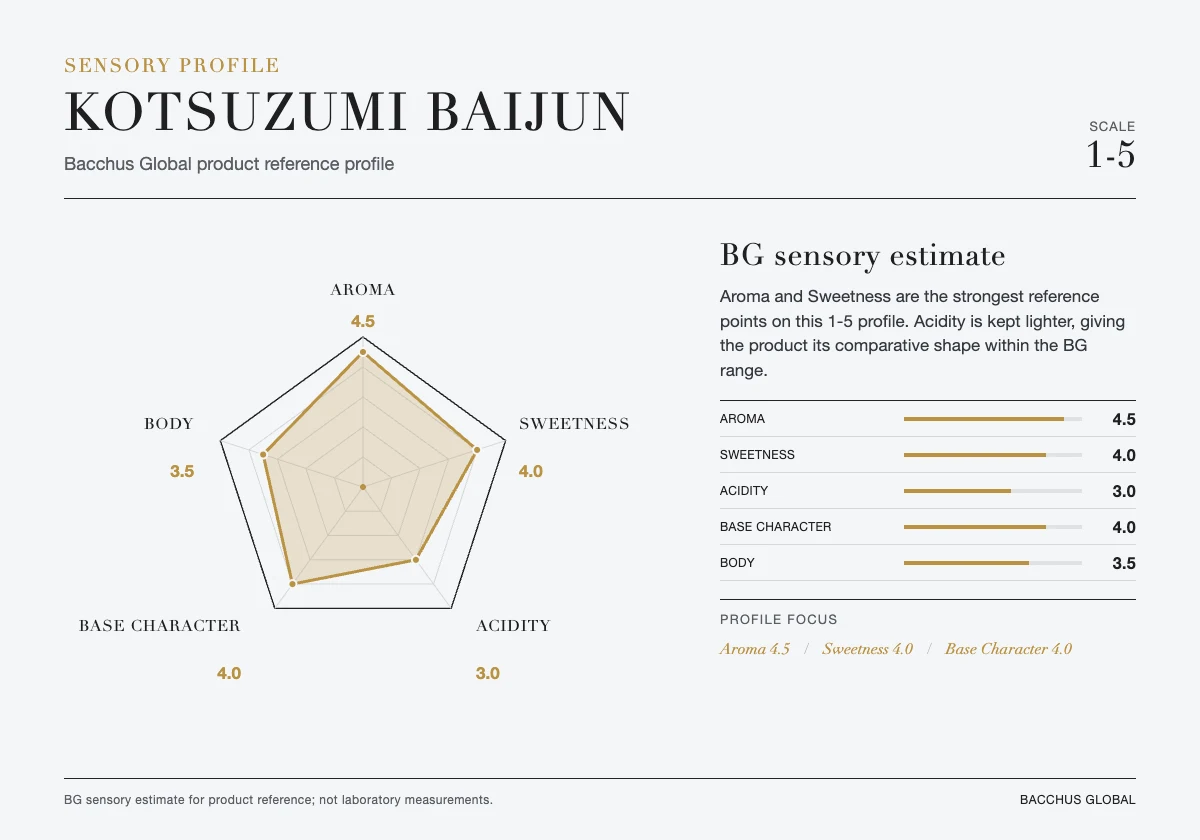
Ripe ume opens into suggestions of peach and plum. The texture is nectar-like, while fresh acidity rises through the sweetness and leaves the finish clean and composed.
Where a velvety texture and fruit aroma meet the table
The food affinities below for KOTSUZUMI Baijun are not pairings the brewery has stated officially — they are a reading of the characteristics recorded on this page. Four directions are built around the ripe-ume aroma, the velvety texture, and the bright acidity.
This pairing rationale draws on the following reference books: Following the “acid insertion” idea from Logical Pairing, Baijun’s acidity plays the same structural role whether the dish carries fat or stays light. Food Pairing Encyclopedia notes that peach resonates with dairy and other fruit, and that cucumber resonates with seafood and citrus; The Science of Food Pairing explains how citrus and fruit aromas rise right after a rich dish and prompt the next bite. Baijun’s balance of fruit aroma and acidity follows the same logic.
Nishiyama Shuzoujou, brewing in Tamba since 1849
Nishiyama Shuzoujou was founded in Tamba, Hyogo, in 1849. Under the KOTSUZUMI name, given by the haiku poet Takahama Kyoshi, it continues to work across both sake and liqueur.
From the same producer
Only directly relevant products and Bacchus Global stories are shown.
Contact Bacchus Global for product documentation and trade information.