
Rice Has No Sugar — So How Does Sake Become One of the World’s Strongest Brewed Drinks?
Our map left one riddle unanswered: sake is a brewed drink, never distilled, yet undiluted it reaches nearly 20% alcohol. Beer tops out around 5–9%, even wine around 14–15% — so why can sake alone climb so high?
The answer lies in one of the most labor-intensive fermentation methods in the world, hidden inside how sake is made. It is called parallel multiple fermentation (heikō-fukuhakkō). It sounds technical, but one comparison makes it click.
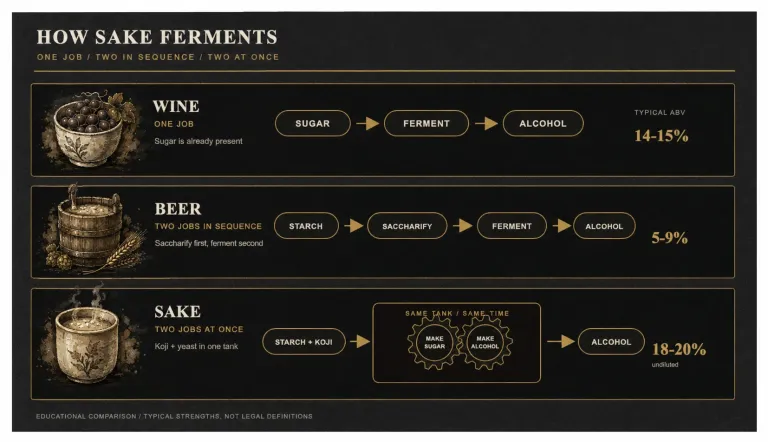
First, alcohol is born from sugar
Every alcohol begins at the same point: yeast eats sugar and turns it into alcohol. That is fermentation. No sugar, no alcohol.
Here wine has it easy. Grape juice is already full of sugar. So making wine is a single job — add yeast, let it ferment.
But rice has no sugar. It has starch, and yeast cannot eat starch. Someone must first turn that starch into sugar.
Beer does it “in sequence,” sake does it “at the same time”
Beer, made from barley, faces the same problem — barley has starch, not sugar. Beer solves it like this: first convert the starch into sugar, and only when that is finished, add the yeast to ferment. Two jobs, done one after the other.
Sake takes one step beyond the world’s norm. It houses a partner called koji in the rice and runs both jobs — turning starch into sugar, and fermenting that sugar — inside the same tank, at the same time. That is parallel multiple fermentation.
Wine is “one job,” beer is “two jobs in sequence,” sake is “two jobs at once.” The wisdom of brewing grows one step more intricate along that line.
Why “at the same time” makes a stronger drink
The secret is how long the yeast can be kept working.
As fermentation proceeds, the yeast grows less and less able to withstand the alcohol it has itself produced. Wine yeast hits this “alcohol wall” relatively early, and the strength gives out around 14–15%.
Sake raises that wall in two ways. One is parallel fermentation: koji makes sugar little by little and the yeast eats it right away, so the sugar in the tank stays thin throughout and the strain on the yeast stays light. The other is that the yeast used for sake has itself been selected, over long years, for strains that are strong against alcohol. Together, these two let sake reach — without any help from distillation — a strength that stands among the highest of the world’s brewed drinks (close to 20% undiluted). That is the answer to the riddle we opened with.
Most sake is sold at 15–16% because water is added afterward to adjust the strength. Sake with no water added — genshu — reaches a robust strength of nearly 20%.
The partner, koji — the “national fungus” behind the Japanese kitchen
The star of this feat is koji: steamed rice cultured with a beneficial microorganism called koji-kin. This same microorganism gives rise to miso, soy sauce, and mirin — a foundation of Japanese food culture, and one officially designated Japan’s “national fungus.”
In other words, sake is not some far-off foreign technology. It is born from the very same fermentation wisdom as the miso and soy sauce used in the kitchen every day.
Common misconceptions:
- “Sake is rice wine.” → In craft it is closer to beer (it has a starch-to-sugar step). As the map said: brewed like a beer, savored like a wine.
- “Sake is distilled.” → It is not. Its strength comes from parallel fermentation, not distillation.
- “High strength means it belongs with shochu or vodka.” → At around 15%, sake sits between wine and beer by strength alone — a completely different family from strong distilled spirits.
All you need to remember
- Rice has no sugar — so it needs a partner, koji, to turn starch into sugar.
- Saccharification and fermentation run at the same time — that is parallel fermentation. Beer does it in sequence; sake does it at once.
- That is how it reaches, without distillation, a strength among the world’s highest brewed drinks — and that koji comes from the same kitchen wisdom as miso and soy sauce.
Grasp these three, and you can already describe “what sake is” more accurately than many people in Japan.
— But then, why is that rice “polished” before brewing? What does the “polishing ratio” on the label actually grind away? And why does one and the same sake change its expression with temperature? From here, we step into the story of flavor.
Read next: What Is Shochu? / The Map of Japanese Alcohol / Pairing Basics / Glossary of Japanese Drinks
ข้าวไม่มีน้ำตาล แล้วสาเกกลายเป็นหนึ่งในเครื่องดื่มหมักที่แรงที่สุดในโลกได้อย่างไร?
แผนที่ครั้งก่อนทิ้งปริศนาไว้ข้อหนึ่ง: สาเกเป็นเครื่องดื่มหมักที่ไม่ผ่านการกลั่นเลย แต่ในแบบไม่เจือน้ำ (เก็นชู) กลับมีความแรงเกือบ 20% เบียร์สูงสุดราว 5–9% ไวน์ก็ราว 14–15% แล้วทำไมเฉพาะสาเกจึงขึ้นไปได้สูงขนาดนั้น?
คำตอบซ่อนอยู่ในวิธีทำสาเก ซึ่งเป็นหนึ่งในกรรมวิธีการหมักที่ต้องใช้ความพิถีพิถันมากที่สุดในโลก มีชื่อว่า การหมักซ้อนแบบขนาน (เฮโก-ฟุกุฮักโก) ฟังดูเป็นศัพท์เทคนิค แต่เทียบเคียงเพียงข้อเดียวก็เข้าใจได้ทันที
อย่างแรก แอลกอฮอล์เกิดจาก “น้ำตาล”
เครื่องดื่มแอลกอฮอล์ทุกชนิดเริ่มต้นที่จุดเดียวกัน: ยีสต์กินน้ำตาลแล้วเปลี่ยนเป็นแอลกอฮอล์ นั่นคือการหมัก ไม่มีน้ำตาล ก็ไม่มีแอลกอฮอล์
ตรงนี้ไวน์ได้เปรียบ น้ำองุ่นมีน้ำตาลเต็มเปี่ยมอยู่แล้ว การทำไวน์จึงเป็นงานเดียว — ใส่ยีสต์ แล้วปล่อยให้หมัก
แต่ข้าวไม่มีน้ำตาล มีแต่แป้ง และยีสต์กินแป้งไม่ได้ จึงต้องมีใครสักคนเปลี่ยนแป้งให้เป็นน้ำตาลเสียก่อน
เบียร์ทำ “ตามลำดับ” สาเกทำ “พร้อมกัน”
เบียร์ซึ่งทำจากข้าวบาร์เลย์ก็เจอปัญหาเดียวกัน — บาร์เลย์มีแป้ง ไม่มีน้ำตาล เบียร์แก้ปัญหาแบบนี้: เปลี่ยนแป้งให้เป็นน้ำตาลก่อน แล้วเมื่อเสร็จแล้วจึงใส่ยีสต์เพื่อหมัก สองงาน ทำทีละอย่างตามลำดับ
สาเกก้าวข้ามธรรมเนียมของโลกไปอีกขั้น มันให้ผู้ช่วยที่ชื่อ โคจิ อาศัยอยู่ในข้าว แล้วเดินสองงาน — เปลี่ยนแป้งเป็นน้ำตาล และหมักน้ำตาลนั้น — ในถังเดียวกัน พร้อมกัน นี่คือการหมักซ้อนแบบขนาน
ไวน์คือ “งานเดียว” เบียร์คือ “สองงานตามลำดับ” สาเกคือ “สองงานพร้อมกัน” — ภูมิปัญญาการหมักซับซ้อนขึ้นทีละขั้นตามลำดับนี้
ทำไม “พร้อมกัน” จึงให้เครื่องดื่มที่แรงกว่า
ความลับอยู่ที่ว่าจะรักษาให้ยีสต์ทำงานต่อไปได้นานแค่ไหน
เมื่อการหมักดำเนินไป ยีสต์จะทนต่อแอลกอฮอล์ที่ตัวมันเองสร้างขึ้นได้น้อยลงเรื่อย ๆ ยีสต์ของไวน์ชนกับ “กำแพงแอลกอฮอล์” นี้ค่อนข้างเร็ว ความแรงจึงหมดแรงอยู่ราว 14–15%
สาเกยกกำแพงนั้นให้สูงขึ้นด้วยสองวิธี วิธีแรกคือการหมักแบบขนาน — โคจิสร้างน้ำตาลทีละน้อย และยีสต์ก็กินทันที น้ำตาลในถังจึงเจือจางอยู่เสมอ ภาระของยีสต์จึงเบา อีกวิธีหนึ่งคือ ยีสต์ที่ใช้ทำสาเกเองก็ถูกคัดเลือกมายาวนานให้เหลือแต่สายพันธุ์ที่ทนแอลกอฮอล์ได้สูง เมื่อสองอย่างนี้มาประกอบกัน สาเกจึงไปถึง — โดยไม่พึ่งการกลั่นเลย — ความแรงที่จัดว่าอยู่ในระดับสูงที่สุดกลุ่มหนึ่งในบรรดาเครื่องดื่มหมักของโลก (เกือบ 20% เมื่อไม่เจือน้ำ) นี่คือคำตอบของปริศนาที่เราเปิดไว้ตอนต้น
สาเกส่วนใหญ่วางขายที่ 15–16% เพราะเติมน้ำภายหลังเพื่อปรับความแรง ส่วนสาเกที่ไม่เติมน้ำ — เก็นชู — มีความเข้มถึงเกือบ 20%
ผู้ช่วยชื่อโคจิ — “เชื้อราประจำชาติ” ที่อยู่เบื้องหลังครัวญี่ปุ่น
พระเอกของงานนี้คือโคจิ: ข้าวนึ่งที่เพาะจุลินทรีย์ชนิดดีที่เรียกว่า โคจิ-คิน จุลินทรีย์ชนิดเดียวกันนี้ยังให้กำเนิดมิโสะ โชยุ และมิริน — เป็นรากฐานของวัฒนธรรมอาหารญี่ปุ่น และได้รับการกำหนดอย่างเป็นทางการให้เป็น “เชื้อราประจำชาติ” ของญี่ปุ่น
พูดอีกอย่างคือ สาเกไม่ใช่เทคโนโลยีต่างแดนอันไกลโพ้น แต่เกิดจากภูมิปัญญาการหมักเดียวกันกับมิโสะและโชยุที่ใช้ในครัวทุกวัน
ความเข้าใจผิดที่พบบ่อย:
- “สาเกคือไวน์ข้าว” → ในแง่กรรมวิธีใกล้เคียงเบียร์มากกว่า (มีขั้นตอนเปลี่ยนแป้งเป็นน้ำตาล) ดังที่แผนที่บอกไว้ “หมักอย่างเบียร์ ลิ้มรสอย่างไวน์”
- “สาเกผ่านการกลั่น” → ไม่ได้กลั่น ความแรงมาจากการหมักแบบขนาน ไม่ใช่จากการกลั่น
- “แรงมากแปลว่าเป็นพวกเดียวกับโชจูหรือวอดก้า” → ที่ราว 15% สาเกอยู่ระหว่างไวน์กับเบียร์เมื่อวัดจากความแรงล้วน ๆ เป็นคนละตระกูลกับสุรากลั่นที่แรงจัดโดยสิ้นเชิง
จำแค่นี้ก็พอ
- ข้าวไม่มีน้ำตาล จึงต้องมีผู้ช่วยชื่อโคจิมาเปลี่ยนแป้งให้เป็นน้ำตาล
- การเปลี่ยนแป้งเป็นน้ำตาลกับการหมัก เดินไปพร้อมกัน นั่นคือการหมักแบบขนาน เบียร์ทำตามลำดับ สาเกทำพร้อมกัน
- นี่คือเหตุที่มันไปถึงความแรงระดับสูงที่สุดกลุ่มหนึ่งของเครื่องดื่มหมักในโลกโดยไม่ต้องกลั่น และโคจินั้นมาจากภูมิปัญญาครัวเดียวกันกับมิโสะและโชยุ
เข้าใจ 3 ข้อนี้ คุณก็อธิบาย “สาเกคืออะไร” ได้แม่นยำกว่าคนญี่ปุ่นหลายคนแล้ว
— แล้วทำไมข้าวนั้นจึงถูก “ขัดสี” ก่อนนำไปหมัก? ตัวเลข “อัตราการขัดสี” บนฉลากขัดอะไรออกไปกันแน่? และทำไมสาเกขวดเดียวกันจึงเปลี่ยนบุคลิกไปตามอุณหภูมิ? จากนี้ไป เราจะก้าวเข้าสู่เรื่องราวของรสชาติ
อ่านต่อ: โชจูคืออะไร / แผนที่เครื่องดื่มญี่ปุ่น / พื้นฐานการจับคู่อาหาร / คำศัพท์สุราญี่ปุ่น
米は甘くない。では、なぜ日本酒は世界でも指折りに強い醸造酒になれるのか
前回の地図で、ひとつ謎を残した。日本酒は、蒸留しない醸造酒なのに、原酒で20度近くに届く。 ビールはせいぜい5〜9度、ワインでも14〜15度が限界なのに、なぜ日本酒だけがそこまで強くなれるのか。
答えは、日本酒の造りに隠された世界でも屈指の手間のかかる発酵の仕組みにある。その名を、並行複発酵(へいこうふくはっこう)という。難しそうな四文字だが、たとえ話ひとつで腑に落ちる。
まず、酒は「糖」から生まれる
すべての酒は、同じ一点から始まる。酵母が糖を食べて、アルコールに変える。 これが発酵だ。糖がなければ、酒は生まれない。
ここでワインは有利だ。ぶどうの果汁には、はじめから糖がたっぷり入っている。だからワインづくりは、酵母を入れて発酵させる—ひとつの仕事で済む。
ところが米には、糖がない。あるのはデンプンだ。デンプンのままでは酵母は食べられない。誰かが先に、デンプンを糖に変えてやらなければならない。
ビールは「順番に」、日本酒は「同時に」
同じ問題は、麦から造るビールも抱えている。麦にも糖はなく、デンプンがあるだけだ。ビールはこれをこう解く—まず麦のデンプンを糖に変え、それが終わってから、酵母を入れて発酵させる。二つの仕事を、順番にこなすやり方だ。
日本酒は、ここで世界の常識を一歩越える。デンプンを糖に変える相棒麹(こうじ)を米に住まわせ、「デンプンを糖に変える」と「その糖を発酵させる」を、同じタンクの中で、同時に走らせる。 これが並行複発酵だ。
ワインは「一つの仕事」、ビールは「二つの仕事を順番に」、日本酒は「二つの仕事を同時に」—酒づくりの知恵は、この順に一段ずつ複雑になっていく。
「同時に」が、なぜ強い酒を生むのか
秘密は、酵母をどこまで働かせ続けられるか、にある。
発酵が進むほど、酵母は自分が生み出したアルコールそのものに、だんだん耐えられなくなる。ワインの酵母はこの「アルコールの壁」に比較的早く突き当たり、度数は14〜15度あたりで力尽きる。
日本酒には、その壁を高くする工夫が二つある。ひとつが並行複発酵だ。麹が糖を少しずつ造り、酵母がそれをすぐに食べるので、タンクの中の糖はいつも薄いまま保たれ、酵母への負担が軽い。もうひとつは、日本酒づくりに使う酵母そのものが、長い年月をかけて「アルコールに強い」系統だけ選び抜かれてきたこと。この二つが揃って、日本酒は蒸留の力を借りずに、醸造酒としては世界でも指折りの度数(原酒で20度近く)に達する。冒頭の謎の答えが、これだ。
多くの日本酒が15〜16度で売られているのは、造ったあとに水を加えて度数を整えているからだ。水を加えない「原酒」は、20度近くの力強さに達する。
相棒・麹 — 日本の台所を支えてきた「国菌」
この離れ業の主役が、麹だ。麹は、蒸した米に麹菌(こうじきん)という微生物を育てたもの。この麹菌は、味噌・醤油・みりんを生んできた、日本の食文化の土台であり、日本では正式に「国菌」(国を代表する菌)に定められている。
つまり日本酒は、遠い異国の技術ではない。台所で毎日使う味噌や醤油と、同じ発酵の知恵から生まれた酒なのだ。
よくある誤解:
- 「日本酒=米のワイン」→ 造りはむしろビールに近い(デンプンを糖に変える工程がある)。前回の地図のとおり「ビールのように醸し、ワインのように味わう」が正確。
- 「日本酒は蒸留している」→ 蒸留はしない。度数が高いのは並行複発酵の結果であって、蒸留の結果ではない。
- 「度数が高い=焼酎やウォッカの仲間」→ 15度前後の日本酒は、度数だけ見ればワインとビールの間。強い蒸留酒とはまったく別の家族だ。
覚えておくのは、これだけ
- 米は甘くない。 だからデンプンを糖に変える相棒—麹—が要る。
- 糖化と発酵を、同時に走らせる。 これが並行複発酵。ビールは「順番に」、日本酒は「同時に」。
- だから、蒸留せずに世界でも指折りの度数に届く。 その麹は、味噌や醤油と同じ台所の知恵から来ている。
この3つを掴めば、あなたはもう「日本酒とは何か」を、多くの日本人より正確に語れる。
—では、その米は、造る前になぜ「磨かれる」のだろう。ラベルに書かれた「精米歩合」の数字は、いったい何を削り落としているのか。そして、同じ一本の酒が、なぜ温度で表情を変えるのか。次からは、味わいの物語に入っていく。