
Burgundy, Through One Map
Why Does the Village Synonymous with White Burgundy Have No Grand Cru at All? — Meursault
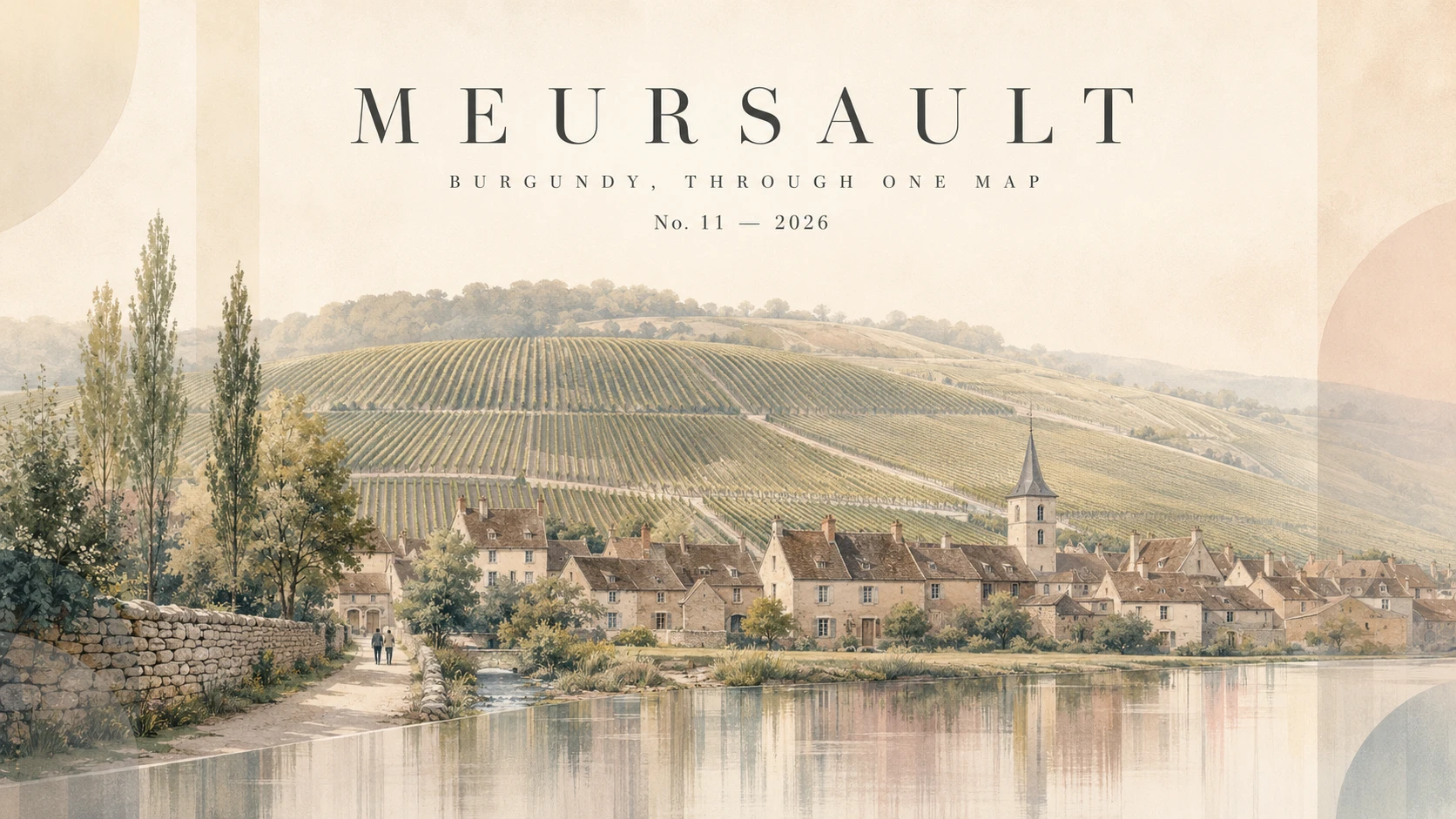
Head south through the Côte de Beaune, and the hillside villages gradually give way to white wine country. At the center of it all sits the village of Meursault. Nearly all of its production is white wine made from Chardonnay, and it is widely known as one of the villages that define white Burgundy. Yet for all its renown, Meursault’s classification includes not a single Grand Cru. How can such a famous white wine village have none at all? The answer, it turns out, leads to a history with no clear record — much like the origin of the village’s own name.
| Item | Details |
|---|---|
| Village | Meursault |
| District | Côte de Beaune |
| Classification | 19 Premier Cru vineyards; no Grand Cru |
| AOC recognition | July 31, 1937 |
| Grape variety | Predominantly Chardonnay (mostly white wine; a small amount of Pinot Noir is also grown for red) |
| For reference | Neighboring villages Volnay and Pommard likewise have no Grand Cru |
A Village Covered in Chardonnay
Within the Côte de Beaune, Meursault is a village where white wine accounts for the vast majority of production. Nearly all of the grapes grown are Chardonnay, with only a small amount of Pinot Noir planted for red wine. Premier Cru vineyards line the mid-slope of the hill, among them the well-known Perrières and Charmes. It is this expanse of vineyards that has made Meursault synonymous with white wine.
A Classification Without a Grand Cru
As the AOC (Appellation d’Origine Contrôlée) system took shape for Burgundy’s vineyards in the 1930s, Meursault was recognized as a village appellation on July 31, 1937. At that time, certain vineyards within the village were granted Premier Cru status, a list that today numbers 19. Names like Perrières and Charmes appear on it. But not a single vineyard in this classification was named Grand Cru. The same is true of its neighbors, Volnay and Pommard.
A Reason Left Unspoken
Why did such a celebrated white wine village end up with no Grand Cru at all? No official record offers a clear answer. One story passed down holds that the village chose not to seek the higher status because it would have meant a heavier tax burden. But no primary source has been found to confirm it. Without a settled answer, the village has carried a classification capped at Premier Cru to this day.
A Rat’s Leap, or a Walled Forest
The origin of the village’s name is just as unsettled. The most widely told story traces it to the Latin muris saltus, “the rat’s leap” — said to come from Roman soldiers stationed here, who watched rats leap across a stream. Among linguists, however, the more accepted view traces the name to an older term meaning “a forest enclosed by walls.” Two similar-sounding Latin words, it is said, were confused somewhere along the way. Either way, the name is old enough to appear in documents from the late 11th to early 12th century.
Meursault offers no clear answer for why it has no Grand Cru, nor for where its name comes from. And yet, through its Chardonnay-based white wines, the village remains, to this day, one of the defining names of the Côte de Beaune.
Three Facts Worth Knowing
- Meursault was recognized as an AOC on July 31, 1937, but its classification includes no Grand Cru. Instead, 19 vineyards hold Premier Cru status, and neighboring Volnay and Pommard likewise have no Grand Cru.
- No official record explains why no Grand Cru emerged here. A story is told that the village avoided the heavier tax burden that would come with the higher status, but no primary source confirms it, and the truth remains unclear.
- The origin of the village’s name is equally unsettled. A well-known story traces it to a Latin term for “the rat’s leap,” while linguists more often favor an older term meaning “a forest enclosed by walls.”
In this series
เมื่อลงมาทางใต้ตามแนวโกต เดอ โบน ไหล่เขาจะค่อย ๆ เปลี่ยนเป็นหมู่บ้านแห่งไวน์ขาว และใจกลางของย่านนี้คือหมู่บ้านเมอร์โซ ผลผลิตเกือบทั้งหมดของที่นี่คือไวน์ขาวที่ทำจากองุ่นชาร์ดอนเนย์ และเป็นที่รู้จักกันดีในฐานะหนึ่งในหมู่บ้านที่เป็นตัวแทนของไวน์ขาวแห่งบูร์กอญ แต่ทั้งที่มีชื่อเสียงเช่นนี้ ในการจัดระดับของเมอร์โซกลับไม่มีแกรนด์ครูแม้แต่ผืนเดียว เหตุใดหมู่บ้านไวน์ขาวที่โด่งดังเช่นนี้จึงไม่มีแกรนด์ครูเลย คำตอบนำไปสู่ประวัติศาสตร์ที่ไม่มีบันทึกชัดเจน — เช่นเดียวกับที่มาของชื่อหมู่บ้านแห่งนี้เอง
| รายการ | รายละเอียด |
|---|---|
| หมู่บ้าน | เมอร์โซ (Meursault) |
| เขต | โกต เดอ โบน (Côte de Beaune) |
| การจัดระดับ | พรีเมียร์ครู (Premier Cru) 19 ผืน / ไม่มีแกรนด์ครู (Grand Cru) |
| การรับรอง AOC | 31 กรกฎาคม 1937 |
| สายพันธุ์องุ่น | ส่วนใหญ่เป็นชาร์ดอนเนย์ (Chardonnay) (ไวน์ขาวเป็นหลัก มีปิโนต์นัวร์ (Pinot Noir) ปลูกเล็กน้อยสำหรับไวน์แดง) |
| ข้อมูลอ้างอิง | หมู่บ้านข้างเคียงอย่างโวลเนและปอมมาร์ก็ไม่มีแกรนด์ครูเช่นกัน |
หมู่บ้านที่ปกคลุมด้วยชาร์ดอนเนย์
ในย่านโกต เดอ โบน เมอร์โซเป็นหมู่บ้านที่ผลผลิตส่วนใหญ่เป็นไวน์ขาว องุ่นที่ปลูกแทบทั้งหมดคือชาร์ดอนเนย์ มีปิโนต์นัวร์ปลูกอยู่เพียงเล็กน้อยสำหรับไวน์แดง ไร่พรีเมียร์ครูเรียงรายอยู่บนไหล่เขา ในจำนวนนั้นมีชื่อที่รู้จักกันดีอย่างเปรีแยร์และชาร์ม ผืนไร่เหล่านี้เองที่ทำให้เมอร์โซกลายเป็นตัวแทนของไวน์ขาว
การจัดระดับที่ไม่มีแกรนด์ครู
ขณะที่ระบบ AOC (การรับรองแหล่งกำเนิดสินค้าควบคุม) ของไร่องุ่นในบูร์กอญค่อย ๆ ก่อร่างขึ้นในทศวรรษ 1930 เมอร์โซได้รับการรับรองเป็นอาเปลาซียงระดับหมู่บ้านเมื่อวันที่ 31 กรกฎาคม 1937 ในครั้งนั้น ไร่บางส่วนของหมู่บ้านได้รับสถานะพรีเมียร์ครู ซึ่งปัจจุบันมีจำนวนถึง 19 ผืน ชื่ออย่างเปรีแยร์และชาร์มอยู่ในรายชื่อนี้ แต่ในการจัดระดับครั้งนั้น ไม่มีไร่แห่งใดเลยที่ได้เป็นแกรนด์ครู หมู่บ้านข้างเคียงอย่างโวลเนและปอมมาร์ก็เป็นเช่นเดียวกัน
เหตุผลที่ไม่มีใครบอกเล่า
เหตุใดหมู่บ้านไวน์ขาวที่มีชื่อเสียงเช่นนี้จึงไม่มีแกรนด์ครูเลยสักผืน ไม่มีบันทึกทางการใดให้คำตอบที่ชัดเจน มีเรื่องเล่าสืบต่อกันมาว่าหมู่บ้านเลือกที่จะไม่ขอสถานะที่สูงกว่านี้ เพราะจะทำให้ต้องแบกรับภาระภาษีที่หนักขึ้น แต่ยังไม่พบเอกสารชั้นต้นที่ยืนยันเรื่องนี้ได้ โดยไม่มีคำตอบที่แน่ชัด หมู่บ้านแห่งนี้จึงรักษาการจัดระดับที่สูงสุดเพียงพรีเมียร์ครูมาจนถึงทุกวันนี้
การกระโดดของหนู หรือป่าที่ล้อมด้วยกำแพง
ที่มาของชื่อหมู่บ้านก็ไม่มีข้อสรุปที่แน่ชัดเช่นกัน เรื่องเล่าที่รู้จักกันแพร่หลายที่สุดสืบย้อนไปถึงคำละติน มูริส ซัลตุส (Muris Saltus) ซึ่งแปลว่า “การกระโดดของหนู” กล่าวกันว่าทหารโรมันที่ประจำการอยู่ในย่านนี้เป็นผู้ตั้งชื่อ หลังเห็นหนูกระโดดข้ามลำธาร แต่ในหมู่นักภาษาศาสตร์ มุมมองที่ได้รับการยอมรับมากกว่าคือชื่อนี้สืบมาจากคำเก่าแก่กว่าที่แปลว่า “ป่าที่ล้อมด้วยกำแพง” กล่าวกันว่าคำละตินสองคำที่ออกเสียงคล้ายกันอาจถูกสับสนกันไปในบางช่วงเวลา ไม่ว่าเรื่องจริงจะเป็นแบบใด ชื่อนี้ก็เก่าแก่พอจะปรากฏอยู่ในเอกสารตั้งแต่ช่วงปลายศตวรรษที่ 11 ถึงต้นศตวรรษที่ 12
เมอร์โซไม่มีคำตอบที่ชัดเจนว่าเหตุใดจึงไม่มีแกรนด์ครู หรือชื่อของหมู่บ้านมาจากไหน แต่กระนั้น หมู่บ้านแห่งนี้ก็ยังคงเป็นที่รู้จักมาจนถึงทุกวันนี้ ในฐานะหนึ่งในหมู่บ้านตัวแทนของโกต เดอ โบน ผ่านไวน์ขาวที่ทำจากชาร์ดอนเนย์
3 เรื่องที่รู้แล้วเล่าต่อได้
- เมอร์โซได้รับการรับรอง AOC เมื่อวันที่ 31 กรกฎาคม 1937 แต่ในการจัดระดับกลับไม่มีแกรนด์ครูแม้แต่ผืนเดียว แทนที่ด้วยไร่ 19 ผืนที่ได้รับสถานะพรีเมียร์ครู และหมู่บ้านข้างเคียงอย่างโวลเนกับปอมมาร์ก็ไม่มีแกรนด์ครูเช่นกัน
- ไม่มีบันทึกทางการใดอธิบายว่าเหตุใดจึงไม่มีแกรนด์ครูเกิดขึ้นที่นี่ มีเรื่องเล่าว่าหมู่บ้านหลีกเลี่ยงภาระภาษีที่หนักขึ้นซึ่งจะมาพร้อมสถานะที่สูงกว่า แต่ไม่มีเอกสารชั้นต้นยืนยัน ความจริงจึงยังไม่ชัดเจน
- ที่มาของชื่อหมู่บ้านก็ไม่มีข้อสรุปเช่นกัน เรื่องเล่าที่รู้จักกันดีสืบย้อนไปถึงคำละตินที่แปลว่า “การกระโดดของหนู” ขณะที่นักภาษาศาสตร์ส่วนใหญ่เห็นด้วยกับคำเก่าแก่กว่าที่แปลว่า “ป่าที่ล้อมด้วยกำแพง” มากกว่า
ลิงก์ในชุดเรื่อง
コート・ド・ボーヌを南へ下ると、丘の斜面はしだいに白ワインの村々に変わっていく。その中心にあるのがムルソー村だ。生産されるワインのほとんどをシャルドネによる白ワインが占め、ブルゴーニュの白を代表する村としてよく知られている。だが、その名高さとは裏腹に、ムルソーの格付けには特級(グラン・クリュ)が一つも含まれていない。これほど名の知れた白ワインの村に、なぜ特級がないのか。たどっていくと、村の名前の由来と同じように、はっきりとした答えの残っていない歴史に行き着く。
| 項目 | 内容 |
|---|---|
| 村名 | Meursault(ムルソー) |
| 地区 | コート・ド・ボーヌ地区 |
| 格付け | 一級畑(プルミエ・クリュ)19か所/特級(グラン・クリュ)なし |
| AOC認定 | 1937年7月31日 |
| ぶどう品種 | シャルドネが中心(白ワインが大半。赤ワイン用にピノ・ノワールもわずかに栽培される) |
| 参考 | 隣接するヴォルネ村・ポマール村も、同じく特級を持たない |
シャルドネが覆う村
コート・ド・ボーヌのなかでもムルソーは、生産量のほとんどを白ワインが占める村だ。使われるぶどうはほぼシャルドネで占められ、赤ワイン用のピノ・ノワールはごくわずかにとどまる。丘の中腹には一級畑が連なり、なかでもペリエール、シャルムといった名がよく知られている。こうした畑の広がりが、ムルソーを白ワインの村の代名詞と呼ばれるほどの存在にしている。
特級のない格付け
1930年代、ブルゴーニュの畑を格付けするAOC(原産地呼称統制)制度が固まっていくなかで、ムルソーは1937年7月31日、村名アペラシオンとして認定された。この時、村の中でも優れた畑には一級(プルミエ・クリュ)の格が与えられ、その数は今日19を数える。ペリエールやシャルムの名もそこに並ぶ。だが、この格付けの中に特級(グラン・クリュ)は一つも含まれていない。隣り合うヴォルネ村、ポマール村もまた同様である。
語られない理由
名高い白ワインの村でありながら、なぜ特級が一つも生まれなかったのか。公式にはっきりした記録は残っていない。格付けが定められた当時、特級に格上げされると税の負担が重くなるため、村がそれを望まなかった、という話が伝えられてはいる。だが、これを裏付ける一次資料は見つかっていない。真偽の定かでないまま、この村は一級畑どまりの格付けを、今日まで守り続けている。
ネズミの跳躍、あるいは壁の森
村の名前の由来にも、同じように定説がない。よく知られているのは、ラテン語で「ネズミの跳躍」を意味する「ムリス・サルトゥス(Muris Saltus)」に由来するという言い伝えだ。この地に駐屯したローマ兵が、小川を飛び越えるネズミを見て名づけた、と語られている。だが言語学者の間では、より古い「壁に囲まれた森」を意味する語に由来するという見方の方が有力とされる。響きの似た二つのラテン語が、いつしか取り違えられたのだろうとも言われている。いずれにしても、この名は11世紀末から12世紀はじめにかけての文書に、すでに記録が残るほど古い。
なぜ特級を持たないのかも、名前がどこから来たのかも、ムルソーははっきりとは語らない。それでもこの村は、シャルドネの白ワインを通じて、コート・ド・ボーヌを代表する村として、今日まで知られ続けている。
知っておくと語れる3つ
- ムルソーは1937年7月31日にAOCとして認定されたが、格付けに特級(グラン・クリュ)は一つも含まれていない。 代わりに19の畑が一級畑として認定されており、隣接するヴォルネ村・ポマール村も同じく特級を持たない。
- なぜ特級が生まれなかったのか、公式な記録は残っていない。 格上げに伴う税負担を避けるためだった、という話が伝えられているが、一次資料による裏付けはなく、真相ははっきりしない。
- 村の名の由来にも定説がない。 ラテン語で「ネズミの跳躍」を意味する語に由来するという言い伝えが広く知られる一方、言語学者の間では「壁に囲まれた森」を意味する語に由来するという見方の方が有力とされている。