
Burgundy, Through One Map
Why Did It Take Him Nearly Twenty Years to Turn a Stony Plot of Jerusalem Artichokes Back Into a Vineyard? — Henri Jayer
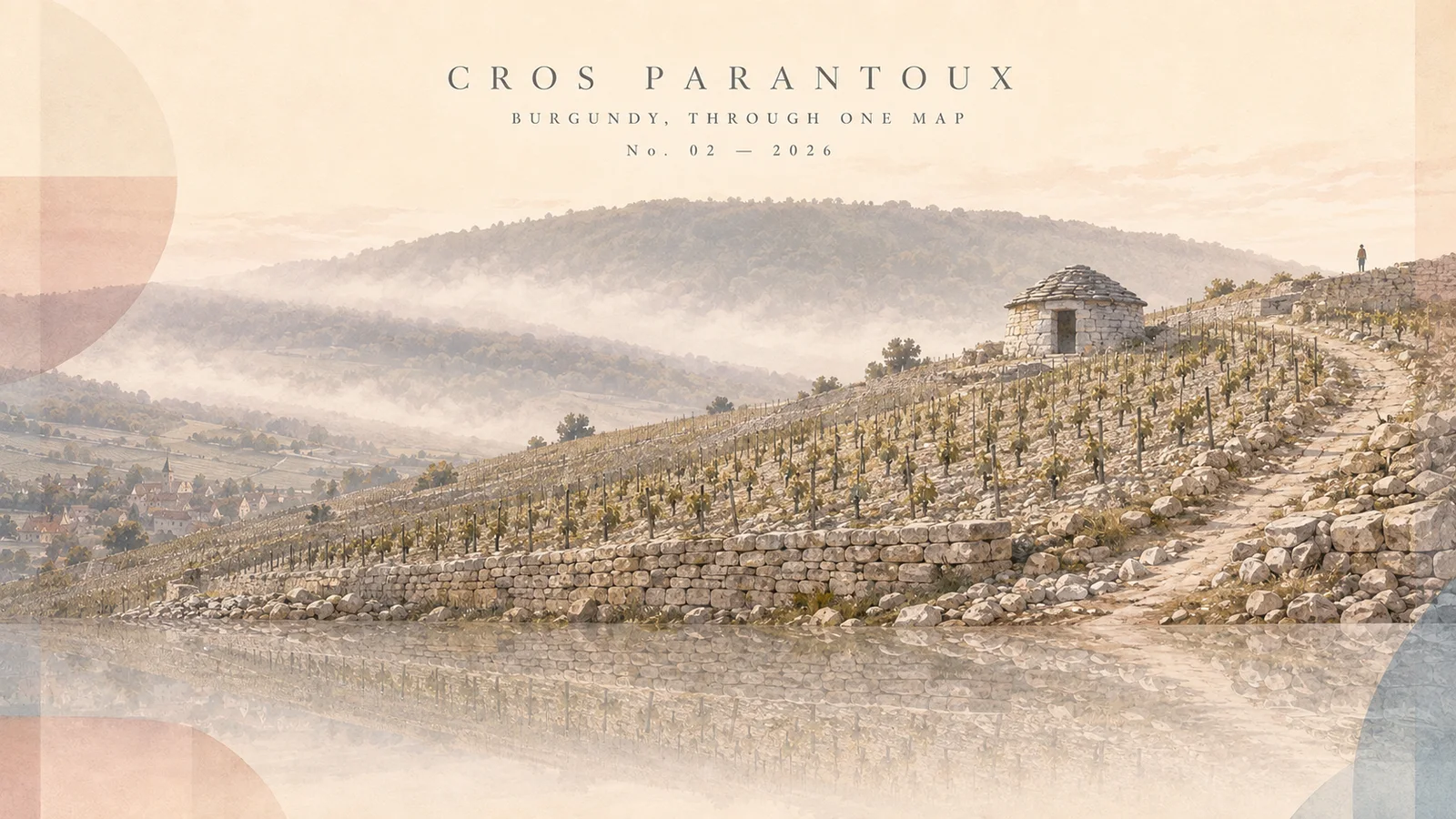
Walking up the slope in the village of Vosne-Romanée, just above the Grand Cru vineyard of Richebourg, lies a small plot called Cros Parantoux. It is a stony patch of ground that, at first glance, looks like no great gift of land. Yet around the time of the Second World War, not a single vine stood here. The vineyard had been abandoned, and in its place grew Jerusalem artichokes.
It was Henri Jayer (1922–2006), a grower born in Vosne-Romanée, who bought up this plot piece by piece and broke up its rock to return it to vine. He acquired his first parcel here in the early 1950s. It would be nearly a quarter of a century before he released a wine carrying this plot’s name alone. Why did it take him so long? The answer goes back to something that happened when he was still a teenager.
| Item | Details |
|---|---|
| Name | Henri Jayer |
| Born – Died | 1922 – 2006 |
| Home / active region | Vosne-Romanée (Côte de Nuits) |
| Signature plot | Cros Parantoux (Vosne-Romanée Premier Cru) |
| Milestone years | 1939 (takes over family vineyard work after his brothers are called up) / 1951 (acquires the first parcel of Cros Parantoux) / 1953 (begins clearing and replanting) / 1978 (first release carrying the Cros Parantoux name alone) / mid-1990s to early 2000s (retirement) / 2006 (death) |
| For reference | Cros Parantoux totals roughly one hectare, said to be the second-smallest of Vosne-Romanée’s fourteen Premier Crus |
The Year His Brothers Went to War
Henri Jayer was born in 1922 into a modest vine-growing family in Vosne-Romanée, said to be the youngest of three children. His father is said to have been a small grower with a few plots in and around the village.
When France entered the war in 1939, his two older brothers were called up for military service. Still in his teens, Henri left school to take over his father’s vineyard work in their place. He is also said to have studied oenology at the University of Dijon around this period. By the 1950s, working with roughly three hectares of family land inherited in Échezeaux and Beaux Monts, he began making wine under his own name.
A Stony Plot of Jerusalem Artichokes
The plot that caught his attention lay not far from his own vines, just above Richebourg. Known as Cros Parantoux, it had been abandoned as vineyard land since the phylloxera epidemic of the late nineteenth century. The soil was thin, and hard rock lay beneath it — by most accounts in the village, not worth the effort of clearing. Around the time of the Second World War and the years that followed, what grew here was said to be not vines but vegetables, including Jerusalem artichokes.
Where no one else saw a reason to return, Henri Jayer saw a vineyard.
Twenty Years of Breaking Rock and Buying Land, Piece by Piece
He is said to have acquired his first parcel of Cros Parantoux in 1951, and to have begun clearing and replanting it in 1953. Dynamite is reported to have been used to break through the hard rock beneath the soil, though no record has been confirmed of how often or on what scale.
Over the following years, he continued to buy small parcels from various owners. The last is said to have been added around 1970, by which point his holding had grown to roughly seven-tenths of the plot’s total area of about one hectare. Even then, the young vines needed more time before they were ready. It was in 1978 — nearly a quarter of a century after acquiring his first parcel — that he released a wine carrying the Cros Parantoux name alone for the first time.
An Approach That Begins in the Vineyard
What Jayer valued came before any technique in the cellar: work in the vineyard itself. Keeping yields low. Carefully sorting out unripe or damaged grapes. Removing the stems completely. Allowing several days of cold maceration before fermentation. Letting native yeasts do the work rather than adding cultivated ones. Leaving the wine unfiltered. These were methods he refined over many years, and it is said that many growers who came after him would go on to adopt this same way of thinking.
He is said to have been required to step back from vineyard work in the mid-1990s, under the terms of the French pension system. Accounts differ on the exact year of his final vintage, but by most records he had fully withdrawn from the work by the early 2000s. He died in 2006.
The ground that once grew Jerusalem artichokes was returned, by his hands, to the map as a vineyard. And the way of thinking that starts in the vineyard — his way — still lives on in the work of many growers today.
Three Facts Worth Knowing
- Cros Parantoux grew vegetables, including Jerusalem artichokes, around the time of the Second World War. Abandoned as vineyard land since the phylloxera epidemic, it was bought up piece by piece from the 1950s onward by Henri Jayer, who is said to have broken up its rock to replant it.
- He released the first wine carrying this plot’s name alone in 1978 — nearly twenty-five years after acquiring his first parcel there.
- Keeping yields low, sorting fruit rigorously, and putting the work into the vineyard rather than the cellar: this was his approach, and many growers who came after him would go on to adopt it.
In this series
เมื่อเดินขึ้นไปตามความลาดชันของหมู่บ้านโวสน-โรมาเน (Vosne-Romanée) เหนือไร่องุ่นระดับแกรนด์ครูอย่างรีชบูร์ก (Richebourg) ขึ้นไปเล็กน้อย จะพบผืนดินเล็ก ๆ แห่งหนึ่งชื่อว่าโคร ปารองตู (Cros Parantoux) เป็นผืนดินเต็มไปด้วยหิน มองเผิน ๆ แล้วไม่ใช่ที่ดินที่ดูมีค่าแต่อย่างใด แต่ในช่วงสงครามโลกครั้งที่สอง ที่นี่ไม่มีต้นองุ่นเหลืออยู่แม้แต่ต้นเดียว ไร่แห่งนี้ถูกทิ้งร้าง และสิ่งที่ปลูกแทนคือแก่นตะวัน (Jerusalem artichoke)
ผู้ที่ค่อย ๆ ซื้อรวบรวมผืนดินแห่งนี้ทีละแปลง และทุบหินเพื่อปลูกองุ่นกลับคืนสู่ผืนดิน คือ อองรี ฌาเยร์ (Henri Jayer, 1922–2006) ชาวไร่ผู้เกิดในหมู่บ้านโวสน-โรมาเนแห่งนี้เอง เขาได้แปลงแรกมาในช่วงต้นทศวรรษ 1950 และต้องใช้เวลาอีกเกือบหนึ่งในสี่ศตวรรษ กว่าที่เขาจะออกไวน์ที่มีเพียงชื่อผืนดินแห่งนี้เป็นครั้งแรก เหตุใดจึงต้องใช้เวลานานเช่นนี้ คำตอบย้อนไปถึงเหตุการณ์หนึ่งในวัยรุ่นของเขา
| รายการ | รายละเอียด |
|---|---|
| ชื่อ | อองรี ฌาเยร์ (Henri Jayer) |
| เกิด – เสียชีวิต | ค.ศ. 1922 – ค.ศ. 2006 |
| ถิ่นกำเนิด/พื้นที่ทำงาน | หมู่บ้านโวสน-โรมาเน (Vosne-Romanée) เขตโกต เดอ นุยส์ (Côte de Nuits) |
| แปลงที่เป็นตัวแทน | โคร ปารองตู (Cros Parantoux ไร่ระดับพรีเมียร์ครูของโวสน-โรมาเน) |
| ปีสำคัญ | ค.ศ. 1939 (รับหน้าที่ดูแลไร่ของครอบครัวแทนพี่ชายที่ถูกเกณฑ์ทหาร) / ค.ศ. 1951 (ได้แปลงแรกของโคร ปารองตู) / ค.ศ. 1953 (เริ่มบุกเบิกและปลูกใหม่) / ค.ศ. 1978 (ออกไวน์ในชื่อโคร ปารองตูเพียงชื่อเดียวเป็นครั้งแรก) / กลางทศวรรษ 1990 ถึงต้นทศวรรษ 2000 (ช่วงเกษียณ) / ค.ศ. 2006 (เสียชีวิต) |
| ข้อมูลอ้างอิง | โคร ปารองตูมีพื้นที่รวมประมาณ 1 เฮกตาร์ กล่าวกันว่าเป็นแปลงพรีเมียร์ครูที่เล็กเป็นอันดับสองจากทั้งหมด 14 แปลงของหมู่บ้านโวสน-โรมาเน |
ปีที่พี่ชายทั้งสองออกสู่สงคราม
อองรี ฌาเยร์เกิดในปี 1922 ในครอบครัวชาวไร่องุ่นที่ไม่ได้มีฐานะร่ำรวยแห่งหมู่บ้านโวสน-โรมาเน กล่าวกันว่าเขาเป็นบุตรคนสุดท้องในบรรดาพี่น้องสามคน บิดาของเขาเป็นชาวไร่รายย่อยที่มีที่ดินเพียงเล็กน้อยในและรอบหมู่บ้านแห่งนี้
เมื่อฝรั่งเศสเข้าสู่สงครามในปี 1939 พี่ชายสองคนของเขาถูกเกณฑ์เข้ารับราชการทหาร อองรีซึ่งยังอยู่ในวัยรุ่นจึงออกจากโรงเรียนเพื่อรับหน้าที่ดูแลไร่องุ่นของบิดาแทน กล่าวกันว่าในช่วงเวลานี้เขายังได้ศึกษาวิชาการทำไวน์ (oenology) ที่มหาวิทยาลัยดีฌง (Dijon) ด้วย เมื่อเข้าสู่ทศวรรษ 1950 เขาเริ่มทำไวน์ในชื่อของตนเอง โดยใช้ที่ดินของครอบครัวที่ได้รับสืบทอดมาในเอเชโซ (Échezeaux) และโบมง (Beaux Monts) รวมพื้นที่ราว 3 เฮกตาร์
ผืนดินเต็มไปด้วยหินที่ปลูกแก่นตะวัน
ผืนดินที่เขาสนใจอยู่ไม่ไกลจากไร่ของตนเอง เหนือรีชบูร์กขึ้นไปเล็กน้อย ผืนดินแห่งนี้มีชื่อว่าโคร ปารองตู ถูกทิ้งร้างจากการเป็นไร่องุ่นมาตั้งแต่เกิดโรคระบาดฟิลลอกเซอรา (phylloxera) ในช่วงปลายศตวรรษที่ 19 หน้าดินตื้น และใต้ดินเป็นชั้นหินแข็ง กล่าวกันว่าในสายตาของคนในหมู่บ้านสมัยนั้น ไม่คุ้มค่าที่จะบุกเบิก ในช่วงสงครามโลกครั้งที่สองและหลังจากนั้น สิ่งที่ปลูกในผืนดินนี้ไม่ใช่องุ่น แต่กล่าวกันว่าเป็นพืชผักอย่างแก่นตะวัน
ในผืนดินที่ไม่มีใครคิดจะนำกลับมาทำไร่อีก อองรี ฌาเยร์กลับมองเห็นความเป็นไปได้
ยี่สิบปีแห่งการทุบหินและซื้อที่ดินเพิ่มทีละแปลง
กล่าวกันว่าเขาได้แปลงแรกของโคร ปารองตูมาในปี 1951 และเริ่มบุกเบิกปลูกใหม่ตั้งแต่ปี 1953 มีการเล่าว่าเขาใช้ระเบิด (ไดนาไมต์) เพื่อทุบชั้นหินแข็งใต้ดิน แต่ไม่พบบันทึกที่ยืนยันจำนวนครั้งหรือขนาดของการใช้งานดังกล่าว
หลังจากนั้นเขายังคงซื้อที่ดินเพิ่มทีละแปลงจากเจ้าของหลายราย แปลงสุดท้ายกล่าวกันว่าได้มาราวปี 1970 ซึ่งทำให้พื้นที่ที่เขาครอบครองขยายมาอยู่ที่ราวร้อยละ 70 ของพื้นที่ทั้งหมดของแปลง (ประมาณ 1 เฮกตาร์) แม้กระนั้น ต้นองุ่นที่เพิ่งปลูกใหม่ก็ยังต้องใช้เวลาอีกระยะหนึ่งก่อนจะนำมาใช้ทำไวน์ได้ ปี 1978 คือปีที่เขาออกไวน์ในชื่อโคร ปารองตูเพียงชื่อเดียวเป็นครั้งแรก ซึ่งเป็นเวลาเกือบหนึ่งในสี่ศตวรรษหลังจากได้แปลงแรกมา
แนวคิดที่ให้ไร่องุ่นเป็นตัวกำหนดทุกสิ่ง
สิ่งที่ฌาเยร์ให้ความสำคัญมาก่อนเทคนิคใด ๆ ในห้องหมัก คือการทำงานในไร่องุ่นเอง ไม่ว่าจะเป็นการควบคุมปริมาณผลผลิตให้ต่ำ การคัดผลองุ่นที่ยังไม่สุกหรือเสียหายออกอย่างพิถีพิถัน การปลิดก้านช่อออกทั้งหมด การแช่เย็นผลองุ่นหลายวันก่อนหมัก การปล่อยให้ยีสต์ตามธรรมชาติทำหน้าที่แทนการเติมยีสต์เพาะเลี้ยง และการไม่กรองไวน์ ทั้งหมดนี้คือวิธีการที่เขาขัดเกลามาตลอดหลายปี และกล่าวกันว่าชาวไร่รุ่นหลังจำนวนไม่น้อยได้นำแนวคิดเหล่านี้ไปใช้ต่อ
กล่าวกันว่าในช่วงกลางทศวรรษ 1990 เขาต้องถอยห่างจากงานในไร่องุ่นตามกฎเกณฑ์ของระบบบำนาญฝรั่งเศส บันทึกเกี่ยวกับปีที่ทำไวน์เป็นปีสุดท้ายของเขานั้นแตกต่างกันไปในแต่ละแหล่งข้อมูล แต่โดยทั่วไปแล้วเขาถอนตัวจากงานอย่างสมบูรณ์ในช่วงต้นทศวรรษ 2000 และเสียชีวิตในปี 2006
ผืนดินที่ครั้งหนึ่งเคยปลูกแก่นตะวัน ได้กลับคืนสู่แผนที่ในฐานะไร่องุ่นอีกครั้งด้วยน้ำมือของเขา และแนวคิดที่เริ่มต้นจากไร่องุ่น—วิธีของเขา—ก็ยังคงมีชีวิตอยู่ในงานของชาวไร่จำนวนมากจนถึงทุกวันนี้
3 เรื่องที่รู้แล้วเล่าต่อได้
- โคร ปารองตูเคยเป็นที่ปลูกพืชผักอย่างแก่นตะวันในช่วงสงครามโลกครั้งที่สอง ผืนดินแห่งนี้ถูกทิ้งร้างจากการเป็นไร่องุ่นมาตั้งแต่เกิดโรคระบาดฟิลลอกเซอรา ก่อนที่อองรี ฌาเยร์จะซื้อรวบรวมทีละแปลงตั้งแต่ทศวรรษ 1950 และกล่าวกันว่าเขาทุบหินเพื่อปลูกองุ่นกลับคืนสู่ผืนดิน
- เขาออกไวน์ในชื่อแปลงนี้เพียงชื่อเดียวเป็นครั้งแรกในปี 1978 ซึ่งเป็นเวลาเกือบยี่สิบห้าปีหลังจากได้แปลงแรกมา
- การควบคุมปริมาณผลผลิตให้ต่ำ การคัดผลองุ่นอย่างพิถีพิถัน และการทุ่มเทให้กับงานในไร่องุ่นมากกว่าห้องหมัก คือแนวทางของเขา ซึ่งชาวไร่รุ่นหลังจำนวนไม่น้อยได้นำไปใช้ต่อ
ลิงก์ในชุดเรื่อง
ヴォーヌ・ロマネ村の斜面を上へ上へと歩いていくと、特級畑リシュブールのすぐ上手に、クロ・パラントゥと呼ばれる小さな一角がある。石だらけの、決して恵まれた土地には見えない区画だ。だが第二次大戦の頃、ここにブドウの樹は一本も残っていなかった。畑として見捨てられ、代わりに植えられていたのはキクイモだった。
この一角を、少しずつ買い集め、岩を砕いて畑に戻したのが、ヴォーヌ・ロマネ村生まれの栽培家アンリ・ジャイエ(1922〜2006)である。最初の一区画を手に入れたのは1950年代の初め。彼がこの区画だけの名を冠したワインを初めて世に出すまでには、そこから四半世紀近くがかかっている。なぜ、彼はここまで時間をかけたのか。答えは、彼がまだ10代だった、ある年の出来事にさかのぼる。
| 項目 | 内容 |
|---|---|
| 氏名 | アンリ・ジャイエ(Henri Jayer) |
| 生没 | 1922年 – 2006年 |
| 出身・活動地 | ヴォーヌ・ロマネ村(コート・ド・ニュイ地区) |
| 代表区画 | クロ・パラントゥ(ヴォーヌ・ロマネ プルミエ・クリュ) |
| 節目の年 | 1939年(兄の従軍を機に家業の畑仕事を担う)/1951年(クロ・パラントゥの最初の一区画を取得)/1953年(開墾・植え直しに着手)/1978年(クロ・パラントゥの名だけを冠して初めて世に出す)/1990年代半ば〜2000年代初め(引退へ)/2006年(没) |
| 参考 | クロ・パラントゥの総面積は約1ヘクタール。ヴォーヌ・ロマネ村に14あるプルミエ・クリュのうち、2番目に小さい区画とされる |
兄たちが戦場へ行った年
アンリ・ジャイエは1922年、ヴォーヌ・ロマネ村でブドウ栽培を営むつましい家に生まれた。三人きょうだいの末っ子だったと伝えられる。父はこの村とその周辺にわずかな畑を持つ、小さな栽培家だったとされる。
1939年、フランスが戦争に入ると、二人の兄が兵役に取られた。まだ10代だったアンリは学業を離れ、父に代わって畑仕事を引き受けることになる。この前後、彼はディジョン大学で醸造学も学んだと伝えられる。1950年代に入ると、家族から受け継いだエズェゾーやボー・モンなどの区画、合わせて3ヘクタールほどをもとに、彼は自分の名でワインを造り始めた。
石だらけの、キクイモ畑
彼が目をつけたのは、自分の畑からそう遠くない、リシュブールのすぐ上手に位置する一角だった。クロ・パラントゥと呼ばれるこの土地は、19世紀末にフィロキセラ(ブドウ根アブラムシ)の被害を受けて以来、ブドウ畑としては見捨てられていた。土は浅く、下は硬い岩盤—耕すには割に合わないというのが、当時の村の見方だったとされる。第二次大戦中からその前後にかけて、この一角に植えられていたのはブドウではなく、キクイモなどの野菜だったと伝えられる。
誰も畑に戻そうとしなかったこの土地に、アンリ・ジャイエは可能性を見た。
岩を砕き、少しずつ畑を買い足した二十年
クロ・パラントゥの最初の一区画を彼が手に入れたのは1951年のことだったとされる。1953年からは開墾と植え直しに着手した。硬い岩盤を割るために発破(ダイナマイト)を使ったと伝えられるが、その回数や規模を示す記録は確認できていない。
その後も彼は、複数の所有者から少しずつ区画を買い足していった。最後の一区画を手に入れたのは1970年前後とされ、彼が持つに至った面積は、区画全体(約1ヘクタール)のおよそ7割に達したという。植えたばかりの若い樹がワインに使えるようになるまでには、さらに時間がかかった。彼がクロ・パラントゥの名だけを冠したワインを初めて世に送り出したのは1978年—最初の一区画を手に入れてから、四半世紀近くが過ぎていた。
畑がすべてを決める、という考え方
ジャイエが大切にしたのは、セラーでの技術より先に、畑での仕事だった。収量を低く抑えること、熟していない粒や傷んだ粒を丁寧に取り除くこと、除梗を徹底すること、発酵前に数日間の低温浸漬を置くこと、酵母を添加せず自生のものに任せること、そして濾過をしないこと—いずれも彼が長年かけて磨いた手法であり、後に多くの造り手がこれらの考え方を取り入れることになった、と伝えられる。
1990年代半ば、年金制度の定めにより、彼は畑仕事から退くことを求められたと伝えられる。最後のヴィンテージの年については資料によって記述が異なるが、彼が完全に手を引いたのは2000年代の初め頃とされる。そして2006年、彼はこの世を去った。
キクイモが植えられていたその土地は、彼の手によって畑として地図の上に戻ってきた。そして畑を起点に考えるという彼のやり方は、今も多くの造り手たちの仕事の中に残っている。
知っておくと語れる3つ
- クロ・パラントゥは、第二次大戦の頃はキクイモなどの野菜畑だった。 フィロキセラの被害以来ブドウ畑としては見捨てられていたこの土地を、アンリ・ジャイエは1950年代から少しずつ買い足し、岩を砕いて植え直したと伝えられる。
- 彼がこの区画の名だけを冠したワインを初めて世に出したのは1978年だった。 最初の一区画を手に入れてから、四半世紀近くが経ってからのことである。
- 収量を抑え、選果を徹底し、畑での仕事に手間をかけるという考え方は、後に多くの造り手が取り入れることになった。 セラーでの技術より先に、畑での仕事を重視する姿勢が、彼の名を今に残している。