
Burgundy, Through One Map
Why Are Tiny Fossilized Oysters Buried in a Vineyard's Soil? — Chablis
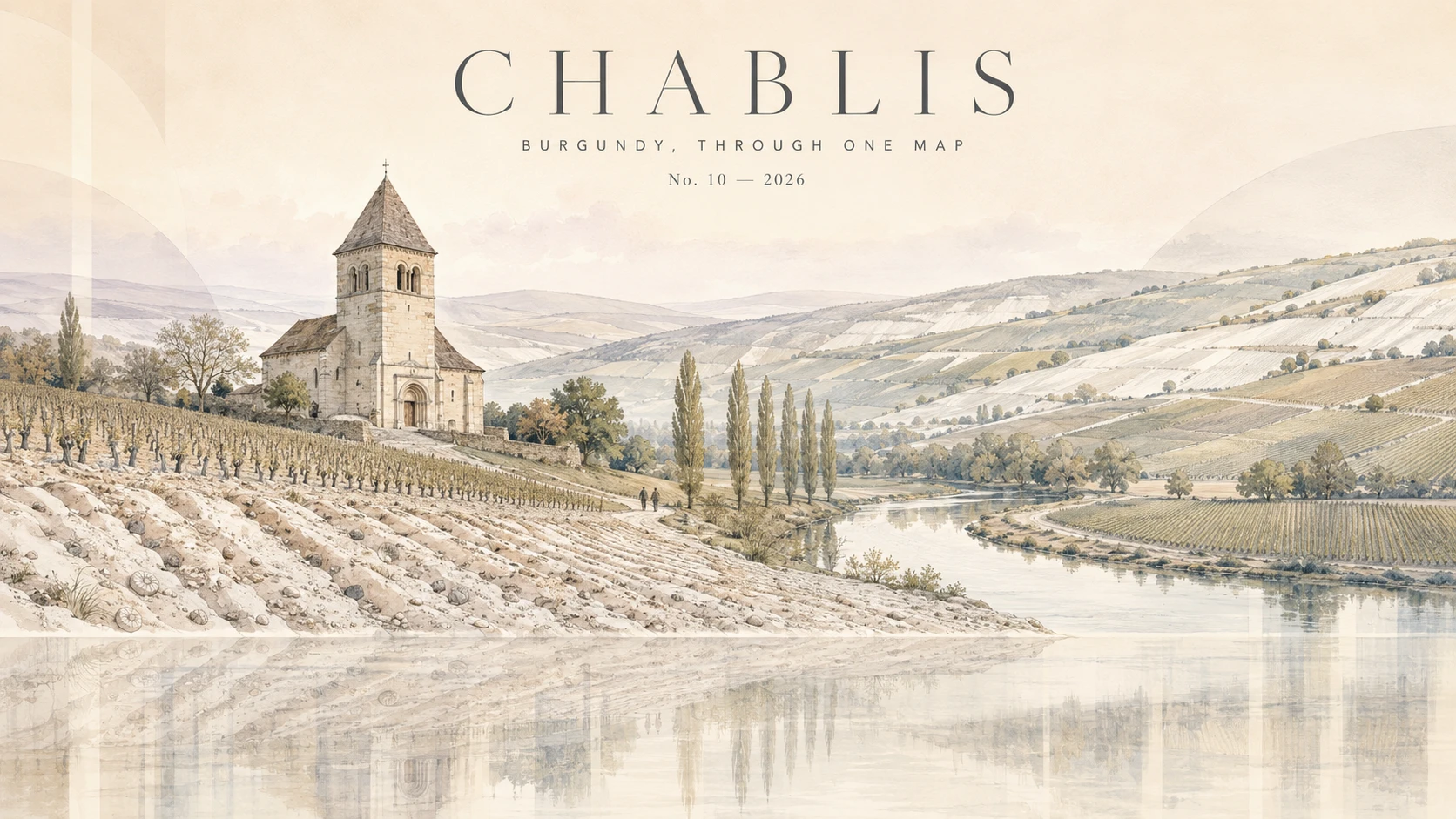
Walk through the vineyards surrounding the village of Chablis, at the northern edge of Burgundy, and you may notice small, swirl-shaped fragments mixed into the pale soil. Pick one up and look closely, and it turns out to be the fossilized shell of an ancient oyster. Why would the soil of a vineyard hold the fossils of creatures that once lived in the sea? The answer lies in the fact that, roughly 150 million years ago, this land was the floor of a warm, shallow sea.
| Item | Details |
|---|---|
| Appellation | Chablis |
| Location | Yonne department, Burgundy. The northernmost of Burgundy’s appellations, and the one closest to Paris |
| Soil | Limestone-based soil formed roughly 150 million years ago (the Kimmeridgian), containing small fossilized oysters (Exogyra virgula) |
| Grape variety | Chardonnay only |
| Milestone years | 12th century (monks of the Abbey of Pontigny extend vine-growing at Chablis) / January 13, 1938 (the AOC “Chablis” is initially recognized) / late 19th century (phylloxera and powdery mildew inflict serious damage on the vineyard) / 1957 (a major frost) / from the 1960s onward (mechanization and anti-frost technology allow the vineyard to expand again) |
| For reference | Classified into four tiers: Petit Chablis / Chablis / Premier Cru / Grand Cru. As of 2024, the vineyard covers roughly 5,866 hectares in total |
A Land That Was Once the Floor of the Sea
The soil beneath the Chablis vineyards belongs to a geological layer known as the Kimmeridgian. Roughly 150 million years ago, this area was not yet part of the continent — it was the floor of a warm, shallow sea. Over a long span of time, carbonate sediment from that sea, together with the shells of countless small creatures that lived in it, settled into a clay-bearing limestone layer that still lies beneath the vineyards today. Among the fossils found most often are small, comma-shaped oysters known by the scientific name Exogyra virgula. Even now, when the soil is turned, these fossils still surface.
The Monks Who Extended the Vineyard
It was the Abbey of Pontigny, in the 12th century, that gave a major push to vine-growing on this land. The monks of this abbey, part of the Cistercian order, cleared the slopes of the surrounding hills and planted vines parcel by parcel, extending the Chablis vineyard. They are also said to have built a building in the town of Chablis for making and storing wine, known as “Petit Pontigny,” part of which still stands in the town today.
The Part of Burgundy Closest to Paris
Burgundy is made up of a string of wine districts, and Chablis sits at the northernmost point among them — said to be the part of Burgundy closest to Paris. Look for Chablis on a map, and it sits closer to the Champagne region than to the Côte d’Or, where Burgundy’s main wine districts are clustered. From the medieval period into the early modern era, Chablis wine is said to have traveled down the Yonne River and on through the Seine, reaching all the way to Paris.
A Vineyard That Nearly Vanished, and Came Back
The Chablis vineyard did not arrive at its present state without hardship. In the late 19th century, phylloxera and powdery mildew struck the vineyard and caused serious damage. Grafting gradually helped rebuild it, but hardship continued into the 20th century. A major frost in 1957, in particular, is said to have caused serious damage to the vineyard. In 1955, in the years just after the Second World War, the vineyard’s total area had shrunk to 550 hectares. From the 1960s onward, as mechanization spread and technology for protecting vines from frost became available, the vineyard slowly but steadily reclaimed its lost ground. As of 2024, the total area of the Chablis vineyard stands at roughly 5,866 hectares.
Three Facts Worth Knowing
- Beneath the Chablis vineyards lies a layer of soil that was once the floor of a sea, roughly 150 million years ago. That soil still holds small, comma-shaped fossilized oysters known as Exogyra virgula.
- In the 12th century, monks of the Abbey of Pontigny cleared the hillsides of Chablis and extended its vineyards. They also built a building for making and storing wine known as “Petit Pontigny,” part of which still stands in the town today.
- Phylloxera in the late 19th century, followed by repeated frosts in the 20th, once shrank the Chablis vineyard dramatically. After mechanization and anti-frost technology spread from the 1960s onward, the vineyard revived, and as of 2024 covers roughly 5,866 hectares.
In this series
เมื่อเดินไปตามไร่องุ่นที่รายล้อมหมู่บ้านชาบลี ซึ่งอยู่ทางเหนือสุดของแคว้นบูร์กอญ บางครั้งจะสังเกตเห็นเศษชิ้นเล็ก ๆ รูปทรงคล้ายก้นหอยปะปนอยู่ในดินสีขาวซีด หยิบขึ้นมาพินิจดูใกล้ ๆ จะพบว่านั่นคือฟอสซิลเปลือกหอยนางรมจากยุคโบราณ เหตุใดดินในไร่องุ่นจึงมีฟอสซิลของสิ่งมีชีวิตในทะเลหลงเหลืออยู่ คำตอบอยู่ที่ผืนดินแห่งนี้ เมื่อราว 150 ล้านปีก่อน เคยเป็นก้นทะเลตื้นที่อบอุ่นมาก่อน
| รายการ | รายละเอียด |
|---|---|
| ชื่อแหล่งผลิต | ชาบลี (Chablis) |
| ที่ตั้ง | จังหวัดยอน (Yonne) แคว้นบูร์กอญ เป็นแหล่งผลิตไวน์ในบูร์กอญที่อยู่เหนือสุดและใกล้กรุงปารีสที่สุด |
| ดิน | ดินหินปูนที่ก่อตัวขึ้นเมื่อราว 150 ล้านปีก่อน (ยุคคิมเมอริดเจียน) มีฟอสซิลหอยนางรมตัวจิ๋ว (Exogyra virgula) ปะปนอยู่ |
| พันธุ์องุ่น | ชาร์โดเนย์เพียงพันธุ์เดียว |
| ปีสำคัญ | ศตวรรษที่ 12 (พระในอารามปงตีญีขยายการปลูกองุ่นในชาบลี) / 13 มกราคม 1938 (AOC “ชาบลี” ได้รับการรับรองครั้งแรก) / ปลายศตวรรษที่ 19 (โรคฟิลลอกเซอราและโรคราแป้งสร้างความเสียหายอย่างหนักแก่ไร่องุ่น) / ปี 1957 (เหตุน้ำค้างแข็งครั้งใหญ่) / ตั้งแต่ทศวรรษ 1960 เป็นต้นมา (ไร่องุ่นขยายตัวอีกครั้งด้วยเครื่องจักรกลและเทคโนโลยีป้องกันน้ำค้างแข็ง) |
| ข้อมูลอ้างอิง | แบ่งเป็น 4 ระดับ ได้แก่ Petit Chablis / Chablis / Premier Cru / Grand Cru ณ ปี 2024 ไร่องุ่นทั้งหมดมีเนื้อที่รวมประมาณ 5,866 เฮกตาร์ |
ผืนดินที่เคยเป็นก้นทะเล
ดินใต้ไร่องุ่นชาบลีจัดอยู่ในชั้นธรณีวิทยาที่เรียกว่ายุคคิมเมอริดเจียน เมื่อราว 150 ล้านปีก่อน พื้นที่แห่งนี้ยังไม่ได้เป็นส่วนหนึ่งของแผ่นดินใหญ่ แต่เป็นก้นทะเลตื้นที่อบอุ่น ตะกอนคาร์บอเนตจากทะเลแห่งนั้น ผสมกับเปลือกของสิ่งมีชีวิตตัวเล็ก ๆ นับไม่ถ้วนที่เคยอาศัยอยู่ ค่อย ๆ ทับถมกันเป็นชั้นหินปูนปนดินเหนียวที่ยังคงอยู่ใต้ไร่องุ่นจนถึงทุกวันนี้ ฟอสซิลที่พบได้บ่อยที่สุดคือหอยนางรมตัวเล็กรูปทรงคล้ายเครื่องหมายจุลภาค มีชื่อวิทยาศาสตร์ว่า Exogyra virgula เมื่อพลิกหน้าดิน ฟอสซิลเหล่านี้ก็ยังคงปรากฏให้เห็นอยู่จนถึงปัจจุบัน
พระสงฆ์ผู้ขยายไร่องุ่น
ผู้ที่ผลักดันการปลูกองุ่นในดินแดนแห่งนี้อย่างจริงจังคืออารามปงตีญี (Abbaye de Pontigny) ในศตวรรษที่ 12 พระในอารามแห่งนี้ซึ่งสังกัดคณะซิสเตอร์เชียน (Cistercian) ได้บุกเบิกไหล่เขาโดยรอบและปลูกองุ่นทีละแปลง ขยายไร่องุ่นของชาบลีออกไป กล่าวกันว่าพวกเขายังสร้างอาคารสำหรับหมักและเก็บรักษาไวน์ขึ้นในตัวเมืองชาบลี เรียกว่า “เปอติ ปงตีญี” (Petit Pontigny) ซึ่งบางส่วนของอาคารนี้ยังคงหลงเหลืออยู่ในเมืองจนถึงทุกวันนี้
แหล่งผลิตของบูร์กอญที่ใกล้ปารีสที่สุด
บูร์กอญประกอบด้วยแหล่งผลิตไวน์หลายแห่งเรียงต่อกัน และชาบลีตั้งอยู่ทางเหนือสุด ซึ่งกล่าวกันว่าเป็นส่วนของบูร์กอญที่อยู่ใกล้กรุงปารีสที่สุด เมื่อค้นหาชาบลีบนแผนที่ จะพบว่าอยู่ใกล้แคว้นชองปาญมากกว่าใกล้โกตดอร์ (Côte d’Or) ซึ่งเป็นที่ตั้งของแหล่งผลิตหลักของบูร์กอญ กล่าวกันว่าตั้งแต่ยุคกลางจนถึงยุคใหม่ตอนต้น ไวน์ชาบลีถูกล่องไปตามแม่น้ำยอน (Yonne) แล้วต่อไปยังแม่น้ำแซน (Seine) จนไปถึงกรุงปารีส
ไร่องุ่นที่เกือบสูญหาย แล้วฟื้นคืนมา
ไร่องุ่นของชาบลีไม่ได้เดินทางมาถึงวันนี้อย่างราบรื่น ปลายศตวรรษที่ 19 โรคระบาดฟิลลอกเซอราและโรคราแป้งโจมตีไร่องุ่น สร้างความเสียหายอย่างหนัก เทคนิคการต่อกิ่งค่อย ๆ ฟื้นฟูไร่องุ่นขึ้นมาใหม่ แต่ความยากลำบากยังคงดำเนินต่อไปในศตวรรษที่ 20 โดยเฉพาะเหตุน้ำค้างแข็งครั้งใหญ่ในปี 1957 ซึ่งกล่าวกันว่าสร้างความเสียหายอย่างหนักแก่ไร่องุ่น ในปี 1955 ซึ่งเป็นช่วงไม่นานหลังสงครามโลกครั้งที่สอง พื้นที่ไร่องุ่นของชาบลีลดลงเหลือเพียง 550 เฮกตาร์ ตั้งแต่ทศวรรษ 1960 เป็นต้นมา เมื่อเครื่องจักรกลและเทคโนโลยีป้องกันไร่องุ่นจากน้ำค้างแข็งแพร่หลายขึ้น ไร่องุ่นก็ค่อย ๆ ทวงพื้นที่กลับคืนมาอย่างมั่นคง ณ ปี 2024 ไร่องุ่นชาบลีทั้งหมดมีเนื้อที่รวมประมาณ 5,866 เฮกตาร์
3 เรื่องที่รู้แล้วเล่าต่อได้
- ใต้ไร่องุ่นชาบลีคือชั้นดินที่เคยเป็นก้นทะเลเมื่อราว 150 ล้านปีก่อน ดินนั้นยังคงมีฟอสซิลหอยนางรมตัวจิ๋วรูปทรงคล้ายเครื่องหมายจุลภาค (Exogyra virgula) ปะปนอยู่จนถึงทุกวันนี้
- ในศตวรรษที่ 12 พระในอารามปงตีญีบุกเบิกไหล่เขาของชาบลีและขยายไร่องุ่นออกไป พวกเขายังสร้างอาคารสำหรับหมักและเก็บไวน์ที่เรียกว่า “เปอติ ปงตีญี” ซึ่งบางส่วนยังคงหลงเหลืออยู่ในเมืองจนถึงทุกวันนี้
- โรคฟิลลอกเซอราในปลายศตวรรษที่ 19 ตามด้วยน้ำค้างแข็งซ้ำแล้วซ้ำเล่าในศตวรรษที่ 20 เคยทำให้ไร่องุ่นชาบลีหดตัวลงอย่างมาก หลังจากเครื่องจักรกลและเทคโนโลยีป้องกันน้ำค้างแข็งแพร่หลายตั้งแต่ทศวรรษ 1960 ไร่องุ่นก็ฟื้นคืนมา และ ณ ปี 2024 มีเนื้อที่รวมประมาณ 5,866 เฮกตาร์
ลิงก์ในชุดเรื่อง
ブルゴーニュ地方の最も北、シャブリの村を囲むブドウ畑を歩くと、白っぽい土のなかに、小さな渦を巻いたような形の欠片が混じっているのに気づくことがある。手のひらに乗せてよく見れば、それは大昔の牡蠣の殻の化石だ。ブドウ畑の土に、なぜ海の生き物の化石が眠っているのか。答えは、この土地がおよそ1億5千万年前、暖かく浅い海の底だったことにある。
| 項目 | 内容 |
|---|---|
| 産地名 | シャブリ(Chablis) |
| 所在地 | ブルゴーニュ地方ヨンヌ県。ブルゴーニュのアペラシオンのなかで最も北に位置し、パリに最も近い |
| 土壌 | 約1億5千万年前(キンメリジャン期)に形成された石灰質の土壌で、小さな牡蠣の化石(Exogyra virgula)を含む |
| ブドウ品種 | シャルドネのみ |
| 節目の年 | 12世紀(ポンティニー修道院の修道士がシャブリでブドウ栽培を広げる)/1938年1月13日(AOC「シャブリ」が最初に認定される)/19世紀末(フィロキセラとうどんこ病により畑が大きな打撃を受ける)/1957年(大規模な霜害)/1960年代以降(機械化と防霜技術により畑が再び拡大) |
| 参考 | 格付けはプティ・シャブリ/シャブリ/プルミエ・クリュ/グラン・クリュの4段階。2024年時点で畑の総面積は約5,866ヘクタール |
海の底だった土地
シャブリの畑の下に広がる土壌は、地質学でキンメリジャン期と呼ばれる時代の地層でできている。今からおよそ1億5千万年前、この一帯はまだ大陸の一部ではなく、暖かく浅い海の底だった。長い年月をかけてその海に積もった炭酸質の堆積物と、そこに暮らしていた無数の小さな生き物の殻が、粘土質を含んだ石灰岩の層となって、今も畑の下に眠っている。なかでもよく見つかるのが、コンマのような形をした小さな牡蠣の化石で、学名をExogyra virgulaという。畑を耕すと、今もこの化石が土の中から姿を現す。
修道士が広げた畑
この土地でブドウ栽培を大きく前進させたのが、12世紀のポンティニー修道院である。シトー会に連なるこの修道院の修道士たちは、周辺の丘の斜面を切り拓き、区画ごとにブドウを植えて、シャブリの畑を広げていった。ワインを仕込み、蓄えるための建物「プティ・ポンティニー」をシャブリの町に築いたとも伝わり、その建物の一部は今も町に残っている。
パリに最も近いブルゴーニュ
ブルゴーニュには複数の産地が連なっているが、シャブリはそのなかでいちばん北に位置し、パリに最も近いブルゴーニュの産地とされる。地図の上でシャブリを探すと、ブルゴーニュの主要な産地が集まるコート・ドールよりも、むしろシャンパーニュ地方に近い。中世から近世にかけて、シャブリのワインはヨンヌ川を下り、セーヌ川を通ってパリまで運ばれていたと伝わる。
一度消えかけ、蘇った畑
シャブリの畑は、順調にここまで来たわけではない。19世紀末、ブドウネアブラムシ(フィロキセラ)とうどんこ病が畑を襲い、大きな打撃を受けた。接ぎ木という技術によって畑は少しずつ立て直されたが、20世紀に入ってからも試練は続いた。なかでも1957年の大規模な霜害は、畑に大きな被害を及ぼしたと伝わる。戦後まもない1955年には、畑の面積が550ヘクタールにまで縮小していた。機械化と、畑を霜から守る技術が広まった1960年代以降、畑は少しずつ、しかし着実に面積を取り戻し、2024年時点でシャブリの畑の総面積はおよそ5,866ヘクタールを数える。
知っておくと語れる3つ
- シャブリの畑の下には、約1億5千万年前の海の底だった地層が広がっている。 その土には、コンマのような形をした小さな牡蠣の化石(Exogyra virgula)が今も混じっている。
- 12世紀、ポンティニー修道院の修道士たちがシャブリの丘を切り拓き、ブドウ畑を広げた。 ワインを仕込み蓄えるための建物「プティ・ポンティニー」も築かれ、その一部は今もシャブリの町に残っている。
- 19世紀末のフィロキセラ被害と20世紀の度重なる霜害で、シャブリの畑は一度、大きく縮小した。 機械化と防霜技術が広まった1960年代以降に畑は蘇り、2024年時点ではおよそ5,866ヘクタールを数える。