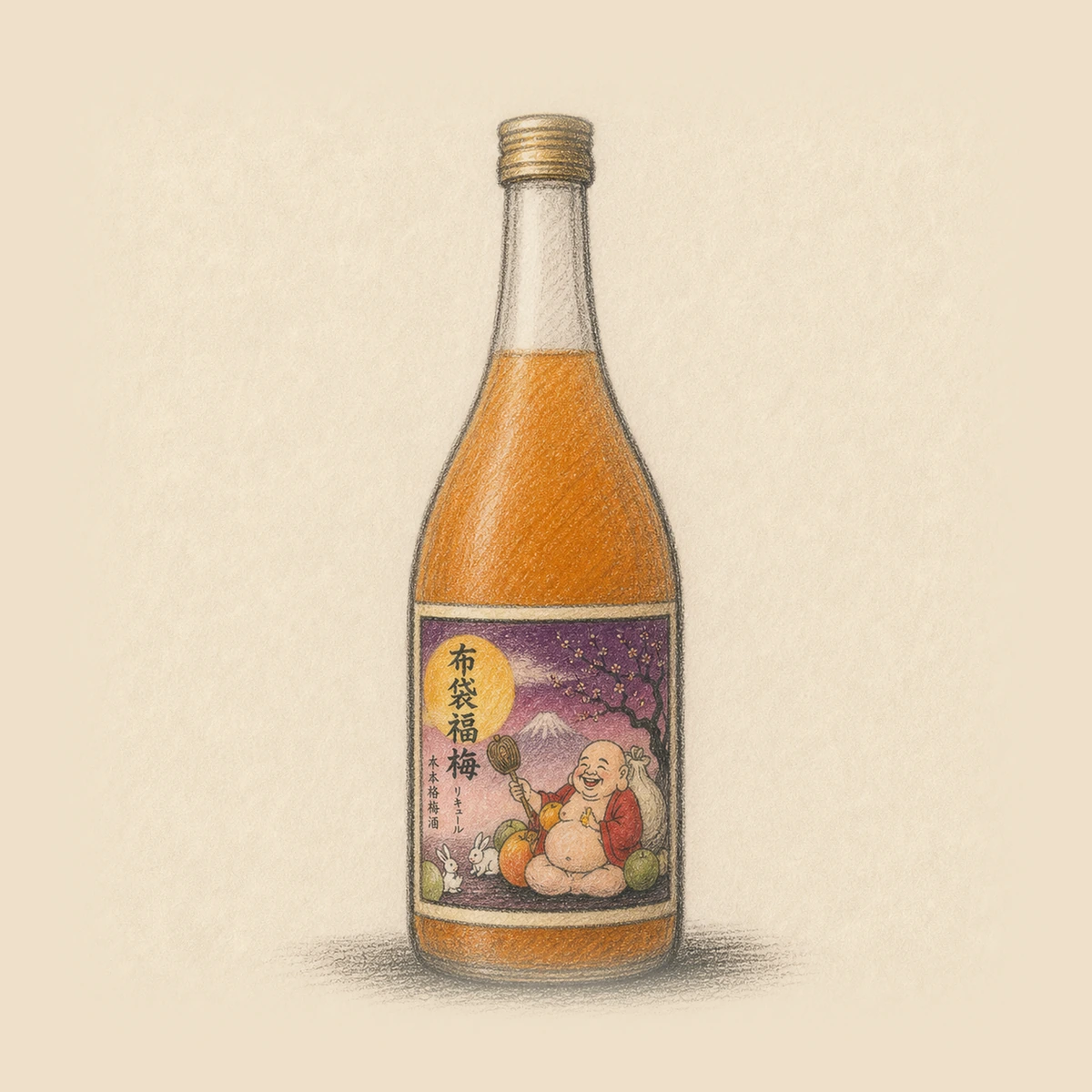
FUKUUME HOTEI
Ripe-ume confiture and pulp are folded back into brandy-based umeshu, bringing jam-like density and the fruit’s own acidity into one cloudy expression.
Thailand · Product information
Product information from Bacchus Global Co., Ltd., based in Bangkok, Thailand. About Bacchus Global
Pulpy cloudy umeshu
Returning ripe ume to the liqueur as fruit
A dedicated confiture and pulp made from ripe ume is blended into the liqueur, intensifying aroma and texture at the same time.
Turning ripe ume into confiture
Cooking the fruit gathers its perfume, sweetness and acidity into one concentrated layer.
Blending pulp back into the umeshu
The fruit is returned to brandy-based umeshu, retaining a cloudy appearance and smooth viscosity.
Jam-like density resolved by ume acidity
The palate is sweet and concentrated, yet clear acidity keeps the fruit texture from becoming heavy.
Ripe ume and confiture, dense yet vivid
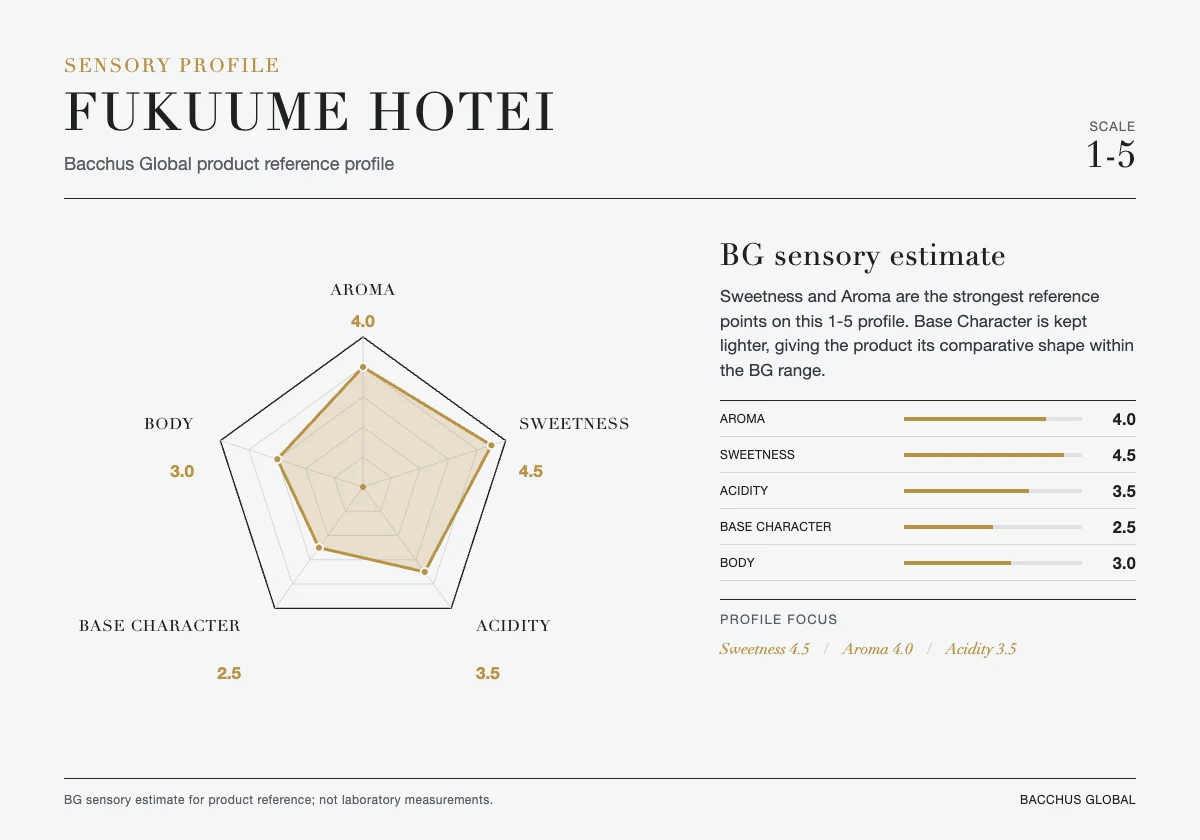
Aroma recalling ume jam leads into a thick, pulpy palate. Generous sweetness is lifted by the fruit’s acidity, leaving a bright finish.
Question 1
Which ume is used for the fruit component?
- Ripe ume from Oindo Farm
- Green apple
- Grape skins
Read the answer and explanation
Correct answer: A — Ripe ume from Oindo Farm
The fruit component uses ripe ume from Oindo Farm.
Question 2
In what form is the fruit returned?
- Distilled into a spirit
- As confiture and pulp
- Only as dried powder
Read the answer and explanation
Correct answer: B — As confiture and pulp
Ripe-ume confiture and pulp are blended back into the umeshu.
Question 3
What is the final texture?
- Completely clear
- Only sparkling
- Cloudy with fruit pulp
Read the answer and explanation
Correct answer: C — Cloudy with fruit pulp
Retained pulp creates cloudiness and smooth viscosity.
Dishes that echo the thickness of the fruit pulp
Fukuume Hotei blends a dedicated confiture and pulp made from fully ripe ume back into the umeshu, deepening both its aroma and texture. The pairings below are not an official recommendation from the producer, but a reading based on its recorded flavor characteristics.
This pairing rationale draws on the following reference books: Based on the texture (viscosity) axis outlined in Logical Pairing (summary), this reading pairs the thick, pulp-laden character of Fukuume Hotei with dishes or cheeses of similarly thick texture; the way ume acidity lightens the overall effect follows the acid principle in The Science of Food Pairing (summary).
Kawachi Wine, established in Habikino in 1934
Founded in Habikino, Osaka, in 1934, Kawachi Wine brings its experience with wine, brandy and liqueur into the FUKUUME range.
From the same producer
Only directly relevant products and Bacchus Global stories are shown.
Contact Bacchus Global for product documentation and trade information.