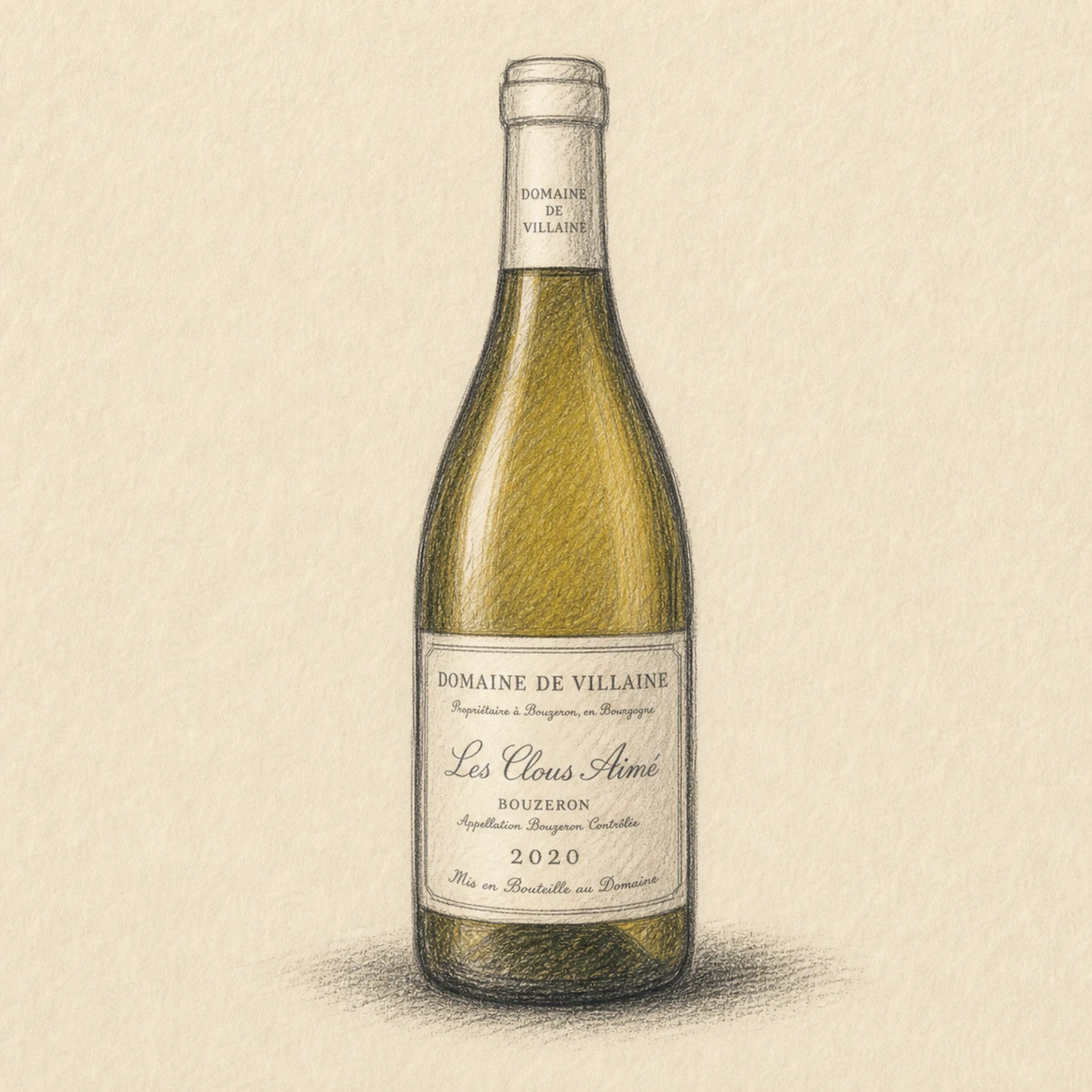
Original bottle illustration — Bacchus Global
Domaine de Villaine · Bouzeron, Côte Chalonnaise
DOMAINE DE VILLAINELes Clous Aimé
In Bouzeron, a village the wine world knows for Aligoté, Domaine de Villaine set aside selected south-facing parcels for Chardonnay — plots the village elders once spoke of with quiet affection, simply as 'Les Clous Aimé.' Aubert de Villaine kept that name on the label as a nod to the people who tended this ground long before him.
- Wine type
- Still white wine
- Grape
- Chardonnay 100%
- Appellation
- AOC Bourgogne Côte Chalonnaise
- Origin
- Bouzeron, Côte Chalonnaise, Burgundy, France
- Drinking window
- 2025–2032 (peak 2027–2030)
- Recommended temperature
- 12–14°C
- Alcohol
- 12.5% vol
- Bottle size
- 750 ml
A Chardonnay Grown in Aligoté Country
Les Clous Aimé takes its name from a phrase Bouzeron's older generation used when speaking of these particular vines — an affectionate turn of phrase that Aubert de Villaine chose to preserve on the label rather than replace with a conventional lieu-dit name.
The wine is fermented and aged for twelve months on its lees in large oak foudres rather than small barrels, a vessel choice associated with Domaine de la Romanée-Conti and intended to build texture without imposing overt oak character.
Taste profile
In the glass
LES CLOUS AIMÉ
Scale1–5
BG wine structure estimate
Comparative profile within the Bacchus Global wine range.
White flowers, broom, acacia, fresh almond and a hint of lemon.
A soft, full attack gives way to energetic, fresh acidity; a rounded, creamy texture balances the wine through a long, clean finish.
Pale yellow.
Before it reaches the glass
Temperature
12–14°C; cooler temperatures tend to close down the floral and almond notes.
Timing
Drinking window 2025–2032, with a peak from 2027 to 2030; the producer notes that 5–7 years of bottle age allow the wine's finesse and aromatic complexity to develop fully.
Glassware
A Burgundy white glass with a generous bowl, such as a Montrachet-style glass.
At the table
The wine's floral, almond-and-lemon aromatics and its balance of fresh acidity with a rounded, creamy texture guide these pairings.
Because the palate is more about texture and clean acidity than overt fruit weight, the strongest matches are dishes built on delicate proteins, dashi or cream-based sauces, and gentle seasoning rather than heat or heavy spice.
Japanese
- Salt-grilled sea bream
- Yuan-yaki chicken
- Dashi-maki tamago
Why it worksThe wine's clean acidity and understated white-flower and almond notes sit comfortably alongside dashi-based seasoning and lightly grilled proteins without overwhelming them.
Thai
- Pla nueng manao (mild version)
- Ho mok pla (mild version)
- Yam wun sen talay (light on fish sauce)
Why it worksMilder, herb-forward preparations let the wine's acidity and texture come through; dishes built on heavy chili or strong fish sauce would work against its more restrained profile.
Western
- Sole meunière
- Roast chicken breast with cream sauce
- Goat cheese
Why it worksThe producer highlights fish, white meat and goat cheese as classic matches for this wine; dishes such as sole meunière or roast chicken with cream sauce illustrate that same balance of acidity and creamy texture.
From cellar to bottle
Winemaking
Grapes are hand-harvested and sorted, then pressed slowly and gently in a pneumatic press to avoid extracting unwanted astringency; fermentation and twelve months of lees aging take place in large oak foudres rather than small barrels.
Product detail
Bottled at 12.5% alcohol without cold stabilization, meaning natural tartrate crystals may occasionally be present — a sign of natural bottling rather than a fault.
Bouzeron, Côte Chalonnaise
Bouzeron is best known worldwide for Aligoté; Les Clous Aimé is a Chardonnay drawn from selected plots set apart within that same village.
Official producer website→Trade information
Contact Bacchus Global for product documentation, availability and trade enquiries.