
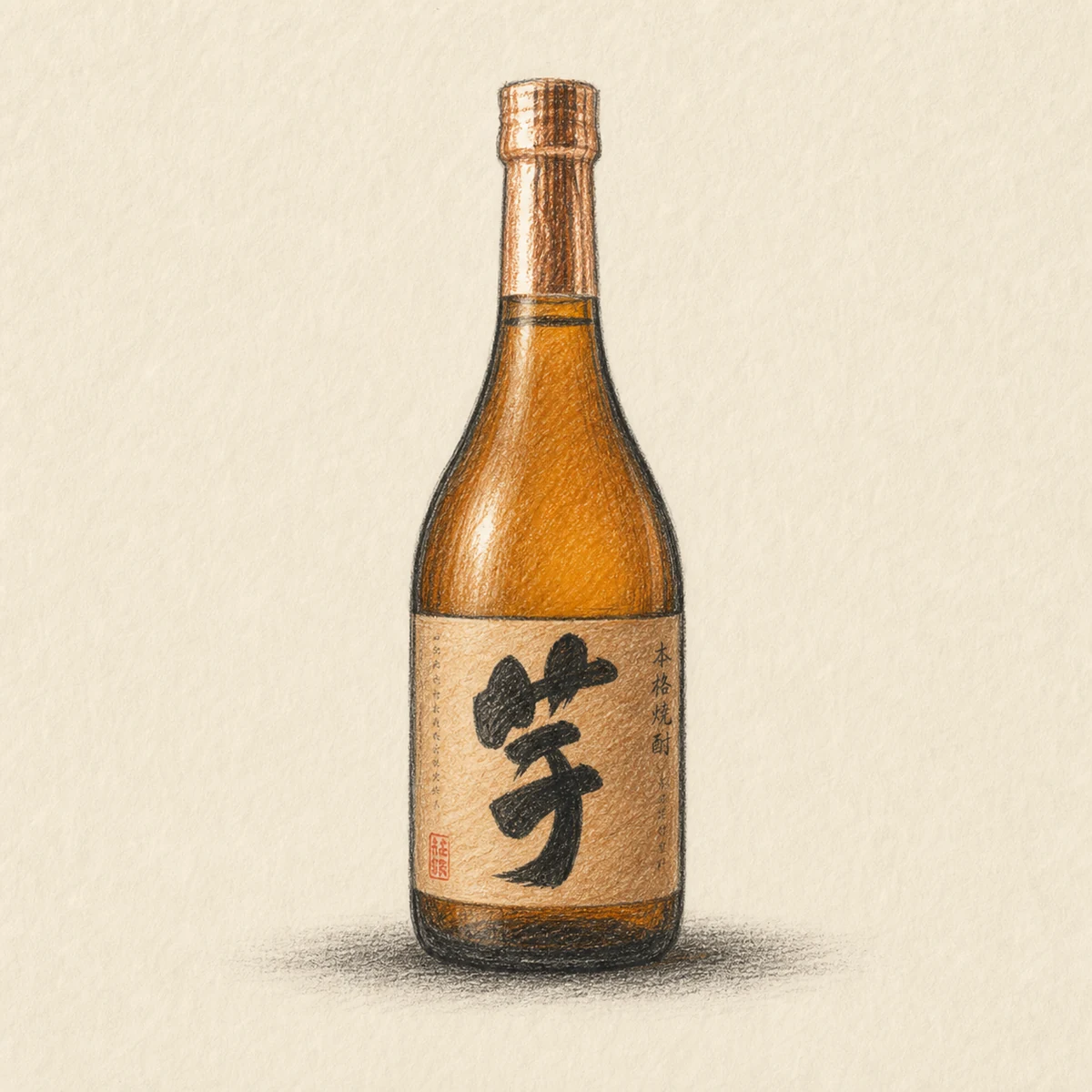
IMO
Sweet potato is placed on both sides of the mash: as the main ingredient and as the koji. Released in 1998, IMO preserves that demanding idea in a 26% expression with a distinct vintage-minded identity.
Thailand · Product information
Product information from Bacchus Global Co., Ltd., based in Bangkok, Thailand. About Bacchus Global
Sensory profile
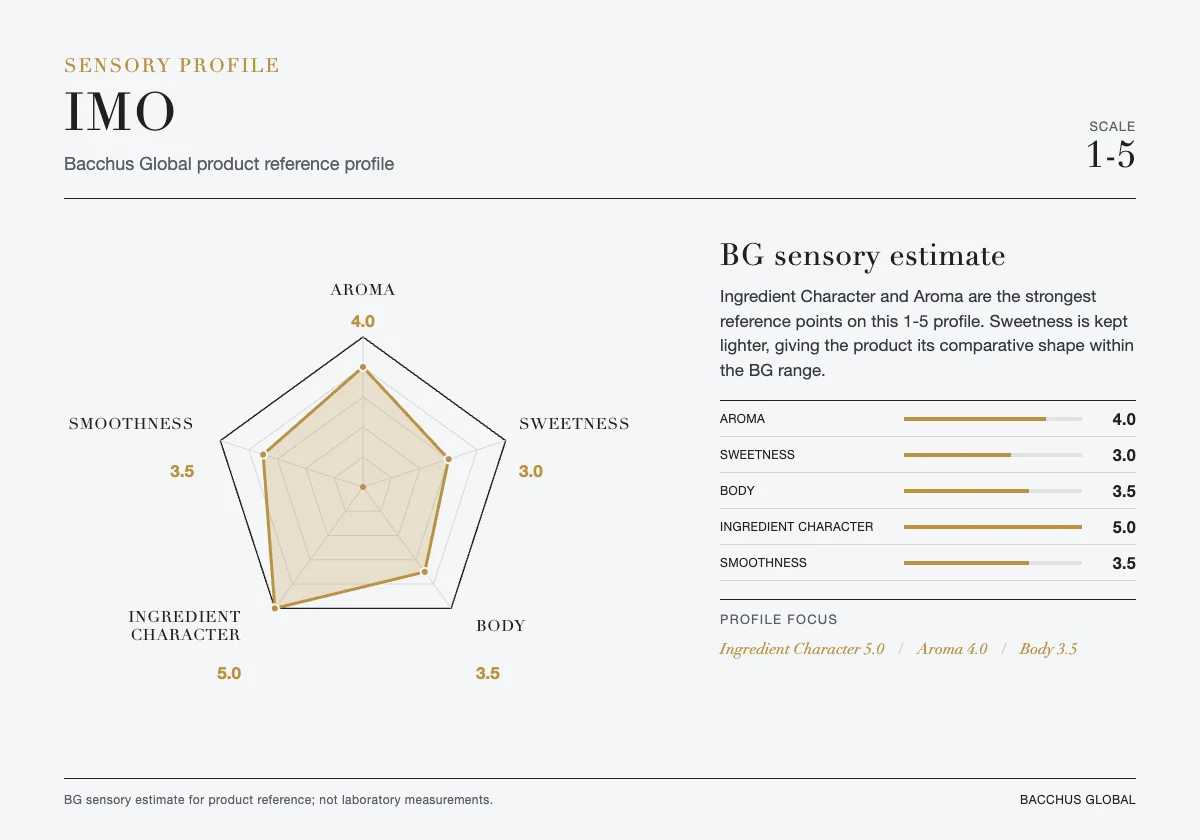
A mash built entirely from sweet potato
IMO was created by setting aside rice koji and using sweet potato both as the base material and as the medium for koji. It was a technically demanding decision at the time of its first release in 1998, and it remains the point from which Kokubu’s material-led experiments can be read.
A number retained from the first release
The first spirit settled naturally to 26% after storage. Rather than treating the number as a standardised specification, the house kept it as a trace of the original release. Each vintage is bottled without blending across years, allowing the harvest to remain visible in the finished spirit.
Kokubu Distillery
Kokubu Distillery works in the Kawahara area of Kirishima, Kagoshima, using groundwater from the Kirishima mountain system. Since its cooperative foundation in 1986, the house has treated shochu as a field for material-led experiments rather than as a fixed recipe.
Question 1
Which description fits both the main ingredient and the koji?
- Both are made from sweet potato
- Sweet potato is the main ingredient, but the koji is rice-based
- Barley is the main ingredient, with rice koji
Read the answer and explanation
Correct answer: A — Both are made from sweet potato
The page states that sweet potato is used on both sides and rice koji is not used.
Question 2
Which koji appears in the specifications?
- Black barley koji
- White sweet-potato koji
- Yellow rice koji
Read the answer and explanation
Correct answer: B — White sweet-potato koji
The listed koji is white sweet-potato koji.
Question 3
What alcohol content does this page show?
- 20%
- 43%
- 26%
Read the answer and explanation
Correct answer: C — 26%
This page gives the product specification as 26%.
Continue within Kokubu Distillery
For current-lot specifications, availability, storage requirements and trade terms, please contact Bacchus Global.

