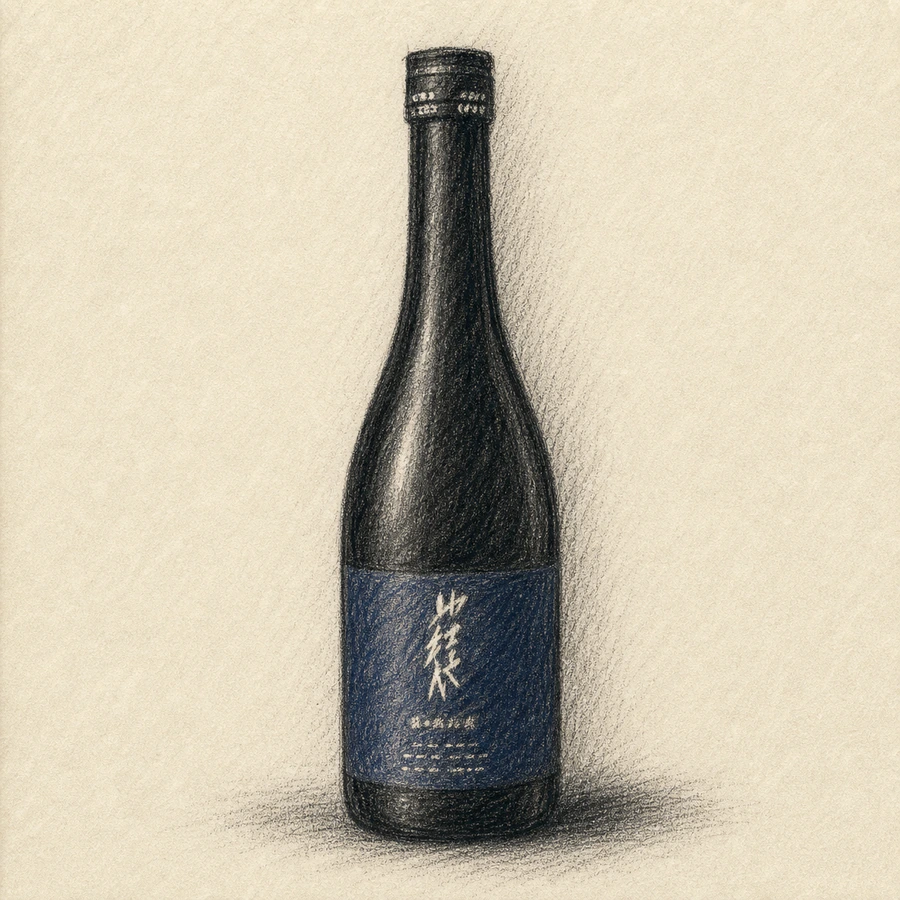
SNOW BEAUTY / YUKI no BIJIN Junmai-Ginjo
A small urban brewery on the ground floor of an Akita City apartment building — soft water from the foot of Mt. Taihei and meticulous small-batch, four-season brewing.

A defined expression of the range
Akita Jozo brews in a limited space on the ground floor of an apartment building in central Akita City, using shiki-jozo — brewing in small batches through all four seasons rather than winter alone. Soft water drawn from the foot of Mt. Taihei is carried to this urban brewery to shape a delicate junmai-ginjo.
Koji is made using koji-buta trays of Akita cedar, and the shubo (yeast starter) is developed slowly at low temperature. That meticulous temperature control ties together a gentle aroma, soft umami and well-defined acidity.
How it tastes

A restrained, clean aroma recalls green apple, pear and citrus peel. The palate is soft, with taut acidity supporting the rice’s light umami — full without turning heavy, and cutting clean and precise on the finish.
The green apple and pear brightness stays clean through a precise finish.
YUKI no BIJIN · Akita Jozo · Akita
Akita Jozo was founded in 1919 in Akita City. In 2001 it moved into a brewery built into an apartment building, developing shiki-jozo brewing to make the most of that limited space, alongside thorough temperature control.
Third-generation owner-toji Tadahiko Kobayashi served as representative of NEXT5, a collective of five Akita breweries. His approach — carrying tradition forward while refining a modern Akita sake within an urban setting — shapes Yuki no Bijin’s quiet tension.
Four directions built on green apple, pear and taut acidity
The brewery does not publish official food pairings. What follows are four directions read from the aroma and taste structure stated on this page — green apple, pear and citrus peel aromas, a soft mouthfeel, taut acidity, a light rice umami, and a precise finish.
As a junmai-ginjo built around acidity for the table, we have drawn one dish each from Thai, Japanese and Western cuisine into every one of the four directions.
Interested in listing SNOW BEAUTY / YUKI no BIJIN Junmai-Ginjo at your restaurant or retail venue? Our team can provide information on availability, storage requirements and trade terms.