
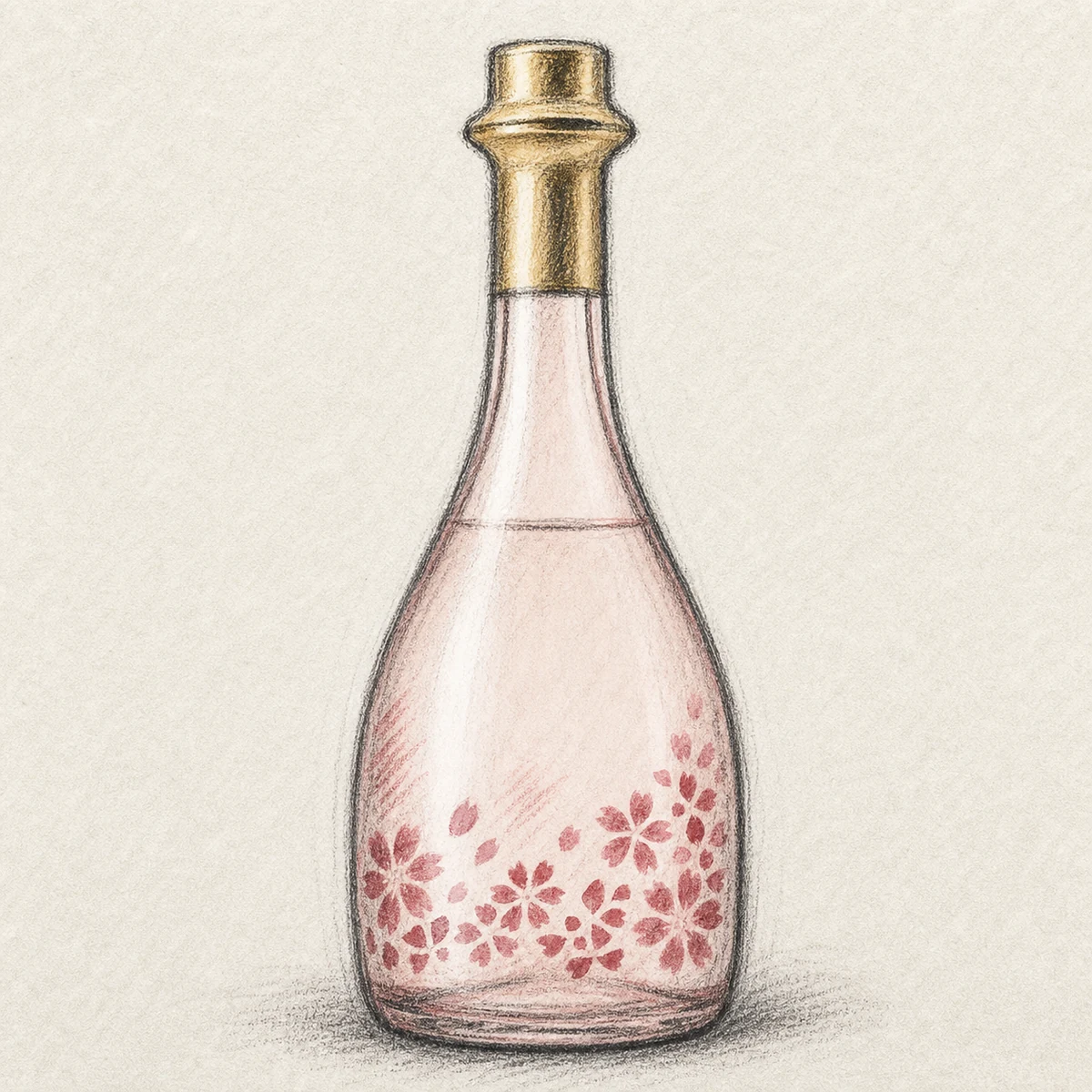
KOTSUZUMI Rojoh-Hana-Ari Tohka
Kitanishiki, fruit-led softness and a floral Junmai-Daiginjo line.
Thailand · Product information
Product information from Bacchus Global Co., Ltd., based in Bangkok, Thailand. About Bacchus Global
Peach blossom in the Rojoh-Hana-Ari series
Tohka is the peach-blossom expression of Rojoh-Hana-Ari. Hyogo Kitanishiki is polished to 50% and paired with Chinjutenzan ultra-soft spring water and Kokai-10 yeast. The etched floral bottle was conceived by the late artist Hiromi Watanuki.
How it tastes

Clean, fruit-led sweetness and a gentle rice core move with a light, easy line. The finish remains composed rather than rich.
The light, easy line carries through cleanly into the composed finish.
Tamba, Hyogo — water, flowers and food
Nishiyama Shuzo was founded in Tamba, Hyogo in 1849. The KOTSUZUMI range draws on the brewery’s Chinjutenzan ultra-soft spring water, from everyday Junmai to the flower-named Rojoh-Hana-Ari series.
Verified for this bottling
Only distinctions attributable to this exact label are shown. Awards for a pasteurised or otherwise different version are not transferred here.
Question 1
Which rice is used?
- Hyogo Kita Nishiki
- Yamada Nishiki
- Gohyakumangoku
Read the answer and explanation
Correct answer: A — Hyogo Kita Nishiki
Answer: Hyogo Kita Nishiki. The linked section gives the source detail.
Question 2
What is the rice polishing ratio?
- 40%
- 50%
- 65%
Read the answer and explanation
Correct answer: B — 50%
Answer: 50%. The linked section gives the source detail.
Question 3
Which flower does Tohka represent?
- Plum blossom
- Cherry blossom
- Peach blossom
Read the answer and explanation
Correct answer: C — Peach blossom
Answer: Peach blossom. The linked section gives the source detail.
At the table
- Sushi
- White fish
- Shellfish
- Light Thai dishes
Related products
Move from a warm-service Junmai to floral Rojoh-Hana-Ari expressions and a magnum format.
Related stories
The related article is specific to the Rojoh-Hana-Ari series.
Interested in listing KOTSUZUMI Rojoh-Hana-Ari Tohka at your restaurant or retail venue? Our team can provide information on availability, storage requirements and trade terms.

