Drink
The Architecture of Flavor: Defining the Four Expressions of Sakurao Distillery
Layering citrus harvested in Hiroshima. Sourcing ingredients exclusively within the prefecture. Crafting a spirit around a botanical gathered from the shores of Miyajima. Layering delicate floral aromas over a classic backbone.
These distinct approaches do not belong to four separate distilleries. They describe four gins made by Sakurao Distillery in Hiroshima, where the character of each is shaped not merely by its ingredient list, but by the intention behind its composition.
To appreciate these four expressions, comparing botanical counts alone misses the deeper story. The distinction lies in understanding their shared foundation and the choices that set each one apart.
The Foundation: Hiroshima Citrus and Classic Structure
SAKURAO GIN ORIGINAL features 14 botanicals. Nine are harvested within Hiroshima Prefecture, including five citrus varieties: green lemon, navel orange, natsumikan, Kawane yuzu, and daidai. The remaining five include imported gin staples such as juniper berries and coriander seeds, which support its classic gin structure.
The designation “Hiroshima gin” does not imply that every botanical originates locally. In ORIGINAL, Hiroshima citrus, Japanese cypress, and green tea are combined with traditional gin botanicals. The design places local ingredients at the forefront while preserving a clear juniper core.
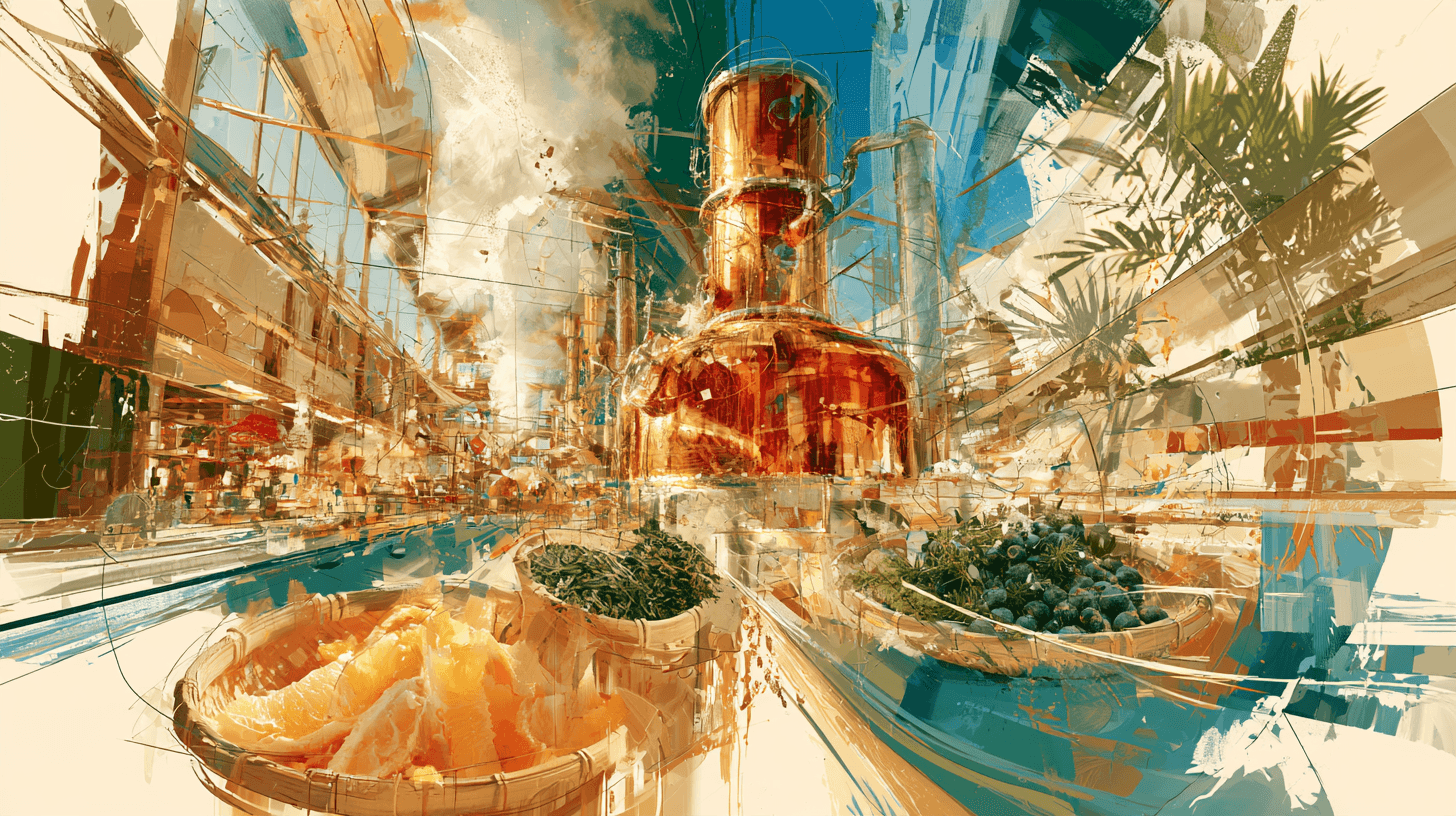
The distillery uses a copper hybrid still with two extraction methods: steeping botanicals in alcohol and passing alcohol vapor through others. Each method is used to draw out different aromas. Consequently, a botanical list alone cannot convey the spirit's character; extraction matters as well as composition.
LIMITED: A Focus on Regional Origin
SAKURAO GIN LIMITED incorporates 17 botanicals, all sourced from Hiroshima Prefecture. In addition to the nine local ingredients also found in ORIGINAL, it uses Hiroshima-grown juniper, cherry blossom, kuromoji, kinome, and green shiso. The producer's botanical list also includes oyster shells from Jigozen in Hatsukaichi and local wasabi.
The distinction goes beyond numerical count. While ORIGINAL relies on imported juniper, LIMITED uses juniper grown within Hiroshima itself, sourcing even this central gin botanical locally. Oyster shells and wasabi bring materials associated with the coast and inland landscape into a single composition.
LIMITED need not be understood as a superior version of ORIGINAL. The clear distinction lies in the origin and composition of their botanicals.
HAMAGOU: A Coastal Botanical Across Annual Editions
At the center of SAKURAO GIN HAMAGOU is hamagou, or beach vitex, a plant that grows along the shores of Miyajima. Long used as incense, hamagou has a refreshing herbal aroma, according to the distillery. Sakurao builds the botanical structure around this plant.
HAMAGOU is released in annual editions, with its ninth announced in 2026. The distillery describes different aromatic profiles for past editions. Understanding this gin therefore involves looking at both its featured botanical and the edition year; the name alone does not describe every release.
WHITE HERBS: An Additional Aromatic Dimension
Introduced in 2023 to mark Sakurao Distillery's fifth anniversary, SAKURAO GIN WHITE HERBS builds upon ORIGINAL. Seven additional botanicals, including lemon leaf, white rose, vanilla, and elderflower, were selected around the idea of a bouquet.
Those seven botanicals are additions to ORIGINAL, not the total number used in the finished gin. ORIGINAL remains the foundation, while floral and leafy aromas receive greater emphasis. It illustrates another facet of Sakurao's craft: developing a new expression by adding an aromatic layer to an existing design.
ORIGINAL combines Hiroshima citrus with classic gin botanicals. LIMITED sources every botanical within Hiroshima. HAMAGOU centers on a coastal plant across annual editions, while WHITE HERBS extends ORIGINAL's composition. Tracing these choices explains the differences among the four more precisely than simply calling them “citrusy” or “floral.”
Related articles
- Japanese Gin Is Not One Single Aroma: Understanding What “Japanese” Really Means
- How Can We Read a Gin’s Connection to Place? Four Clues in the Official Information for ohoro GIN Standard
Product information
This article explains the botanical choices and production methods behind four Japanese gins for educational purposes. It does not promote the purchase or consumption of alcohol. Intended for readers aged 20 and over.
บทความนี้อธิบายการเลือกวัตถุดิบให้กลิ่นและวิธีผลิตจินญี่ปุ่นสี่แบบเพื่อให้ความรู้ มิได้มีเจตนาส่งเสริมการซื้อหรือการบริโภคเครื่องดื่มแอลกอฮอล์ สำหรับผู้อ่านอายุ 20 ปีขึ้นไป