
Burgundy, Through One Map
Why Did Romanée-Conti's Co-Director Build His Own Domaine in This Village? — Bouzeron
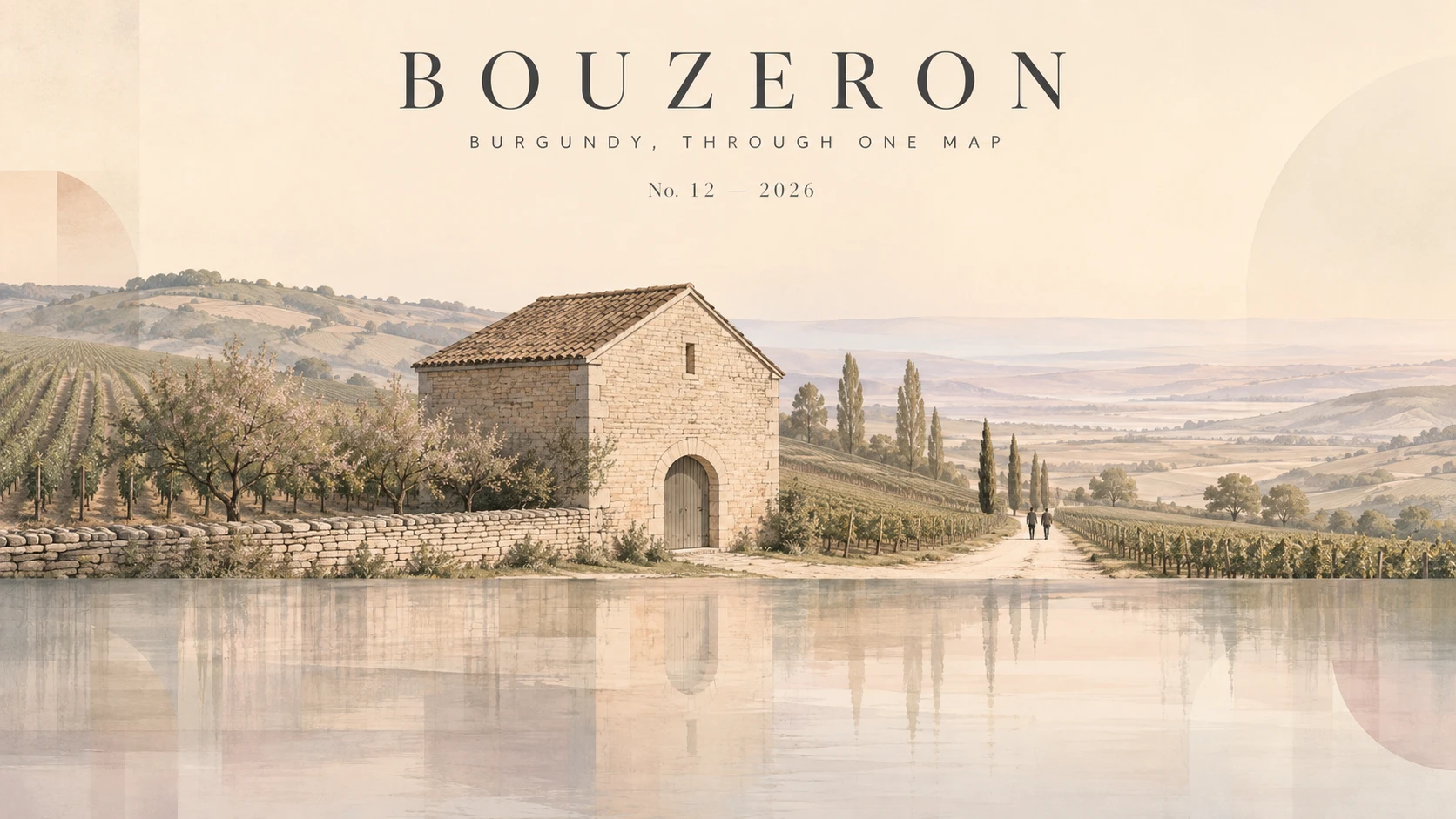
In the Côte Chalonnaise, at the southern edge of the ground this series has covered, just west of the town of Chagny, lies a small village called Bouzeron. Among the hundreds of vineyard and village names that fill the map of Burgundy, few people have ever heard of this one. But in 1971, one man built a domaine of his own here. That man had served as co-director of a vineyard in the Côte de Nuits, Romanée-Conti, for nearly half a century — Aubert de Villaine. Why did he choose this village, tucked away in a corner of the map?
| Item | Details |
|---|---|
| Village | Bouzeron — Côte Chalonnaise |
| Principal grape variety | Aligoté (white) |
| Appellation | Bouzeron (village AOC) — the only village appellation in Burgundy reserved solely for Aligoté |
| Milestone years | 1971 (Aubert de Villaine builds a domaine of his own in this village) / February 17, 1998 (the village AOC “Bouzeron” is recognized) / 2007 (the association leading the campaign for World Heritage status for the Climats is founded, with Villaine as its first president) / July 4, 2015 (“The Climats, Terroirs of Burgundy” is inscribed as a UNESCO World Heritage Site) |
| For reference | Villaine also served as co-director of a vineyard in the Côte de Nuits, Romanée-Conti, for nearly half a century |
A Village Since the Middle Ages, and a Grape That Never Took the Lead
Records of vines planted in Bouzeron reach back to the Middle Ages, when it is said that monks of the Abbey of Cluny worked this land. Yet for a long time, the white grape grown here, Aligoté, never took center stage in Burgundy. It was treated only as one variety within the broad regional appellation, and had never once had a village-level appellation of its own.
The Village Chosen by a Man Who Led a Vineyard for Nearly Half a Century
In 1971, Aubert de Villaine, together with his American wife, Pamela, built a domaine of his own in this village. Villaine served as co-director of a vineyard in the Côte de Nuits, Romanée-Conti, for nearly half a century. What he chose was not the Côte de Nuits, lined with Grand Cru vineyards, but this Aligoté village, set apart at the southern edge of the map of Burgundy. The couple saw potential in the match between the limestone slopes of this land and the Aligoté grape, and devoted themselves to its cultivation. Their effort bore fruit: on February 17, 1998, “Bouzeron” was recognized as the only village appellation in Burgundy dedicated solely to Aligoté. It was the moment a grape that had only ever been one variety within a regional appellation finally had a village’s name attached to it.
From One Village to the Heritage of All Burgundy
Even as he built up his own domaine in Bouzeron, Villaine took on a larger task as well. In 2007, an association was founded to preserve Burgundy’s vineyard “climats” — its individually delimited vineyard parcels — as a heritage for humanity’s future, and Villaine became its first president. The work of this association, which brought together government bodies, local authorities, and producer organizations, bore fruit on July 4, 2015, when “The Climats, Terroirs of Burgundy” — 1,247 climats counted at the time of inscription — was inscribed as a UNESCO World Heritage Site. Within that same year, Villaine passed the association’s presidency to a successor.
From the 1.81-hectare vineyard in the Côte de Nuits to a small village in the Côte Chalonnaise: the same man left his name in both places. This series’ map begins at Romanée-Conti and ends here, at Bouzeron. Every place we walked across this map had a story of its own.
Three Facts Worth Knowing
- Bouzeron is the only village appellation in Burgundy reserved solely for the white grape Aligoté. Until it earned that status on February 17, 1998, Aligoté had only ever been treated as one variety within a broad regional appellation.
- In 1971, the man who built a domaine of his own in this village was Aubert de Villaine, who served for nearly half a century as co-director of a vineyard in the Côte de Nuits, Romanée-Conti. Rather than land lined with Grand Cru vineyards, he chose a small village at the edge of the map.
- In 2007, Villaine also became the first president of an association formed to preserve Burgundy’s climats for future generations. That work bore fruit on July 4, 2015, when “The Climats, Terroirs of Burgundy” was inscribed as a UNESCO World Heritage Site.
In this series
This article is the final episode of the series “Burgundy, Through One Map,” in all 13 parts.
ในเขตโกต ชาลอแนส (Côte Chalonnaise) ที่ปลายด้านใต้สุดของผืนแผ่นดินที่ซีรีส์นี้ได้เดินทางผ่านมา ห่างจากตัวเมืองชาญี (Chagny) ไปทางตะวันตกเล็กน้อย มีหมู่บ้านเล็ก ๆ แห่งหนึ่งชื่อบูซรง (Bouzeron) ท่ามกลางชื่อไร่องุ่นและหมู่บ้านนับร้อยที่เต็มแผนที่บูร์กอญ มีคนไม่มากนักที่เคยได้ยินชื่อหมู่บ้านแห่งนี้ แต่ในปี 1971 ชายคนหนึ่งได้สร้างโดเมนของตนเองขึ้นที่นี่ ชายผู้นั้นคือผู้ที่ดำรงตำแหน่งผู้บริหารร่วมของไร่องุ่นแห่งหนึ่งในโกต เดอ นุยส์ (Côte de Nuits) นามว่าโรมาเน-กงติ (Romanée-Conti) มาเกือบครึ่งศตวรรษ — โอแบร์ เดอ วิแลน (Aubert de Villaine) เหตุใดเขาจึงเลือกหมู่บ้านที่อยู่มุมหนึ่งของแผนที่แห่งนี้
| รายการ | รายละเอียด |
|---|---|
| ชื่อหมู่บ้าน | บูซรง (Bouzeron) — เขตโกต ชาลอแนส (Côte Chalonnaise) |
| พันธุ์องุ่นหลัก | อาลีโกเต (Aligoté พันธุ์ขาว) |
| AOC | Bouzeron — AOC ระดับหมู่บ้านแห่งเดียวในบูร์กอญที่สงวนไว้สำหรับอาลีโกเตเท่านั้น |
| ปีสำคัญ | 1971 (โอแบร์ เดอ วิแลนสร้างโดเมนของตนเองขึ้นในหมู่บ้านนี้) / 17 กุมภาพันธ์ 1998 (AOC ระดับหมู่บ้าน “Bouzeron” ได้รับการรับรอง) / 2007 (สมาคมผู้นำการขึ้นทะเบียน climats เป็นมรดกโลกก่อตั้งขึ้น โดยมีวิแลนเป็นประธานคนแรก) / 4 กรกฎาคม 2015 (“Climats du vignoble de Bourgogne” ได้รับการขึ้นทะเบียนเป็นมรดกโลกโดย UNESCO) |
| ข้อมูลอ้างอิง | วิแลนยังเป็นผู้ที่ดำรงตำแหน่งผู้บริหารร่วมของไร่องุ่นแห่งหนึ่งในโกต เดอ นุยส์ นามว่าโรมาเน-กงติ มาเกือบครึ่งศตวรรษด้วยเช่นกัน |
หมู่บ้านตั้งแต่ยุคกลาง กับองุ่นที่ไม่เคยเป็นพระเอก
บันทึกการปลูกองุ่นในบูซรงย้อนไปได้ถึงยุคกลาง กล่าวกันว่าพระในอาราม กลูนี (Cluny) เป็นผู้บุกเบิกผืนดินแห่งนี้ แต่เป็นเวลานานที่องุ่นขาวซึ่งปลูกในหมู่บ้านนี้ คืออาลีโกเต ไม่เคยได้เป็นพระเอกในบูร์กอญ มันถูกจัดอยู่เพียงในฐานะพันธุ์องุ่นหนึ่งภายใต้ AOC ระดับภูมิภาคเท่านั้น ไม่เคยมี AOC ระดับหมู่บ้านเป็นของตนเองเลยสักครั้ง
หมู่บ้านที่ชายผู้นำไร่องุ่นมาเกือบครึ่งศตวรรษเลือก
ในปี 1971 โอแบร์ เดอ วิแลน พร้อมด้วยปาเมลา (Pamela) ภรรยาชาวอเมริกัน ได้สร้างโดเมนของตนเองขึ้นในหมู่บ้านแห่งนี้ วิแลนดำรงตำแหน่งผู้บริหารร่วมของไร่องุ่นโรมาเน-กงติในโกต เดอ นุยส์มาเกือบครึ่งศตวรรษ สิ่งที่เขาเลือกไม่ใช่โกต เดอ นุยส์ซึ่งเรียงรายไปด้วยไร่องุ่นระดับ Grand Cru แต่เป็นหมู่บ้านแห่งอาลีโกเตที่อยู่ห่างออกไปทางใต้สุดของแผนที่บูร์กอญ ทั้งคู่มองเห็นศักยภาพในความเข้ากันได้ระหว่างเนินลาดหินปูนของผืนดินนี้กับองุ่นอาลีโกเต จึงทุ่มเทให้กับการเพาะปลูก ความพยายามนั้นนำมาซึ่งผล — วันที่ 17 กุมภาพันธ์ 1998 “Bouzeron” ได้รับการรับรองเป็น AOC ระดับหมู่บ้านแห่งเดียวในบูร์กอญที่สงวนไว้สำหรับอาลีโกเตเท่านั้น เป็นช่วงเวลาที่องุ่นซึ่งเคยเป็นเพียงพันธุ์หนึ่งภายใต้ AOC ระดับภูมิภาค ได้รับชื่อหมู่บ้านมาประดับในที่สุด
จากหมู่บ้านหนึ่ง สู่มรดกของบูร์กอญทั้งมวล
ขณะที่บ่มเพาะโดเมนของตนเองในบูซรง วิแลนก็รับภารกิจที่ใหญ่กว่านั้นด้วยเช่นกัน ในปี 2007 มีการก่อตั้งสมาคมขึ้นเพื่ออนุรักษ์ “climats” ของไร่องุ่นบูร์กอญ — แปลงไร่องุ่นแต่ละแปลงที่ถูกขีดเส้นแบ่งไว้อย่างชัดเจน — ให้เป็นมรดกของมนุษยชาติสืบไปในอนาคต โดยวิแลนดำรงตำแหน่งประธานคนแรกของสมาคมนี้ การทำงานของสมาคมซึ่งรวมหน่วยงานภาครัฐ องค์กรปกครองส่วนท้องถิ่น และกลุ่มผู้ผลิตเข้าไว้ด้วยกัน ได้ผลิดอกออกผลในวันที่ 4 กรกฎาคม 2015 เมื่อ “Climats du vignoble de Bourgogne” — นับได้ 1,247 climats ณ ขณะขึ้นทะเบียน — ได้รับการขึ้นทะเบียนเป็นมรดกโลกโดย UNESCO ภายในปีเดียวกันนั้นเอง วิแลนได้ส่งต่อตำแหน่งประธานสมาคมให้แก่ผู้สืบทอด
จากไร่องุ่นเนื้อที่ 1.81 เฮกตาร์ในโกต เดอ นุยส์ ไปจนถึงหมู่บ้านเล็ก ๆ ในโกต ชาลอแนส ชายคนเดียวกันได้ฝากชื่อของตนไว้ในทั้งสองแห่ง แผนที่ของซีรีส์นี้เริ่มต้นที่โรมาเน-กงติ และมาจบลงที่บูซรง ทุกแห่งที่เราเดินผ่านบนแผนที่นี้ ล้วนมีเรื่องราวเป็นของตัวเอง
3 เรื่องที่รู้แล้วเล่าต่อได้
- บูซรงเป็น AOC ระดับหมู่บ้านแห่งเดียวในบูร์กอญที่สงวนไว้สำหรับองุ่นขาวอาลีโกเตเท่านั้น ก่อนจะได้สถานะนี้ในวันที่ 17 กุมภาพันธ์ 1998 อาลีโกเตเคยเป็นเพียงพันธุ์องุ่นหนึ่งภายใต้ AOC ระดับภูมิภาคเท่านั้น
- ในปี 1971 ผู้ที่สร้างโดเมนของตนเองขึ้นในหมู่บ้านนี้คือโอแบร์ เดอ วิแลน ผู้ดำรงตำแหน่งผู้บริหารร่วมของไร่องุ่นโรมาเน-กงติในโกต เดอ นุยส์มาเกือบครึ่งศตวรรษ เขาไม่ได้เลือกผืนดินที่เรียงรายไปด้วยไร่องุ่นระดับ Grand Cru แต่เลือกหมู่บ้านเล็ก ๆ ที่มุมหนึ่งของแผนที่
- ในปี 2007 วิแลนยังดำรงตำแหน่งประธานคนแรกของสมาคมที่ก่อตั้งขึ้นเพื่ออนุรักษ์ climats ของบูร์กอญไว้ให้คนรุ่นหลัง ความพยายามนั้นผลิดอกออกผลในวันที่ 4 กรกฎาคม 2015 เมื่อ “Climats du vignoble de Bourgogne” ได้รับการขึ้นทะเบียนเป็นมรดกโลกโดย UNESCO
ลิงก์ในชุดเรื่อง
บทความนี้เป็นตอนสุดท้ายของซีรีส์ “Burgundy, Through One Map” ทั้งหมด 13 ตอน
コート・シャロネーズ、このシリーズが歩いてきた土地のいちばん南、シャニィの町から少し西に入ったところに、ブーズロンという小さな村がある。ブルゴーニュの地図を埋める何百もの畑や村の名前のなかで、この村の名を耳にしたことがある人は多くない。だが1971年、ある一人の男が、ここに自分自身の蔵を構えた。その男は、コート・ド・ニュイの畑、ロマネ・コンティの共同経営者を半世紀近く務めた人物—オベール・ド・ヴィレーヌである。なぜ、その人物は、地図の隅にあるこの村を選んだのか。
| 項目 | 内容 |
|---|---|
| 村名 | ブーズロン(Bouzeron)—コート・シャロネーズ地区 |
| 主要品種 | アリゴテ(白ブドウ) |
| アペラシオン | Bouzeron(村名AOC)—ブルゴーニュでアリゴテのみを名乗る唯一の村名アペラシオン |
| 節目の年 | 1971年(オベール・ド・ヴィレーヌが自らの蔵をこの村に構える)/1998年2月17日(村名AOC「ブーズロン」認定)/2007年(クリマの世界遺産登録運動を担う協会が設立され、初代会長に就任)/2015年7月4日(「ブルゴーニュのブドウ畑のクリマ」がユネスコ世界遺産に登録) |
| 参考 | ヴィレーヌは、コート・ド・ニュイの畑、ロマネ・コンティの共同経営者を半世紀近く務めた人物でもある |
中世からの村、日の当たらなかったブドウ
ブーズロンにブドウが植えられた記録は、中世にまでさかのぼる。クリュニー修道院の修道士たちがこの土地に手を入れていたと伝わる。だが長いあいだ、この村で育てられてきた白ブドウ、アリゴテは、ブルゴーニュのなかで主役になったことがなかった。ブルゴーニュ地方名アペラシオンの一品種として扱われるのみで、村の名を冠したアペラシオンを持ったことは一度もなかった。
半世紀近く畑を率いた男が、選んだ村
1971年、オベール・ド・ヴィレーヌは、アメリカ出身の妻パメラとともに、この村に自分自身の蔵を構えた。ヴィレーヌは、コート・ド・ニュイの畑、ロマネ・コンティの共同経営者を半世紀近く務めた人物である。その彼が選んだのは、特級畑の並ぶコート・ド・ニュイではなく、ブルゴーニュの地図のいちばん南に離れた、アリゴテの村だった。夫妻はこの土地の石灰岩質の斜面とアリゴテとの相性に可能性を見出し、栽培に力を注いだ。その取り組みは実を結び、1998年2月17日、「ブーズロン」はブルゴーニュで唯一、アリゴテだけを名乗る村名アペラシオンとして認定された。地方名アペラシオンの一品種でしかなかったブドウに、村の名がついた瞬間だった。
一つの村から、ブルゴーニュ全体の遺産へ
ブーズロンで自らの蔵を育てながら、ヴィレーヌはさらに大きな仕事にも取り組んでいく。2007年、ブルゴーニュのブドウ畑の「クリマ」—一つひとつ線引きされた畑の区画—を人類の遺産として未来に残すための協会が設立され、ヴィレーヌはその初代会長に就いた。行政・自治体・生産者団体を束ねたこの協会の活動は、2015年7月4日、「ブルゴーニュのブドウ畑のクリマ」—登録時点で数えられた1,247のクリマ—のユネスコ世界遺産登録という形で実を結んだ。ヴィレーヌはその年のうちに、この協会の会長職を後進に譲った。
コート・ド・ニュイの1.81ヘクタールの畑から、コート・シャロネーズの小さな村まで。同じ一人の男が、そのどちらにも自分の名前を残した。このシリーズの地図は、ロマネ・コンティに始まり、ブーズロンで終わる。地図の上を歩いてきたすべての場所に、それぞれの物語があった。
知っておくと語れる3つ
- ブーズロンは、ブルゴーニュでアリゴテという白ブドウだけを名乗る、唯一の村名アペラシオンだ。 1998年2月17日にこの資格を得るまで、アリゴテは地方名アペラシオンの一品種としてしか扱われてこなかった。
- 1971年、この村に自分自身の蔵を構えたのは、コート・ド・ニュイの畑、ロマネ・コンティの共同経営者を半世紀近く務めたオベール・ド・ヴィレーヌだった。 特級畑の並ぶ土地ではなく、地図の隅の小さな村を選んだ。
- ヴィレーヌは2007年、ブルゴーニュのクリマを次世代に残すための協会の初代会長にも就いた。 その活動は2015年7月4日、「ブルゴーニュのブドウ畑のクリマ」のユネスコ世界遺産登録として実を結んだ。
シリーズ内リンク
本記事は、シリーズ「一枚の地図でわかる ブルゴーニュ」全13話の最終話です。