
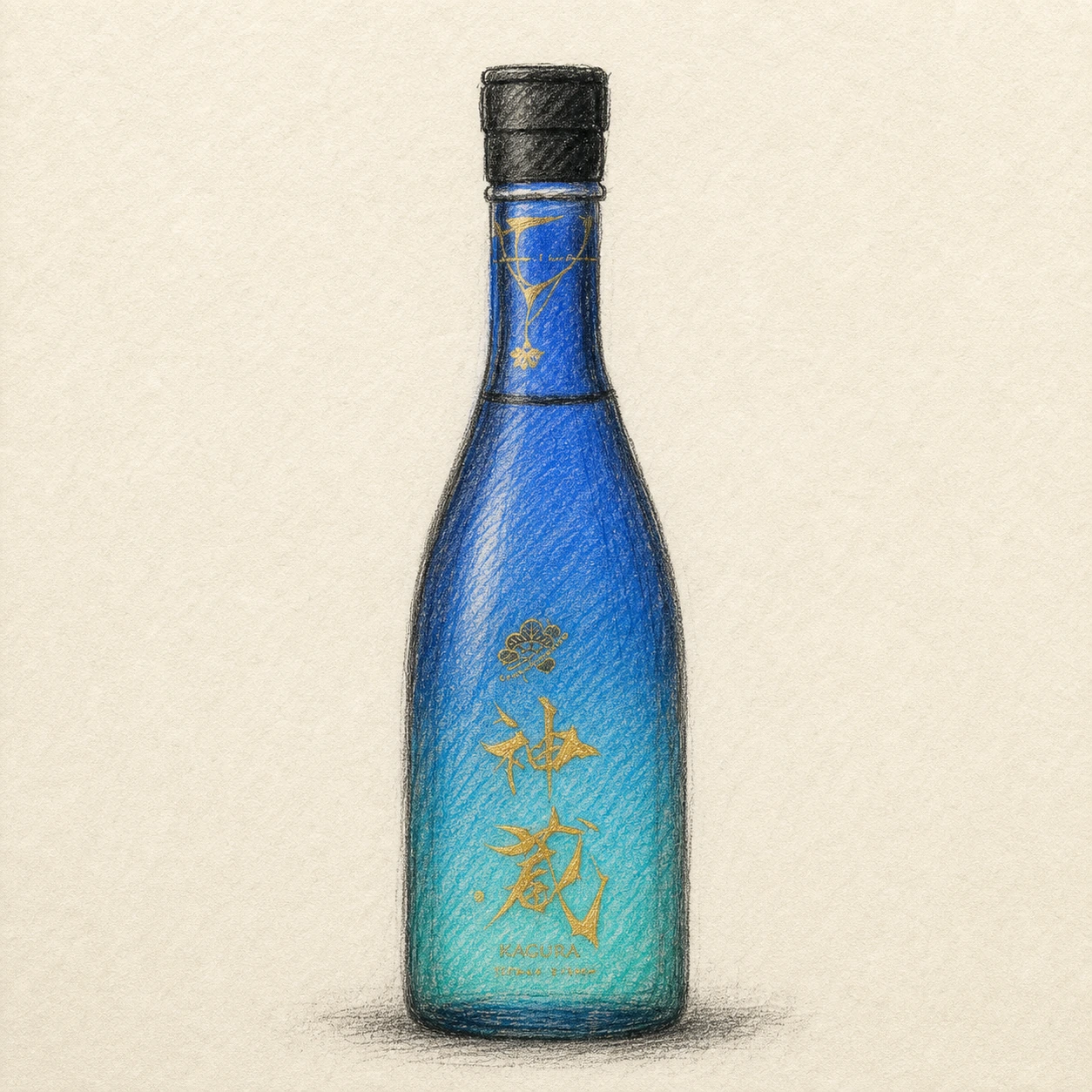
KAGURA Junmai Midnight Blue Non-filter Nama-Genshu
Fresh nama-genshu energy, layered rice umami and a clean finish.
Thailand · Product information
Product information from Bacchus Global Co., Ltd., based in Bangkok, Thailand. About Bacchus Global
Extended low-temperature fermentation
Midnight Blue is an unfiltered, undiluted and unpasteurised Junmai made from Kyoto-grown Iwai. Approximately 35 days of low-temperature fermentation build rice depth while retaining the fresh, lightly lively character of nama-genshu.
The story behind this bottle
A conversation with the brewery at its centre. About seven minutes.
Question 1
Which rice does the page name for Midnight Blue?
- Kyoto-grown Iwai
- Akita-grown Kairyoshinko
- Rice bran from Yamagata-grown Dewasansan
Read the answer and explanation
Correct answer: B — Akita-grown Kairyoshinko
The sake is made from Kyoto-grown Iwai. Do not carry a rice or rice-bran specification over from another product.
Question 2
Which set of steps does the page say is not used for this nama-genshu?
- Low-temperature fermentation, bottling and rice polishing
- Filtration, dilution and pasteurisation
- Koji making, fermentation and pressing
Read the answer and explanation
Correct answer: A — Low-temperature fermentation, bottling and rice polishing
The page says it is unfiltered, undiluted and unpasteurised. This does not imply a short fermentation period.
Question 3
What does the page associate with developing depth from Iwai rice?
- A few hours of hot fermentation
- Thirty-five years in casks
- About 35 days of low-temperature fermentation
Read the answer and explanation
Correct answer: C — About 35 days of low-temperature fermentation
The roughly 35 days refer to fermentation, not years of ageing. It is also separate from the decision not to filter or heat-treat the sake.
How it tastes

Green apple, ripe pear, melon and a light ramune-like note open into layered rice umami. Sweetness and acidity are balanced by a gentle bitter accent, then a clean, persistent finish.
Keep refrigerated. The fruit-forward brightness stays precise, with the bitter accent settling into a clean, persistent finish.
Kyoto, a brewery restored in its historic centre
Matsui Shuzo was founded in 1726. Brewing resumed in central Kyoto in 2009, using water from the Senshin-i well. KAGURA brings together Kyoto-grown Iwai rice, small-scale brewing and a clear, rice-led style.
Verified for this bottling
Only distinctions attributable to this exact label are shown. Awards for a pasteurised or otherwise different version are not transferred here.
Matsunoo Taisha Sake-1 Grand Prix
The Sake-1 Grand Prix is decided by visitors voting for their preferred brewery. These are results for KAGURA / Matsui Shuzo, not awards for this exact bottling. View the official results.
At the table
- Sashimi
- Tofu and vegetable dishes
- Tomato-led dishes
- Fresh-herb dishes
Related products
Two Junmai Nama-Genshu expressions and the White Junmai-Daiginjo provide the clearest comparison.
Related stories
Three confirmed BG articles give product, brewery and serving context.
Interested in listing KAGURA Junmai Midnight Blue Non-filter Nama-Genshu at your restaurant or retail venue? Our team can provide information on availability, storage requirements and trade terms.

