

MISAO Umeshu
Aged Okinawan awamori, estate-grown ripe Nanko ume and plum purée come together in a cloudy liqueur with mature aroma, fruit density and a soft, lingering texture.
Thailand · Product information
Product information from Bacchus Global Co., Ltd., based in Bangkok, Thailand. About Bacchus Global
Aged-awamori cloudy umeshu
Aged awamori and ripe ume, joined by the fruit itself
MISAO begins with Okinawan awamori aged for at least three years, then layers in fully ripened Nanko ume from the producer’s own orchard and a purée of the fruit. Mature spirit and fruit texture meet in one cloudy umeshu.
Awamori aged for at least three years
The base is koshu, an aged expression of Okinawa’s traditional distilled spirit, bringing rounded depth to the liqueur.
Purée from fully ripened Nanko ume
Tree-ripened fruit is added as purée, preserving not only its aroma but also a palpable sense of the plum itself.
A long finish carried by liquid and fruit
The purée gives the palate a smooth, nectar-like weight and releases ripe-plum aroma gradually. Beneath the sweet-tart fruit, the aged awamori brings quiet depth.
Ume fruit in two forms
Two voices explore aroma and texture in Misao Umeshu through fully ripe Nanko ume, aged awamori and fruit pulp. Runs about 7 minutes 39 seconds.
Question 1
Which spirit forms the base of MISAO Umeshu?
- Aged awamori
- Brandy
- Sake
Read the answer and explanation
Correct answer: A — Aged awamori
MISAO uses aged Okinawan awamori as its base. Brandy and sake are used in other umeshu by the same producer, not as the base here.
Question 2
What does the page say the ripe Nanko ume purée contributes?
- Fuller fruit texture and smoothness
- Oak-derived aroma
- Roasted barley notes
Read the answer and explanation
Correct answer: A — Fuller fruit texture and smoothness
The page says the fruit purée adds a palpable sense of the plum and a smooth, nectar-like weight. It does not describe oak or barley as the source of that texture.
Question 3
What does “recalling peach and apricot” describe on this page?
- An aroma impression of fully ripe Nanko ume
- Peach and apricot as added ingredients
- The raw materials of aged awamori
Read the answer and explanation
Correct answer: A — An aroma impression of fully ripe Nanko ume
“Taste profile” compares the aroma of fully ripe Nanko ume with peach and apricot. It does not state that those fruits are added ingredients.
Ripe plum recalling peach and apricot, rounded by aged spirit
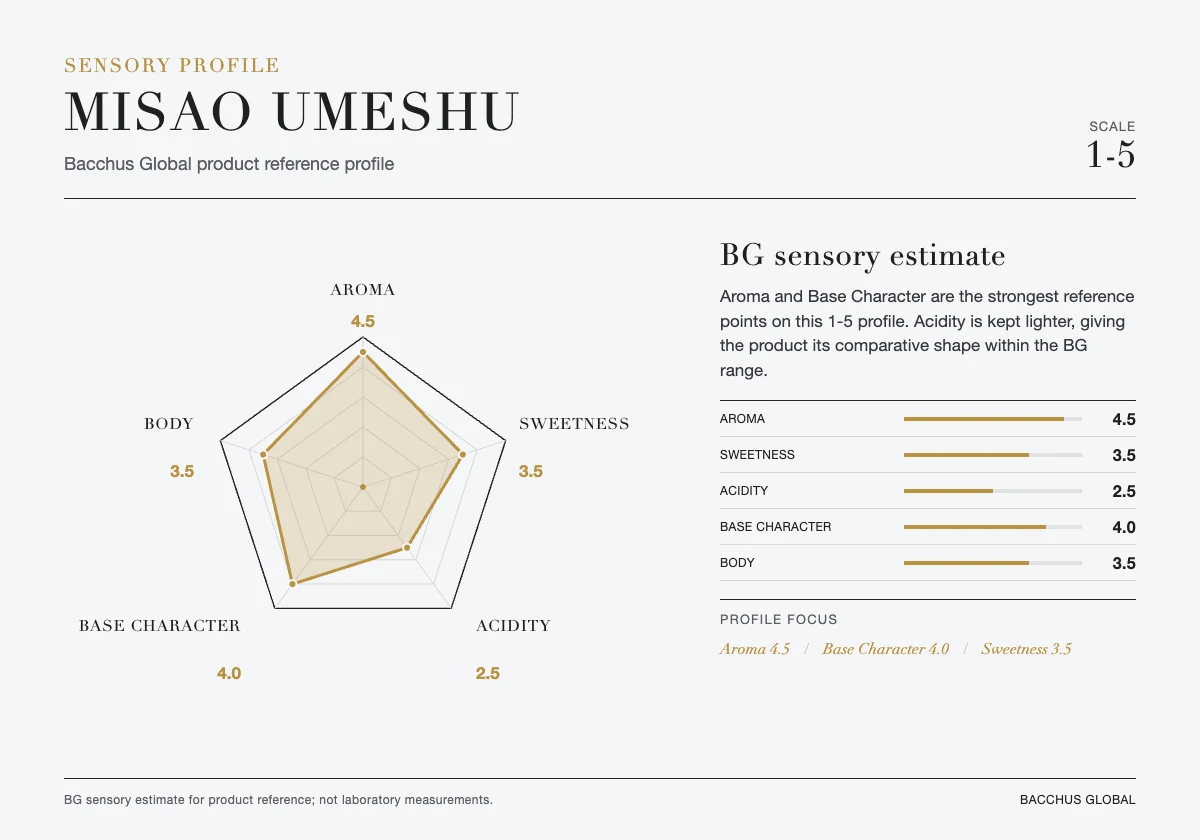
Fully ripened Nanko ume suggests peach and apricot, followed by the gentle maturity of aged awamori. The texture is smooth and nectar-like, with bright acidity supporting the fruit’s sweetness before a soft, slowly fading finish.
Dishes that layer onto ripe ume’s aroma
MISAO Umeshu layers a puree of tree-ripened Nanko ume from its own orchard onto awamori koshu aged three years or more. The pairings below are not an official recommendation from the producer, but a reading based on the flavor characteristics recorded on this page.
Following the stone-fruit aroma overlap described in The Science of Food Pairing (summary), this reading pairs MISAO Umeshu’s ripe ume aroma with dishes built on peach or citrus. The way the awamori’s aged character resonates with smoked or aged dishes follows the aroma axis described in Logical Pairing.
Kishu Honjo Umeyoshi, a plum grower in Minabe
Kishu Honjo Umeyoshi began in Minabe in 1971 as a producer of umeboshi and continues to grow and process its own fruit. MISAO was created to mark the 50th anniversary of the Nanko ume, expressing the producer’s understanding of fully ripened fruit in a cloudy liqueur.
From the same producer
Only directly relevant products and Bacchus Global stories are shown.
Related stories
Only directly relevant products and Bacchus Global stories are shown.
Contact Bacchus Global for product documentation and trade information.

