
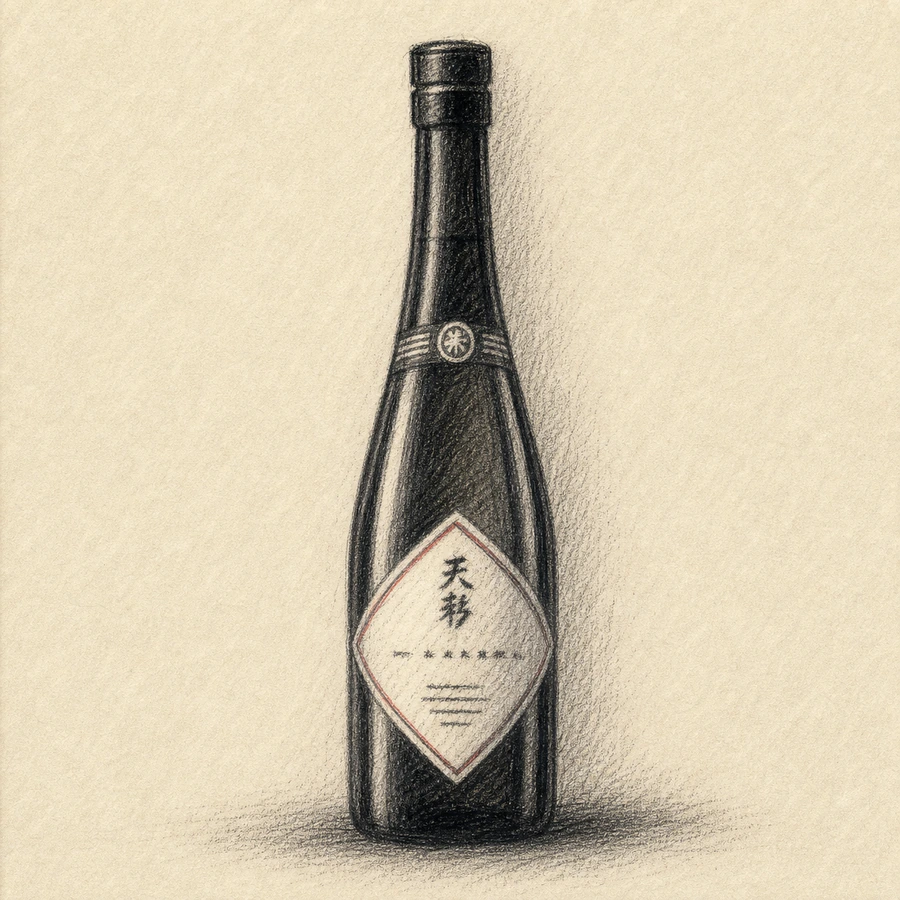
SAKE HUNDRED AMAIRO
Sake brewed with sake, and that sake used to brew the next. This “exponential” method layers honey-like sweetness with bright acidity, again and again.
Thailand · Product information
Product information from Bacchus Global Co., Ltd., based in Bangkok, Thailand. About Bacchus Global

Sake brewed with sake — an “exponential” method
AMAIRO is brewed using “exponential brewing” (累乗仕込み) — a method that replaces part of the water in the mash with sake itself, then carries the resulting sake into the next stage of brewing. Rather than adding sweetness afterward, this builds density directly out of the fermentation process.
Nara-grown rice and the yeast that lives in the brewery draw out a bright acidity from within that density. Despite a honeyed texture, the sake never leans on weight alone — its many layers of flavour unfold slowly.
Yellow peach and apricot, a honey-like finish
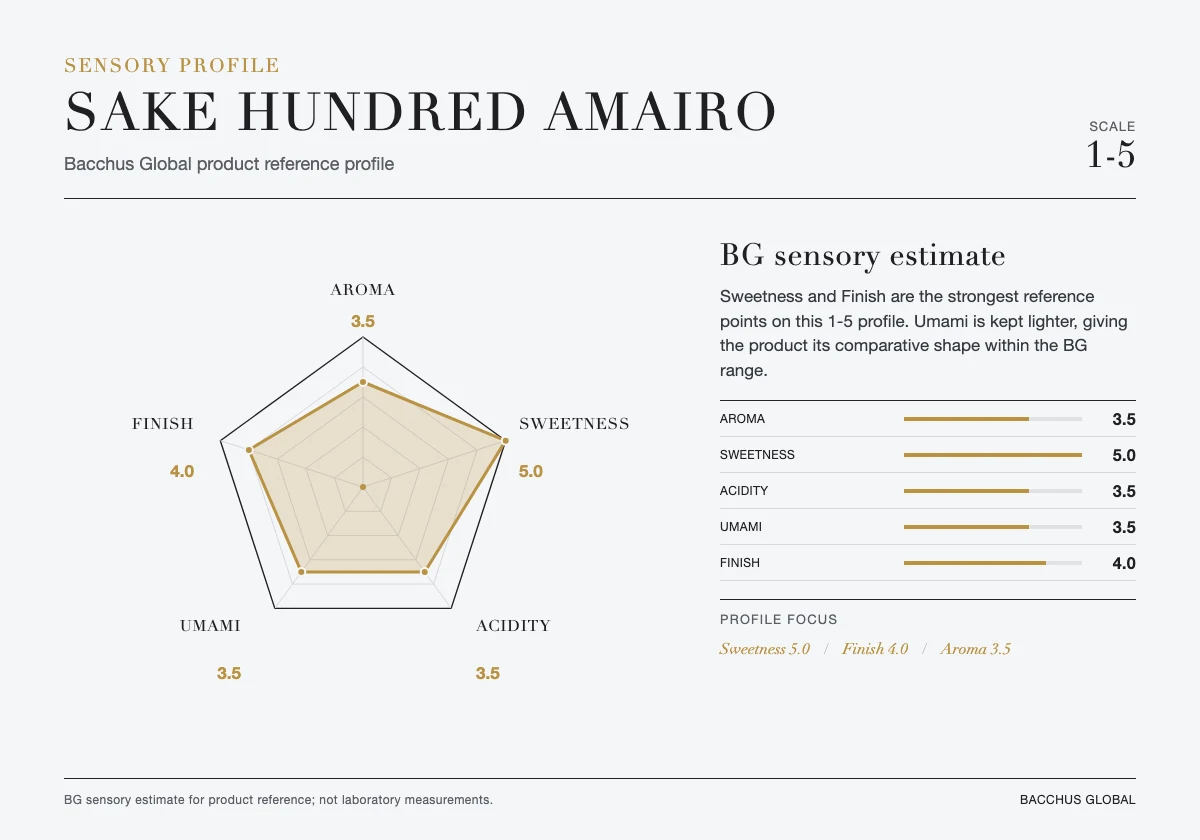
Ripe yellow peach, apricot and apple lead the nose, with notes of honey, linden blossom and nutmeg. A fine, generous sweetness spreads out with a smooth texture.
Supple acidity and a faint minerality bring precise structure to the dense, concentrated flavour.
Its honeyed density and bright acidity stay in balance from first aroma to last.
Nara, Yoshino — with Miyoshino Jozo
AMAIRO is brewed by Miyoshino Jozo, founded in 1912 in Yoshino, Nara Prefecture. Since 2017 the brewery has moved to sake-making without added cultured yeast, and since 2018 it has used contract-grown rice from within Nara Prefecture for all of its sake.
The brewery channels the microorganisms living in its walls and the character of Yoshino’s land into the sake’s acidity. That approach keeps the generous sweetness of the exponential brewing method from turning one-note, giving AMAIRO its depth.
Verified international recognition
Listed only where the official Kura Master record matches this exact product name. Other labels and variants are excluded.
Question 1
What replaces some of the water during brewing?
- Sake
- Fruit juice
- Honey
Read the answer and explanation
Correct answer: A — Sake
Answer: Sake. The linked section gives the source detail.
Question 2
In the repeated-brewing process, what goes into the next batch?
- Distilled sake
- Sake from the previous batch
- Wood chips
Read the answer and explanation
Correct answer: B — Sake from the previous batch
Answer: Sake from the previous batch. The linked section gives the source detail.
Question 3
According to the page, where does the sweetness come from?
- Added honey
- Added fructose
- The fermentation process itself
Read the answer and explanation
Correct answer: C — The fermentation process itself
Answer: The fermentation process itself. The linked section gives the source detail.
Toward yellow peach and apricot sweetness, and a honey-like finish
The brewery has indicated an affinity with white liver mousse, blue cheese, ankimo (monkfish liver), cream cheese and tempura of red sea bream with matsutake for a meal, and with vanilla ice cream, strawberry or matcha desserts afterward. Beyond that, from the aromas and taste structure confirmed on the BG product page — ripe yellow peach, apricot and apple aromas with notes of honey, linden blossom and nutmeg, a fine, generous sweetness carried on a smooth texture, and a supple acidity with a faint minerality — four directions follow.
The generous sweetness from its exponential brewing method is held in check by a supple acidity and minerality. Two of the four directions above (the mango dessert and the blue cheese) sit within the brewery’s own recommendation; the other two are a reading of the aromas and taste structure that can be confirmed.
Related products
Compare a closely related expression, a contrasting bottle and a reference from the same range.
Interested in listing SAKE HUNDRED AMAIRO at your restaurant or retail venue? Our team can provide information on availability, storage requirements and trade terms.

