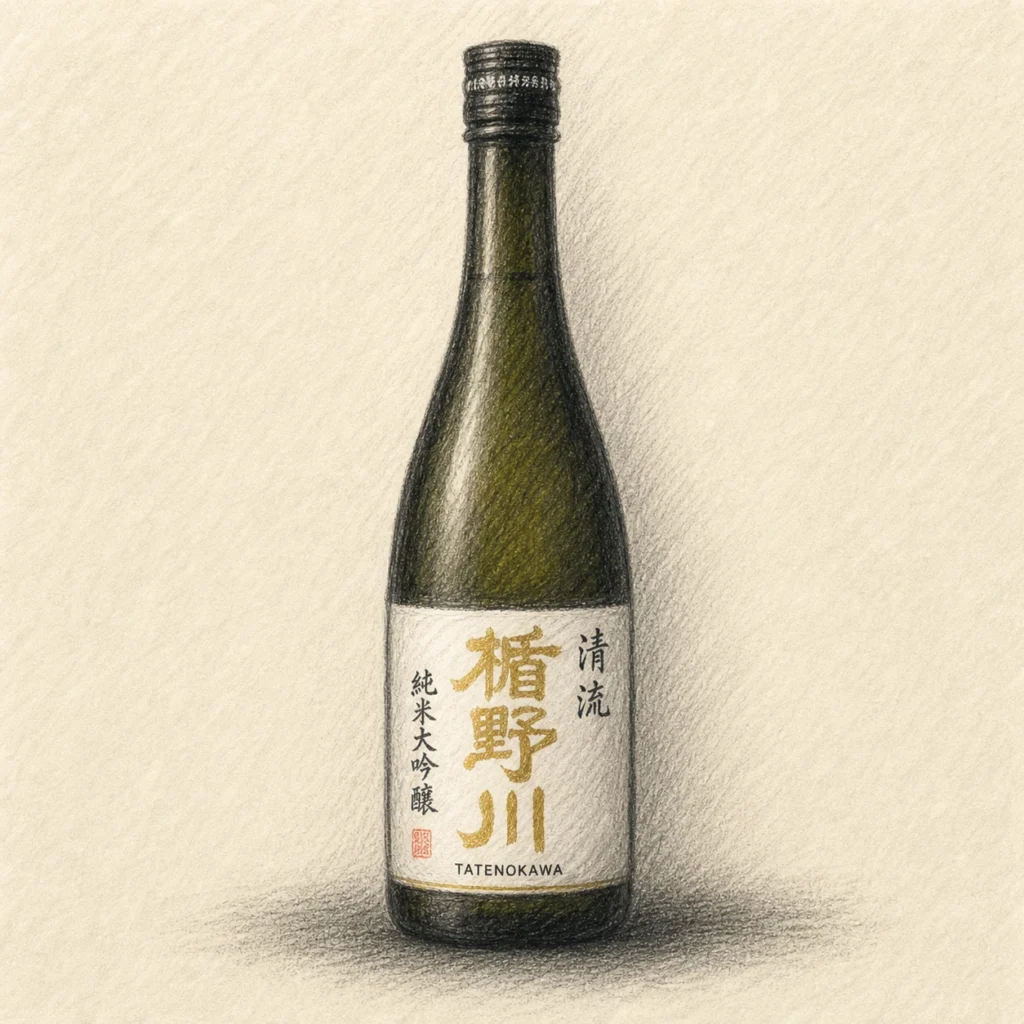
TATENOKAWA Stream Seiryu
Specially cultivated Dewa Sansan with Chokai subsoil water — green apple and pear, soft rice umami and a white-wine lightness that opens the way into TATENOKAWA.
Thailand · Product information
Product information from Bacchus Global Co., Ltd., based in Bangkok, Thailand. About Bacchus Global

A light Junmai-Daiginjo, shaped by the waters of Mt. Chokai
Made with 100% specially cultivated Dewa Sansan rice, grown by local contract farmers under reduced pesticide and chemical fertiliser use. Mt. Chokai’s exceptionally soft water and long, low-temperature fermentation draw out the rice’s gentle sweetness and a clear character.
It keeps a Junmai-Daiginjo’s depth while reaching for a lightness reminiscent of white wine. Rather than competing on polishing ratio, it refines a balance of fruit aroma, supple umami and a dry cut — an entry point into Tatenokawa.
Green apple and pear, soft sweetness, a clean cut
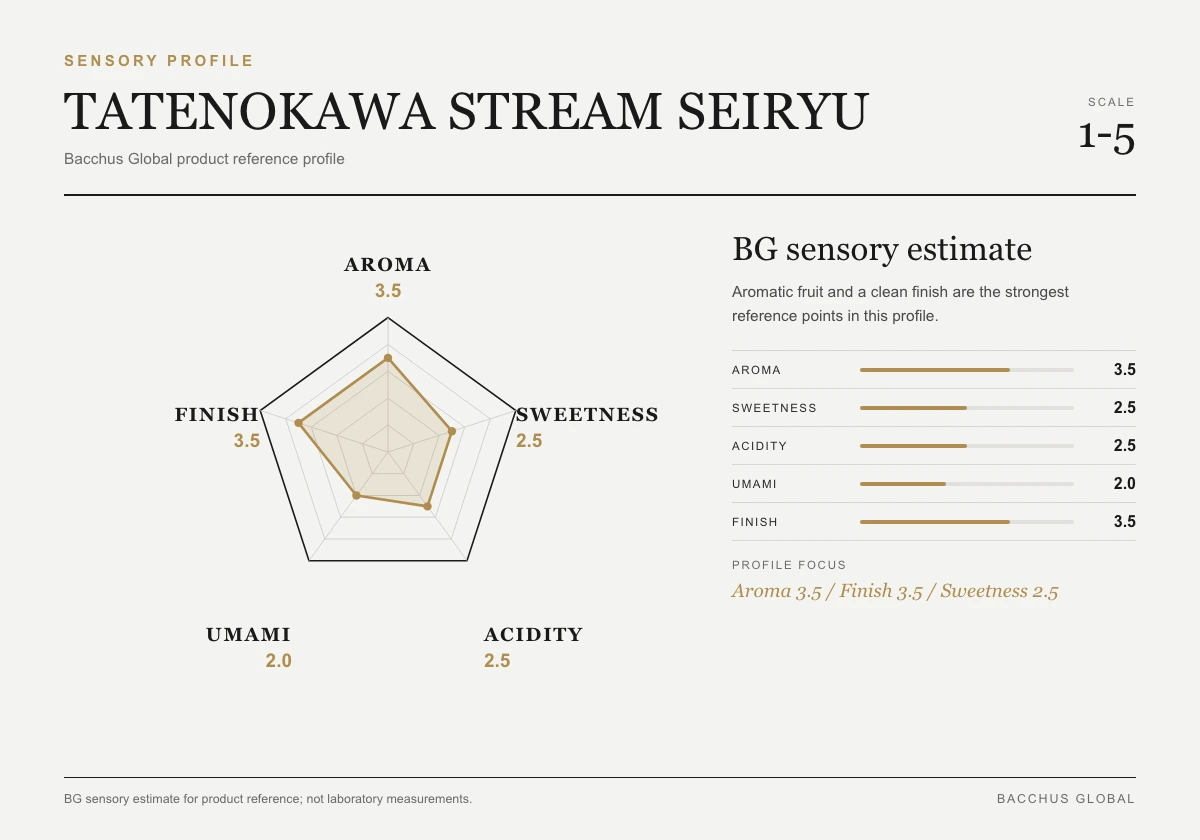
A fresh aroma of muscat grape, green apple and pear. The texture is fine and delicate, with Dewa Sansan’s soft sweetness and umami spreading quietly. Light without losing its core, moderate acidity and a dry cut shape the finish.
That balance of acidity and a dry cut carries the finish to a clean close.
Founded 1832, an entry point into Junmai-Daiginjo
Tatenokawa Sake Brewery was founded in 1832 in Sakata, Yamagata Prefecture. In 2010, it became the first brewery in Yamagata to convert its entire production to Junmai-Daiginjo, refining everything from rice cultivation through milling to brewing under a single philosophy.
Seiryu (“Clear Stream”) carries that philosophy in its lightest form. Through Mt. Chokai’s water and Shonai-grown rice, it reflects the brewery’s modern stance: not confining Junmai-Daiginjo to special occasions alone.
Verified international recognition
Listed only where the official Kura Master record matches this exact product name. Other labels and variants are excluded.
A low-alcohol lightness that keeps spice from turning sharp
The brewery has not stated an official food pairing for this sake. Here we set out four directions drawn from its confirmed structure: a 14% alcohol content that is unusually low for a junmai daiginjo, and an aroma close to green apple, pear and muscat grape. A lower alcohol content and a soft texture are understood to take some of the edge off spice.
This pairing rationale draws on the following reference book: Motohiro Ogoshi’s Logical Pairing notes that lower-alcohol drinks tend to suit spicier dishes well. This sake’s 14% design sits within that idea. That said, this reading applies to dishes in the delicate-to-medium-spice range only — dishes built on heavy chili, rich coconut milk, or strongly fermented fish sit outside this sake’s delicate character.
Related products
Compare a closely related expression, a contrasting bottle and a reference from the same range.
Related articles
Interested in listing TATENOKAWA Stream Seiryu at your restaurant or retail venue? Our team can provide information on availability, storage requirements and trade terms.