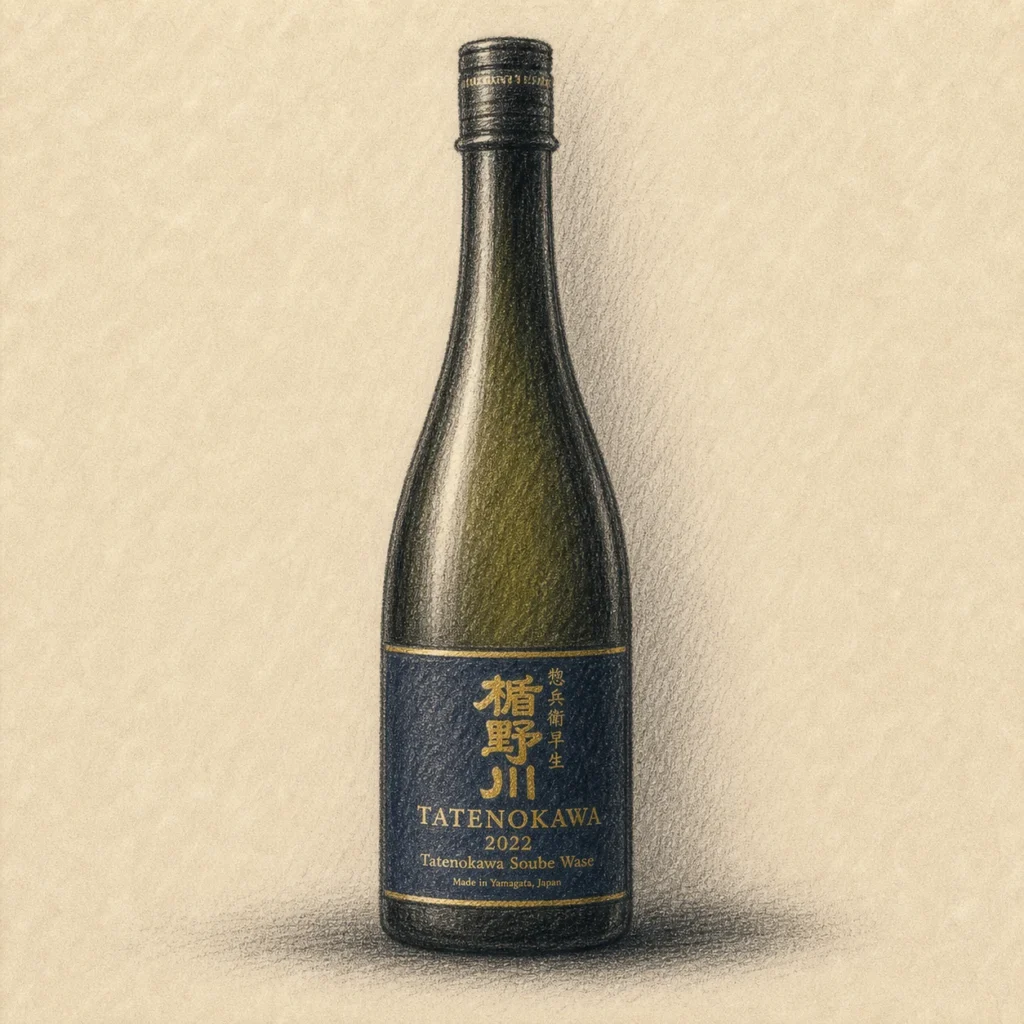
TATENOKAWA Soube Wase
Soube Wase, a Shonai heirloom rice revived from just 1.9 kg of seed over three years with contract growers — some 150 years of rice umami and a creamy texture, set into a modern junmai daiginjo.
From 1.9 kilograms of seed rice, reviving Shonai’s rice heritage
Soube Wase is a native rice variety born in Shonai, an ancestor connected to Kameno-o and today’s major rice varieties. It disappeared around 150 years ago because it was difficult to cultivate, but just 1.9 kg of its seed, preserved at a research institution, was multiplied over three years with contract farmers and revived as a sake rice.
Small-grained, with a small shinpaku (white core), it is a rice that is difficult to both mill and brew — one Tatenokawa meets head-on, using 100% Yamagata-grown Soube Wase. It carries the memory of an almost-lost rice forward into the future, as a modern Junmai-Daiginjo.
White blossom and pear, rich rice umami, a creamy finish
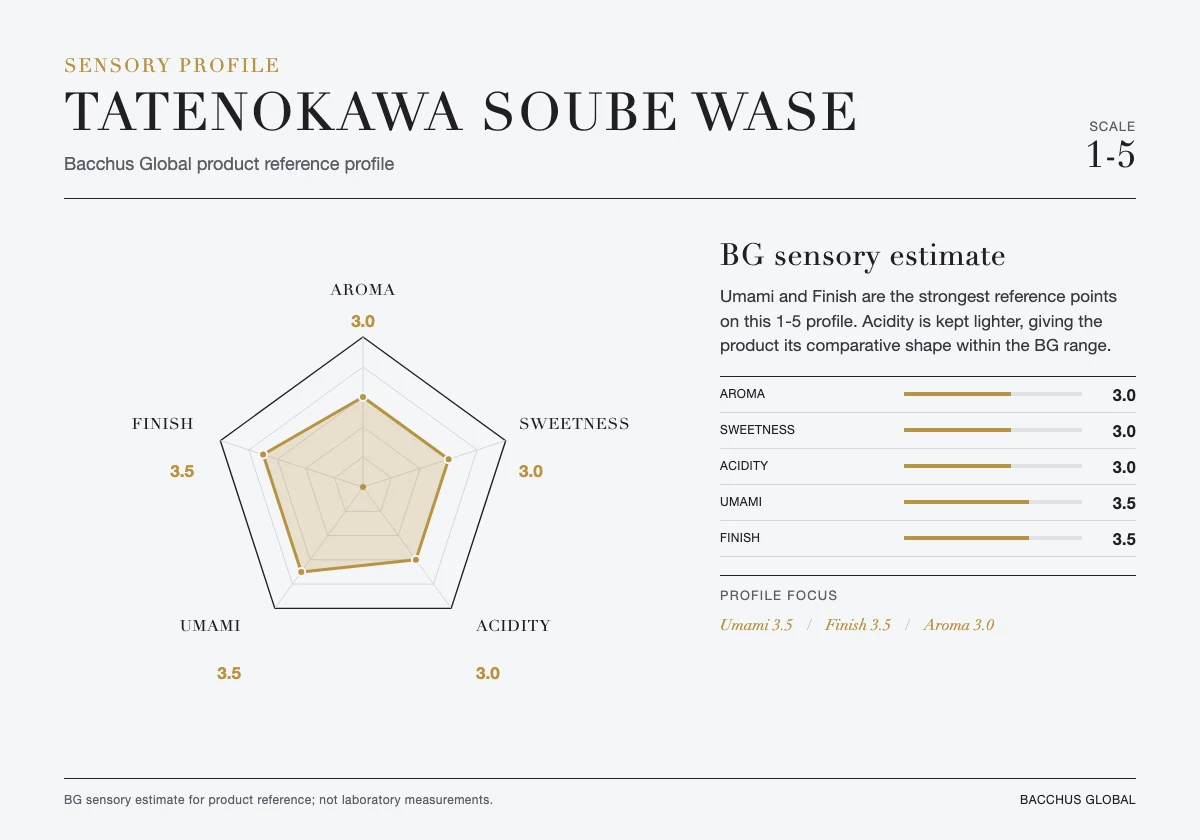
A gentle aroma of white blossom, steamed rice, pear and sweet apple. The texture carries a light viscosity, with the rice’s rich umami and gentle sweetness unfolding in layers. Supple acidity and a mineral quality keep that richness in check, and while the finish is long and creamy, the aftertaste stays clean.
Long and creamy, yet the aftertaste never loses its clarity.
Founded 1832, protecting Shonai’s rice heritage through sake
Tatenokawa Sake Brewery was founded in 1832 in Sakata, Yamagata Prefecture. In 2010 it became Yamagata’s first brewery to convert its entire production to Junmai-Daiginjo, and continues sake-making that expresses each rice variety’s character with high precision.
Soube Wase grew out of an effort to pass Shonai’s historic rice on to the next generation through sake. Beyond competing on polishing ratios alone, protecting regional varieties and their memory is, for Tatenokawa, also part of what Junmai-Daiginjo is for.
A revived heirloom rice, carrying umami in layers
The brewery has not stated an official food pairing for this sake. Here we set out four directions drawn from its confirmed structure: the viscous texture and richly layered umami that come from Soube Wase, a rare rice variety revived after 150 years.
Food-pairing science notes that the umami compounds in mushrooms connect with the fat in butter and cheese to create a new layer of flavour — a direction this sake’s own layered umami is open to as well.
Related products
Compare a closely related expression, a contrasting bottle and a reference from the same range.
Interested in listing TATENOKAWA Soube Wase at your restaurant or retail venue? Our team can provide information on availability, storage requirements and trade terms.